Turning Civic and Voter Education commitment into an action plan
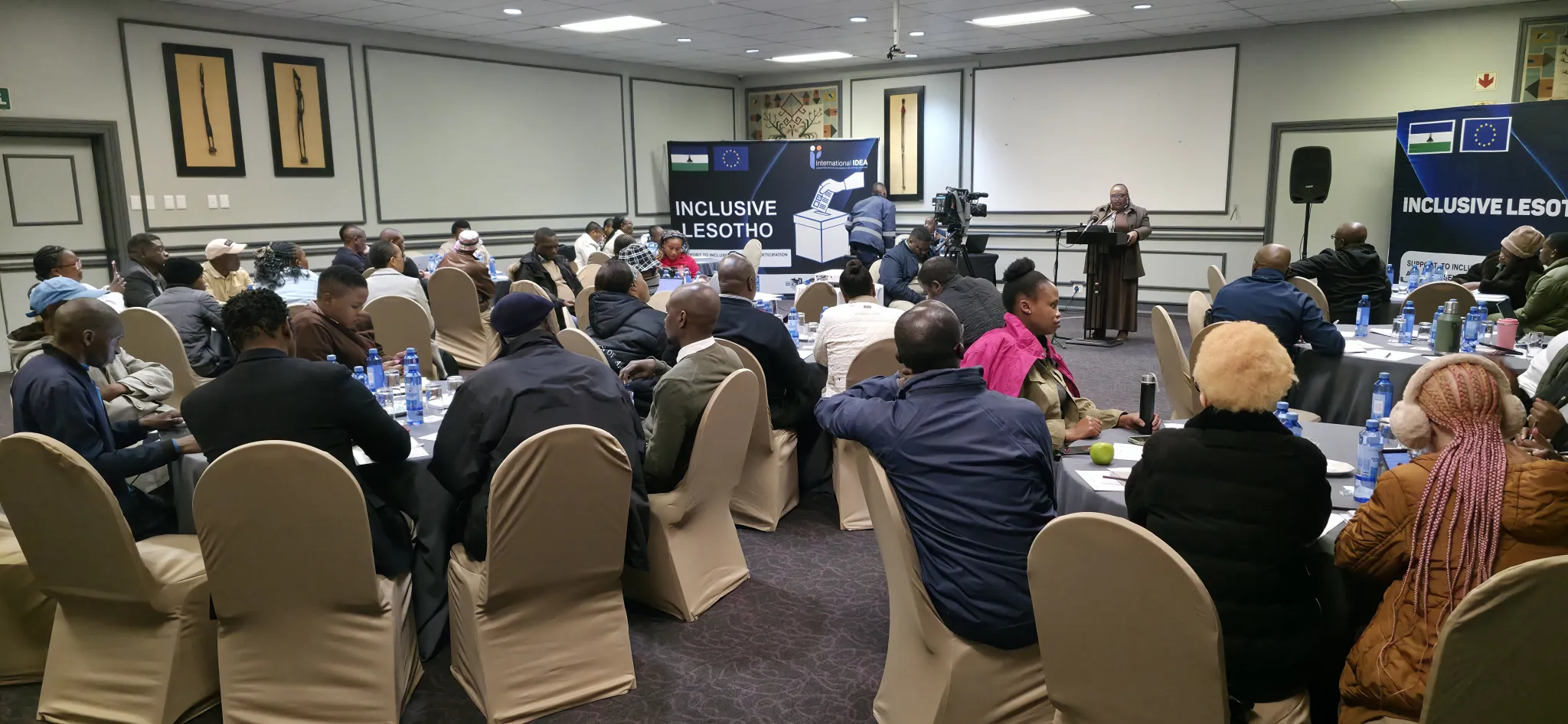
The workshop built on the continued support of International IDEA to IEC Lesotho with the aim of strengthening its institutional capacity and augmenting participation and engagement of the citizenry within the governance and electoral processes. To improve competency and empower Lesotho's citizens, the Civic and Voter Education Strategy (2026-2028) was developed with a pool of experts and resources of the organisation to support the development process.
Informed by the Civic and Voter Education Strategy (2026-2028), which was officially launched by the Chairperson of the Commission, John Maphephe, and the Principal Secretary of Local Government, Home Affairs and Police, Mabataung Khalane. This plan will operationalise the continuous civic and voter education efforts across Lesotho.
Participants included IEC management and civic and voter education officials from all ten districts, electoral managers, political parties, civic education committees, government officials, academia, development partners, media, civil society organizations, women- and youth-led organisations, and representatives of persons with disabilities. The diversity of groups strengthened ownership, transparency and inclusion, with guides and sign language interpreters also supporting full and active engagement.
The workshop standardised civic and voter education materials, manuals and facilitation guides for nationwide dissemination, and updated training manuals to reflect recent electoral amendments passed by Lesotho’s Parliament. Participants also designed interventions to address barriers affecting the participation of women, youth, persons with disabilities, LGBTQI+ persons and other marginalised groups. These interventions were translated into activities with timelines and assigned responsibilities, resulting in a clear implementation roadmap for inclusive, continuous civic and voter education in Lesotho.
Participants expressed their appreciation to International IDEA and the European Union (EU) in Lesotho for supporting an inclusive workshop. This engagement, supported by regional Monitoring and Evaluation Specialist Elizabeth Asiimwe, reaffirmed International IDEA’s commitment to helping IEC Lesotho consolidate democratic gains and advance sustainable, inclusive democracy in the Mountain Kingdom.


About the authors