National conference: Advancing women's political participation and representation in The Gambia
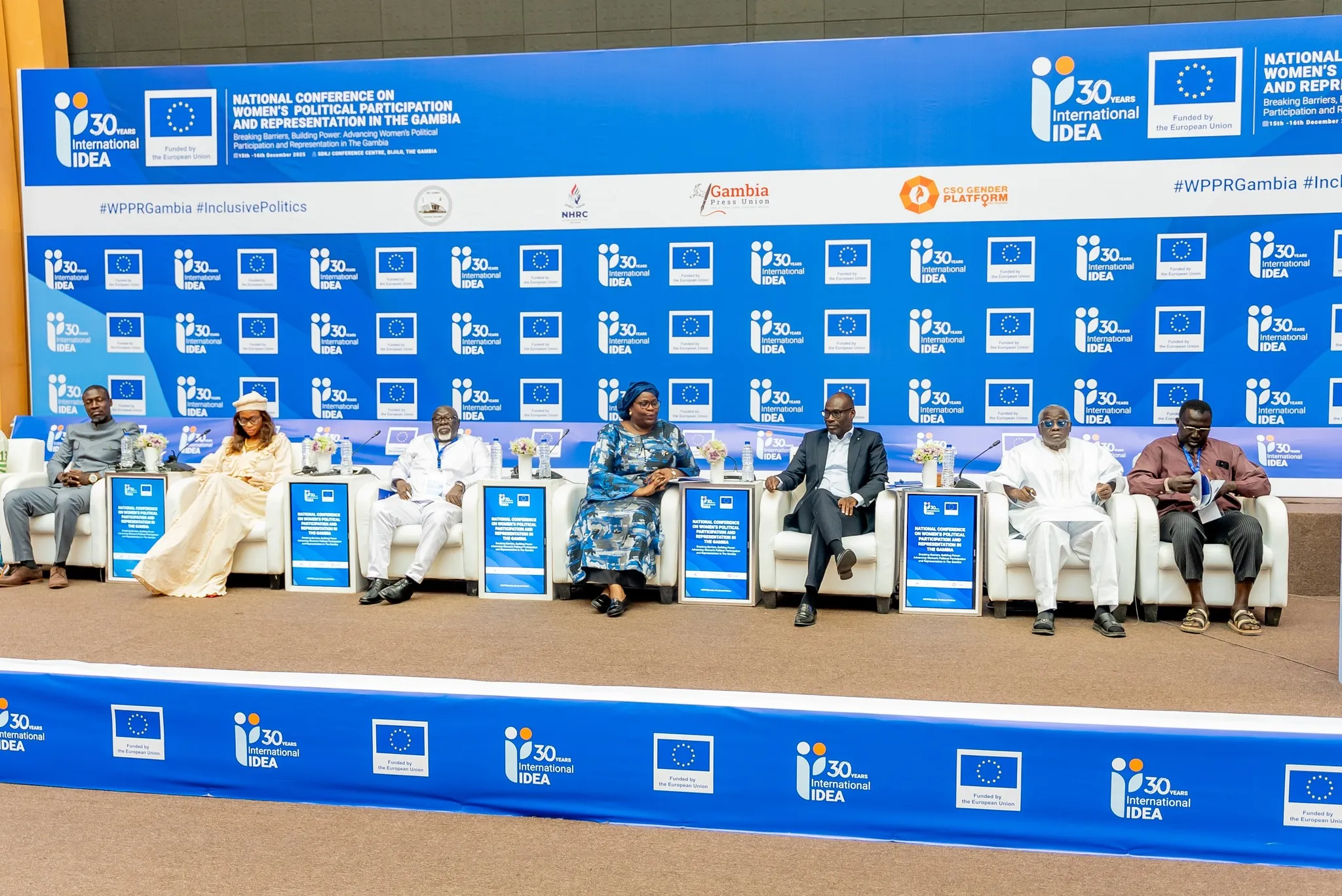
Women constitute more than 50 per cent of The Gambia’s population, yet their representation in formal political structures, including the National Assembly, local councils, and political parties, remains disproportionately low. In the National Assembly, women hold approximately 8.6 per cent of seats (5 out of 58 members, based on the 2022 elections), far below the 30 per cent critical mass recommended by the Beijing Platform for Action. At the local government level, women constitute less than 15 per cent of Ward Councillors. No woman has ever been elected President, and women’s presence in high-level Ministerial roles remains minimal, with only 3 women in the 23-member Cabinet.
Recognizing the urgency of addressing these challenges, the International Institute for Democracy and Electoral Assistance (International IDEA), through the EU-CODE-funded project and in partnership with the National Assembly, the National Human Rights Commission, the Gambia Press Union, and the CSO Gender Platform, convened a national conference on Women’s Political Participation and Representation in Banjul on December 15-16, 2025.
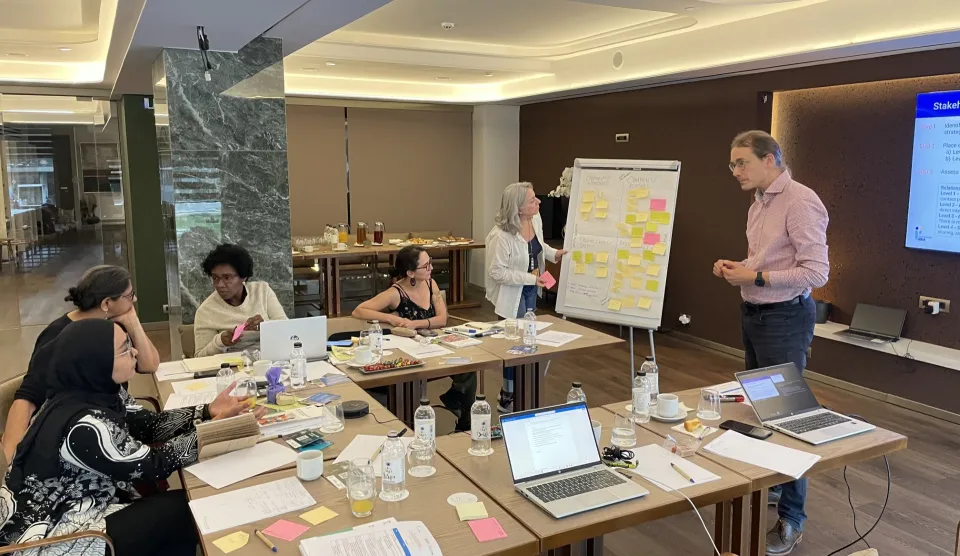
The two-day National Conference, themed “Breaking Barriers, Building Power: Advancing Women’s Political Participation and Representation in The Gambia,” successfully brought together a diverse group of participants, including government officials, political party leaders, aspiring politicians, civil society members, women leaders, youth representatives, the Independent Electoral Commission, and international partners. This gathering created a vital national platform for stakeholders to collectively analyze existing barriers, exchange best practices, identify effective strategies and formulate a coordinated action plan aimed at enhancing women’s political empowerment in The Gambia.
Following the successful conclusion of the National Conference, eighteen out of twenty-two registered political parties in The Gambia have signed a historic communiqué committing to concrete reforms aimed at advancing women’s political participation and representation.
Conference delegates acknowledged that while The Gambia has made notable strides in democratic reform, women remain significantly underrepresented in political decision-making. Currently, women hold only 8.6 per cent of seats in the National Assembly and 14.2 per cent of Cabinet positions. They are similarly marginalized in local governance, despite making up more than half of the population and the majority of registered voters.
“Women's leadership must move beyond commitments into concrete actions through legal reforms, political party transformation, adequate financing and the protection of women human rights defenders”, expressed Tabu Sarr, National Coordinator for CSO Gender Platform.
The conference reaffirmed The Gambia’s obligations under various national, regional, and international frameworks, including the Women’s Act, National Gender Policy, CEDAW, the Maputo Protocol, ECOWAS Gender Policy, and the Sustainable Development Goals (SDGs 5 and 16).
Deliberations underscored various challenges faced by women in politics, including deeply rooted patriarchal norms, economic and campaign finance obstacles, and the lack of enforceable gender quotas. Additionally, issues like limited political literacy and leadership training, political violence and harassment (including forms of digital violence), gender-biased media narratives, weak support systems within political parties, and insufficient backing from families and communities for women candidates were also highlighted.
By adopting the communiqué point by point, stakeholders resolved to:
• Strengthen women’s political participation through gender-sensitive electoral reforms, including lowering nomination fees, introducing gender quotas in electoral laws, and enabling civil servants, particularly women, to take paid leave to contest elections without reproach.
• Enhance women’s representation in decision-making by instituting a minimum 30% gender quota within political parties, leadership structures, and candidate nomination processes, alongside mentorship and leadership pipelines.
• Promote safe and inclusive political environments through the enforcement of laws against gender-based and political violence, provision of security for women candidates, and establishment of independent reporting and accountability mechanisms.
• Mobilize resources and partnerships, including advocacy for a national women’s political empowerment fund, dedicated party budgets for women candidates, and strengthened collaboration with civil society, the private sector, and development partners.
• Amplify women’s voices and shift public perceptions via fair media coverage, national awareness campaigns, engagement with traditional and religious leaders, and expanded use of local languages and digital platforms.
The communiqué was adopted through motions by representatives from various political parties, youth and women’s organizations, local government, and national institutions, culminating in a final adoption by H.E. Fatoumatta Jallow Tambajang, former Vice President of The Gambia and seconded by Mr Joseph Colley, Chairman of the IEC.
By signing the communiqué, 18 out of 21 registered political parties, along with civil society and development partners, affirmed that women's equal participation in politics is a democratic imperative. The conference concluded with a call to the Gambian government, political parties, civil society, and the public to turn these commitments into action.


About the authors