National Assembly concludes review of draft Constitution Amendment Bill 2026 on reserved seats for women and persons with disabilities
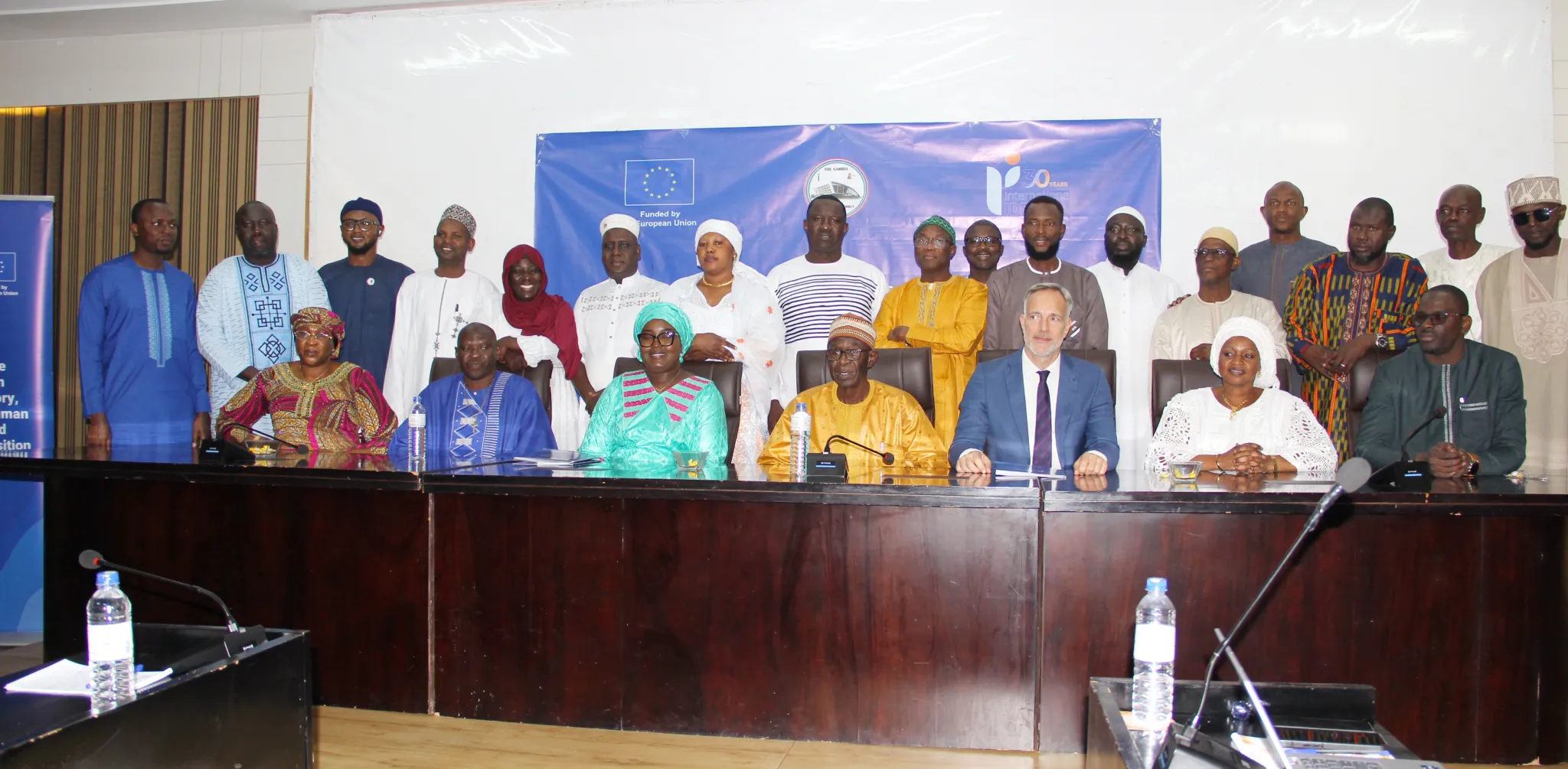
The proposed amendment seeks to introduce reserved seats for women and Persons with Disabilities (PWDs) in the National Assembly.
The review, held from 21–23 January 2026, provided members of the National Assembly Select Committee on Gender, Children and Social Welfare, as well as the full House, with an opportunity to examine and deliberate on the proposed Bill ahead of its formal gazetting for debate and consideration. The amendment proposes the allocation of 14 reserved seats for women and two seats for Persons with Disabilities, as part of broader efforts to address the longstanding imbalance in parliamentary representation since independence.
Speaking at the review, the Head of International IDEA’s Country Office, Ms. Jainaba Faye, underscored the importance of advancing inclusive and representative democracy. She described the proposal to reserve seats for women and Persons with Disabilities as a significant step towards building a legislature that reflects the diversity and aspirations of all Gambians.
The Deputy Head of Mission of the European Union to The Gambia, Mr. Raphaël Brigandi, emphasised that gender equality is a fundamental pillar of democracy, not a concession. He noted that half of the population has a right to representation and that inclusive political leadership is a proven driver of stronger, fairer, and more resilient societies. According to him, women’s participation in political leadership improves the quality of legislation, strengthens accountability, and ensures that policies reflect the lived realities of all citizens.
“This Bill is more than a legal proposal; it is a powerful democratic statement that signals readiness to close the gap between ambition and action on women’s representation and to write a historic chapter in The Gambia’s democratic journey,” Mr. Brigandi stated.
The Speaker of the National Assembly, Hon. Fabakary Tombong Jatta, described the Gender Committee’s initiative to introduce a Committee Bill on reserved seats for women as both bold and necessary to correct historical imbalances. He stressed that leadership and political decision-making are shared national responsibilities and should not be viewed as the preserve of any one gender.
“When women are at the table, the quality of our legislation improves, our focus on social welfare deepens, and our democracy becomes more representative of the people it serves,” the speaker remarked.
The Chairperson of the National Assembly Select Committee on Gender, Children and Social Welfare, Hon. Fatoumatta Njai, expressed appreciation to International IDEA and the European Union for their continued support and commitment to promoting inclusive governance and democratic reforms in The Gambia.
The reviewed draft Bill will now proceed to the next stages of the legislative process in the National Assembly. As part of the official ceremony, the European Union presented communication equipment to the National Assembly to strengthen its capacity to broadcast parliamentary proceedings. The equipment, which includes professional-grade cameras, specialised lenses, and a tripod, is intended to enhance public access to legislative activities and improve transparency and visibility across the parliamentary process.
Receiving the equipment on behalf of the National Assembly, the Clerk of the National Assembly, Mr. Kalipha M. M. Mbye, expressed gratitude to the European Union and International IDEA for their continued partnership. He highlighted the critical role of effective communication in promoting democratic accountability.
“Parliamentary debates and oversight only achieve their full impact when citizens can see, hear, and understand the work of their representatives. This support will significantly enhance our ability to communicate parliamentary business clearly and professionally,” the Clerk stated.


About the authors