How the parliament and civil society are shaping Bhutan's democratic future together
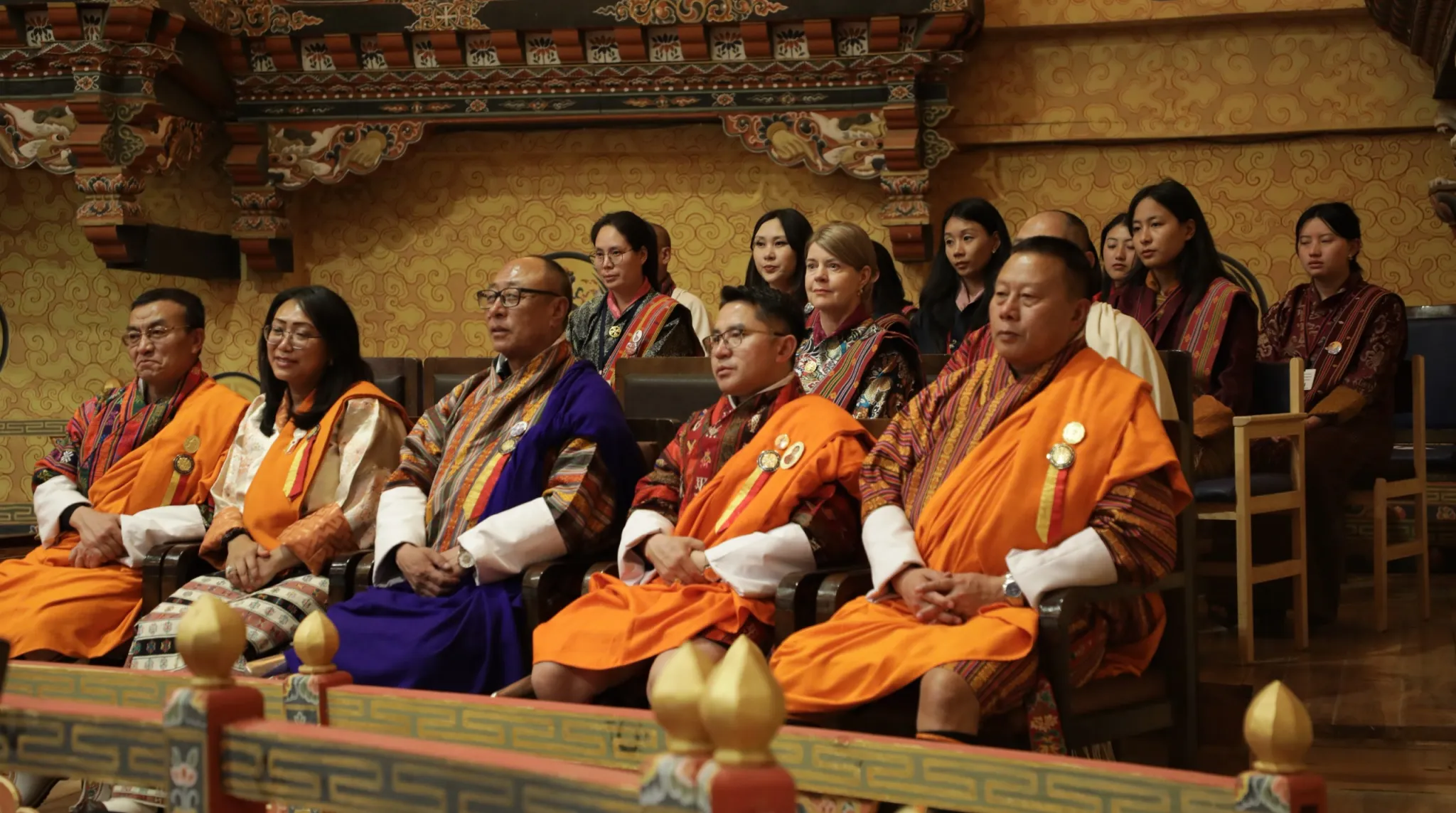
The morning sun had just begun to lift over the hills surrounding Thimphu as Members of Parliament gathered for the opening days of the summer session. Prayer flags stretching across the valleys with the mountain breeze, while government officials, journalists and citizens turned their attention towards the debates that would unfold inside Bhutan's Parliament over the coming weeks.
For first-time visitors, Bhutan can feel both deeply rooted in tradition and quietly forward-looking. Its valleys are dotted with centuries-old monasteries, traditional architecture and cultural practices that remain central to daily life. At the same time, Bhutan is one of the world's youngest democracies. It has been less than two decades since the country held its first democratic elections in 2008 following the decision of the Fourth Druk Gyalpo, His Majesty Jigme Singye Wangchuck, to guide Bhutan's transition to constitutional democracy.
As Bhutan's democratic institutions continue to evolve, so do the connections that help them serve the public. Parliamentarians, journalists and civil society leaders that we met across Thimphu, spoke of growing trust, greater openness and more regular engagement between institutions that had traditionally operated within their own spheres. Together, these changes are helping create new pathways for closer engagement and bringing citizens closer to the decisions that affect their lives.
Perhaps nowhere was this more evident than at the Bhutan Kidney Foundation.
The Foundation's Executive Director, Tashi Namgay, pointed towards an orange tree growing in his office. He had planted a single seed a year ago that has since sprouted into a healthy sapling. As he reflected on the evolving relationship between Parliament and civil society organizations, the comparison came naturally. "You plant the seed, nurture it, and over time it grows," he said.
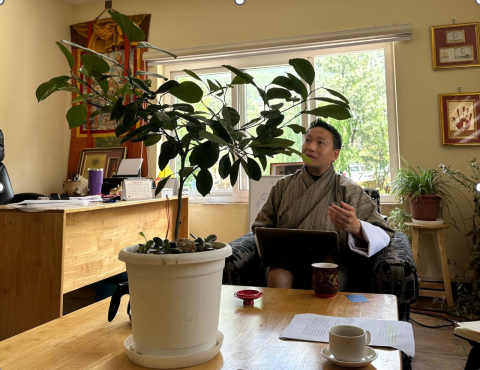
The Bhutan Kidney Foundation focuses on the prevention of non-communicable diseases and advocates on behalf of kidney patients and their families. Through its work, the Foundation collects data, documents challenges faced by patients and serves as a bridge between vulnerable communities and policymakers.
During the Covid-19 pandemic, the organization raised more than Nu. 4 million to support kidney patients, even renting a building in Kolkata to accommodate Bhutanese patients and caregivers undergoing treatment in India. In the process, it witnessed the financial strain many families faced when accompanying loved ones abroad for specialised care.
Drawing on years of evidence and engagement with patients, the Foundation raised the issue with policymakers. Eventually, the daily subsistence allowance available to accompanying caregivers was increased, a seemingly modest policy change that brought meaningful relief to families already coping with illness and financial hardship. The experience is not unique to the Bhutan Kidney Foundation.
For many civil society leaders, one of the most significant changes in recent years has been the growing opportunity to engage directly with Parliament. Conversations that once relied largely on individual connections are becoming more regular and structured, creating clearer pathways through which organizations can share ideas, concerns and evidence with policymakers.
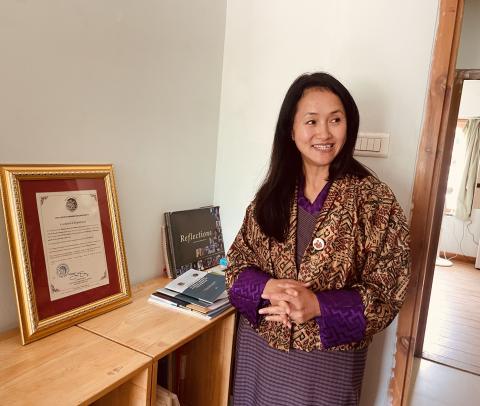
For organizations such as the Bhutan Centre for Media and Democracy, this engagement also extends to the next generation. Through youth-focused initiatives, students have had opportunities to interact directly with parliamentarians and discuss issues ranging from employment and education to mental health and civic participation. For many participants, the forums provided a rare opportunity to move beyond observing politics and take part in the conversation themselves.
On the other hand, several Parliamentarians spoke about the value of hearing directly from organizations working closely with communities and noted that these exchanges help provide a fuller picture of how policies and programmes are experienced on the ground. Civil society organizations, once viewed primarily as service providers or advocates, are increasingly seen as partners that can contribute expertise and practical insights to legislative discussions.
This growing engagement was perhaps most visible earlier this year when Parliament held Bhutan's first public hearing on the Economic Stimulus Programme. The hearing brought together parliamentarians, government officials, technical experts and civil society representatives in an open examination of one of the country's largest public investments. For many of those involved, the significance lay not only in the subject under discussion, but in the process itself. Voices that might previously have remained outside the rooms were now part of the conversation.
Further supporting this shift is the Civil Society Organizations Authority, which works to strengthen the environment in which civil society operates and helps ensure that engagement between institutions becomes increasingly regular and sustainable. The same spirit of engagement is beginning to shape relations between Parliament and the media.
During conversations with journalists and parliamentarians, both groups reflected on how their interactions have evolved in recent years. Journalists spoke of greater access and a better understanding of parliamentary procedures, while parliamentarians acknowledged the important role the media plays in helping citizens understand debates that unfold inside the chamber.
Media symposiums and exchanges have contributed to that shift. Reporters described feeling more confident covering parliamentary proceedings, while lawmakers spoke of more regular engagement with journalists. The result can increasingly be seen in parliamentary stories published in both English and Dzongkha, helping bring discussions from the chamber to audiences across the country.
While Bhutan's democratic journey is still relatively anew, the relationships that sustain democratic participation continues to evolve. A parliamentarian who hears directly from a kidney patient's family. A journalist who can explain a parliamentary debate with greater clarity and context. A public hearing that opens a national programme to wider scrutiny and discussion. These moments reflect a broader shift towards greater engagement between Parliament, civil society and the media. In doing so, they are also helping ensure that national conversations are informed by a wider range of experiences, expertise and perspectives from across the country.
Back at the Bhutan Kidney Foundation, the orange sapling at Tashi Namgay's office offers a fitting metaphor. Years after it was planted, its roots remain largely unseen, while the results are visible in the fruit it will soon bear.
The 'Nyamdrel II project is supported by the European Union.


About the authors