Why any self-respecting democrat should go to the FIFA World Cup
Disclaimer: Opinions expressed in this commentary are those of the authors and do not necessarily represent the institutional position of International IDEA, its Board of Advisers or its Council of Member States.
You could feel the angst of the liberal-minded traveler with privileged access to return tickets in a world of increasingly nasty governments.
Alastair Campbell, former Tony Blair spin doctor, ‘Rest is Politics’ podcast host and ardent fan of Scotland’s football team, had spent much of the broadcast in a diatribe against President Donald Trump. He now spoke about whether he should visit the United States to watch his beloved team play. It had been a week of a Minneapolis shooting and talk of US intervention in Greenland. The US brand name was, quite simply, mud.
‘I just don’t want to. It just feels like it’s not a place to go right now’, Campbell said, before announcing he would poll listeners before deciding.
Campbell’s dilemma reflects that of many liberals as they try to grasp some elusive moral north star in a world where autocracies, populists and generally unpleasant governments are becoming the norm. The hashtag #BoycottWorldCup began trending in 2026. There have been increasing calls for a boycott.
But as political polarization erodes democracy worldwide, boycotts may just contribute to that toxic atmosphere putting ‘us’ vs ‘them’. Democracy may need more trips to countries with dodgy reputations. In its drip-drip fashion, travel chips away at national walls. You may still return shocked at your host’s views on guns, taxes, or migration, but that social media inspired ‘hater’ in us can soften, even so slightly.
A year into Trump’s second term, foreign visitors’ trepidation is growing. It is not just an ethical concern, but fear of getting handcuffed at the border or having your phone hijacked by airport security to check your Facebook posts. The World Travel & Tourism Council predicts a USD12.5 bn loss in US international visitor spending in 2025, making it the only nation among 184 analyzed to decline.
Nor it is confined to the United States. Activists called on people not to travel to the previous World Cup in Qatar due to the country’s repression of LGBTQ+ rights; to Saudi Arabia to protest human rights abuses; to Israel due to accusations of genocide in Gaza; and many more, ranging from Hungary to Uganda.
I have skin in the game here. I took my teenage son to see England play in the 2018 World Cup in Russia, despite tut‑tuts from friends. But it was one of those life experiences for my son, who still remembers the charming Russian landlady where we stayed in the old, run‑down Soviet‑era suburbs of the city, and the general friendliness on Kaliningrad’s streets. It showed him that painting countries by their political hue can be like watching black‑and‑white TV—it ignores their myriad colours and layers.
I would avoid Russia now (there are common‑sense limits to my thesis), but I would urge people to take risks and visit countries where the heartbeat rises slightly on arrival at airport security, where the politics is abhorrent.
It is difficult to quantify the impact of several thousand Scottish fans in kilts in Florida dive bars or fast‑food outlets. But I imagine they will win over a few hearts and minds. Some MAGA (Make America Great Again) supporters may even come away with the thought that these Europeans are not as skewed as their dear leader is telling them.
That is travel’s beauty. The valuable bit is risky and uncomfortable. Travel to like‑minded countries populated by standard globalized baristas or digital nomads is the antithesis of widening minds. I have learnt more from travel to places like Paraguay under military dictatorship or Cuba under Castro.
When the car driver complains about traffic, the best reply is always: ‘Remember, you are the traffic.’ It is the same with political polarization—a problem that plagues both houses.
Those complaining about polarization but calling for boycotts should consider the contradiction. Drunken evenings of Scots singing ‘Flower of Scotland’ among Boston or Miami dive bars may do more for breaking down political barriers than any well‑meaning UN‑funded social programme.
Those arguing for boycotts should bear in mind that the stance is cutting off swathes of this messy world. If you oppose travel to the USA, China could also be on your list. And a good section of the Middle East. As Canadian Prime Minister Mark Carney argued at Davos, Switzerland, that democracies need to balance pragmatism and values—to engage the world as it actually is.
Boycotts hurt the likes of the local restaurant owner near the stadium more than anyone else. History shows only concerted sanctions from governments and corporates will change anything (such as the Apartheid in South Africa). Otherwise, they are mostly empty gestures. I doubt those advocating boycotts would accept the consequences of their governments or major companies trying to sanction Washington.
Still, that may be secondary to the principle that uncomfortable travel is good for the democratic mind. All those fleeting meetings with strangers who speak a different kind of politics change both visitor and host in imperceptible ways.
Campbell announced his poll results the next week: over 80 per cent of listeners opposed going to the USA.
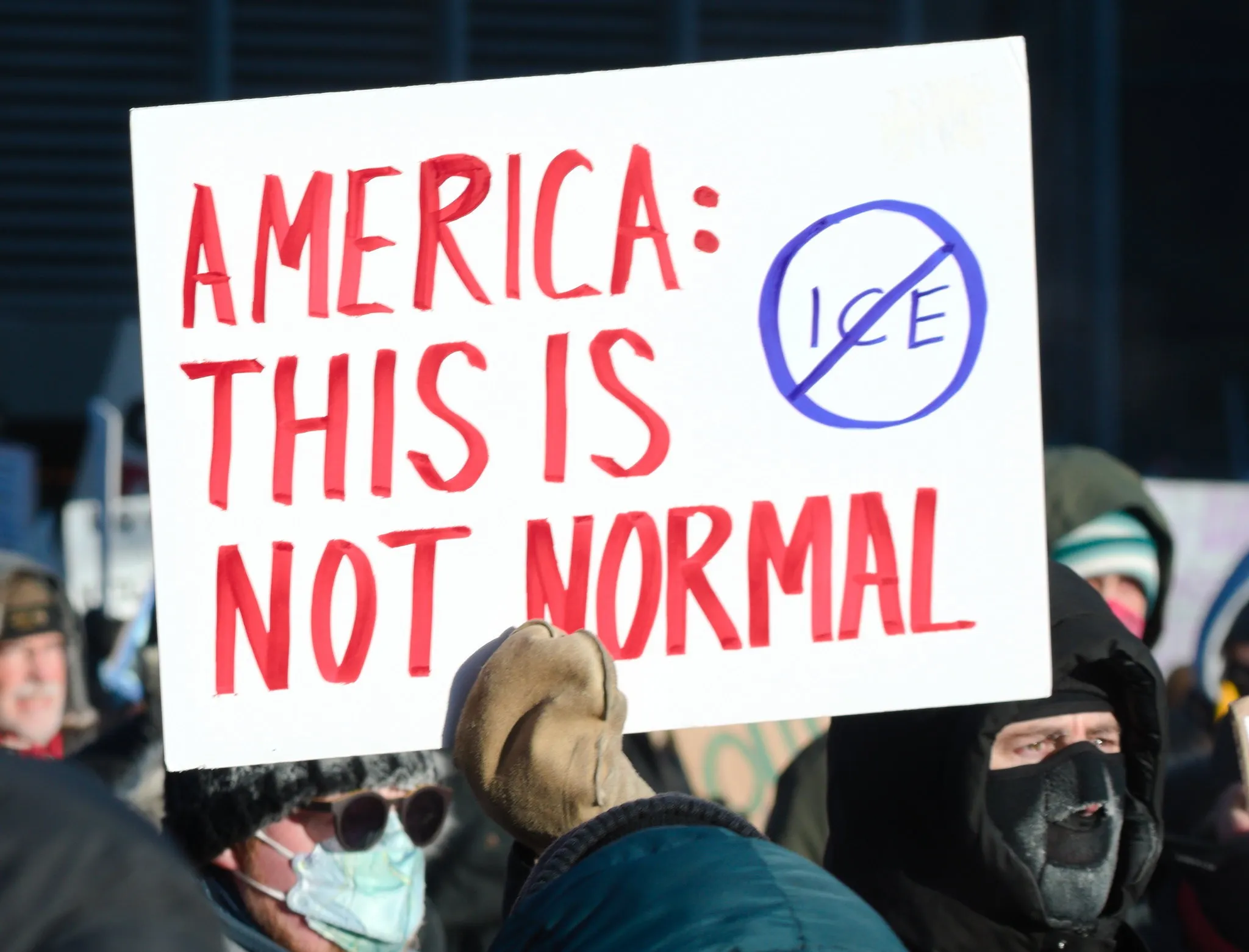
They may feel virtuous, but is it more virtue‑signaling? Next time someone complains about US border security, their fear for social‑media privacy, or ICE on the streets, politely argue that democracy is about risk‑taking, argument and reaching across divides.
As the writer Maya Angelou said: ‘Perhaps travel cannot prevent bigotry, but by demonstrating that all peoples cry, laugh, eat, worry and die, it can introduce the idea that if we try to understand each other, we may even become friends’.
(Declaration of interest: As a Scottish supporter, I am not travelling to the World Cup. But that has to do with the price of tickets).


About the author