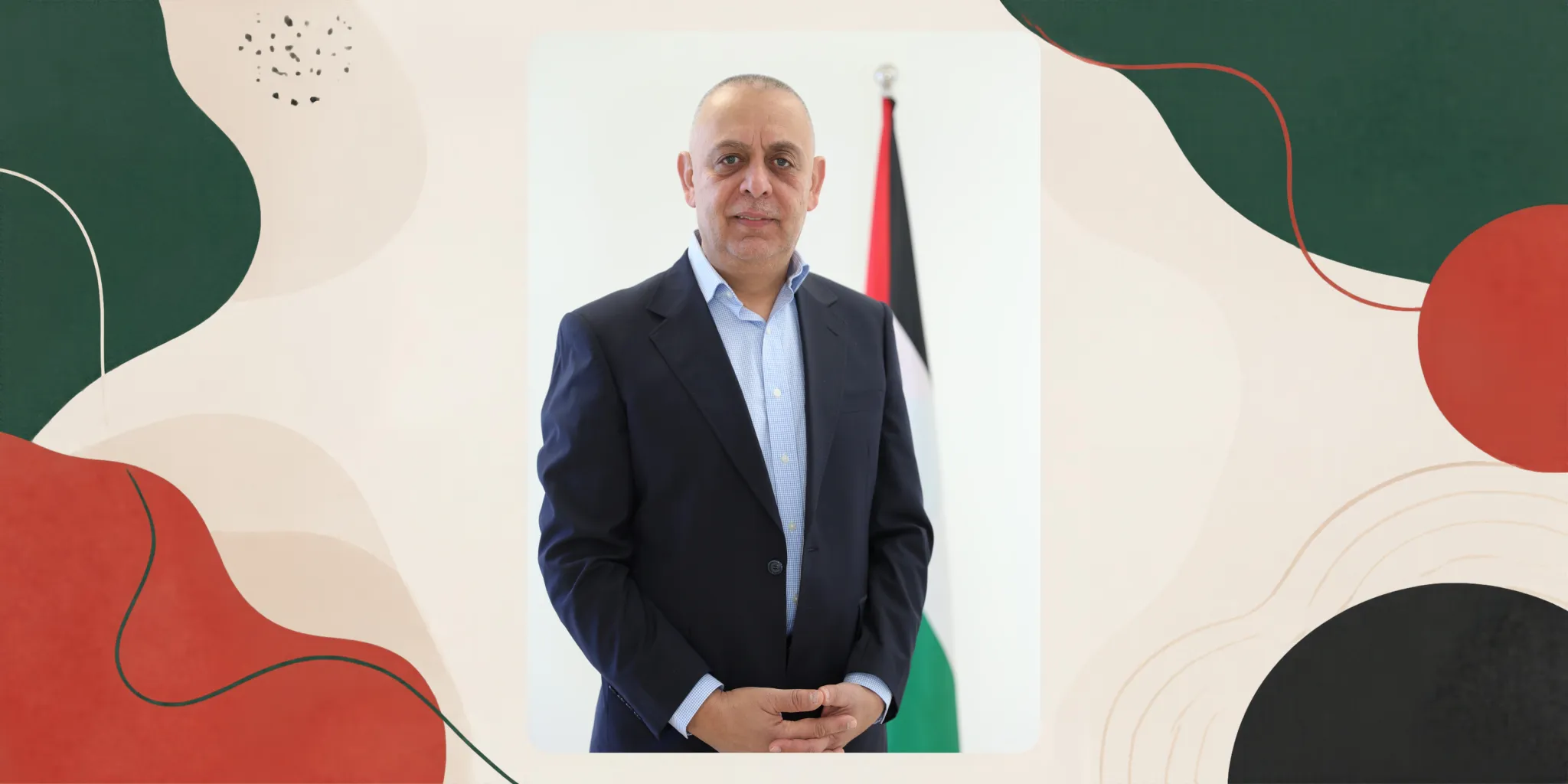
Q&A: Ashraf Shuaibi, CEO of the Central Elections Commission, on electoral resilience in Palestine
How do you run an election when much of the population is displaced, infrastructure lies damaged and movement is restricted on the ground? Palestinians are seeking an answer to this question. After nearly two decades without national elections, preparations for a return to the ballot box had been underway in 2026, raising hopes for the most significant electoral exercise in a generation.
A first test came in April 2026, when municipal elections were held across the West Bank and, notably, in Deir al-Balah, the first vote held in any part of Gaza in more than two decades. It took place under extraordinarily difficult conditions, including Israeli movement restrictions, but the votes were cast and counted.
Attention subsequently turned to the national level, where preparations continued for elections to the Palestinian Legislative Council (PLC, the parliament of the Palestinian Authority) and related out-of-country voting arrangements for the Palestinian National Council (PNC, the parliament of the Palestine Liberation Organization (PLO). These elections were initially scheduled for November 2026. However, on 10 October, President Abbas announced that presidential and legislative elections would instead be held in September 2027.
Against this backdrop, I spoke with Ashraf Shuaibi, CEO of the Central Elections Commission (CEC) of Palestine, about administering elections amid conflict, what the local elections in April revealed, and the challenges of preparing for a future national vote.
Looking back at the municipal elections of April 2026, what were the main challenges and achievements?
The local elections took place under highly abnormal circumstances. The pre-election period ran from 28 February to 7 April, so we were implementing the elections while rockets were being launched across the region [amid regional escalation following the US-Israeli attack on Iran] and movement restrictions were in place throughout the West Bank. With nearly a thousand checkpoints [across the West Bank] and an unstable security environment, these were conditions under which very few countries could realistically conduct elections.
In Gaza, the challenges were even greater. We were organizing an election in a city heavily affected by the war. Many people had lost their homes and were living in tents or temporary shelters. Basic infrastructure was damaged, contact centres were not functioning and, in many cases, addresses were no longer usable.
Another unique challenge was funding. Although the Palestinian Government called the elections, it could not fully finance them because of the economic situation. Most electoral management bodies begin with an allocated budget; in our case, we were fundraising and running the election at the same time.
It was also the first time local elections were held across more than 400 localities on a single day; previous cycles had been conducted in phases. Despite the scale and conditions, the elections took place on time. They were observed by 68 civil society organizations from the West Bank and Gaza, with around 2,500 local observers, as well as diplomats already in Palestine. The feedback we received was very positive, and completing the process successfully was an important achievement.
How did the Commission overcome the logistical challenges of organizing voting in Gaza?
Israeli restrictions meant that only ballot papers, ballot boxes and some basic supplies could be sent into Gaza, so much of what was required had to be sourced or produced locally. Workers repurposed wooden pallets used for aid deliveries and plastic wrapping to make transparent ballot boxes, while a small printing facility still operating in Gaza produced ballot papers with security features.
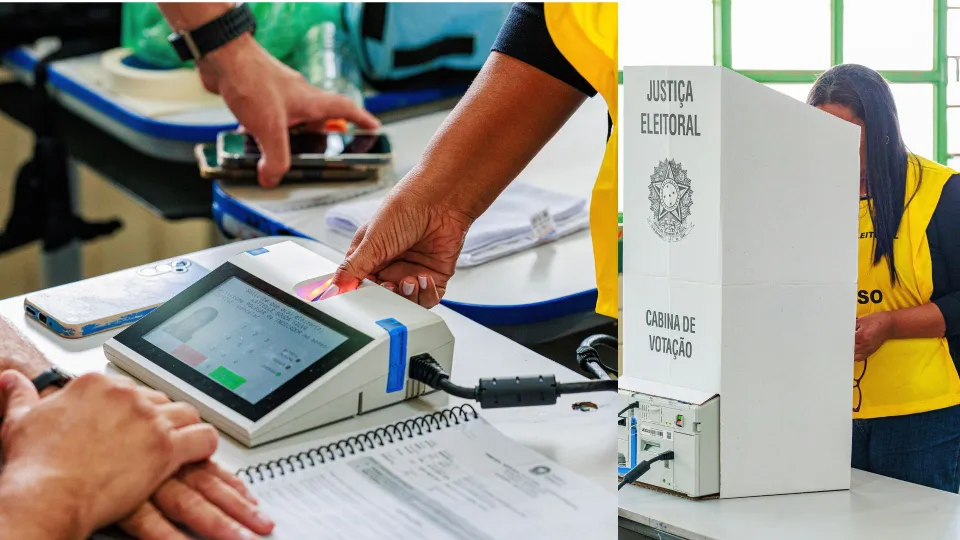
Even election ink became a challenge. Commercial supplies were unavailable, so we obtained the indelible ink used by health workers during polio vaccination campaigns. With little electricity or internet access, voting and counting also had to finish before dark. Polling staff used basic mobile phones and USSD [Unstructured Supplementary Service Data] technology to transmit voters’ identification numbers to our data centre in the West Bank; once a voter was recorded, that person was removed from the active list to prevent double voting. When an escalation in violence kept candidates from reaching our offices on the final nomination day, we quickly allowed applications to be submitted through WhatsApp, with documents verified afterwards. These were emergency solutions, but they allowed the process to continue.
Did the successful conduct of the local elections influence the decision to proceed with national elections?
Many people doubted that an election could be held in Gaza at all. When it happened, it sent a signal to political leaders that elections could be organized despite the circumstances. It strengthened the argument that Palestinians should not have to wait another 20 years for general elections.
National voting will be far harder. Gaza has more than 1.2 million voters, many of whom have lost their homes, and have been displaced into the limited area that remains accessible. We are therefore working on two tracks. Plan A assumes that we can send election materials into Gaza; Plan B is to source or manufacture locally everything needed for a basic electoral process. In the West Bank, we must continue managing checkpoints, settlements and movement restrictions. Our approach is to work day by day and solve problems as they arise.
The elections, originally scheduled for November 2026, have now been postponed to September 2027. How will the additional preparation period affect the Commission’s readiness and planning for elections in Gaza and the West Bank?
The rescheduling adds to public skepticism, which was already a challenge after nearly two decades without elections and the postponement in 2021. Convincing citizens that the process is genuinely moving forward is a significant responsibility, alongside voter education and outreach. As an elections commission, our focus is to find the solutions to the technical difficulties and make these elections possible despite the overwhelming challenges. Technical measures—including identification cards, USSD verification and indelible ink—could enable voting in Gaza despite severe constraints. Funding is also affected by confidence: while certain donors committed early to the 2026 process, others hesitated to commit because they feared another open-ended cancellation. But on the other hand, some partners have already moved forward with their financial commitments despite the rescheduling, indicating a willingness to make the outcome of the 2026 preparations different from those in 2021. We remain pragmatic by solving problems as they emerge and keeping work ongoing towards election day.
What changes have been made regarding youth and women's participation?
The minimum candidate age has been lowered, although it is too early to assess the effect. Awareness workshops on candidate nominations have nevertheless attracted visible interest from young people. Women must now comprise 33 per cent of candidate lists. This is a nomination quota rather than a reserved-seat quota, so the proportion ultimately elected may be lower, but the increase is still significant. The voter list also shows that 53 per cent of eligible voters are under 38. After 20 years without general elections, most have never participated in one before; young people will therefore be central both as candidates and as first-time voters.
What support does the Commission need from the international community in the lead up to elections?
We have two main messages: we need political backing for holding the election, given the security and political conditions, and we need financial support. The Ministry of Finance is under severe pressure and has been able to pay only around half of civil servants’ salaries. The Commission must therefore raise funds for an electoral operation estimated to cost approximately USD 18 million. The European Union, the United Nations (particularly UNDP), and donor countries including Canada, Australia, Sweden, France and Spain have contributed. If candidate nominations are completed successfully, we hope others will follow.
Observation will also be essential, both for transparency and for public confidence. The Carter Center, the EU and regional organizations have expressed significant interest. International observers may, however, face visa and travel restrictions when entering through Jordan or Ben Gurion Airport, and we hope their access will be facilitated. We will also encourage international organizations and diplomatic missions already present in Palestine to observe and monitor the process.
This interview has been edited for length and clarity.
Disclaimer: Opinions expressed in this interview are those of the authors and do not necessarily represent the institutional position of International IDEA, its Board of Advisers or its Council of Member States.


About the authors