How Serbia’s Student List won and what comes next: Q&A with Dobrica Veselinović
Disclaimer: This interview has been edited for length and clarity. Opinions expressed are those of the interviewee and do not necessarily represent the institutional position of International IDEA, its Board of Advisers or its Council of Member States.
For almost two years, Serbia’s students protested across the country, demanding political accountability for corruption and other concerns. The protests eventually produced the Student List, an electoral platform of candidates put forward by the student movement. On 25 October 2026, that mobilization delivered what had long seemed out of reach: the electoral defeat of Aleksandar Vučić’s Serbian Progressive Party (SNS) and its allies after more than a decade of dominance.
When International IDEA brought together politicians, public servants, democracy practitioners and activists from across the Western Balkans in late 2025 in Albania to explore the region’s possible democratic scenarios through 2040, one of the more optimistic scenarios envisioned grass-roots movements driving political transformation. It seemed like a distant prospect. But less than a year later, the optimistic scenario no longer seemed so distant. Serbia did not wait until 2040.
The electoral breakthrough offers lessons far beyond Serbia, but it also marks the beginning of a more difficult transition: from a broad movement united around political change to a government that must rebuild captured institutions, make choices across deep ideological divides and sustain the public trust on which its victory was built.
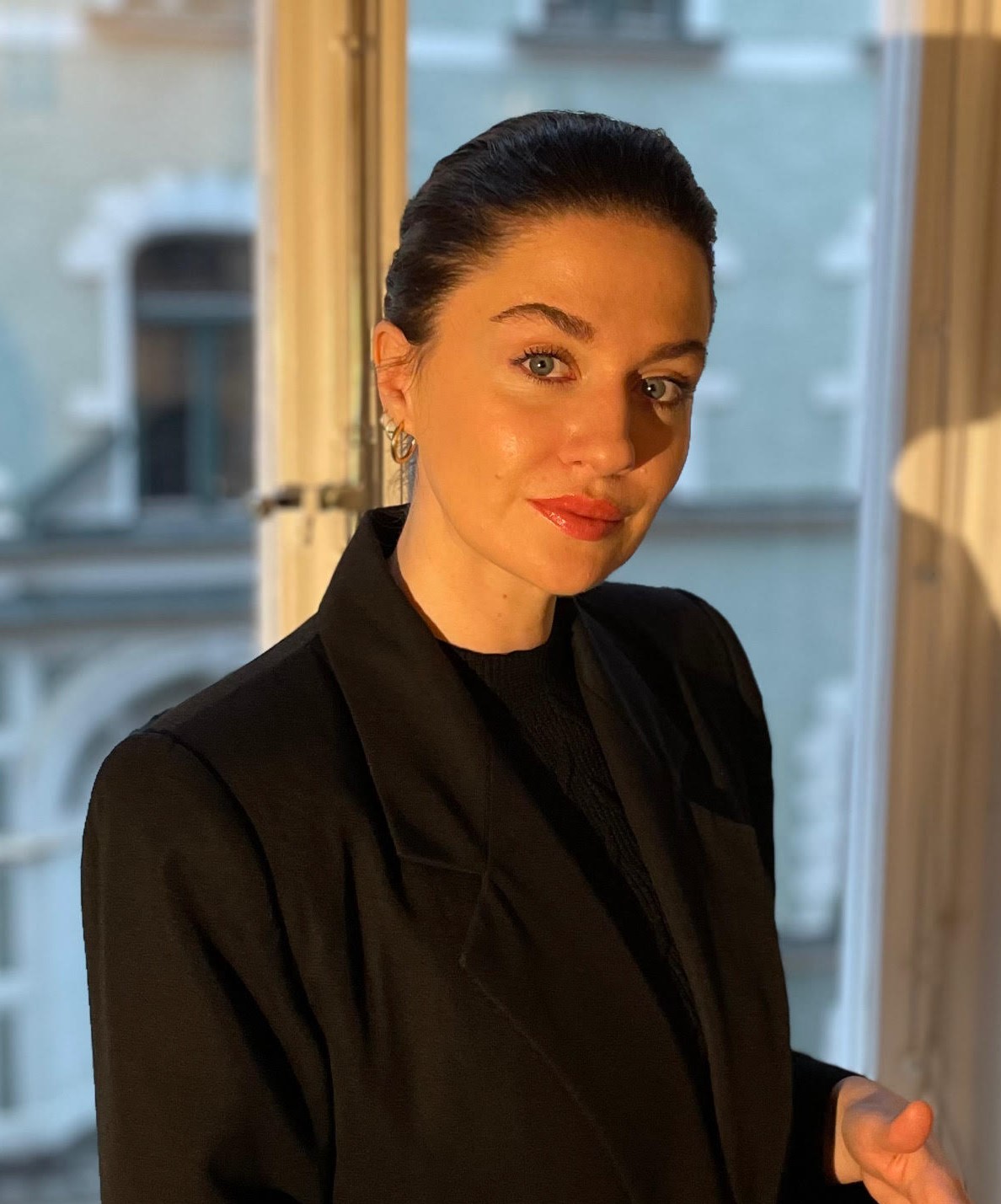
I spoke with Dobrica Veselinović, an outgoing Serbian MP with the Green-Left Front who entered politics through civic activism. He co-founded a grassroots movement, campaigning on urban development and public space, before becoming a candidate for mayor of Belgrade in 2022.
What changed in Serbia that made the Student List’s victory possible?
I think this was building for years, but the real mobilization began after the collapse of the railway station canopy in Novi Sad. People started holding minutes of silence for the victims, and after students taking part in these commemorations were attacked by supporters of President Vučić, students began blocking the universities. From there, the movement grew, first through the student blockades and commemorations, and later through protests, marches and cycling tours across Serbia.
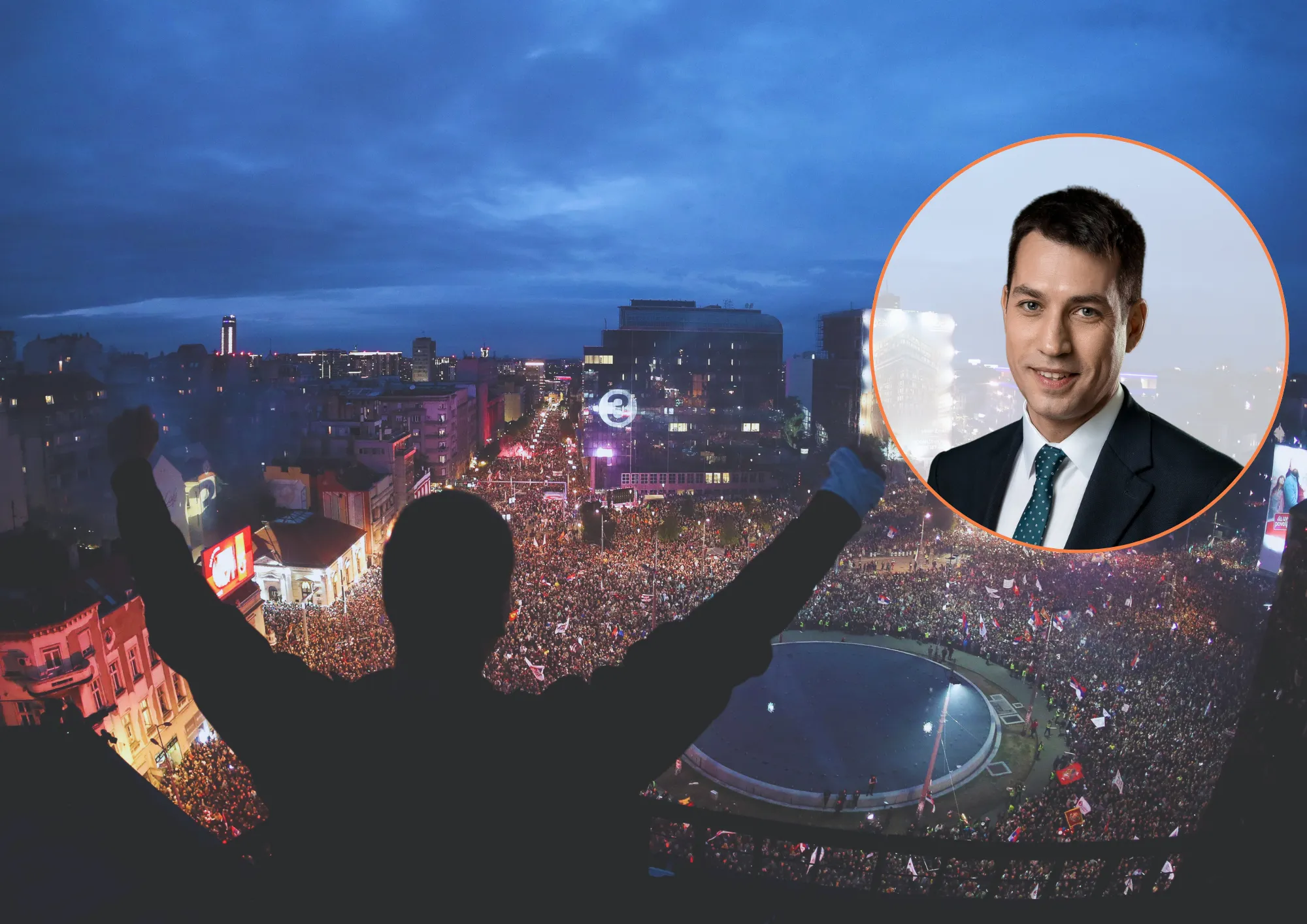
The protests then had several crucial moments. One was the huge gathering in Slavija Square on 22 December 2024, when thousands stood in silence to honour the victims of the Novi Sad railway station canopy collapse. That collective remembrance united people around something bigger than the movement itself. Another came on 15 March 2025, when students called on people from across Serbia to come to Belgrade. It became one of the largest protests in the country’s modern history.
It was an enormous gathering. With Vučić’s supporters, police and hooligans also mobilized, it felt as though the country was on the brink of a much more serious confrontation. Everybody expected major violence, but that did not happen.
One of the features of Vučić’s rule was that he controlled the political rhythm through snap elections, usually every two or two-and-a-half years. That had established elections in the collective mind as a kind of milestone for political change. After 15 March, I think there was a collective realization: we are not going to fight each other in the streets. So, let’s settle this through elections.
From then on, the focus increasingly shifted towards elections as the credible route to change, while the movement worked to maintain the public mobilization and momentum behind it.
How did that mobilization translate into such a decisive election result?
The key was turnout. The SNS had a strong and reliable voter base. The real challenge was the roughly 10 per cent or more of people who leaned towards the opposition but had stopped believing that elections could change anything. They were saying: ‘everybody is the same, I am not going to vote.’ NGOs, political parties and the Student List therefore concentrated heavily on those non-voters.
There was also a deliberate psychological element to the election-day mobilization. People were encouraged to vote as early as possible. From seven in the morning, social media was full of images of queues outside polling stations. The idea was psychological: when people who were not planning to vote saw queues forming from early in the morning, they could see that large numbers of people were turning out and felt that they should turn out too.
We knew from polling that if turnout exceeded roughly 65 per cent, the Student List was highly likely to win. It eventually reached nearly 70 per cent.
As the day progressed, it became increasingly clear where things were heading. When Vučić acknowledged the result, there was an enormous sense of relief. People had prepared themselves for possible violence and for having to defend the vote. Instead, the victory was clear.
Opposition parties, including your Green-Left Front, chose not to compete against the Student List. How did this happen?
The general sentiment was supportive of the students from the beginning. They had achieved levels of mobilization that had previously seemed unimaginable, and their basic demands were clear: more democracy, better electoral conditions and accountability for corruption and wrongdoing.
There were several possible scenarios. One was a joint endeavour involving both the Student List and opposition political parties. The students did not want that. They had built their own momentum, had their own ideas and did not want to negotiate that arrangement. Another option was for the opposition parties to run together on a separate list alongside the Student List. That did not succeed because of political differences, different approaches and personal egos. The third option was simply to support the Student List.
So, we stepped aside electorally, but put our political infrastructure behind them, from grassroots organizing and door-to-door campaigning to call centres and election monitoring.
There was no master plan and no five people masterminding everything. Different actors watched what others were doing, tried similar approaches and gradually moved towards a collective goal. It was trial and error.
As the Student List moves from protest to government, what will be its biggest challenges, and can such a politically diverse movement maintain its unity?
That will be the hard part. And we should be clear: this movement may not be as progressive as some people outside Serbia might have expected. It represents Serbian society. Serbia remains on the periphery of global capitalism, outside the European Union, and is a society that for more than 30 years has not really dealt with some of its biggest historical and political questions.
We have not really confronted Serbia’s role in the wars in the former Yugoslavia, the role of the police, Milošević and the military in Kosovo, or our relationships with Kosovo, Bosnia and Herzegovina and our other neighbours. Serbian society has a habit of postponing difficult decisions and putting problems under the carpet. Sometimes, after decades of not deciding, the position you are left with is worse than if you had made a decision in the first place. Maybe that can change now.
Under Vučić, many of these issues were decided from the top, rather than debated and resolved across society, reinforcing polarization around questions ranging from Russia and the European Union to Kosovo and energy.
Perhaps this change, and the breadth and diversity of the movement behind it, can open space for a different approach. People with very different political views are already working together, and that diversity could create room for debate and new compromises.
Also, we should not forget that most people experience government at the local level. They will demand better streets, schools, hospitals and public services. Changing a system that has operated in a particular way for 15 years or more, including corruption in everyday life, will take time.
There is also the question of how the movement itself will function. You have the student plenums and blockades, the wider movement that powered the campaign, the people who became MPs and now the government. How these different layers work together remains unclear. I expect different blocs may emerge within the Student List, and the government’s stability will depend partly on how they work together.
With further local and presidential elections ahead, some political instability is likely to continue through further electoral cycles.
After more than a decade of democratic backsliding, where should institutional rebuilding begin?
It will be very difficult to make radical changes quickly. Serbia has faced brain drain and population decline for decades, while public institutions are overstretched and relatively poorly paid. So even if there is political will for reform, there is also a basic question of capacity: who will do it?
There is also a fundamental question about institutions that have functioned badly for years: do you reform them, or in some cases build new ones?
I think three priorities come first: a fairer media landscape, electoral conditions people can trust, and reform of the legal and judicial system so people can believe that justice applies equally to everyone.
But political change also means managing expectations. People want results immediately; institutions do not change immediately. We cannot fix the economy, transport, healthcare, education and everything else at once. We need to be clear about what can be delivered, what cannot, and how long change will take.
Where does this leave Vučić, SNS and Serbia’s established opposition parties?
This is a completely new landscape for everybody. SNS remains the country’s biggest political organization, and Vučić is still the dominant political figure. But that also is its weakness. It was built around power, corruption, personal benefits and around Vučić himself, not around a clear ideology or political goal. A major question is what happens to him personally: whether he faces legal proceedings or arrest, or remains as leader of the opposition. In the meantime, I expect him to remain in constant campaign mode, involved in every issue and trying to capitalize on the new government’s difficulties.
The former opposition needs to change. For years, its common ground was essentially being against Vučić: more democracy, human rights and media freedom. But issues such as climate that received less attention have not gone away. The opportunity now is to move from a politics defined by what you are against to a competition over what you can offer.


About the author