Beyond the plan: How parliaments can turn strategy into stronger democratic institutions
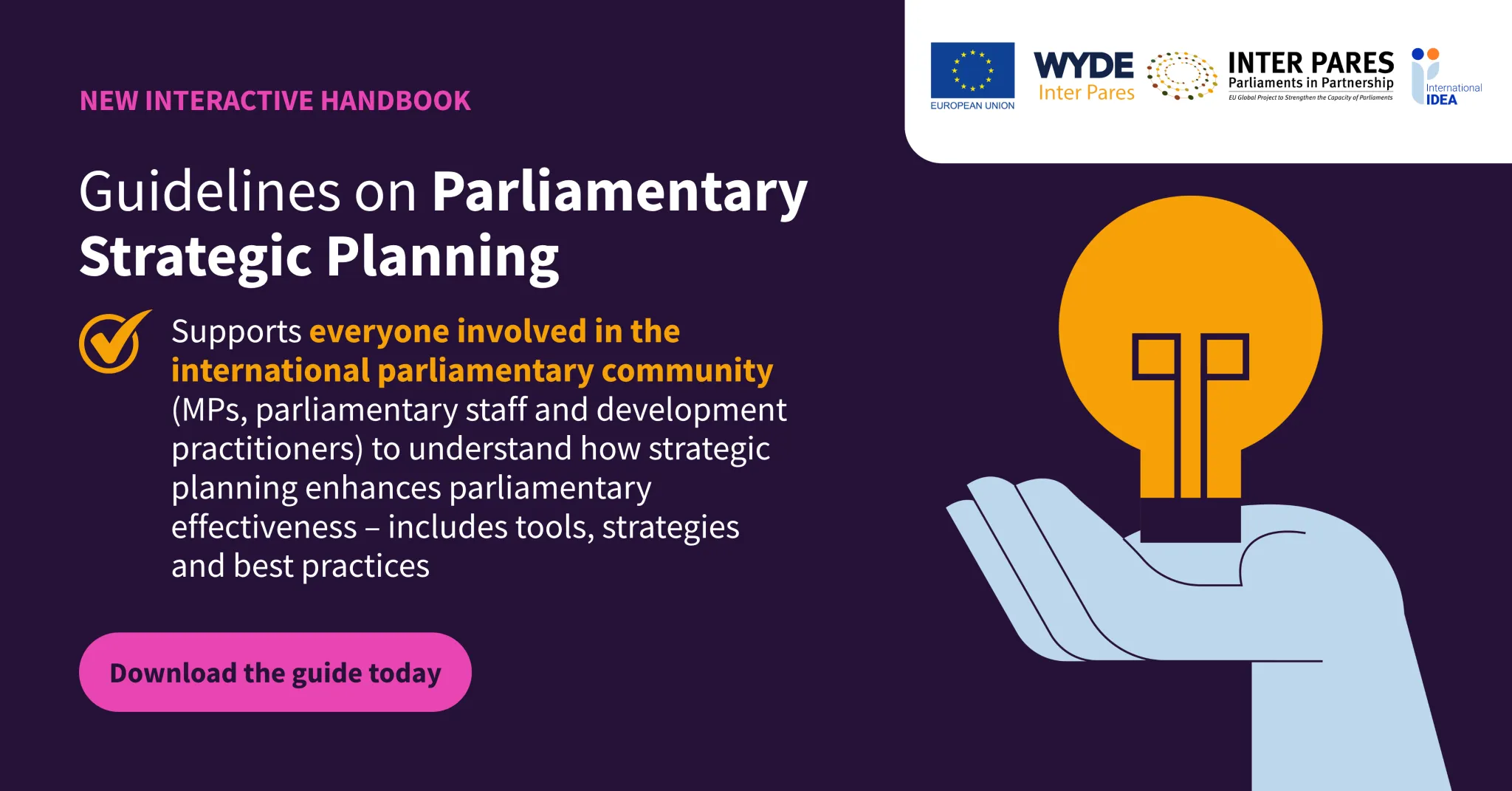
Strategic planning is not typically what comes to mind when people think about parliamentary democracy.
Debates, legislation, committee hearings, oversight – these are the visible markers of parliamentary life. But behind every effective parliament is something less visible and equally essential: the institutional systems, leadership, and long-term planning that allow it to function, adapt, and deliver for citizens.
At a time when parliaments are being asked to modernize, respond to rapid technological change, manage tighter resources, and rebuild public trust, strategic planning is no longer a back-office exercise. It is a core democratic capability.
Strategic plans help parliaments chart a course through complex and shifting environments – to move beyond the reactive and the routine, and toward the purposeful and the sustainable. - Secretary-General Dr Kevin Casas-Zamora, International IDEA
That practical ambition shared this new resource.
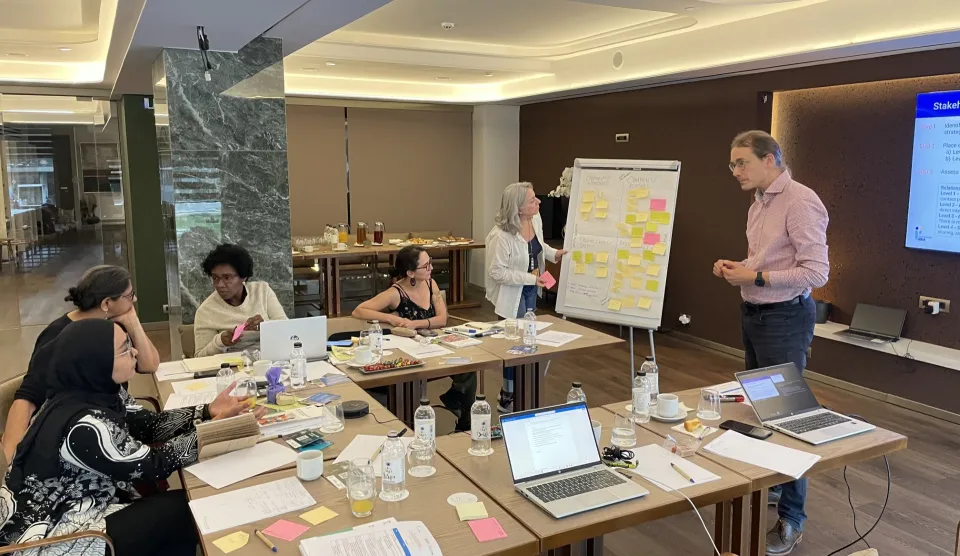
The Guidelines on Parliamentary Strategic Planning emerged not from theory, but from practice. In 2025, for the first time, senior parliamentary staff from 11 parliaments across Africa, Europe, and North America – including Botswana, Canada, Denmark, Ghana, Ireland, Kenya, Namibia, Sierra Leone, South Africa, and Sweden – convened in Lusaka, Zambia, for a High-level Workshop on Parliamentary Strategic Planning hosted by the National Assembly of Zambia in partnership with Inter Pares, which is funded by the European Union.
The workshop was a boost to my professional pride as a civil servant working for democracy. We must remember that we contribute to promoting democracy, which is very valuable even if we think we fail sometimes, said Charlotte Rydell, Secretary General’s Head of Staff, Swedish Parliament.
What unfolded was something rare: an honest, peer-driven conversation about the realities behind institutional reform. Clerks, Secretaries General, and senior parliamentary officials moved beyond polished strategic documents to discuss what actually makes institutional planning succeed – or fail. Conversations tackled everything from securing political buy-in and managing cultural resistance to aligning budgets with ambition and building systems for accountability.
The resulting handbook reflects that collaborative spirit. As the guidelines note, “These guidelines are grounded in practice, informed by diverse parliamentary contexts, and designed for use by parliaments across the world.”
That practical, peer-informed perspective is what makes this handbook especially valuable: it is designed not just to inspire strategic thinking, but to help parliamentary leaders and staff translate strategy into action. Read on to learn 7 ways parliamentary leaders and staff can use it.
1. Start with institutional honesty
Every strategic plan begins with a temptation: to focus immediately on where a parliament wants to go.
The handbook argues that the better starting point is understanding where the institution actually stands.
Before setting ambitious goals, parliaments need an honest assessment of what worked in previous planning cycles, where gaps remain, what risks could derail implementation, and whether institutional culture is ready for change.
Botswana offers a strong example. Before developing its most recent strategic plan, parliament conducted a comprehensive SWOT (Strengths, Weaknesses, Opportunities &Threats) analysis across departments, identifying strengths alongside persistent weaknesses in research services and public outreach. Those findings directly shaped its priorities, ensuring the strategy reflected operational realities rather than aspiration.
The National Assembly of Zambia has taken a similarly reflective approach, embedding self-assessment into its planning culture through internal reviews and formal mid-term evaluations that allow priorities and indicators to evolve.
The lesson is simple: strong strategy begins with evidence, not assumptions.
2. Build ownership across the institution
A strategic plan can be technically excellent and still fail if people do not believe in it.
That was one of the clearest messages to emerge from Lusaka.
Parliamentary strategic planning is not simply an administrative exercise. It depends on shared ownership across political and administrative leadership, as well as staff responsible for implementation.
The guidelines make this point explicitly: “Without a Secretary General or Clerk who champions the strategic planning process, even well-developed plans may stall.”
But administrative leadership alone is not enough. Political ownership matters just as much. Without support from Speakers, parliamentary governing bodies, or Members themselves, plans often struggle to gain legitimacy or secure resources.
Canada’s House of Commons offers a compelling example through its strategic vision: “One House, One Team.” Simple but effective, it reinforces the idea that institutional strategy belongs to the parliament as a whole – not a single department.
The Parliament of the Republic of Namibia provides another example of strategic clarity, framing its vision as “A democratic and citizen-centred legislative assembly.” That language grounds planning in democratic purpose rather than internal process.
The most effective strategies create institutional alignment – not just organizational plans.
3. Turn vision into practical action
A compelling vision matters. But vision alone does not improve institutional performance.
One of the handbook’s greatest strengths is its insistence on practicality.
Across its chapters, it helps parliamentary leaders and staff make difficult strategic choices: selecting realistic priorities, assigning ownership, balancing ambition with operational capacity, and ensuring objectives can be measured.
Sierra Leone’s parliament offers a strong example of this discipline. Its strategic framework includes concrete priorities such as strengthening the independence of the parliamentary service, modernizing ICT infrastructure, revising standing orders, and mainstreaming gender across administration.
These are not vague reform aspirations – they are tangible institutional commitments.
The Danish Parliament offers another useful lens, particularly in linking strategic planning to wider national and global priorities. Its work to integrate the Sustainable Development Goals into parliamentary planning reflects how institutions can connect internal modernization with broader democratic and development responsibilities.
Good strategy is ambitious – but disciplined.
4. Build implementation into the design
One of the most common reasons strategic plans fail is that implementation is treated as something that happens later.
This handbook takes a different approach.
Implementation planning, governance frameworks, stakeholder engagement, and costing are treated not as technical appendices, but as central strategic questions.
That distinction matters.
Without clear governance, accountability becomes blurred. Without realistic costing, priorities remain aspirational. Without assigned ownership, implementation slows.
Zambia’s strategic planning framework illustrates this integrated approach well. Its strategic map explicitly links vision, mission, goals, objectives, and implementation pathways, helping staff and leadership see how institutional ambition translates into operational delivery.
This kind of structured planning helps translate strategy from leadership rhetoric into institutional practice.
5. Make adaptation part of the culture
Parliaments do not operate in stable environments.
Political transitions, shifting public expectations, technological disruption, and external crises all affect institutional priorities.
The handbook recognizes this reality by emphasizing Monitoring, Evaluation, and Learning (MEL) not as a reporting exercise, but as a strategic management function.
Ghana’s parliament offers a particularly thoughtful model. Its strategic framework incorporates assumptions, risks, and mitigation measures directly into the planning process, helping ensure strategy remains grounded in practical realities and easier to monitor over time.
Workshop participants in Lusaka also shared practical tools such as traffic-light dashboards, annual retreats, and mid-term reviews – mechanisms that allow institutions to assess progress honestly and adapt when necessary.
Adaptation should not be seen as a weakness. It is a sign of institutional maturity.
6. Communicate strategy so it becomes culture
Even the strongest strategy can lose momentum if it remains confined to senior leadership conversations.
The handbook’s final chapters rightly emphasize communication as part of implementation.
Sweden’s parliament offers one of the most compelling examples of this approach. After defining institutional values, it developed a formal internal programme to embed them into day-to-day culture through staff workshops, leadership development, ethical scenario discussions, and performance management systems.
That matters because strategy is not sustained through documents alone. It is sustained through repeated communication, leadership reinforcement, and organizational habits.
When staff understand the institution’s direction – and see their role within it – strategy becomes part of parliamentary culture rather than an administrative exercise.
7. A handbook built by practitioners
What makes these guidelines especially valuable is their origin.
They were shaped by parliamentary practitioners who understand the realities of institutional life: competing priorities, political sensitivities, budget constraints, leadership transitions, and the constant pressure to balance long-term reform with immediate demands.
This is not abstract strategy theory.
It is practical institutional knowledge, built through peer exchange and grounded in real parliamentary experience.
For me it was the realization that I was not alone - my problems are not unique, said Thokozani Kamanga, from the National Assembly of Zambia, during the launch of the Guidelines at the Steering Committee Meeting, citing the workshop in Lusaka.
For parliamentary leaders and staff seeking to strengthen institutional resilience, effectiveness, and democratic performance, this handbook offers something rare: not just a framework – but a practical roadmap for action.
Additional Resources:
-
BLOG: Cooperation in Action: Four Lessons from the First Inter-Parliamentary Strategic Planning Workshop in Zambia
-
Guidelines on Parliamentary Strategic Planning on the International IDEA website.


About the author