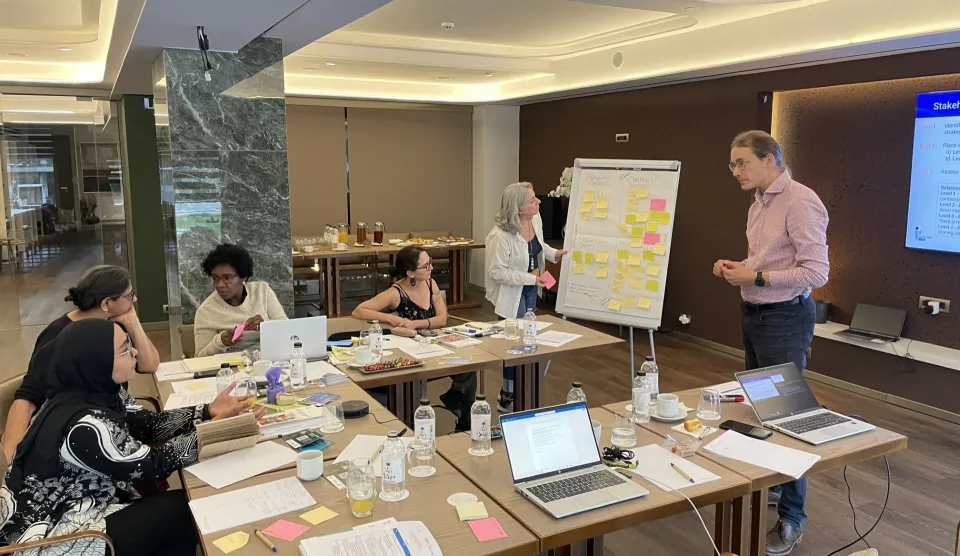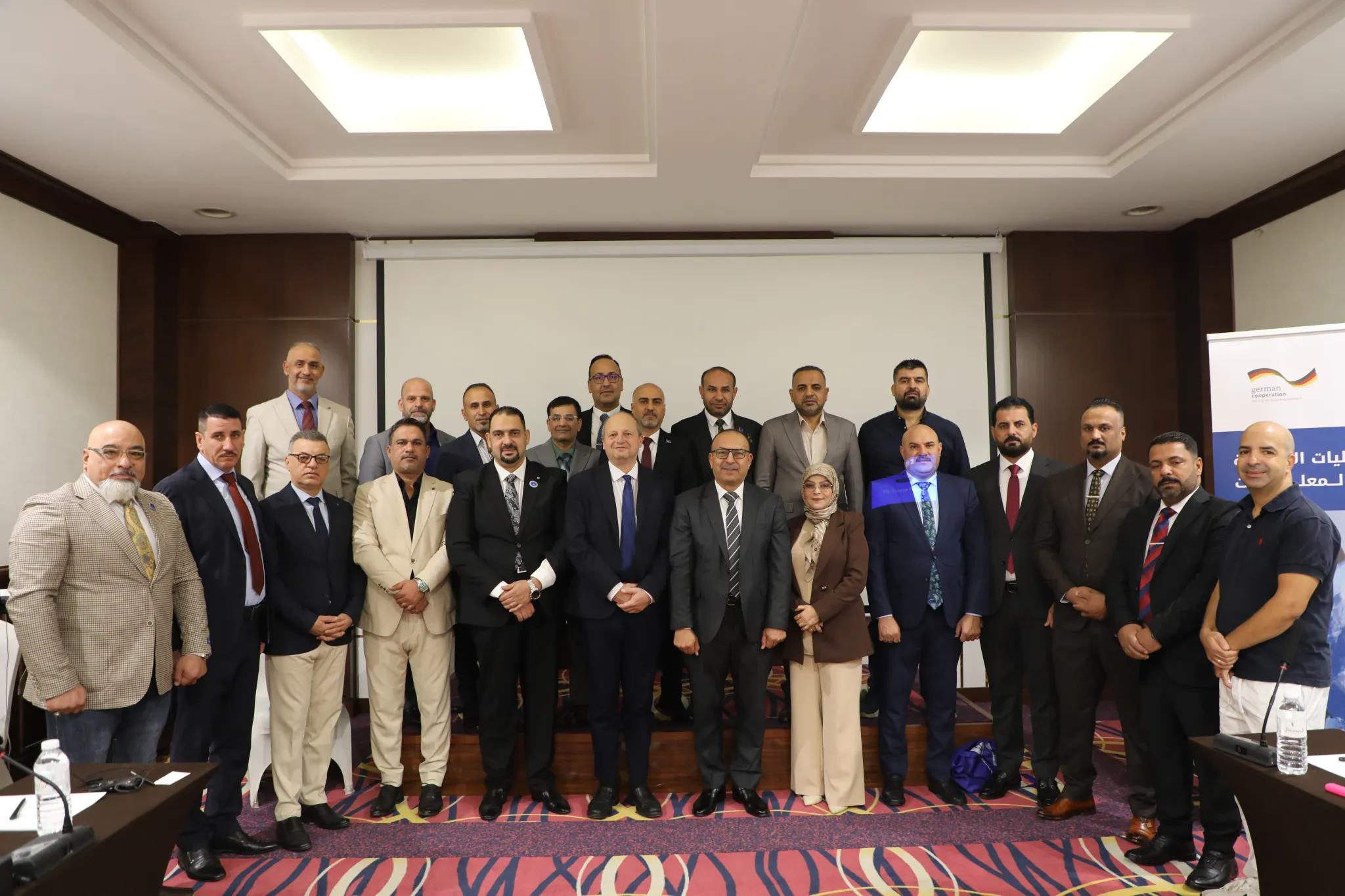
International IDEA organized, in collaboration with the Independent High Electoral Commission (IHEC) in Iraq, a capacity-building session on "Strategic, Coordinated and AI-Supported Electoral Communication" for the benefit of IHEC communication officers. This capacity-building workshop took place from 21 to 23 September 2026 in Erbil, Iraq, and it is part of the project "Protecting Electoral Processes in the Information Environment," funded by the German Federal Foreign Office and implemented by International IDEA.
The workshop sought to respond to two priority needs identified by IHEC and International IDEA. First, it supported more strategic and coordinated communication between IHEC's central and regional communication structures, including shared concepts, common messaging, planning tools and agreed next steps for implementation. Second, it introduced the potential of artificial intelligence (AI) tools to support rapid, accurate and adaptable production of electoral communication content, while emphasizing the need for thorough human oversight, institutional consistency, compliance with the legal framework governing elections and responsible use.
The workshop was delivered by Anass Bendrif, strategic electoral communication consultant, and Znar Rasan, AI tools trainer.
During this workshop, IHEC’s communication officials worked on:
- Developing a communication approach aligned with the stages of the electoral process and IHEC's institutional responsibilities.
- Coordinating messages and responsibilities between central and regional communication teams.
- Using a common message architecture, approval flow, role distribution and escalation channel.
- Applying the principles of neutrality, transparency, accountability, accessibility, inclusion and gender sensitivity to IHEC's communications.
- Responding to sensitive incidents and information risks that may undermine trust in the electoral process.
- Using selected AI tools to produce and adapt draft communication content.
- Agreeing on practical follow-up actions that can be implemented after the workshop.
They also participated in interview simulations on issues related to disinformation and misinformation, particularly during this period marked by rising controversy over the Iraqi government's declaration to adopt the national identity card as an official document for voting instead of the biometric card that IHEC has invested in over the years.
Participants also engaged in exercises to generate voter awareness and information messages using AI tools. These messages, which must align with IHEC's communication policy, must also comply with and take into consideration the obligation to include all groups of Iraqi society, foremost among them women, youth, internally displaced persons, minorities, the languages spoken in Iraq and persons with disabilities.
Moreover, IHEC communication officers from the headquarters and provincial offices worked on the idea of a practical coordination mechanism to align messaging and communication efforts across all levels of the institution.
Finally, this workshop allowed IHEC's central administration to meet with regional communication officers in order to discuss communication coordination issues and align them with the strategies established at the IHEC level. These efforts come at a critical time, as IHEC prepares for the voter-registration update and the 2027 local and provincial elections.


About the authors