South and Southeast Asia dialogue on gender social norms
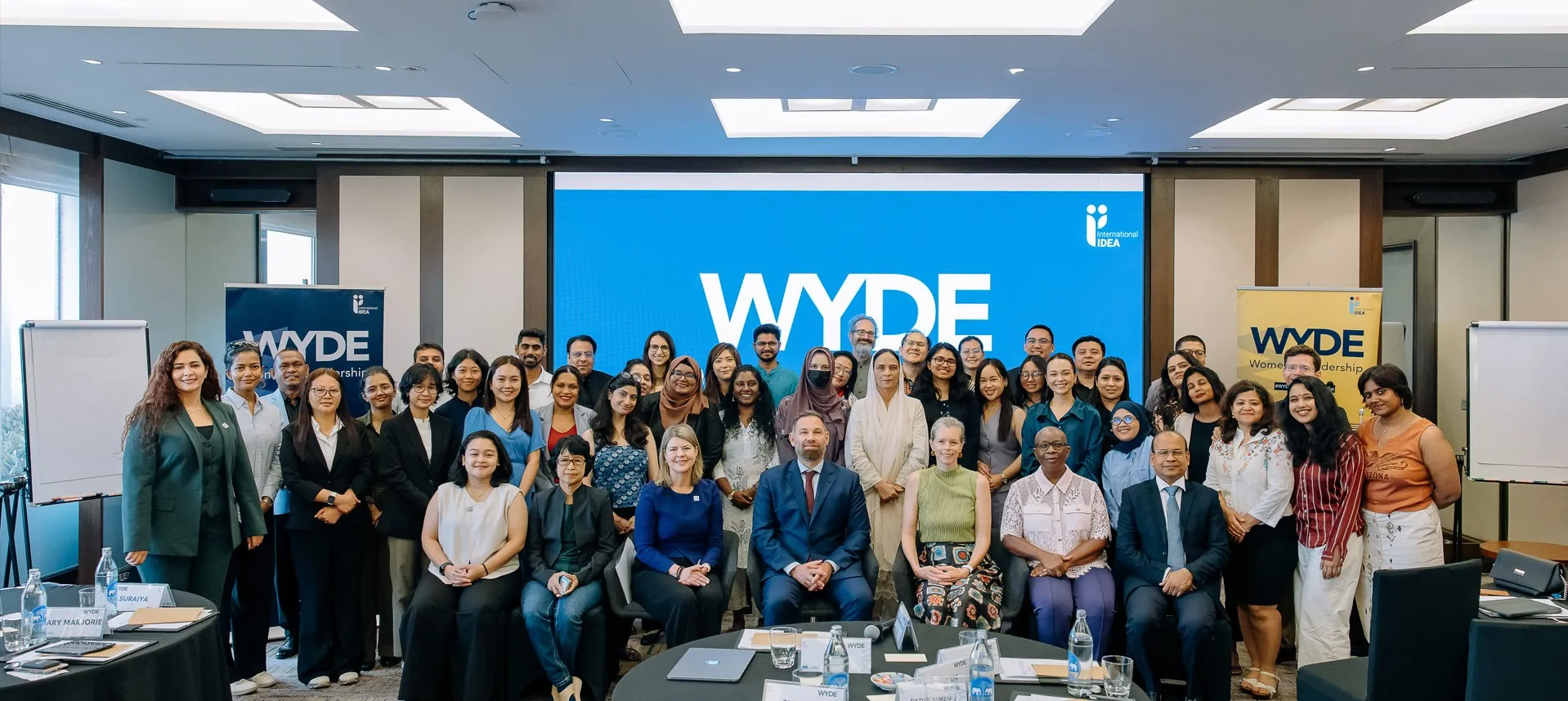
International IDEA convened the South Asia and Southeast Asia Inter Regional Dialogue under the EU-funded Women and Youth Democratic Engagement (WYDE) Women's Leadership Initiative, implemented in partnership with UN Women, the Inter-Parliamentary Union (IPU) and United Cities and Local Governments (UCLG), under the overall coordination and leadership of UN Women. The European Union Delegation to Thailand was represented by the Tom Corrie, First Counselor and Head of Cooperation.
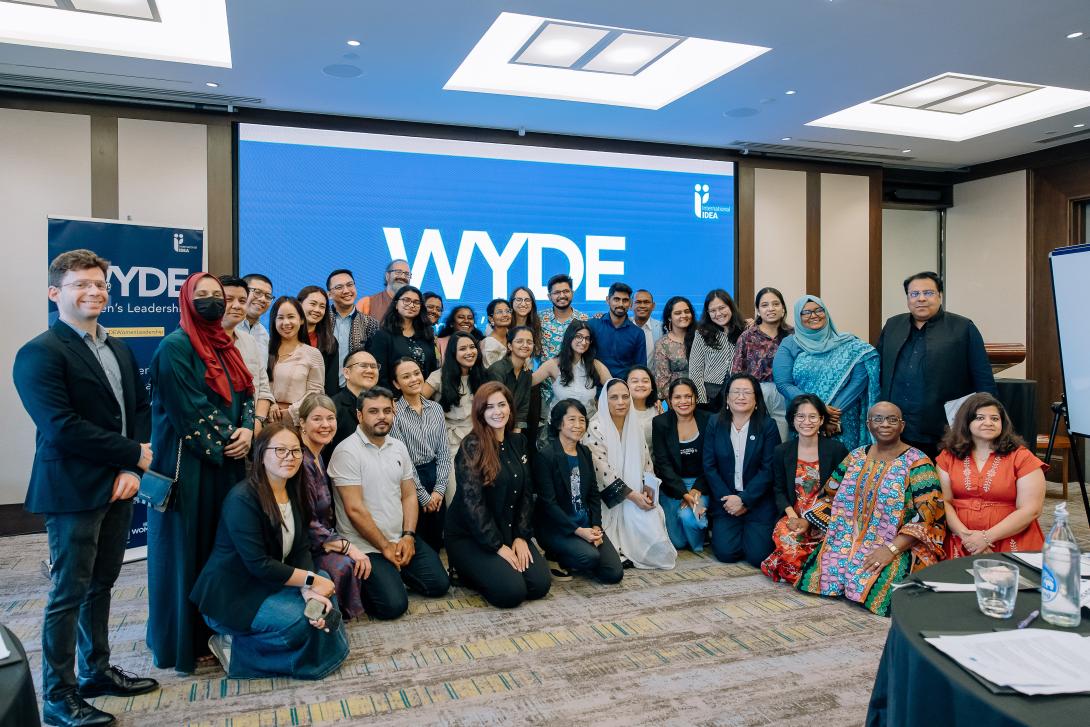
Thirty-nine women and men including youth political leaders, parliamentarians, activists, and civil society representatives, drawn from 12 countries (Bangladesh, Bhutan, India, Indonesia, Malaysia, Myanmar, Nepal, Pakistan, the Philippines, Sri Lanka, Timor Leste, and Thailand) across South Asia and Southeast Asia, participated in the Dialogue on Transforming Gender Social Norms to Advance Women and Youth Participation and Representation in Politics, Leadership and Decision-Making convened on the 23 and 24 July 2026 in Bangkok, Thailand.
The Dialogue was a follow-up to WYDE Women's Leadership's ongoing engagement with women and youth leaders across South Asia and Southeast Asia. The Inter Regional Dialogue was convened in recognition of social norms as a persistent barrier to women's and young people's leadership and decision-making, operating as unwritten rules that shape public institutions and behaviours from the household to the parliament.
Leena Rikkilä Tamang, Director of the Asia and the Pacific Regional Programme at International IDEA noted that social norms continue to shape institutions, behaviours and the underlying assumptions of who is fit to lead. Rikkilä Tamang described the Dialogue as a space that aims to challenge the unwritten rules that exclude women and youth from leadership. Despite some progress, South Asia and Southeast Asia together remain among the slowest-improving regions globally on women's political representation.
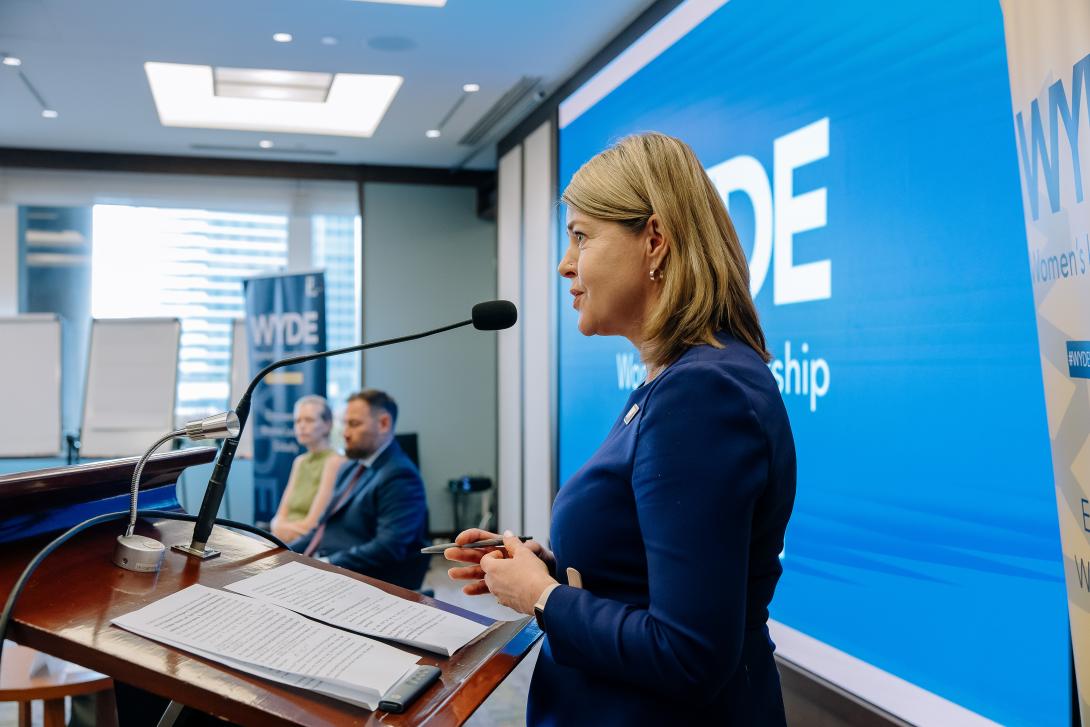
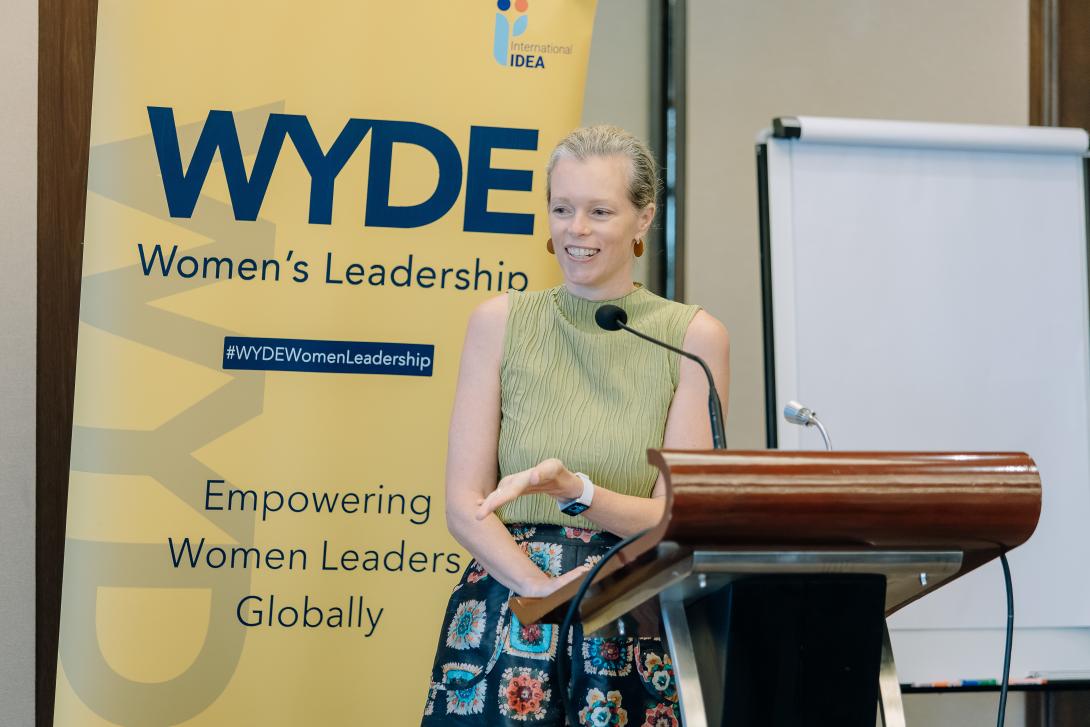
Georgia Westaway, Governance, Peace and Security specialist at the regional office for Asia and the Pacific at the UN Women, indicated that women are already driving change across both regions but remain structurally underrepresented in leadership, with men still cast as the default leader. Westaway described South Asia and Southeast Asia as among the most diverse regions in the world, with much for others to learn from, and underscored that shifting the narratives shaping political participation is central to transforming the social norms that entrench them.
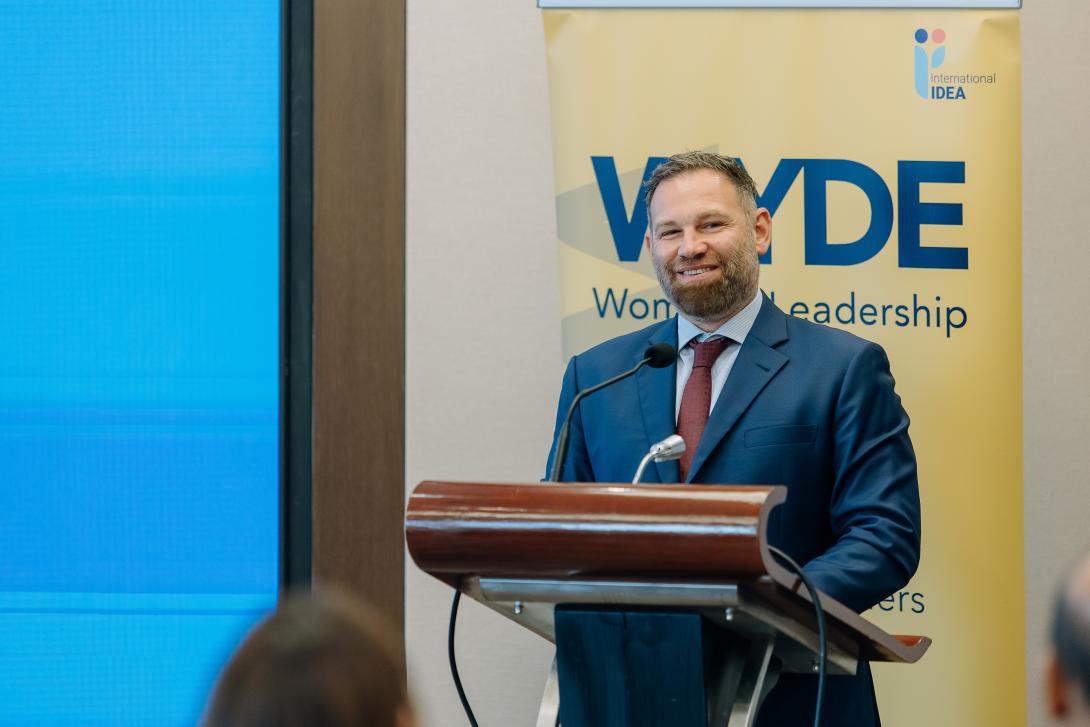
Tom Corrie, First Council and Head of Cooperation at the Delegation of the European Union to Thailand reaffirmed the European Union's commitment in supporting the Dialogue through the WYDE Women's Leadership Initiative, within the EU's Gender Action Plan III and its Action Plan on Human Rights and Democracy. He described gender equality as a core EU value and a condition for democracy, peace and sustainable development, and reaffirmed the EU's commitment to advancing participation and representation through networking, knowledge-sharing and advocacy, with particular attention to young people facing multiple, intersecting barriers.
The Inter Regional Dialogue discussions were structured around the framework on Access-Participation-Representation-Transformation (APRT) used under the WYDE Women's Leadership Initiative to examine how social norms influence practices, behaviors, limit opportunities and ultimately the participation and representation of women and youth in leadership and decision making at all level in line with the WYDE Women’s Leadership: Strategy on Social Norms and Video (UN Women).
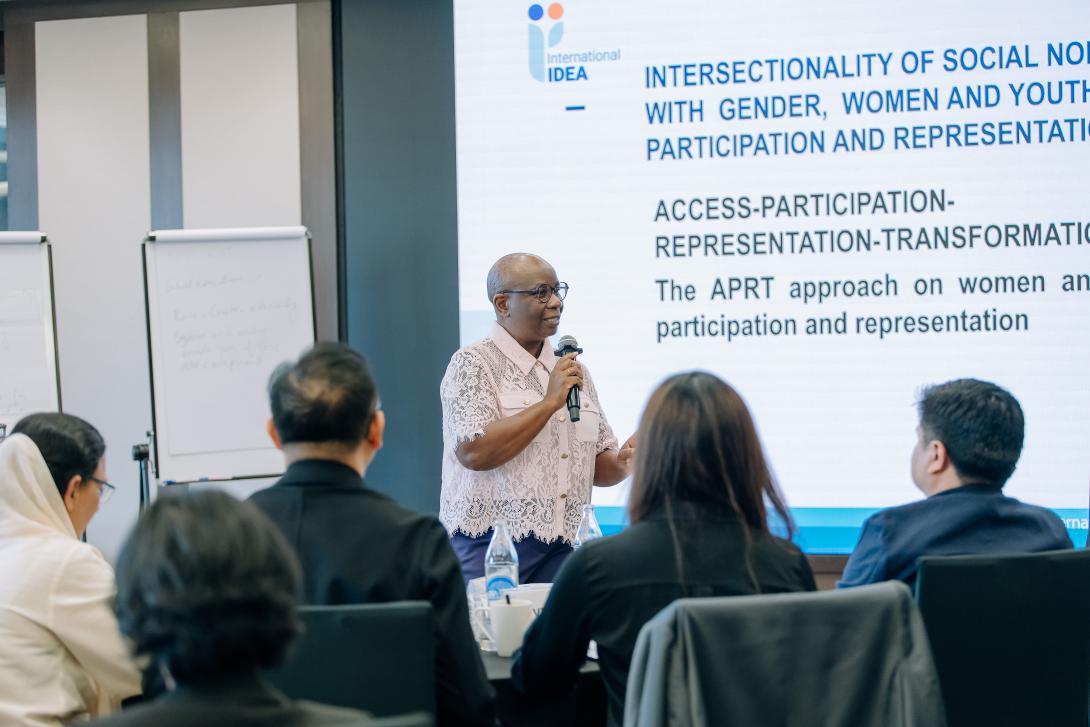
A central theme for the Dialogue was on the critical need to shift narratives: from describing women and youth as “underrepresented” to naming men as “overrepresented.” Framing the issue as women's underrepresentation implicitly places the burden of change on women and young people rather than on the structural and systemic barriers. Participants agreed to carry this reframing forward, alongside a parallel call to apply the same scrutiny on men's performance and competencies in leadership and decision making that is routinely applied to women.
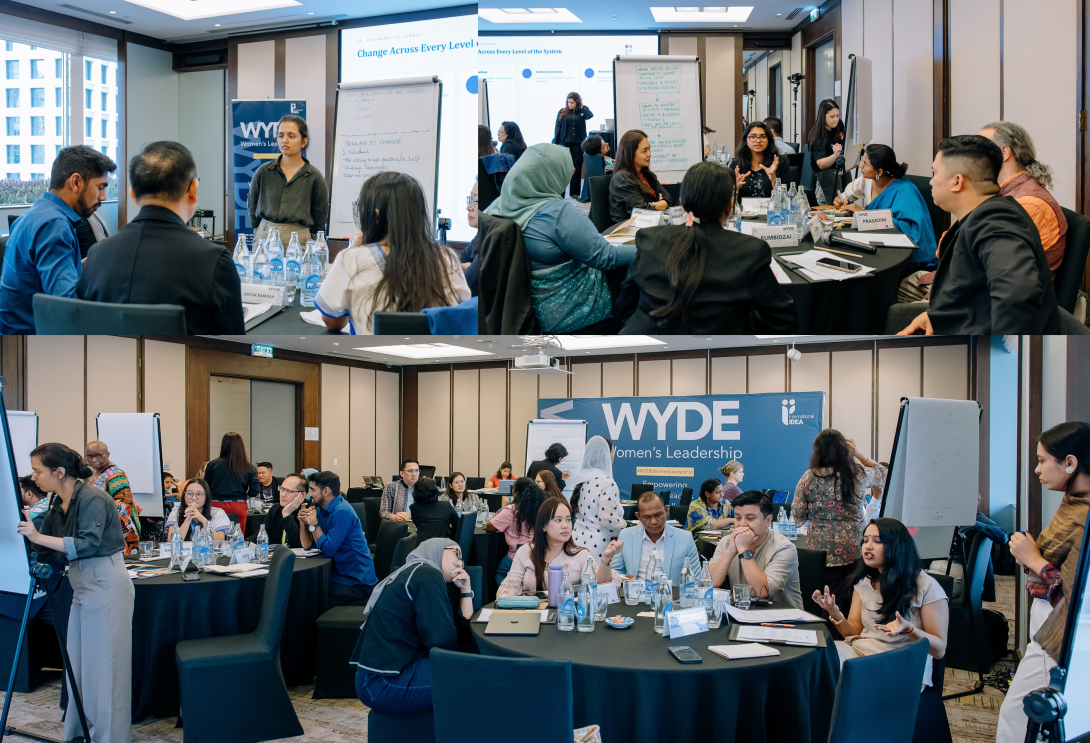
Sessions further examined how age, marital status, education, family expectations and violence intersect to shape women's and young people's political participation, drawing on participants' own experiences of contesting elections against family and community expectation and of facing gender-based violence in politics, including a marked rise in technology-facilitated forms such as AI-generated deepfakes and online harassment. Followed by sessions on engaging men and boys as partners in social norm change stressed that allyship requires institutional and community-level change, not only shifts in individual attitude, and that creating reflective space for men to examine their own conditioning and blind spots is a precondition for sustained transformation.
Country-level reflections from Bangladesh, Bhutan, Indonesia, Nepal, the Philippines and Sri Lanka illustrated how recent political transitions and reform processes across both regions have, to varying degrees, opened and closed space for women's and youth participation from quota provisions that have not translated into substantive representation, to youth-led protest movements whose gains have not always been carried through into the established governments.
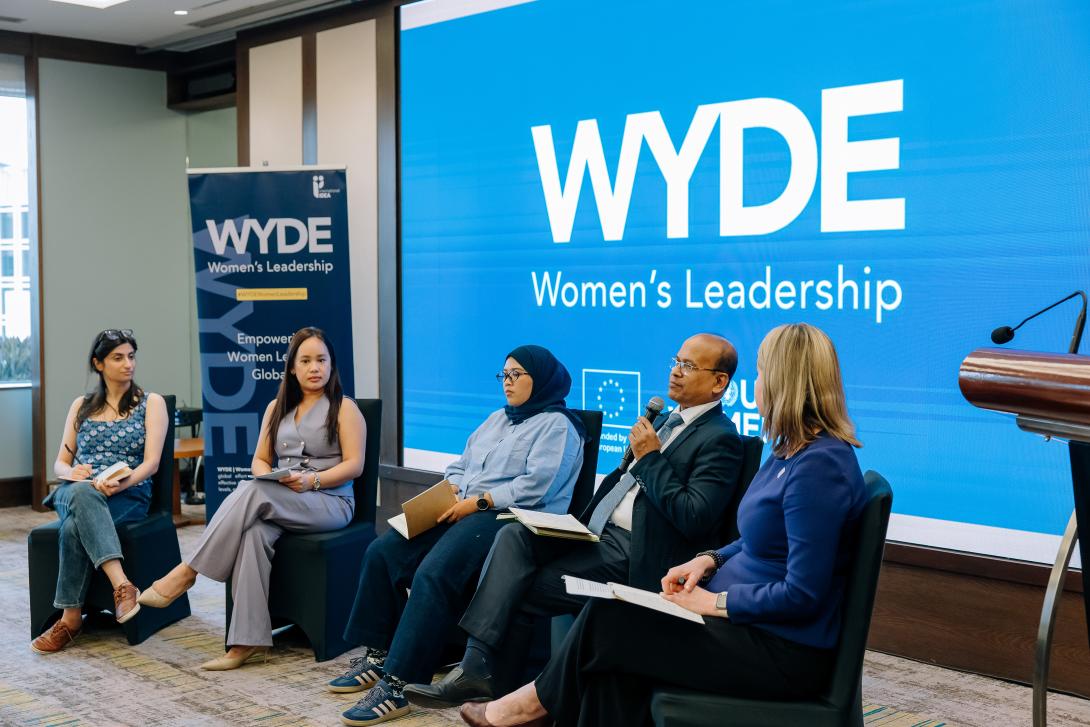
The Inter Dialogue concluded with a structured commitments exercise, identifying individual, community and institutional-level actions to sustain the transformation of gender social norms. Individual commitments centred on self-reflection on bias, gender-sensitive education and consistent advocacy; community-level commitments emphasised building non-judgmental, safe spaces for dialogue and sharing family responsibilities; and institutional-level commitments called for gender-responsive legislation and budgeting, accountability mechanisms to ensure existing laws are implemented rather than left on paper, and protection mechanisms against violence against women in politics within political parties and civil society organisations.
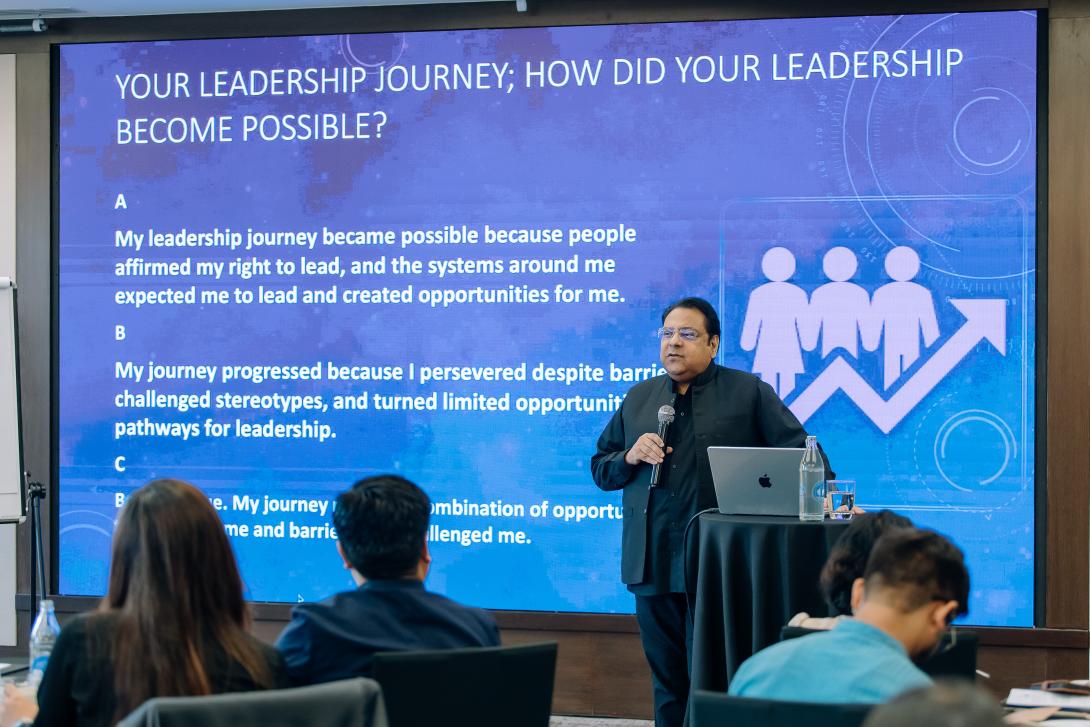
The Dialogue moved beyond analysis to action, strengthening a cross-regional community of practitioners committed to transforming gender social norms and advancing more inclusive and equitable political participation, reinforcing WYDE Women's Leadership's continued engagement with women and youth leaders across South Asia and Southeast Asia.


About the authors