Building a national frontline against violence in schools
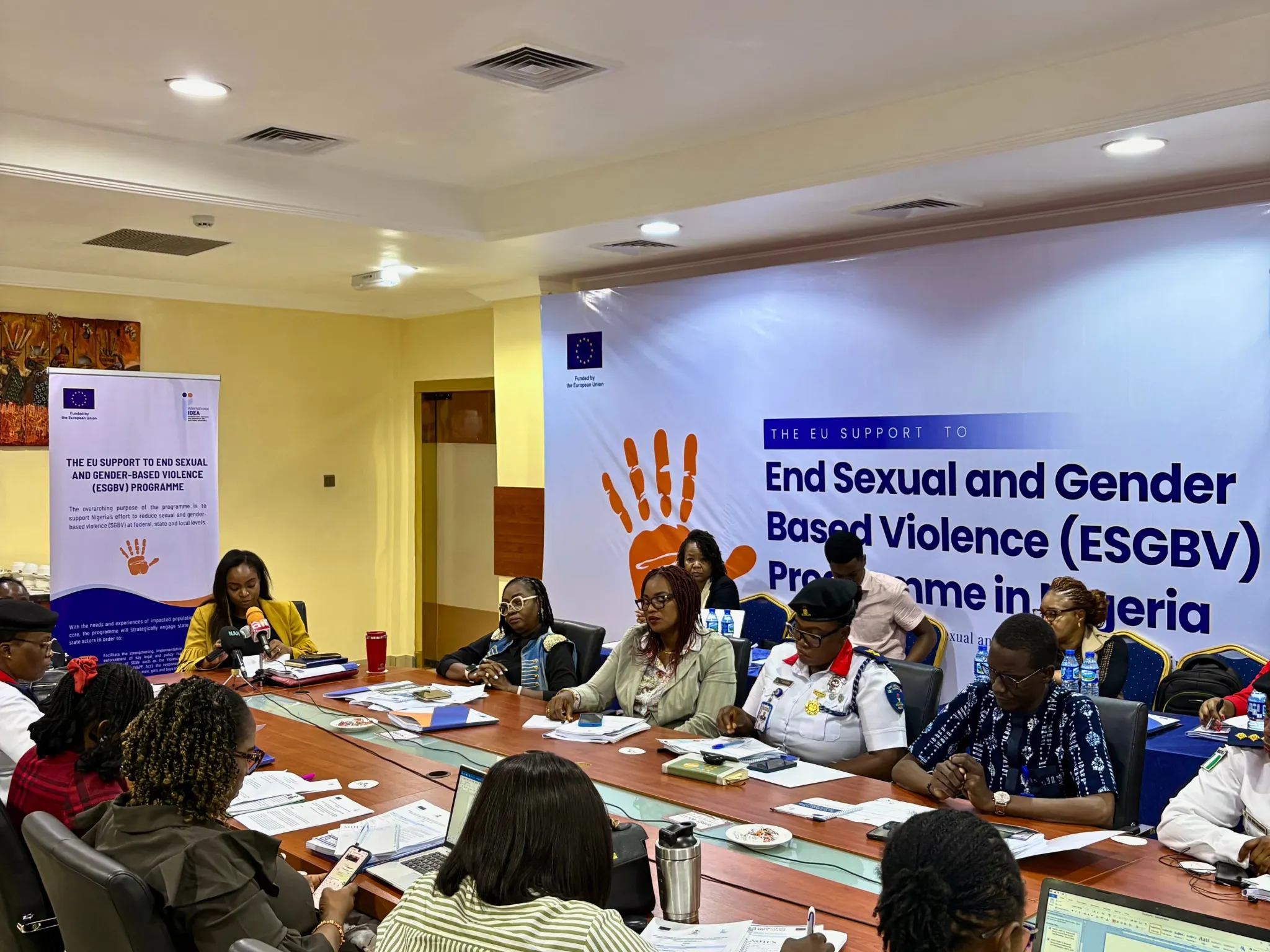
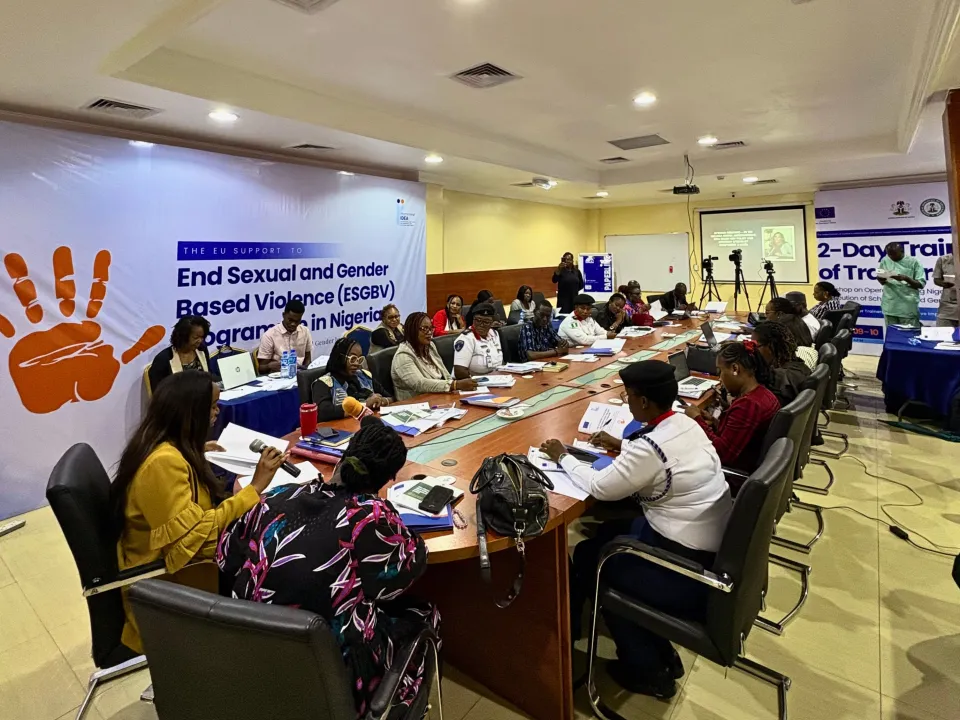
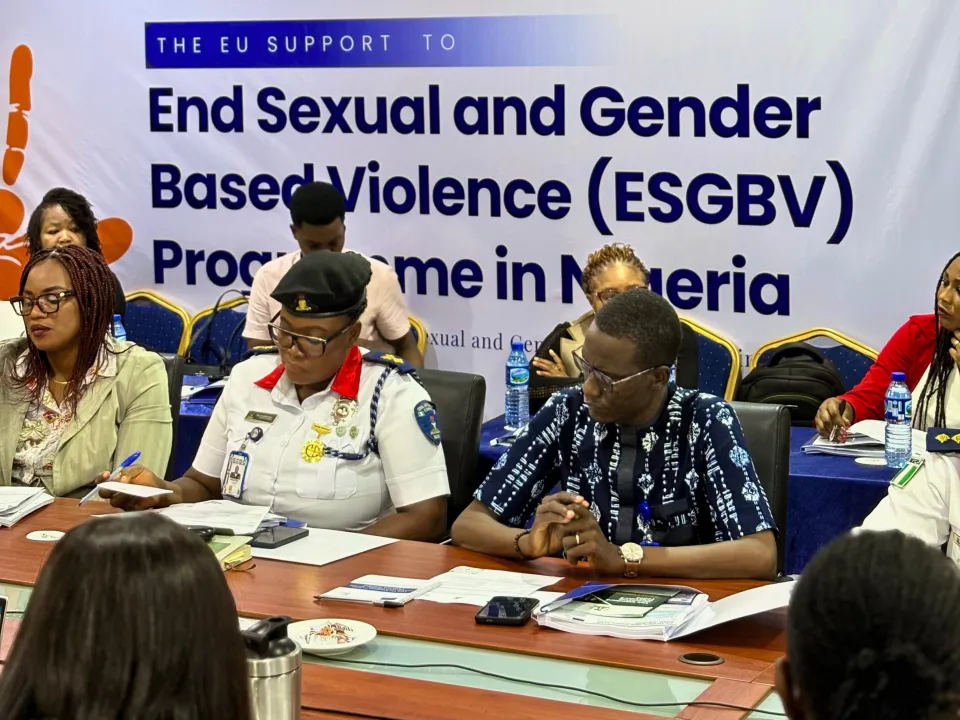
Under the European Union Support to End Sexual and Gender-Based Violence (ESGBV) Programme in Nigeria, implemented by International IDEA, stakeholders from the Federal Ministries of Justice and Education, the Nigeria Security and Civil Defence Corps (NSCDC), the Nigeria Police Force, Legal Aid Council of Nigeria, NAPTIP and civil society organizations concluded a two-day Training of Trainers (ToT) on the Standard Operating Procedure (SOP) on a Legal Pathway for the Prosecution of Perpetrators of School-Related Gender-Based Violence in Abuja.
The training was designed not merely to build knowledge, but to create a sustainable network of master trainers capable of cascading the SOPs across federal, state, local government and school levels, thereby translating policy commitments into coordinated action and measurable protection outcomes for children.
Opening the workshop, Yewande Gbola-Awopetu, Head of the Sexual and Gender-Based Violence Response Unit at the Federal Ministry of Justice, emphasized the importance of implementation, noting that “the strength of every framework lies not only in its content, but in its implementation.” Her remarks highlighted the central objective of the training: to ensure that the SOPs move beyond policy documents and become living tools that guide prevention, reporting, referral and prosecution processes.
The strength of every framework lies not only in its content, but in its implementation.
Representing the Federal Ministry of Education, Assistant Director Apakasa Augustina reiterated the Ministry’s commitment to ending school-related gender-based violence through sustained capacity building and institutional action. She noted that incidents of sexual and gender-based violence often occur within educational settings, making it imperative to equip stakeholders and school personnel with the knowledge and tools to respond effectively. In a significant indication of the government’s commitment to operationalising the framework, she disclosed that the SOP document has already been distributed to all 115 Federal Unity Colleges across Nigeria, laying the foundation for a more coordinated, standardised and survivor-centred response to violence in schools nationwide.
Similarly, the Head of the Gender Unit of the NSCDC FCT Command, Chief Superintendent of Corps Precious Samuel, described the training as both important and necessary, stressing that stakeholders must possess a deep understanding of their roles and responsibilities if they are to provide meaningful support to survivors and ensure accountability for perpetrators.
Throughout the workshop, participants were introduced to practical approaches for identifying, documenting, reporting and referring cases of SR-GBV while strengthening collaboration among education, justice and protection actors. Sessions facilitated by Mrs. Elizabeth Achimugu, Executive Director of Protect the Child Foundation, explored the background and methodology of the participants’ manual and the Training of Trainers guide, while also examining the often-overlooked distinction between discipline and abuse in school settings.
The newly developed training manual is anchored on four transformative principles: survivor-centred and trauma-informed responses; learner-centred and participatory approaches; gender-responsive and disability-inclusive practices; and participant-centred systems strengthening. Importantly, the manual provides clear guidance on offences and appropriate sanctions relating to school-related gender-based violence, helping stakeholders better understand the legal pathways available for accountability and justice.
The training comes at a crucial moment. Despite Nigeria’s legal and policy frameworks, including the Violence Against Persons (Prohibition) Act, the Child Rights Act and the National Policy on Safety, Security and Violence-Free Schools, implementation gaps have continued to limit effective responses to SR-GBV. These gaps often result in underreporting, weak referral systems, poor documentation and inadequate prosecution of perpetrators.
The ESGBV Programme recognises that addressing these challenges requires more than isolated interventions. It demands stronger institutions, coordinated systems and empowered actors who can respond to violence in ways that prioritise survivors’ dignity and rights.
In her remarks on behalf of International IDEA, Melissa Omene, GBV Policy and Strategy Development Specialist under the ESGBV Programme, described the training as an important step towards strengthening Nigeria’s institutional response to sexual and gender-based violence within the education sector. She noted that the initiative seeks to translate policy into meaningful action, strengthen institutional accountability and equip practitioners with the skills to prevent, identify, document, refer and respond to SR-GBV in a coordinated and survivor-centred manner.
The Training of Trainers workshop is expected to trigger a multiplier effect that extends far beyond the Federal Capital Territory, by creating a pool of trained facilitators and institutional champions. As participants return to their respective institutions to cascade the training, schools across Nigeria stand to benefit from improved reporting mechanisms, enhanced coordination between sectors, stronger legal responses and increased protection for children.


About the authors