From grassroots to the parliament: Bhutan organizes a National Conference on Women’s Leadership in Democracy
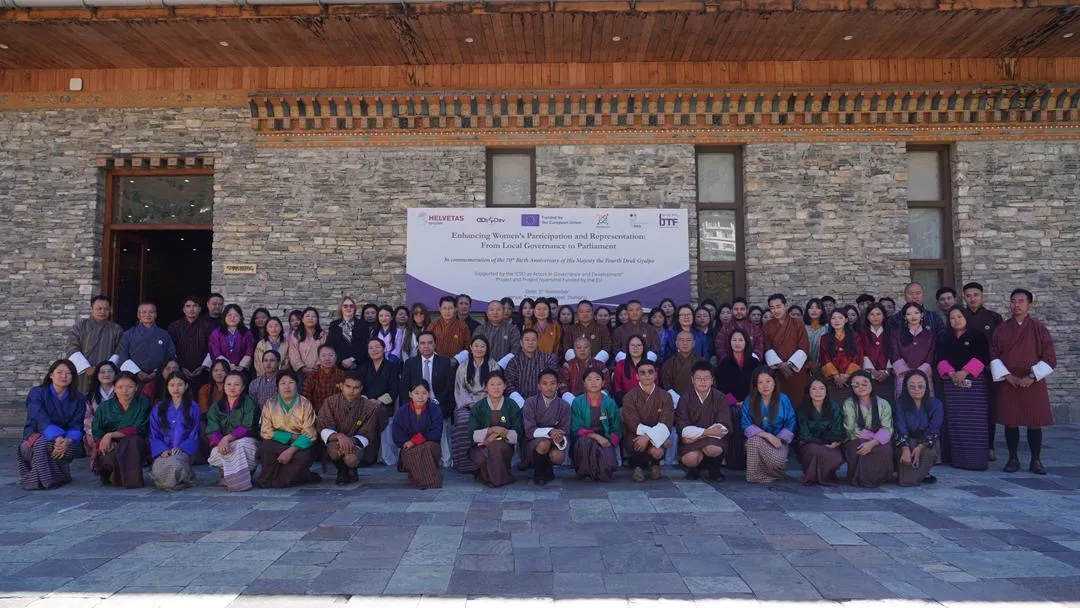
While Bhutan has achieved impressive gains in establishing democratic institutions and processes, women continue to face a glass ceiling in electoral politics. In a show of the importance accorded to the persistent underrepresentation of women in elected positions, the event brought together nearly 90 participants, including the His Excellency, the Chairperson of the National Council, Members of Parliament and representatives from the Election Commission of Bhutan (ECB), local governments, central government agencies, development partners, CSOs and educational institutes from across the country.
The conference took place at a critical moment in Bhutan’s democratic evolution, where efforts toward inclusive and equitable representation are ongoing but need renewed momentum. Even after four electoral cycles, women’s representation remains dismally low at 11.6% at the local government and 6.9% in the National Assembly (House of Representative), highlighting the urgency of deliberate action to close the gender gap. The Community-Based Tourism (CBT) group’s session on Economic Empowerment set the powerful tone for the day by illustrating how women’s financial independence enhances their confidence and engagement in local governance.
“As a women-led, community-based organization working at the grassroots, our experience shows that economic empowerment and livelihood enhancement are key drivers for increasing women’s participation in local governance and decision-making. The way forward is to introduce targeted support programs for women, create a strong mentorship pool, design tailored financial schemes and adopt a family-centered approach to gender empowerment”, said Ms. Ugyen Dema who is the Coordinator for EcoEmpower Women Group based in Trongsa.
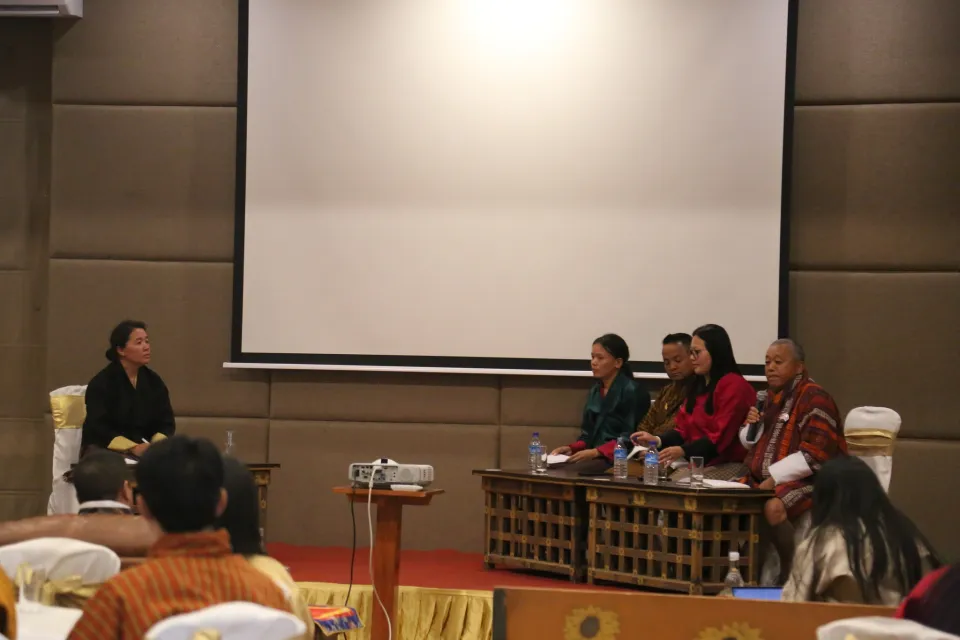
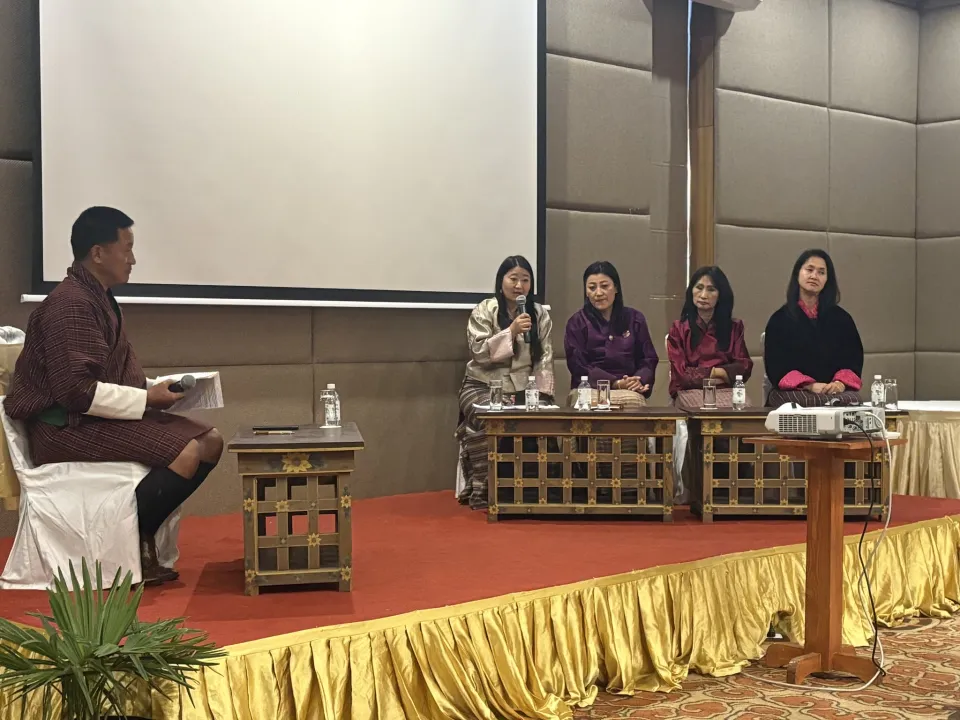
Among the many engaging speeches and presentations, two dynamic panel discussions on “Investing in Women and Youth at the Grassroots” and “Enhancing Women’s Political Participation and Policy Reforms” - a common thread of stories about perseverance, courage and leadership emerged. Women parliamentarians and grassroots leaders shared personal stories of how they overcame stereotypes and societal expectations to lead their communities, breaking long-held perceptions that leadership is a male domain. They spoke about the need for conviction and resilience on the road to electoral success.
“I had to work twice as hard to earn trust and navigate cultural expectations, but these challenges strengthened my determination to represent my community effectively "Moreover, I often faced the challenge of being underestimated simply because leadership is still widely viewed as a man’s role” reflected Gup Ugyen Yangzom, Chairperson of the block administration of Ngatshang in the eastern district of Mongar.
Speakers discussed entrenched social norms, family expectations, economic barriers and gender stereotypes that continue to restrict women’s participation. Yet, amidst these challenges, women are emerging as transformative leaders displaying strength, confidence and an unwavering belief in change. Their journeys reflect the spirit of Bhutanese women trailblazers who are paving the way for the future generations.
Gup Chabi Kumar Rai highlighted the importance of promoting shared family responsibilities as a key factor in enabling greater women’s participation in leadership. He noted that many women are unable to take part in community activities or leadership opportunities due to household duties and family obligations, which are disproportionately shouldered by women. He emphasised that encouraging a more balanced division of responsibilities within the family would help create an environment where women can engage confidently and meaningfully.
H.E. Sangay Dorji, Chairperson of the National Council, shared the Parliament’s perspective on the underrepresentation of women in governance and emphasized the parliament’s critical role as the highest law-making body in driving inclusive change.
Ms. Rumbidzai Kandawasvika-Nhundu, Principal Adviser at International IDEA, highlighted that women’s political empowerment depends on a strong legal framework. She noted that over half the world’s countries now use quotas to fast-track gender equality and highlighted that party list systems - especially those applying the “zipper system” to ensure at least 30% women candidates - are among the most effective mechanisms to promote balanced representation.
As the conference concluded, participants agreed that achieving gender equality in governance requires collective effort through economic empowerment, legal reform and social inclusion, to ensure that women’s voices shape Bhutan’s democratic future.
“Gender equality is at the heart of the European Union’s values,” said Ms Delphine Brissonneau, Gender Focal Point at the EU Delegation to India and Bhutan in her keynote address. “By 2027, 85 percent of our actions worldwide will advance women’s empowerment because investing in women isn’t just right, it’s smart.”
The workshop reinforced the importance of inclusive leadership and women’s active participation at all levels of governance. Hearing from women leaders across sectors was both inspiring and empowering. The event was organized jointly by Helvetas Bhutan and International IDEA through the projects ‘CSOs as Actors in Governance and Development’ Project and Project Nyamdrel II. These projects and conference were supported by the European Union, whose partnership remains instrumental in advancing women’s leadership and participation in Bhutan.
Key takeaways and recommendations
- Invest in women’s economic empowerment and promote shared family responsibilities to enable women’s leadership participation.
- Adopt gender-responsive policies and party mechanisms, including temporary special measures such as quotas or party lists ensuring women’s representation.
- Strengthen capacity building and leadership development for aspiring women candidates through mentorship, training and civic education.
- Sustain civic education and advocacy, through continued collaboration between the Election Commission of Bhutan and CSOs to promote gender equality and inclusive participation.
- Encourage gender-sensitive media narratives that highlight women’s policy contributions.
- Engage men and community leaders as allies to challenge stereotypes and support women’s leadership.


About the authors