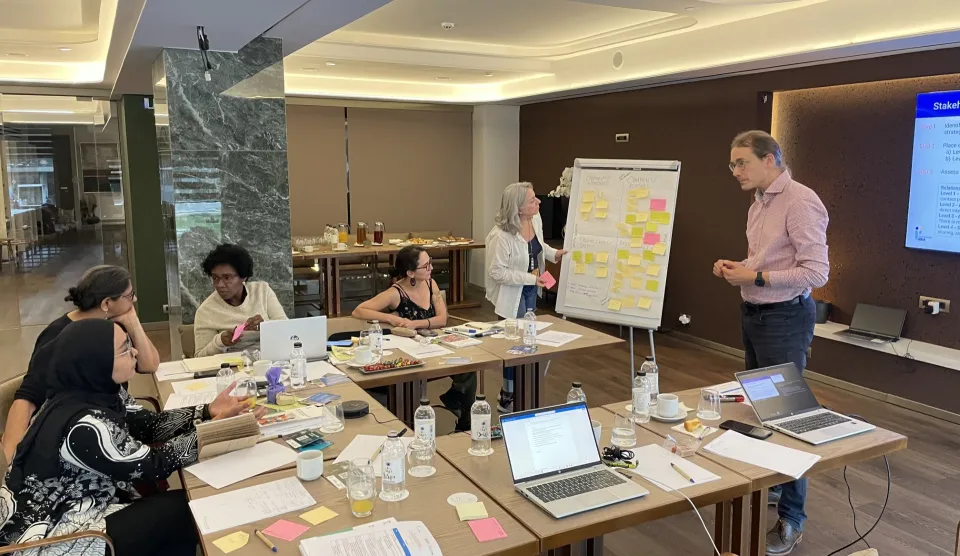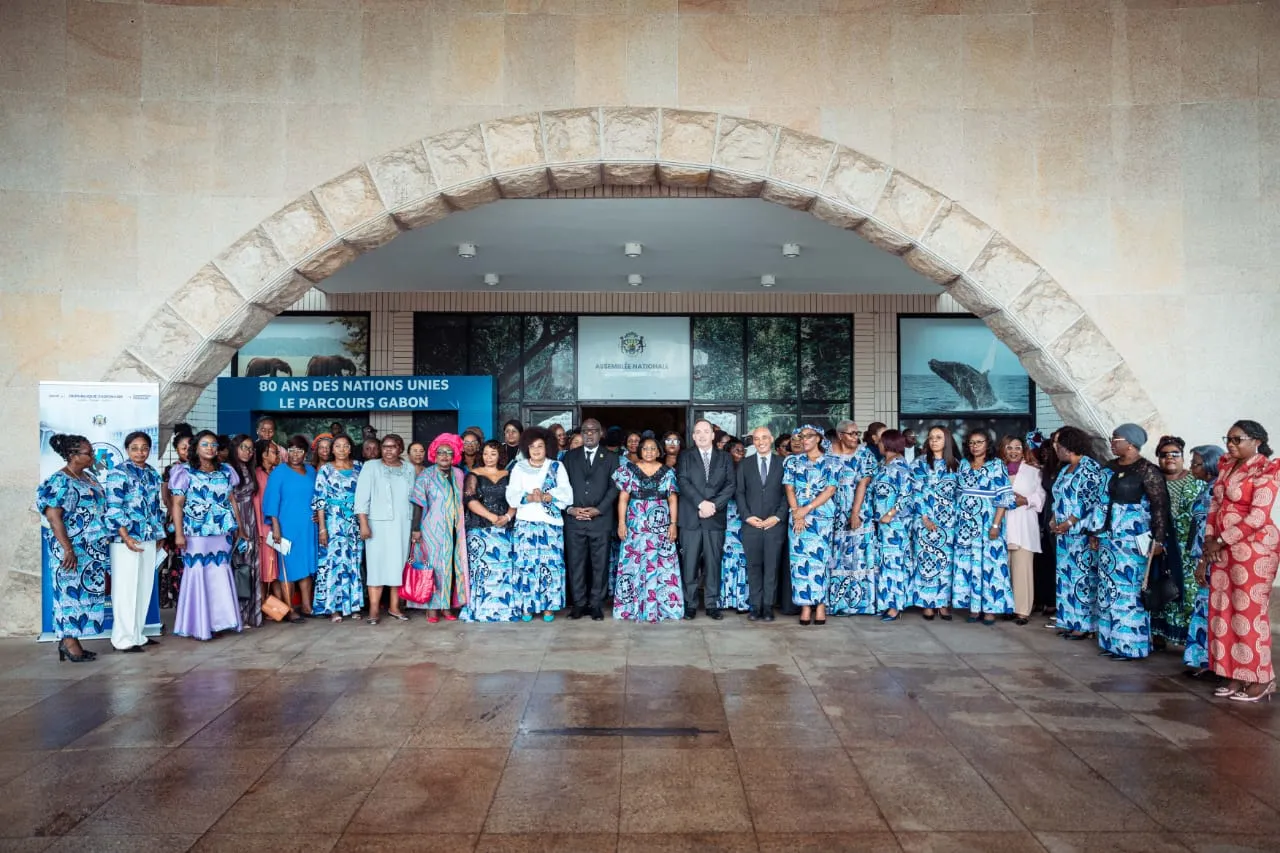
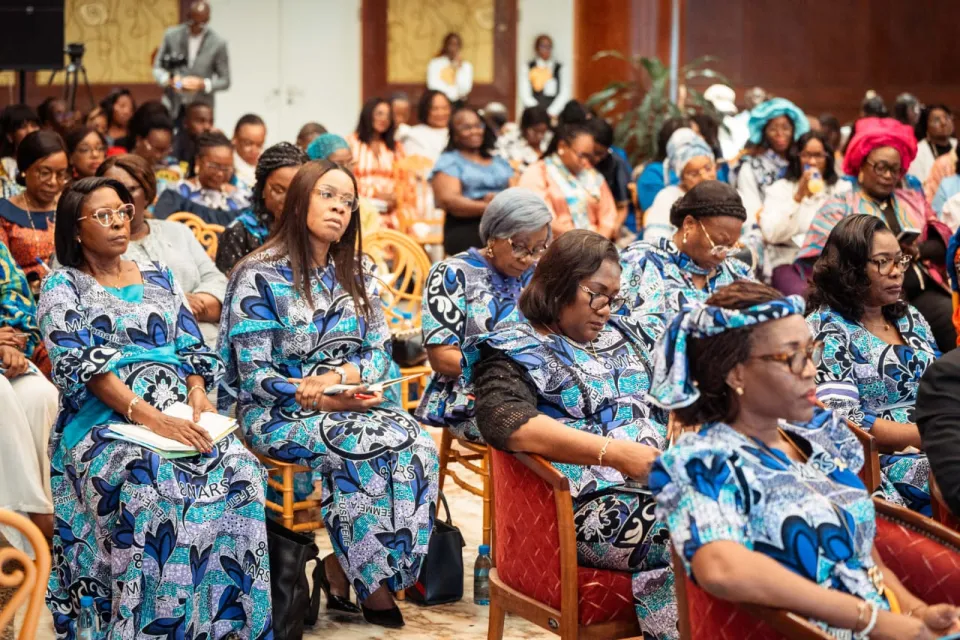
On the agenda: Women’s rights, access to justice, and the integration of gender considerations into legislative action. During these conversations, featuring presentations by experts, sharing experiences, and interactive discussions, a hundred and thirty-five participants worked to identify the priorities that should guide parliamentarians, with the aim of developing a list of recommendations.
Law | An Overview of the Legal Framework for Women’s Rights in Gabon: Progress and Challenges in Implementation
The first session of the dialogue featured a presentation by Ms. Flore Ntsatsiessé, legal advisor to the President of the Republic, who provided an overview of Gabon’s legal framework and the legal advances made regarding women’s rights. Her presentation sparked discussion on the effectiveness of the implementation of Law No. 016, its limitations, and legal support measures for women, particularly economically vulnerable Gabonese women, to promote access to justice for all.
The second presentation in this session focused on the legal gains achieved during and after the transition. The discussions highlighted a central issue regarding the respect for women’s rights: mastery and knowledge of these rights. This represents a major challenge for Gabonese women, who still struggle to navigate the existing legal framework, a situation exacerbated by sociocultural constraints, according to the audience.
Continuing her remarks, the speaker urged the women parliamentarians to translate the commitments of the post-transition period into concrete actions, effective oversight mechanisms, and gender-sensitive public policies, to achieve an institutional overhaul that will fully benefit women and girls.
Finally, she noted that despite a revised legal framework and several advances, women’s representation in Parliament remains limited: the current legislature includes only 28 women out of 145 members, or about 9.3 per cent.
Justice | Effective Access to and Implementation of Gender-Sensitive Laws: Social Justice and the Fight Against Gender-Based Violence
Access to justice is a fundamental and universal right and ensuring real and effective access for women from all social and cultural backgrounds is imperative. During this discussion, the speaker highlighted the agreements ratified by Gabon that guarantee women’s equality before the law, notably CEDAW, General Recommendation No. 33, and the Maputo Protocol.
However, one fact remains:
“Passing a law is only half the battle,” emphasized Ms. Nicole Nguema Metogo, a gender expert, “We must also ensure its effective implementation by institutions and beneficiaries.”
In this regard, the application of texts such as Article 6 of Law 006—which stipulates that medical expenses related to sexual violence, particularly rape, are to be covered by the state—must move from theory to practice. To date, no medical facility has agreed to issue medical certificates to victims free of charge.
The discussions also highlighted the issue of women’s representation in decision-making bodies. Although women make up the demographic majority, they remain underrepresented in leadership positions. This situation reveals the existence of political discrimination, which often relegates women to the bottom of electoral lists, includes them solely to meet quotas, or involves them without granting them real decision-making power.
Another highlight of this session was the testimonies given by members of the NGO ENDOFI on raising awareness about endometriosis.
"Women's health is a matter of rights, and the recognition of their pain is a matter of justice" stated Mrs Tegh-yess Moutchinga, president of ENDOFI.
Recognizing this condition also means recognizing that women’s health is a fundamental right. It is therefore necessary to take action to improve access to care, raise awareness, support research, and encourage the training of healthcare professionals. Finally, they called on public institutions and decision-makers to take ownership of this issue, which affects many Gabonese women.
Action | Gearing up for a lasting impact: tools for women’s leadership
The discussions concluded with a review of legislative instruments useful for protecting and promoting women’s rights, notably the Constitution and the Electoral Code. Women parliamentarians have significant tools at their disposal, such as the power to introduce and amend laws, as well as the promotion of gender-responsive budgeting.
Recommendations for Concerted Action
Concluding the Gabonese Women Parliamentarians’ Dialogue, the participants formulated several recommendations for government authorities, parliamentarians, and civil society organizations.
Major recommendations include:
- Strengthening public policies on equal rights.
- Develop public policies to empower women and protect their rights.
- Promote women’s economic empowerment (microcredit, entrepreneurship, access to skilled jobs).
- Strengthen women’s participation in political and administrative decision-making bodies, particularly through quotas or temporary equality measures.
- Support training programs for judges on violence against women.
- Monitor the implementation of laws on local communities.
- Organize nationwide awareness-raising campaigns with parliamentarians and civil society to improve the dissemination and public understanding of legislation.
- Improve victims’ access to justice by providing free legal aid and simplifying legal procedures to make them more accessible to victims.
- Strengthen the networks of female deputies and female senators (RENAFED and REFESEG) and expand them to include female ministers to foster synergies in their actions.
- Advocate for the operationalization of the Women’s Rights Observatory and the updating of its decree.
- Update Law No. 006/2021 of September 6, 2021, relating to the prevention of violence against women, by including electoral and online violence.
- Propose an amendment to the law on political party financing to include a provision making such financing contingent upon gender parity among candidates presented during elections.
- Review the budgets allocated to advocacy in ministerial departments to ensure greater consideration of and an effective response to women’s rights issues.
This activity was supported by IDEA International in the context of the DEMGAB project, funded by the European Union.


About the authors