Democracy beyond borders: Protecting the political rights of overseas citizens
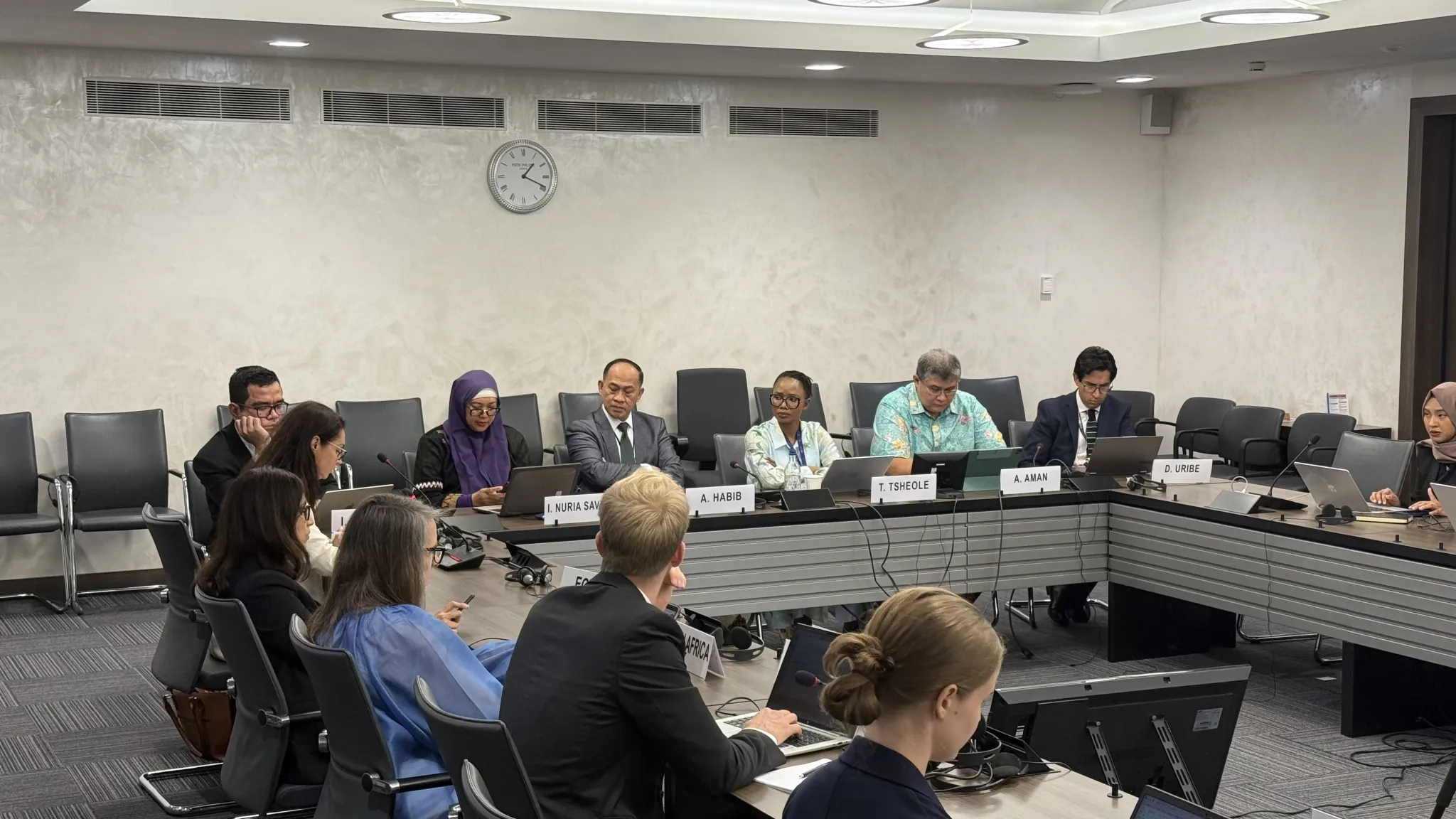
This question framed the side event Political Rights of Overseas Citizens in the Global Mobility Era, held on the sidelines of the 62nd Session of the UN Human Rights Council and co-sponsored by the Permanent Missions of Indonesia, South Africa and Switzerland, together with International IDEA.
Drawing on insights from International IDEA’s Global State of Democracy 2025 Report, the discussion highlighted how urgent this question has become. With international migration having more than tripled since 1970, and more than 300 million people now living outside their country of birth, the political inclusion of citizens abroad is no longer a peripheral issue for democracies. It is central to questions of belonging, rights and participation.
As Ambassador Achsanul Habib, Deputy Permanent Representative of the Republic of Indonesia to the United Nations in Geneva, noted, there is no one-size-fits-all model for out-of-country voting. Yet conversations such as this matter because they allow countries to exchange good practices and learn from different national experiences. Effective out-of-country voting depends on flexibility, innovation and adaptation to context.
Indonesia’s experience offers a strong example of both human rights and democratic commitment. Anis Hidayah, Chairperson of Indonesia’s National Human Rights Commission, emphasised that protecting the rights of citizens abroad is an extension of the core domestic human rights obligations. With 1.7 million overseas citizens and one of the world’s largest out-of-country voting mechanisms, its approach shows both the scale of the challenge and the democratic importance of reaching voters wherever they are. Indah Nuria Savitri, Director for Human Rights and Humanitarian Affairs at the Ministry of Foreign Affairs of the Republic of Indonesia, highlighted,
Democracy is not measured by how easily citizens can vote at home, but how far the government is willing to travel in order to collect the ballots.
The practical challenges many countries face in making overseas voting meaningful were highlighted by Daniel Uribe, Lead Programme Officer of the Sustainable Development and Climate Change Programme at the South Centre. Budget and resource constraints can make implementation particularly difficult for developing countries, especially where citizens are dispersed across great distances, including in rural areas, small towns and agricultural communities where services may already be limited. Ensuring accurate voter information, while keeping processes simple, secure and trusted, requires sustained effort. He emphasized that these challenges can be addressed through flexible design, smart administration as well as South-South and international cooperation. Sharing practical solutions across countries can help protect the political rights of millions of people on the move.
From South Africa’s perspective, Tsholofelo Tsheole, Chargé d’Affaires and Deputy Permanent Representative of South Africa, underscored the deeper democratic meaning of the right to vote. South Africa’s voting rights are rooted in decades of struggle for one person, one vote, making the ballot a symbol of dignity, personhood and belonging. Her remarks reinforced the principle that the right to vote should follow the citizen.
Yanik Weingand, Program Manager for the Federal Department of Foreign Affairs Peace and Human Rights Division, iterated Switzerland’s experience that out-of-country voting requires constant adaptation. While Swiss citizens have long been able to participate in elections from abroad, reliability and timeliness remain practical challenges across diverse regions. Digital tools can complement existing methods, but they also require careful balancing of accessibility, security and public trust so that greater access does not come at the expense of confidence in electoral processes.
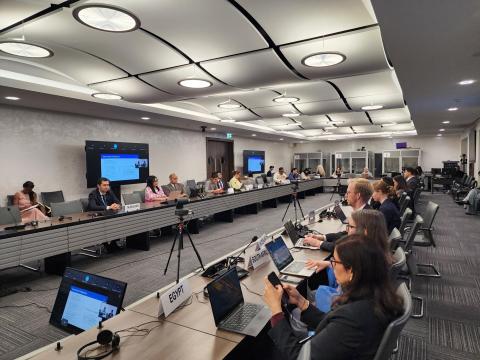
Participants
As Adhy Aman, Senior Programme Manager, International IDEA, suggested in his presentation, increased peer exchanges and review of practices could be encouraged through emphasis by the UN Human Rights Council that political rights extend beyond borders. This also raises a broader question on what “unreasonable restrictions”, under Article 25 of the International Covenant on Civil and Political Rights (ICCPR), allows in today’s context, 60 years after its adoption.
The discussion at the side event made clear that out-of-country voting is not simply a logistical challenge. It is a democratic test of whether citizens abroad are treated as full participants in the political life of their country, regardless of where they live. In an increasingly mobile world, democracy must be able to cross borders too.
Watch the full side event Political Rights of Overseas Citizens in the Global Mobility Era,


About the authors