The Brussels Launch of the Global State of Democracy 2026: Democracy in an Age of Conflict
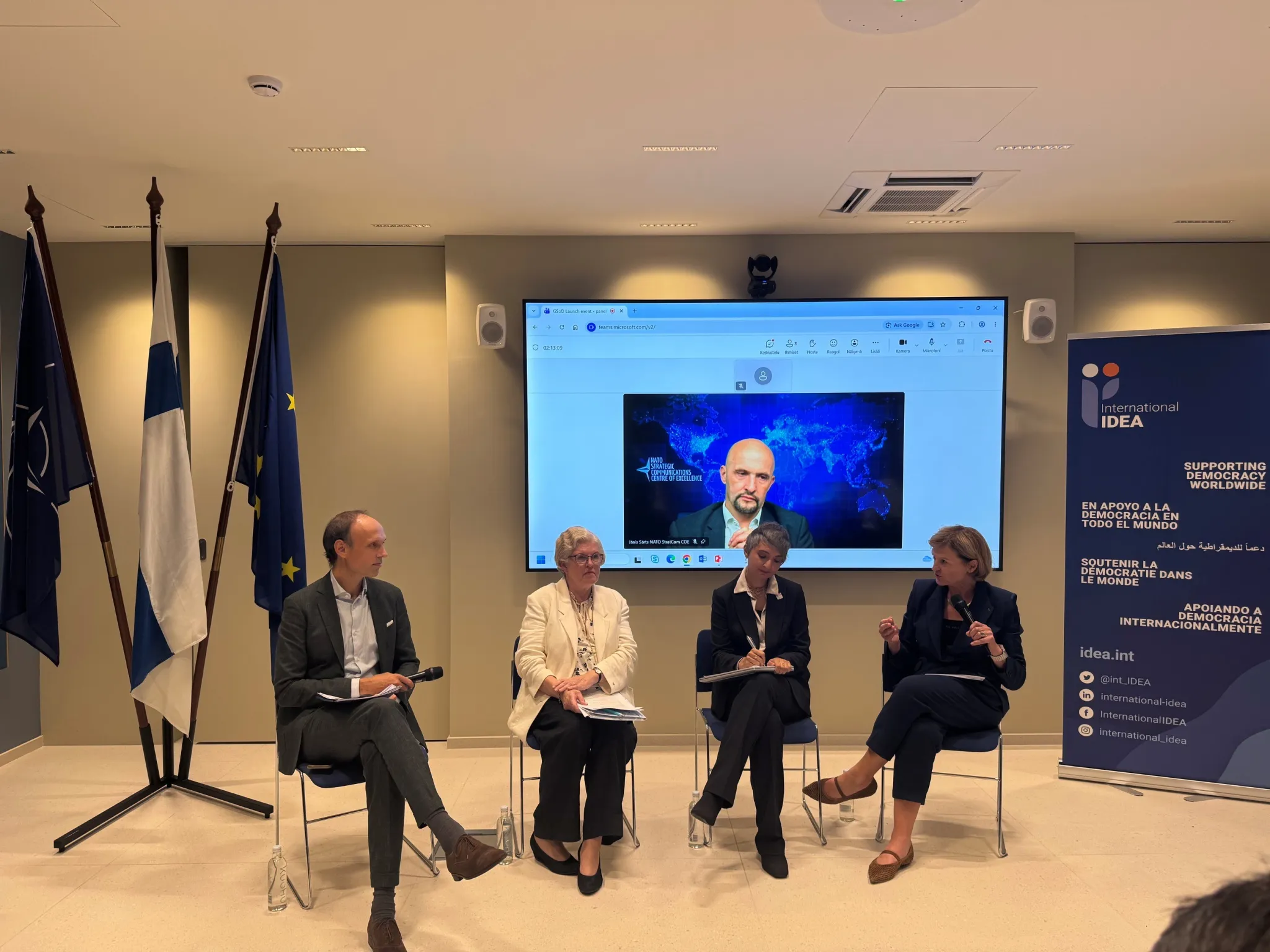
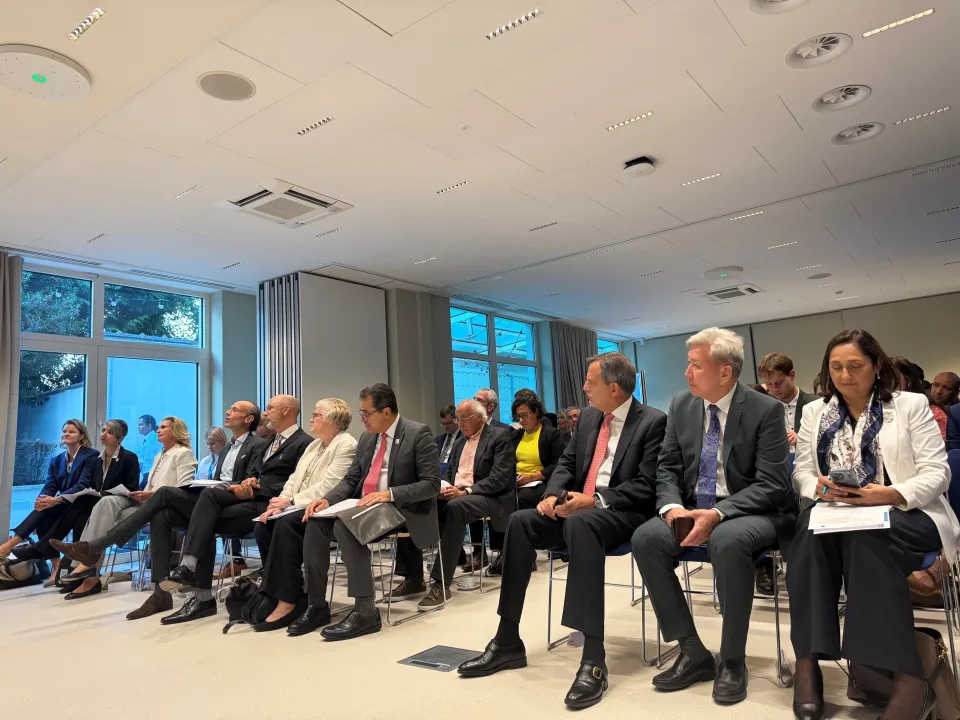
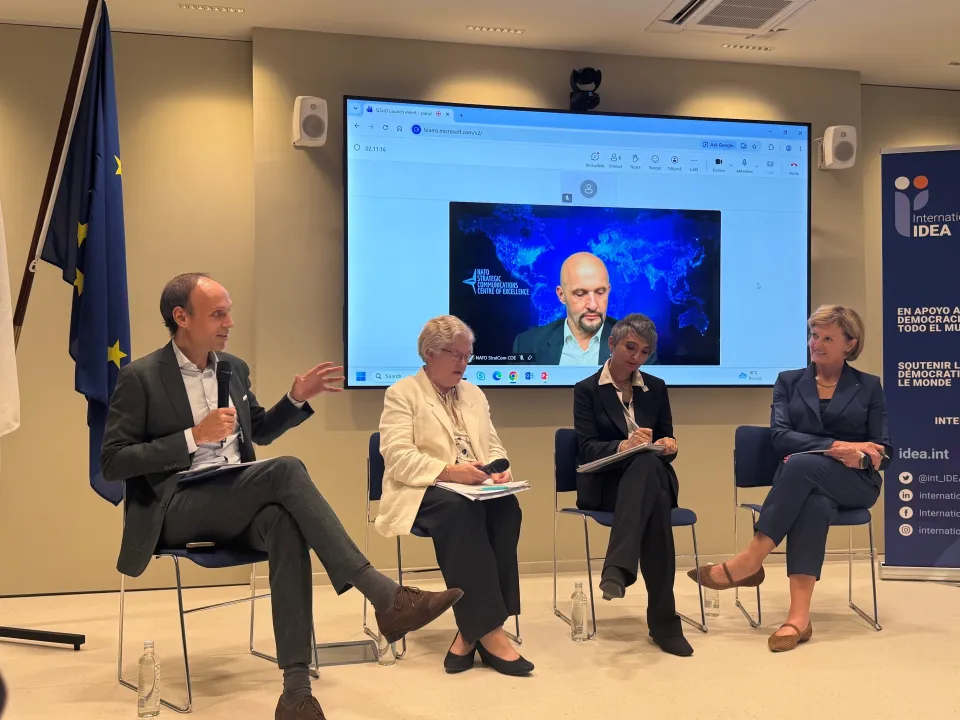
On 16 September, International IDEA and the Permanent Representation of Finland to the European Union brought together policymakers, diplomats, experts and civil society representatives in Brussels for the launch of the Global State of Democracy Report 2026: Democracy in an Age of Conflict.
As the report documents both democratic stagnation and key declines around the world, the event explored what can be done to strengthen democratic institutions, the rule of law and civil society at a time of growing conflict and instability.
Understanding the pressures on democracy
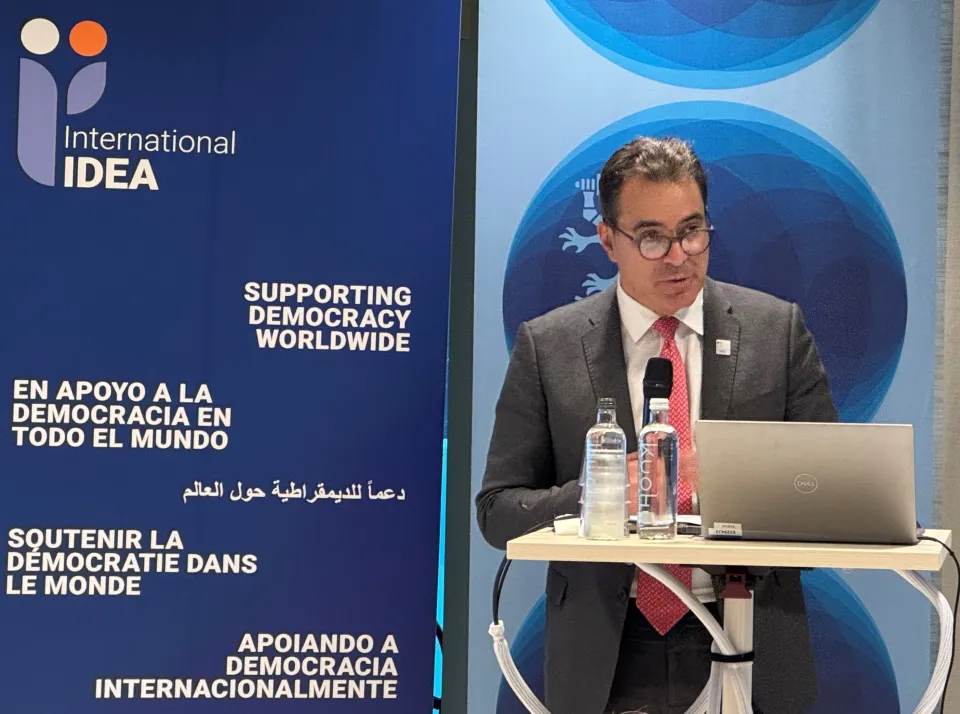
The opening remarks by Miia Lahti, Finland’s Ambassador to the Political and Security Committee, and International IDEA's Secretary-General Dr Kevin Casas-Zamora set the scene for the discussion, framing democracy not only as a fundamental European value, but also as a strategic asset for Europe’s security and resilience. The importance of sustained investment in democracy support emerged as a shared conclusion throughout the event.
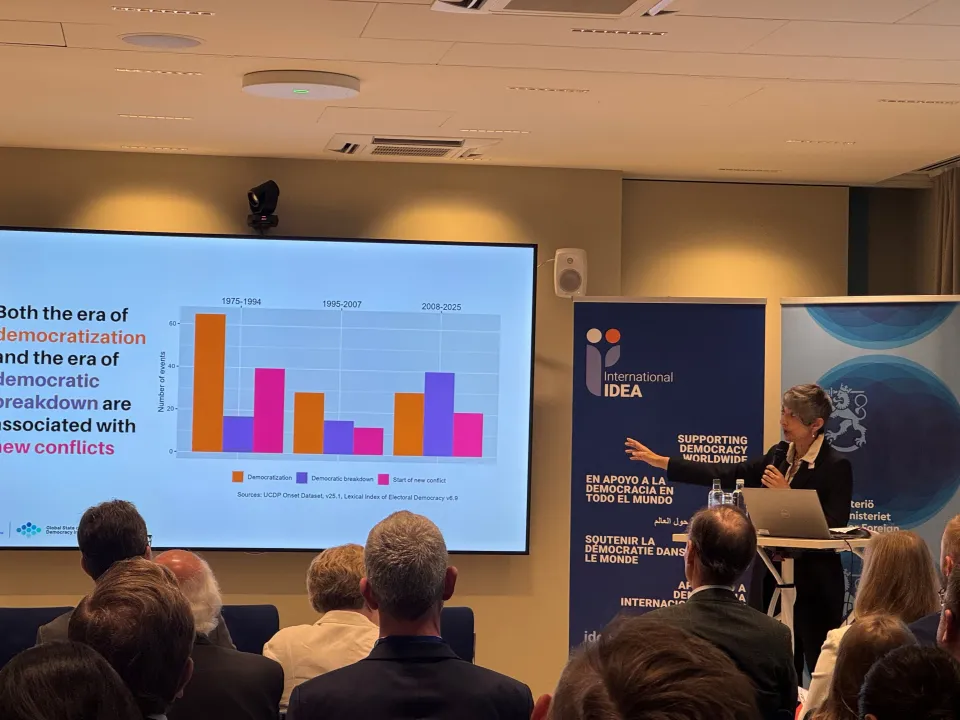
Dr Seema Shah, Head of Democracy Assessment at International IDEA, brought the global picture into focus. Presenting the report’s key findings, she noted that global democratic performance has declined for the eleventh consecutive year. She pointed in particular to the continued erosion of the rule of law and to ways in which weakening democratic institutions can increase the risks of both internal and interstate conflict. Her presentation underscored the importance of strengthening social cohesion, investing in democracy support and acting early when signs of democratic backsliding may signal emerging conflict risks.
Building resilience in a changing world
In his keynote address, Martin Bille Hermann, Deputy Political Director and Managing Director for Multilateral Relations, Human Rights and Democracy at the European External Action Service (EEAS), reaffirmed that democracy support remains an integral part of EU foreign policy. He framed this commitment through the concept of “democratic security”, underscoring the intrinsic nexus between strong, resilient democracies and lasting security. Looking ahead to the upcoming Action Plan for Human Rights and Democracy, he emphasized its role in setting the agenda for EU action and the need to strengthen democratic institutions against growing pressures from both from within societies and external actors.
The ensuing panel discussion featured Jolita Butkevičienė, Director for Innovation in Science and Policymaking at the European Commission’s Joint Research Centre (JRC); Jānis Sārts, Director of the NATO Strategic Communications Centre of Excellence; and Katri Viinikka, Finland’s Ambassador for Democracy and Rule of Law. In her remarks, Ambassador Katri Viinikka reflected on the relationship between security, democratic values and societal resilience, highlighting the role of social cohesion and public trust in strengthening democratic governance. Jolita Butkevičienė emphasized the importance of maintaining citizens' confidence in public institutions and discussed ways of ensuring that policymaking remains responsive to societal needs, including through citizen engagement and innovative participatory approaches. Jānis Sārts completed the panel by underscoring the growing importance of the information environment as a key area shaping the future of democracy. He particularly examined the impact of technological developments on public discourse, focusing particularly on the effects of social media on political debate and societal polarization.
The conversations throughout the event reinforced a common message: supporting democracy is not only about upholding fundamental values. Strong democratic institutions, the rule of law and vibrant civil societies also contribute to peace, stability and resilience in an increasingly uncertain international environment.
International IDEA warmly thanks the Permanent Representation of Finland to the European Union for its partnership in hosting the event and for bringing together diverse perspectives around the findings of the Global State of Democracy Report 2026.
The report as well as the data for individual countries, regions or indices are available online for consultation, visualization and downloading.


About the authors

Carlo-Schmid-Fellow at International IDEA's EU Liaison Office