You know It when you see It: Trump, the claw and the gilded ballroom
When Filipino dictator Ferdinand Marcos and his wife, Imelda, fled the Philippines in 1986, investigators discovered what would come to define an era of kleptocracy: some 3,000 pairs of designer shoes belonging to Imelda, accumulated while the regime stole an estimated USD 5–10 billion and millions of Filipinos lived in poverty. The shoes represented only a tiny proportion of the corruption. But the story resonated and came to define the era. Today, there is even a museum dedicated to the shoes in Manila.
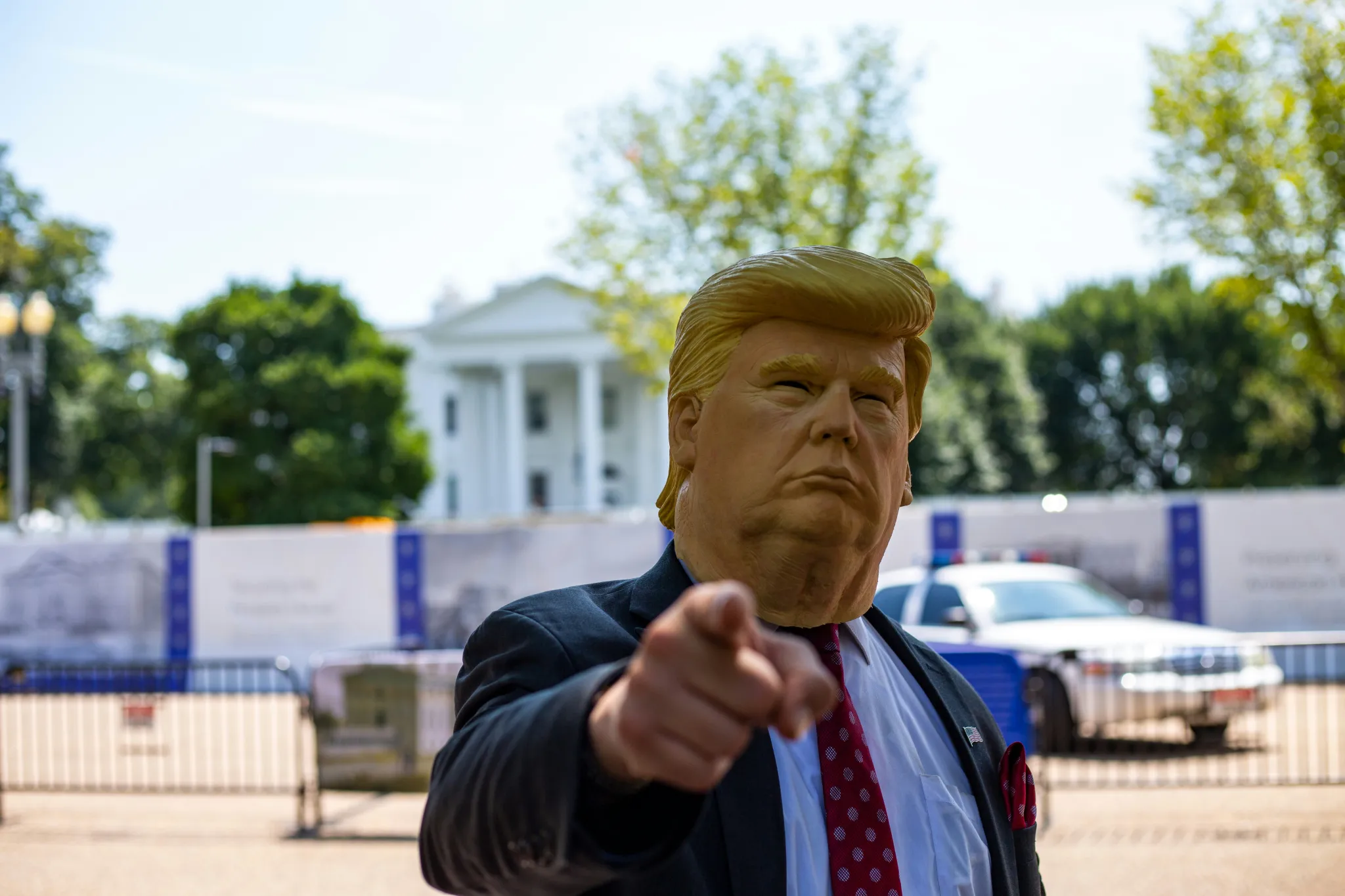
Trump may now be handing critics similar symbols: an Ultimate Fighting Championship “cage”—the “claw”—on the White House lawn for his 80th birthday, alongside plans for a gilded ballroom. Together, they offer many voters an instantly recognizable image of excess and detachment. A 28-metre steel claw over the White House South Lawn. Bud Light logos across the cage. VIP packages reportedly costing around USD 1.5 million. Cranes working nearby on a reported USD 400 million gilded ballroom. For many voters, these are symbols of waste that no audit report can match.
Polling suggests the images are already cutting through. A Reuters/Ipsos survey found that only 16 percent of Americans supported the White House fighting event, including fewer than a third of Republicans. Another poll found Americans opposed the ballroom by roughly two to one.
The details of how much taxpayers may ultimately pay remain contested. Politically, however, the image may matter more than the accounting—especially when many Americans are struggling to pay bills. As USA Today put it: “It’s a mirror to a money-grab of a presidency increasingly disconnected from the day-to-day realities the rest of us face.”
Opposition to Trump has struggled to galvanize voters on an emotional level. Stories of family members benefiting from government contracts, or of money-for-influence mechanisms around the White House, have filled The New York Times investigative pieces. But abstract numbers and shadowy, complex stories do little to stir emotions.
For Trump’s opponents, the challenge has been to turn complex allegations into visual, identifiable stories. While many voters associated Biden with a stuttering TV debate performance, Trump has benefited from iconic footage of him punching the air in defiance after an assassination attempt.
Leaders across the world have suffered when stories of waste become visible. Reports of then Prime Minister Boris Johnson’s staff enjoying parties while the rest of Britain was in pandemic lockdown ultimately proved too much for voters. In Ukraine, when protesters entered Viktor Yanukovych’s Mezhyhirya estate in 2014 after the Revolution of Dignity, they found a private zoo and a gold-plated loaf of bread. Elsewhere, leaders have faced criticism and investigation for wearing watches worth more than their annual salaries.
In all these cases, a generalized perception of kleptocracy or government hypocrisy boiled down to a simple image of an absurd, tangible object: an expensive watch, a loaf of bread, a mansion.
Visual stories do not prove everything, but they can make people see what they already suspect. That is why Marcos’s shoes mattered—and why Trump’s claw and ballroom may matter too as the midterms approach.
Disclaimer: Opinions expressed in this commentary are those of the author and do not necessarily represent the institutional position of International IDEA, its Board of Advisers or its Council of Member States.


About the author