When people and wildlife collide: Why parliaments matter more than ever
In many parts of the world, the line between human life and wildlife is increasingly blurred. Fields overlap with migration routes, villages sit at the edges of protected areas, and livelihoods intersect directly with conservation. What was once seen as a distant environmental concern is now a daily reality for communities – and an urgent political question for lawmakers.
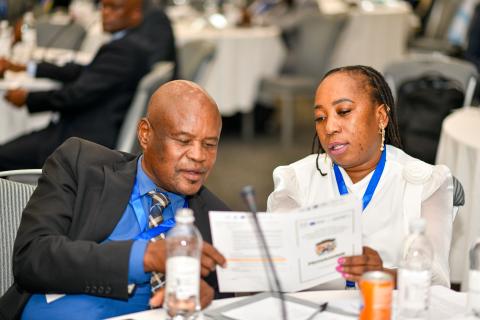
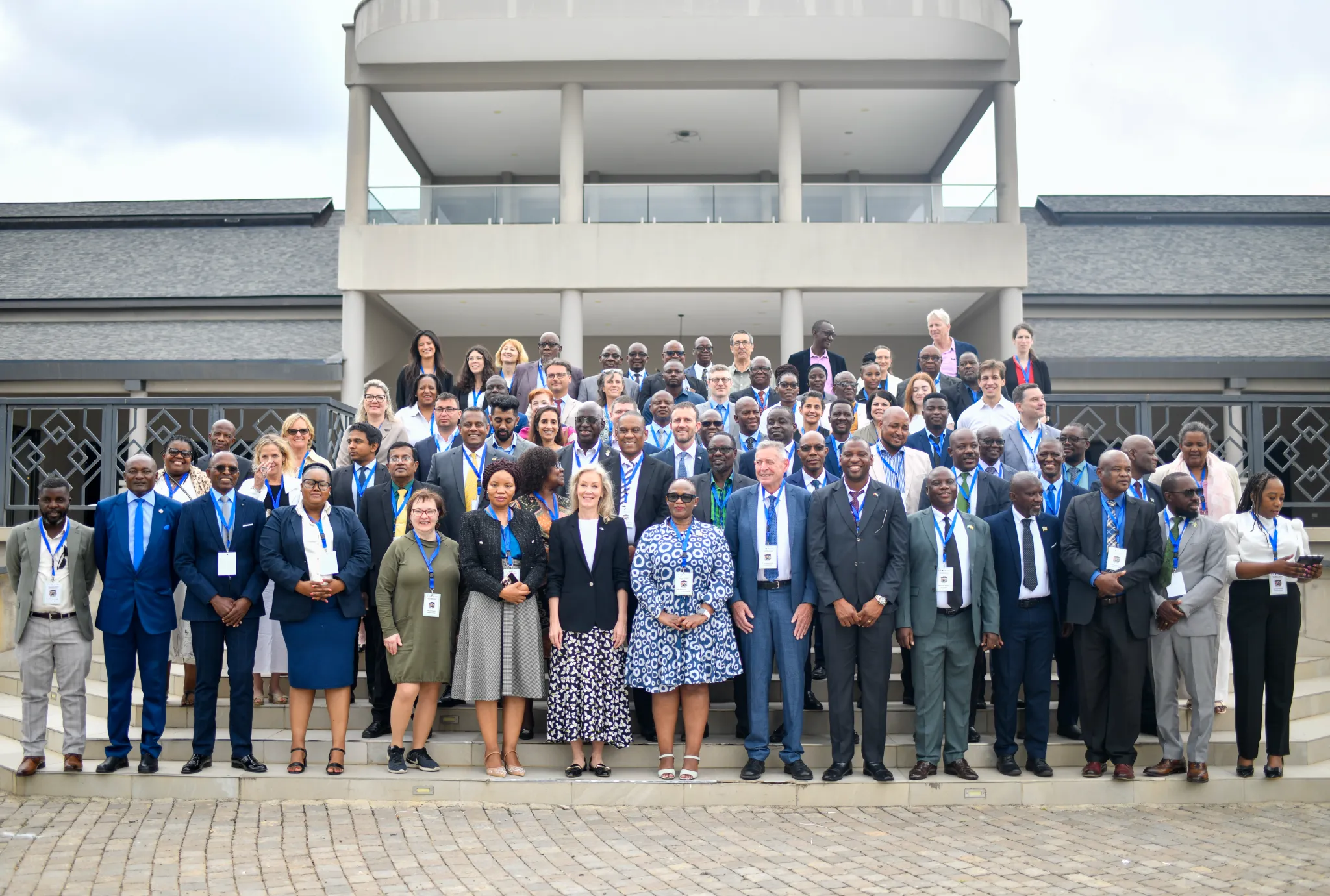
In Africa, this reality is not new. It is shaped by land, livelihoods, and generations of lived experience. Human–wildlife coexistence has long been navigated in practice rather than theory. It was this grounded perspective that framed the International Parliamentary Roundtable on Human–Wildlife Coexistence, hosted by the National Assembly of Botswana together with International IDEA, through its Inter Pares – Parliaments in Partnership and Climate Change and Democracy programmes, in Gaborone from 19 to 21 January 2026.
Supported by the European Union, the roundtable brought together parliamentarians and practitioners from across Africa, Europe, and Asia. For many European participants, the purpose was not to arrive with ready-made solutions, but to listen – and to learn. This sentiment was reflected by Hon. Tiaone Hendry, Chairperson of the National Resources and Climate Change Committee, National Assembly of Malawi, who said:
Parliamentarians play a critical role in nature conservation and promoting sustainable human - wildlife coexistence. As a direct link to decision-making, they can influence effective policies that strengthen wildlife conservation and management while fostering harmonious coexistence.
Coexistence Is Lived, Not Abstract
In Botswana, coexistence is tangible. According to the Megafauna Conservation Index, Botswana ranks No. 1 in the world, with 132,182 of the 227,900 elephants in the Kavango-Zambezi Transfrontier Conservation Area located within its borders. This remarkable conservation success, however, has also heightened coexistence challenges: in regions such as the Okavango Delta, elephants raid crops, lions prey on livestock, and thousands of human-wildlife incidents are reported each year. Similar realities play out across East and Southern Africa, where pastoralist traditions, seasonal migration routes, and shared rangelands shape how people live alongside wildlife.

At the roundtable, parliamentarians from Botswana were joined by colleagues from Finland, Germany, Kenya, Malawi, Namibia, Romania, Sri Lanka, Sweden, and Zambia, alongside government officials, conservation experts, civil society organisations, and local community representatives. What emerged was a shared recognition that coexistence is not about simply reducing wildlife numbers – it is about managing risk while maximizing opportunity, and transforming wildlife from a source of conflict into a shared community asset.
Experiences from African countries' legislative framework illustrated how economic incentives, benefit-sharing, and community-based natural resource management can align conservation goals with livelihoods. At the same time, participants were candid about the pressures that continue to complicate progress, including population growth, land-tenure disputes, climate variability, drought, and expanding agriculture. They also highlighted challenges with existing compensation schemes, which some described more as “consolation” than adequate recompense, as well as bureaucratic hurdles that can slow or complicate the introduction of innovative approaches to prevent and minimize human-wildlife interactions.
From Environmental Issue to Governance Challenge

Human-wildlife coexistence is intensifying globally, driven by habitat loss, climate change, and changing land use. In Europe, where rewilding initiatives have reintroduced species such as wolves and bears into working landscapes, conflict has often been framed as a technical or ecological problem.
The African experience challenges that framing.
As several discussions highlighted, coexistence is fundamentally a governance issue. It depends on transparent decision-making, fair compensation mechanisms, inclusive land-use planning, and laws that recognise local knowledge and lived realities.
Hon. Klaus Mach, Member of the German Bundestag’s Committee on the Environment, captured this shift in perspective:
Coexistence is not a romantic idea. It is a question of law, politics and responsibility… It does not happen in Berlin or New York. It happens in villages, on fields, on grazing land and at the borders of protected areas.
The implication for parliaments is significant. Coexistence is no longer an environmental issue to be managed at the margins – it is a governance challenge requiring legislative and budgetary responses and robust government accountability.
Inclusion Matters: Women, Youth, and Community Voices
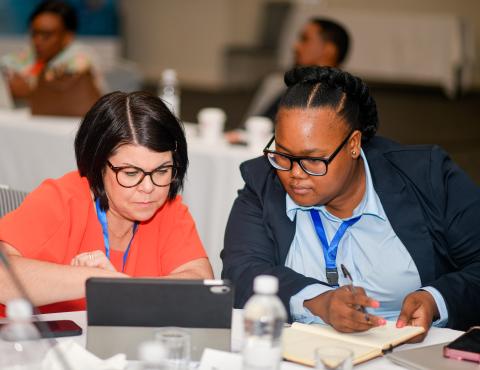
A recurring theme throughout the roundtable was the need for coexistence strategies that reflect who bears the costs of conflict. Women often face sudden economic insecurity and increased caregiving responsibilities when wildlife-related incidents injure or kill household breadwinners. They are also directly at risk of attacks themselves, such as gathering water, or when doing laundry at rivers or lakes. Young people may be exposed to physical danger or forced to leave school to support their families.
Yet women and youth are also central to sustainable solutions—contributing to early-warning systems, conservation education, monitoring, and the adoption of new technologies. Policies that include them meaningfully in decision-making and leadership strengthen not only conservation outcomes, but community resilience and social equity.
Hearing directly from civil society and local community representatives reinforced a simple message: legislation is strongest when it is shaped with, not just for, the people most affected.
Parliamentary Leadership, Shared Learning
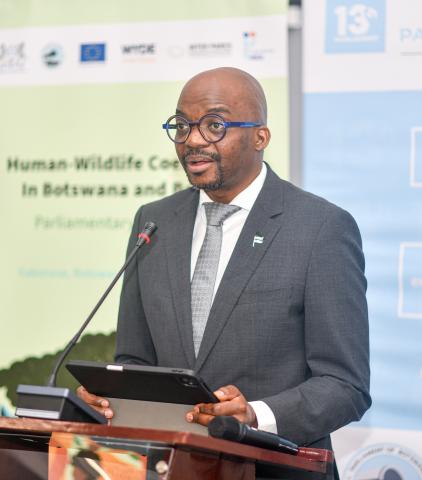
The three-day roundtable focused on strengthening parliamentary leadership on human–wildlife coexistence through lawmaking, oversight, and budgetary decision-making. Participants explored compensation and insurance schemes, climate-smart agriculture, deterrent measures, and technological innovations, while also building networks across committees working on conservation, climate change, and land-use planning.
Hon. Dithapelo L. Keorapetse, Speaker of the National Assembly of Botswana, underscored the responsibility this places on legislators:
Coexistence is not an abstract ideal but a policy choice that requires balance, courage, and foresight… Our laws and decisions must secure both human livelihoods and the long-term survival of wildlife for generations to come.
Reinforcing this message, the European Union reaffirmed its commitment to supporting parliamentary action on human–wildlife coexistence. Petra Pereyra, Ambassador to Botswana and the Southern African Development Community (SADC), highlighted Botswana’s leadership in community-based natural resource management and the critical role of African parliaments in advancing sustainable conservation. She underscored the EU’s continued support through funding, policy guidance, and international cooperation, stating that the Union “strongly supports biodiversity and sustainable conservation, working with local communities and African parliaments,” and will continue to promote collaboration on human–wildlife coexistence across the region.
A Shared Challenge, Shared Learning
One of the most striking outcomes of the Gaborone roundtable was the reversal of the usual “north-to-south” flow of expertise. While the realities of human–wildlife coexistence vary across regions, the challenges themselves are widely shared – and so are the dilemmas faced by parliamentarians.
As Jonathan Murphy, Head of Programme for Inter Pares at International IDEA, reflected:
Communities – whether in rural Botswana, Romania or Sri Lanka – confront similar concerns. This roundtable showed how valuable it is to learn from one another when navigating these shared dilemmas.
Building on these insights, Inter Pares and International IDEA are now developing a Human-Wildlife Coexistence Toolkit for Parliaments, translating lessons drawn from roundtable dialogue and experience into practical guidance for lawmakers worldwide.
Sustainable coexistence is not a compromise. It is evidence that policy, community, and nature can align. Sometimes, the most important expertise does not come from where policy is written – but from where people have long learned how to protect and live alongside wildlife, drawing on traditions, history, and deep conservation knowledge.
Watch more insights from participants from the roundtable here.


About the author