When corruption in Hungary costs a leg
Disclaimer: Opinions expressed in this commentary are those of the author and do not necessarily represent the institutional position of International IDEA, its Board of Advisers or its Council of Member States.
The afternoon light in Budapest in early September has a particular quality, low, and golden, catching the limestone façades along Andrássy Avenue and making even the scaffolding look ceremonial. Ferenc, 44, has driven a taxi through this light for 12 years. He knows which streets flood when it rains and which hotel doormen tip. Until three years ago, he says, he could not have named his own member of parliament.
“Politics was for other people,” he told us, waiting at a red light near the Oktogon traffic intersection. “I drove. I paid my taxes, mostly. I thought, whoever is up there, the traffic is the same.”
Then, in the winter of 2023, his father went into a county hospital for what should have been a routine operation on his lower leg. A vascular procedure, 40 minutes, home in three days. The surgery itself went well. What followed did not. The wound became infected on the ward. Ferenc says the nurses, whom he does not blame, were rationing supplies, improvising with what the family could buy at a pharmacy and bring in themselves. By the time the infection was under control, it was too late. His father, a retired railway machinist who had walked five kilometres a day his entire life, came home with one leg.
“I sat in the corridor of that hospital,” Ferenc said, “holding a bag of bandages we had bought ourselves, and I thought about the pandemic ventilators. Bought with healthcare money, at some of the highest prices in Europe, through middlemen who got extremely rich. That money was my father's bandages. And something in me snapped.”
For years, Hungarian investigative journalists documented what patients and their families already knew from the inside. Direkt36, one of the country’s leading investigative outlets, compiled a database of nearly 1,200 official decisions since 2020 recording hospitals suspending care, tracing which wards closed, for how long, and why, at a time when the ministry responsible for healthcare rarely communicated openly about internal hospital problems. Two of the reporters were shortlisted for the European Press Prize for a series exposing the concealed scale of hospital-acquired infections in Hungary, the same category of harm that took Ferenc’s father’s leg.
In 2023 and 2024, Hungary spent the lowest share of GDP on healthcare of all 27 EU Member States, just 4.7 percent against an EU average of 7.4 percent. Out-of-pocket health spending by Hungarians ran to around 27 percent of the total, far above the EU average, which is a statistical way of describing families carrying bandages into hospitals in plastic bags. And while the system starved, money moved. Investigative reporters found that the government had spent hundreds of millions of euros on unused medical equipment during the pandemic, with public money ending up in the pockets of well-connected businessmen.
Ferenc did not join a party. He drove people to rallies for free. He argued with his brother-in-law. He put a small sticker on his dashboard that said Elég - Enough.
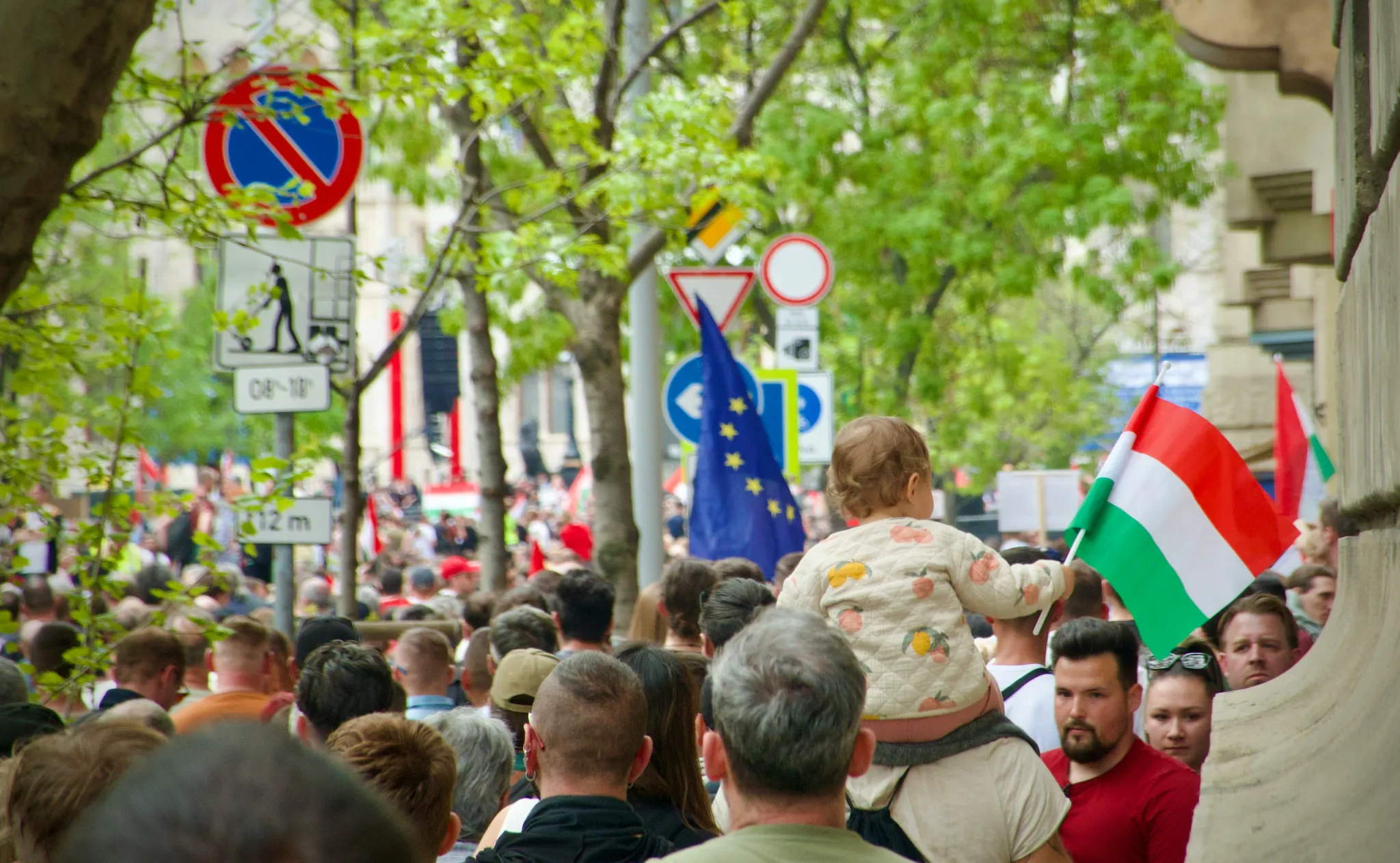
On 12 April 2026, he queued for over an hour outside his polling station in the 10th District and did not mind. Turnout reached nearly 79 percent, the highest in Hungary’s democratic history. The opposition Tisza Party, led by Péter Magyar, won 141 of the 199 seats in the National Assembly, a two-thirds supermajority, ending 16 years of Fidesz rule. Among the new government’s first announced measures was an additional HUF 500 billion (USD 1,575 billion) in annual healthcare funding. It will not restore anyone’s leg. Ferenc knows this.
“But my granddaughter,” he says, pulling up outside Keleti station, “she will not grow up believing that this is normal.”
It is tempting to read Hungary’s story as a morality tale with a clean ending: corruption exposed, voters mobilized, and government changed. But what happened to Ferenc’s father was never about individual thieves. It was about a system in which the rules governing money and power had been gradually changed until public wealth could flow, lawfully or nearly so, towards private hands, while oversight bodies looked away.
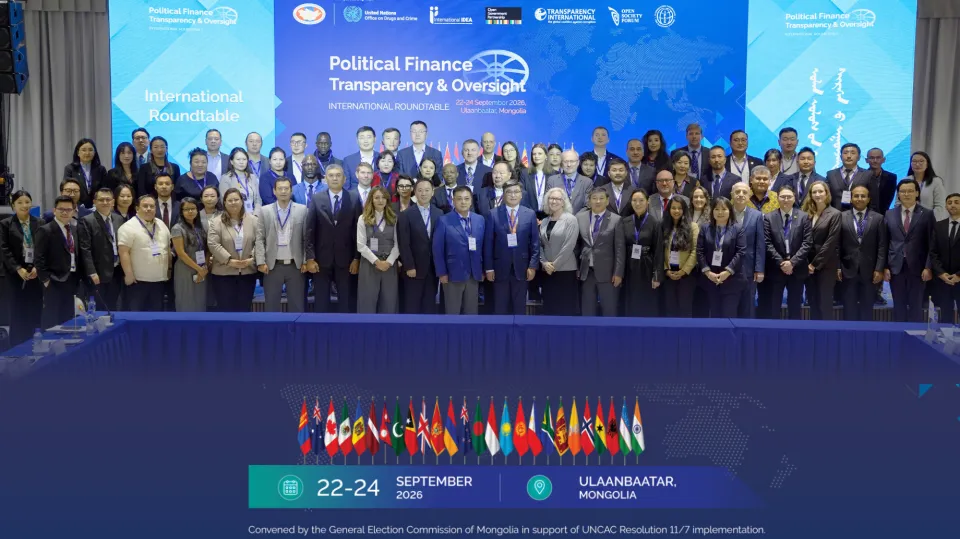
This is the terrain of political finance, the least glamorous and most consequential corner of democracy support. It is where organizations such as International IDEA do their work. International IDEA’s Political Finance Database, the leading global resource of its kind since 2003, tracks how 180 countries regulate money that flows through politics, across four areas: bans and limits on private income, public funding, spending regulations, reporting, oversight and sanctions. Its questions cover candidate finance, abuse of state resources, vote buying, lobbying and asset disclosure, in other words, the exact mechanisms through which a healthcare budget becomes a friend’s fortune.
Beyond the data, International IDEA provides technical assistance to oversight agencies and political parties, and its comparative research helps policymakers learn from countries that have successfully navigated political finance reform, from prohibited donation sources to real-time disclosure of financial transactions.
None of this makes headlines. Databases do not march. But when a new government in Budapest, or Warsaw, or anywhere, sits down to rebuild democracy, and the guardrails around public money are a critical part of it, it needs to know what works, where, and why.
Consider what Hungary’s new government now has to do: rewrite procurement rules, set limits on who can fund parties and campaigns, decide what politicians must disclose and how fast, and give an oversight body real powers to sanction. Every one of those choices has been tried somewhere, and has succeeded or failed for reasons that are known. International IDEA’s comparative data on 180 countries can tell a reforming government which rules get circumvented and which ones bite. That knowledge exists because organizations like International IDEA spent years building it before anyone urgently needed it.
Democracy, Ferenc might say, is not decided only on election day. It is decided in procurement rules, in disclosure requirements, in whether an oversight body has teeth. It is decided, ultimately, in whether a hospital can afford sterile bandages. Everything else is traffic.


About the author