Learning across borders: How parliamentary partnerships strengthen democracy
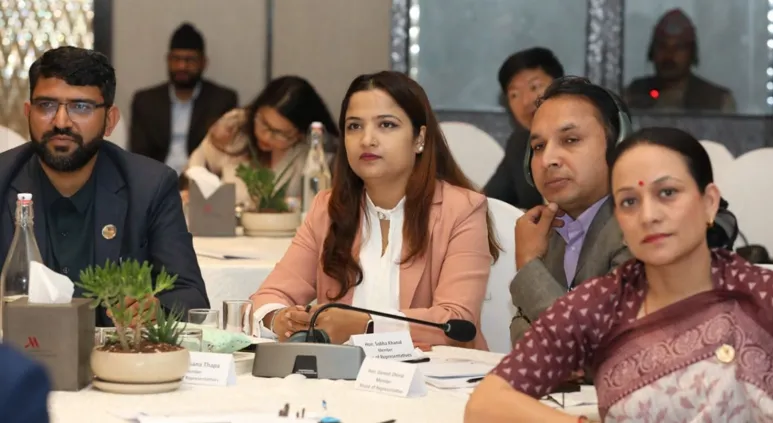
On International Day of Parliamentarism, the experiences of Nepal's Federal Parliament and Ireland's Parliamentary Budget Office demonstrate how peer-to-peer partnerships help parliaments build expertise, strengthen accountability, and deliver better outcomes for citizens.
Every year on 30 June, the International Day of Parliamentarism celebrates the vital role parliaments play in advancing democratic governance. Marking the anniversary of the founding of the Inter-Parliamentary Union in 1889, the Day provides an opportunity to reflect on how parliaments are becoming more effective, representative, transparent, and responsive to the needs of citizens.
Behind these institutional advances are the people who help parliaments evolve – parliamentary leaders, researchers, clerks, and technical experts who work across borders to share lessons and strengthen democratic practice.
For Rekha Upadhyaya, Joint Secretary of Nepal's Federal Parliament Secretariat, and Dr. Annette Connolly, Director of Ireland's Parliamentary Budget Office (PBO), that spirit of collaboration has come to life through International IDEA’s Inter Pares – Parliaments in Partnership programme, which is funded by the European Union. Their partnership demonstrates how peer-to-peer learning can help parliaments build stronger oversight institutions, develop technical expertise, and improve accountability to citizens.
A New Chapter for Parliamentary Oversight in Nepal
Following Nepal's recent elections, Parliament welcomed a significant number of new Members. For Upadhyaya, this moment of institutional renewal has also created an important opportunity to strengthen parliamentary oversight.
"The influx of new Members of Parliament creates a pivotal window to strengthen legislative budget oversight," she explained.
Armed with a fresh democratic mandate, parliamentarians have an important responsibility to ensure that public resources are allocated effectively and in line with citizens' priorities. As Nepal continues to navigate the opportunities and complexities of federal governance, Parliament's ability to scrutinize public finances has become increasingly important.
Effective budget oversight is about more than reviewing numbers. It helps ensure that public resources are directed toward national priorities, that government spending delivers results, and that citizens can have confidence in democratic institutions. It also requires parliamentarians to have access to reliable information and strong institutional support.
To support that effort, the Federal Parliament of Nepal, supported by Inter Pares convened two complementary workshops in Kathmandu focused on strengthening parliamentary budget oversight and institutional capacity.
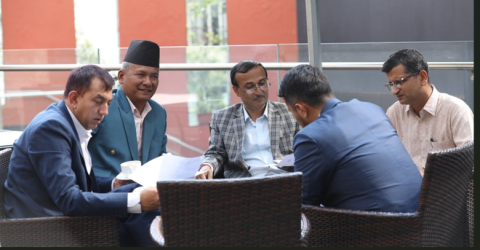
On 15 May, in Kathmandu, Inter Pares, in partnership with the Federal Parliament of Nepal, convened a workshop on The Role and Functioning of Parliamentary Budget Offices (PBOs), bringing together parliamentary staff and international peers to strengthen Parliament’s capacities to effectively engage in the budget process and oversee public spending.
On 15 May, parliamentary staff participated in a workshop examining the role and functioning of PBOs and how independent analytical capacity can support stronger parliamentary scrutiny of public spending. Building on those discussions, newly elected Members of Parliament took part in a two-day workshop on Parliament's budgetary powers.
The workshops brought together parliamentary peers from the Irish Houses of the Oireachtas, the French National Assembly, and the Cyprus House of Representatives, alongside government officials and national and international experts. Discussions explored topics ranging from pre-budget consultations and parliamentary budget offices to collaboration with supreme audit institutions and citizen participation in budget processes.
One parliamentary staff participant reflected on the value of the exchange:
"The perspectives shared by the international colleagues helped me compare and reflect on them more deeply – and I believe are worth emulating. Now, I have been thinking about how Parliament can, to some extent, place checks and balances on the unlimited powers of the Ministry of Finance."
The workshops demonstrated how peer learning can help parliaments strengthen institutional capacity while ensuring that budget decisions remain responsive to citizens' needs. A particular focus of the discussions was how inclusive and participatory budget consultations can help align public spending with national priorities and the concerns of underrepresented groups.
Sharing Experience, Not Prescriptions
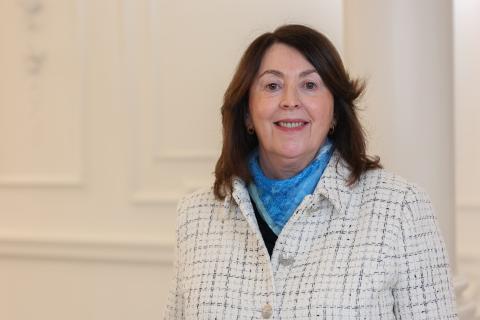
Dr. Annette Connolly, Director of Ireland's Parliamentary Budget Office
For Dr. Annette Connolly, Director of Ireland's Parliamentary Budget Office, supporting parliamentary counterparts in Nepal felt particularly relevant because Ireland's own PBO is still relatively young.
Established in 2017, Ireland's PBO was created to provide parliamentarians with independent, non-partisan analysis of fiscal policy, public expenditure, and budget proposals. Through Inter Pares, Irish parliamentary officials first travelled to Kathmandu in 2024 to share lessons as discussions around creating a PBO were underway. In 2025, Nepali parliamentary staff visited Dublin for a study visit, followed by a return mission to Nepal in 2026 to support both the newly established PBO and newly elected parliamentarians.
"Our own experience is still relatively recent," Connolly explains. "We remember what it was like to establish a new office, define priorities, determine staffing needs, and demonstrate value to parliamentarians. Those lessons can be useful for others facing similar challenges."
Rather than offering a blueprint, Ireland's role has been to share practical experiences that Nepal can adapt to its own context.
One of Ireland's key lessons is that institutional credibility takes time to build.
"We often encourage new PBOs to focus first on supporting key parliamentary milestones and committees. Capacity, expertise, and reputation are built gradually."
That advice reflects Ireland's own journey. The Irish PBO began with only four staff members and has since grown into a multidisciplinary office of approximately twenty specialists. Over time, the office has expanded its services to include confidential policy costings and advanced economic modelling while maintaining a focus on providing accessible, independent information to parliamentarians. For Connolly, transparency and public understanding are essential ingredients of effective fiscal oversight.
The Importance of Parliamentary Expertise
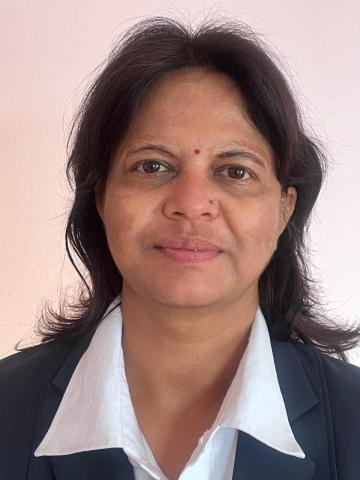
Rekha Upadhyaya, Joint Secretary of Nepal's Federal Parliament Secretariat
For both women in senior positions, one lesson stands out clearly: strong parliamentary oversight depends not only on elected representatives, but also on professional parliamentary staff and independent expertise.
Upadhyaya believes PBOs can help bridge the gap between increasingly complex fiscal information and parliamentary decision-making.
"Parliamentary Budget Offices and parliamentary staff play a critical role in helping Members make informed, evidence-based decisions by providing independent, objective, and professional analysis," she said. Such support enables parliamentarians to scrutinize government proposals, assess fiscal sustainability, monitor budget implementation, and better understand the implications of policy choices.
That support becomes increasingly important as governments face growing fiscal pressures, public debt challenges, climate risks, infrastructure demands, and expectations for improved public services.
Across the world, parliaments often face remarkably similar challenges. Limited technical expertise, insufficient time to review budgets, information gaps, executive dominance in budget preparation, and difficulties monitoring implementation can all hinder effective oversight.
For both Nepal and Ireland, investing in parliamentary expertise helps address these challenges by ensuring that legislators have access to independent, accessible, and evidence-based information when making decisions that affect millions of citizens.
Why Peer Partnerships Matter
The Nepal-Ireland partnership highlights one of the greatest strengths of parliamentary cooperation: learning from those who have recently faced similar challenges.
Unlike traditional technical assistance, peer exchanges allow parliamentary practitioners to engage as equals. Discussions focus not only on successes, but also on obstacles, lessons learned, and practical solutions.
For Nepal, the partnership has provided insights into how a Parliamentary Budget Office can evolve over time, how parliamentary committees can make greater use of evidence, and how institutional capacity can be built sustainably.
For Ireland, the exchange has offered opportunities to learn from Nepal's own experiences of democratic transition, federal governance, and parliamentary modernization.
These conversations reinforce an important reality: while parliamentary systems differ, many of the challenges they face are shared.
Whether strengthening budget oversight, expanding citizen participation, adapting to new technologies, or improving institutional effectiveness, parliaments benefit from opportunities to learn directly from one another.
Building Stronger Democracies Together
Looking ahead, Upadhyaya envisions a Parliament that increasingly relies on evidence-based analysis, independent research, and stronger committee scrutiny to oversee public finances.
Success, she argues, will be measured not simply by more budget debates, but by stronger accountability, greater transparency, improved public services, and increased trust in democratic institutions. Parliament must evolve into a proactive institution that continuously monitors public spending, evaluates government performance, and ensures that public resources contribute to national development goals and citizens' well-being.
That vision reflects the broader goals of International Day of Parliamentarism.
As parliaments around the world work to strengthen oversight, adapt to new challenges, promote more inclusive participation, and better represent the people they serve, peer learning remains one of the most powerful tools for institutional development.
On this International Day of Parliamentarism, their story offers a reminder that strong democratic institutions are built not only through laws and procedures, but through collaboration among the people who bring those institutions to life.


About the author