Beyond the abstract: Six resources for constitutional governance and human rights
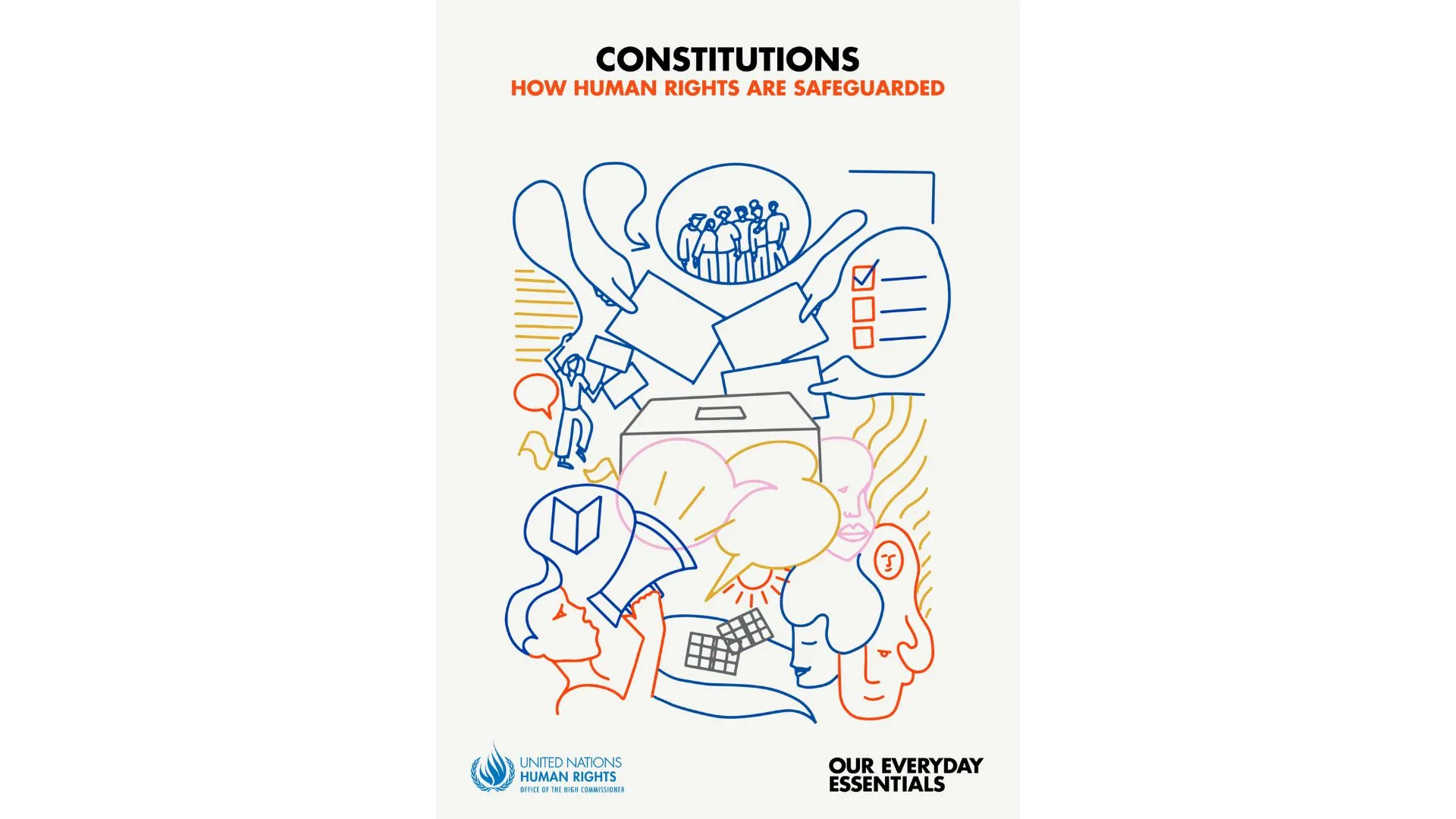
This year, Human Rights Day on December 10 calls us to reflect on "Our Everyday Essentials" — the conditions that allow people to live with dignity, equality, and security. These essentials are not automatic: they are built and protected through the constitutional and legal frameworks that define the social contract between citizens and the state.
At International IDEA, the Constitutional Governance and Rule of Law programme works at this very foundation. Through helping countries strengthen democratic institutions and navigate constitutional reform, we help ensure that the rights people rely on each day are not abstract promises but lived realities.
Constitutions determine how power is shared, how rights are safeguarded, and how societies coexist. When these frameworks are weak, the everyday essentials of human rights — justice, participation, equality, accountability — are the first to erode. When they are strong, they lay the groundwork for peace, inclusion, and democratic resilience.
In honor of this year’s theme, explore six of our key human rights-relevant resources. Together, they demonstrate how constitutional governance transforms human rights from aspiration into daily experience for all.
1) Designing Resistance: How to Fortify Democracy and Protect Human Rights
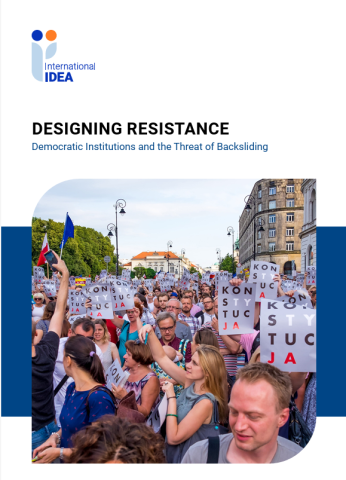
Democracy backsliding directly threatens core human rights, including freedoms of expression, assembly, press, and association. These rights underpin democratic participation, yet they are often the first to erode when governments pack courts, tilt electoral bodies, or rewrite rules to entrench themselves.
"Designing Resistance: Democratic Institutions and the Threat of Backsliding," examines how democratic backsliding increasingly originates from within the system itself. Elected leaders exploit constitutional loopholes and institutional weaknesses to concentrate power and undermine genuine political competition.
The report details these strategies and distills lessons from countries where institutions have been deliberately weakened. Its recommendations focus on strengthening resilience not only through checks and balances, but also through reforms that foster transparency, moderation, and meaningful democratic deliberation. These include empowering political opposition and creating intentional delays that prevent temporary majorities from quickly dismantling democratic safeguards.
"[P]oor institutional design can make the path easier for backsliders, while strong institutional design can strengthen the resistance of democracy. Even if we cannot make buildings earthquake-proof, we can learn how to make them more earthquake resistant." — Designing Resistance: Democratic Institutions and the Thread of Backsliding
The message is clear: protecting human rights requires institutions capable of resisting leaders who seek to centralize authority. Reinforcing these guardrails is essential to preserving democracy — and the freedoms that depend on it.
Also in this series: Designing Resilient Institutions: Countering Democratic Backsliding in Asia, which examines India, Indonesia, Mongolia, the Philippines, South Korea, Sri Lanka, Taiwan and Thailand to capture the patterns, dynamics and diversity of democratic challenges facing countries in Asia, which both align with, and depart from, global trends.
2) Defending the Pillars of Rights: Time, Space, and Information
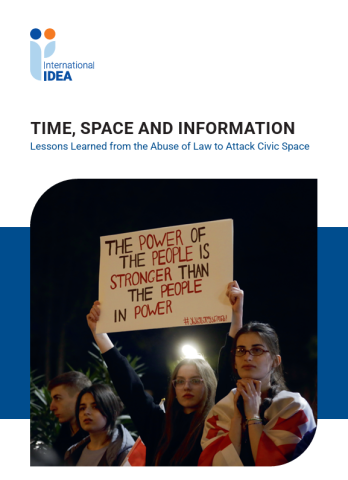
Governments worldwide are increasingly leveraging legal and institutional tools to silence critics and weaken democratic safeguards. The International IDEA report "Time, Space and Information: Lessons Learned from the Abuse of Law to Attack Civic Space," highlights how such tactics systematically shrink civic space, undermining democratic freedoms.
"Strengthening civic space is not only about protecting civil society organizations and the media; it is about fortifying democracy itself." — Time, Space, and Information
This deliberate backsliding violates fundamental human rights, including freedom of expression, association, and the right to participate in public affairs. When civil society and independent media are constrained, disinformation flourishes and accountability erodes.
Drawing on comparative case studies, the report exposes the mechanics of democratic backsliding and identifies strategies for building resilience. It argues that defending civic space requires more than reactive measures: it demands institutional design that protects time, space and information from executive overreach.
3) Constitutional Safeguards for Human Rights in the Digital Age
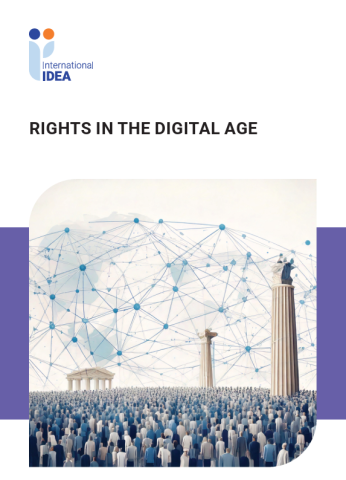
The growing integration of digital technologies into our everyday lives raises critical questions about how fundamental rights and freedoms are preserved and protected in the digital age. International IDEA’s report: "Rights in the Digital Age," makes a critical case: the human rights you enjoy offline must be legally guaranteed online, too.
"As digital technologies increasingly influence the exercise of civil and political rights, as well as other fundamental freedoms, robust constitutional safeguards are essential for addressing new challenges — from unwarranted surveillance and censorship to algorithmic governance and data monopolies." — Rights in the Digital Age
Additionally, it argues that only these robust constitutional protections are strong enough to shield your civil and political rights from the wild threats of digitalization. As digital technologies increasingly influence our lives, robust frameworks are essential to address new challenges, including rampant surveillance, censorship, dodgy algorithms, and massive data monopolies from Big Tech and governments alike.
Ensuring adequate constitutional protection helps anchor fundamental rights in an evolving digital landscape.
4) Courts as Champions of Women's Rights: A Global Judicial Shift
Courts worldwide are increasingly using constitutional law to advance human rights and dismantle discrimination against women.
International IDEA and UN Women’s study "Gender Equality and Women's Empowerment: Constitutional Jurisprudence" spotlights how judges strategically apply constitutional guarantees, often rooted in international human rights treaties like the Convention on the Elimination of all Forms of Discrimination Against Women, to resolve conflicts between women's rights and customary or religious laws.
"Gender-based violence affects the human rights of women and girls, including the right to life, the right to equal benefit and protection of the law, the right to equality, the right to security and the right to dignity. " — Gender Equality and Women’s Empowerment: Constitutional Jurisprudence
Focusing on family law, gender-based violence, and public life, the research shows that courts are becoming powerful allies. They use substantive equality and global human rights standards to ensure progressive judicial outcomes, proving that constitutions are key to security women’s empowerment and dignity.
5) Bridging the Gap: Constitutions, Custom, and Women's Rights
Constitutions often enshrine gender equality, yet for many women and girls, the promise remains unrealized — particularly where customary or religious laws hold sway. Drawing on insights from the annual Women Constitution-Makers' Dialogue — the only peer-to-peer platform of its kind for women involved in constitutional transitions — this publication Constitutions, Customary and Religious Law, and Gender Equality examines how nations navigate the tension between constitutional human rights and traditional systems that may perpetuate discrimination.
The report emphasizes the power of strategic activism and partnerships to transform cultural norms. By engaging traditional leaders, leveraging international law, and treating custom as a “living” system capable of change, activists can advance meaningful, lasting gender equality.
"Most international and regional frameworks are clear that the equal rights of women and girls should take legal precedence over discriminatory customary and religious rules and practices." — Constitutions, Customary and Religious Law, and Gender Equality
At its core, this work empowers women to turn constitutional guarantees into everyday realities. Readers can further explore the Women Constitution-Makers' Dialogue series — along with related publications and multimedia resources — for broader comparative insights.
6) Primer Tools for Rights-Based Constitution Building
International IDEA's Constitution-Building Primers offer accessible, practical introductions to some of the most pressing issues facing constitution-makers today. Designed for non-specialists as well as practitioners, the series breaks down complex choices — ranging from rights protection to institutional design — into clear, comparative insights that can be adapted to different national contexts.
Many primers address human-rights-related questions directly, helping policymakers, civil society, and advisors think through how constitutional provisions can advance equality, justice, and accountability. Among the most relevant are the primers on Social and Economic Rights, Protecting Ethnic Minorities within Minorities, and Emergency Powers in Constitutions, each offering “think-points,” guiding questions, and further resources for deeper exploration.
As an evolving series, the primers continue to grow, providing constitution builders and their supporters with reliable, context-sensitive guidance as they navigate the challenges of reform.
Related Tools:
- Environmental Protection in Constitutions Assessment Tool: Provides guidance on assessing a constitution for environmental stewardship.
- Indigenous Peoples' Rights in Constitutions Assessment Tool: Helps users to analyse a constitution from the perspective of indigenous peoples’ rights.
- Constitution Assessment for Women's Equality Tool: Helps users analyse a constitution or draft constitution from the perspective of the substantive equality of women.


About the author