


Electoral Processes
Global Guiding Principles for Electoral Processes
In cooperation with leading partners such as the United Nations and The Carter Center, International IDEA regularly convenes electoral management bodies (EMBs) and international experts to identify, develop and promote the key principles that underpin the evolving profession of electoral management. Early normative frameworks, such as the Code of Conduct - Administration of Elections, and the Guiding Principles listed in the ACE Project, established a common foundation for ethical and professional electoral practice. Building on these foundations, more recent and forthcoming guidance address increasingly specialised and contemporary challenges, ranging from the use of artificial intelligence in electoral processes, to safeguarding EMB independence, strengthening inter-agency cooperation and enhancing the effectiveness of electoral assistance.
This page brings together International IDEA's work on developing and promoting internationally recognized principles, standards and good practices for credible elections. It features key publications such as The Code of Conduct for the Ethical and Professional Administration of Elections (1997), Supporting Elections Effectively: Principles and Practice of Electoral Assistance (2021), The Model Commitments for Advancing Genuine and Credible Elections (2024), and the Global Network for Securing Electoral Integrity (2024) initiative. The page also highlights major international events and dialogues, including the Stockholm Conference on Electoral Integrity and the Canberra Series on Electoral Integrity, which promote peer learning, policy exchange and international cooperation among election practitioners, policymakers and researchers.
The Model Commitments for Advancing Genuine and Credible Elections (2024) provides a shared framework for strengthening electoral integrity, developed by International IDEA together with the Carter Center, NDI, IFES and the Kofi Annan Foundation. The guide brings together existing international norms, standards and good practices into practical commitments covering the legal framework, election administration, electoral accountability, information integrity and international engagement, while also addressing emerging challenges such as cybersecurity, digital technologies and artificial intelligence.
In 2023, International IDEA (as a steering committee member) joined USAID and electoral assistance organizations around the world, in launching the Global Network for Securing Electoral Integrity (GNSEI, 2024), which convenes election stakeholders around a shared vision: to inspire and inform action to advance electoral integrity in the face of critical threats to democracy. GNSEI brings together electoral assistance actors to develop, advance, and promote adherence to norms, guiding principles, and codes of conduct that address emerging and long-term threats to electoral integrity.
Supporting Elections Effectively: Principles and Practice of Electoral Assistance (2021) examines the principles and lessons that have guided international electoral assistance over recent decades and assesses how they should evolve in response to democratic backsliding and emerging challenges. Drawing on the experience of electoral assistance practitioners, the report recommends renewing international principles, strengthening knowledge exchange, and investing in regional organizations to better support credible and resilient electoral processes. For more information visit Expertgruppen för Biståndsanalys (EBA).
The Code of Conduct for the Ethical and Professional Administration of Elections (1997) establishes the core ethical principles and professional standards that should guide election administrators in the performance of their duties. It promotes integrity, impartiality, transparency, accountability and professionalism as the foundation for credible electoral administration, while providing practical guidance to help election officials uphold public confidence in the electoral process
Conferences and Events
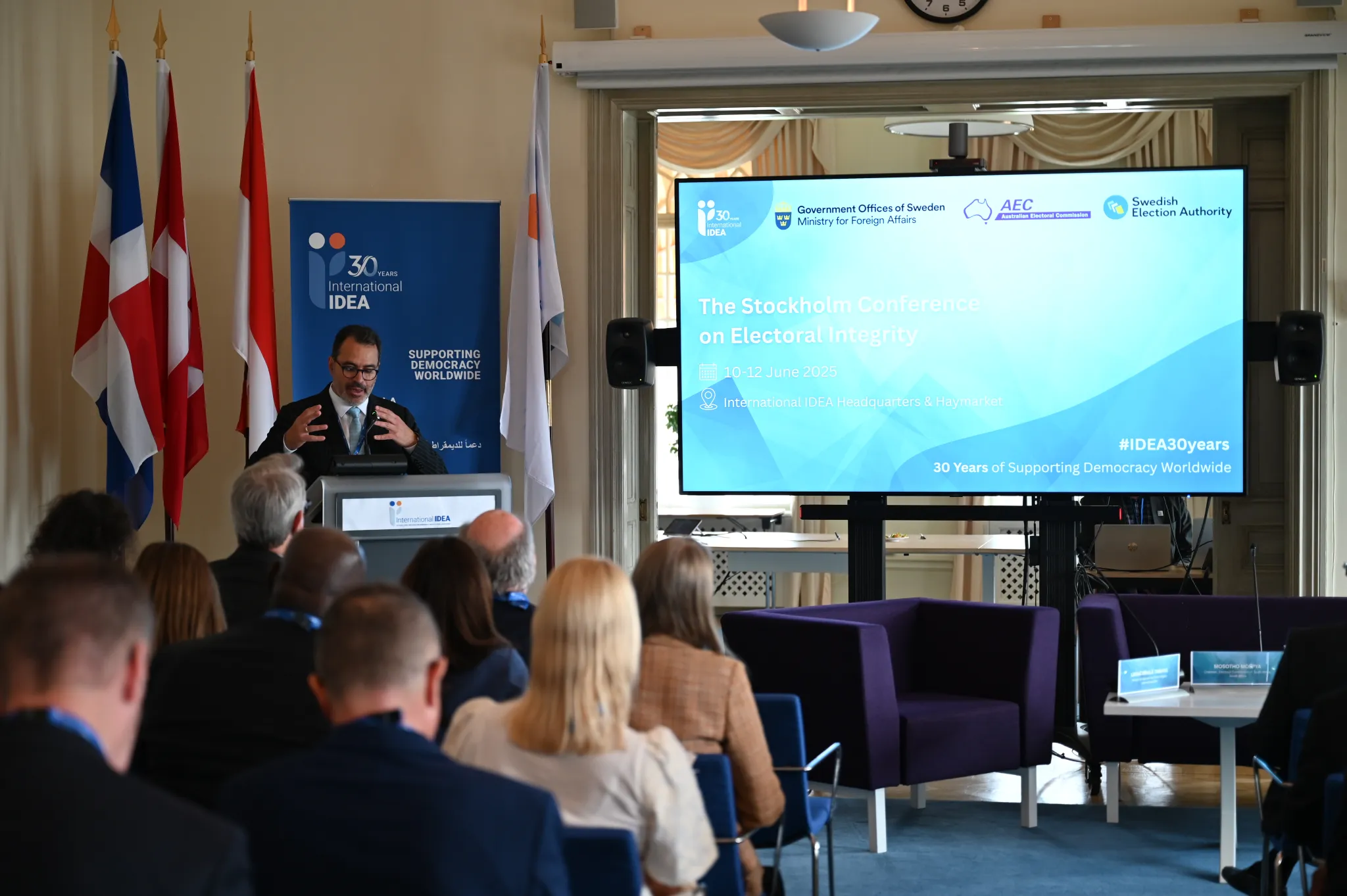
The Stockholm Conference on Electoral Integrity, held on 10–12 June 2025, brought together election officials, researchers, policymakers and international organizations to discuss the future of electoral integrity in an increasingly complex democratic environment. The conference provided a platform for exchanging experiences and research on issues such as election management, information integrity, technology, participation and public trust, while fostering dialogue between practitioners and the academic community. It reaffirmed the importance of international cooperation and evidence-based approaches to strengthening democratic elections worldwide.
In 2024, International IDEA launched a programme of thematic dialogues with and among its Member States to promote peer learning and policy exchange on key democracy issues. The initiative included the Canberra Series on Electoral Integrity, organized with the Australian Electoral Commission and later joined by the Swedish Election Authority and the Swedish Ministry for Foreign Affairs. Together, these dialogues strengthened international cooperation by connecting election practitioners, policymakers and Member States to exchange experiences and good practices on electoral integrity and democratic governance.
For more information about international election standards, see the Carter Centre database and handbook.


