


Transnational Climate Litigation
Case Study, October 2026

Executive Summary
This case study explores the potential of transnational litigation in the pursuit of climate justice. Climate justice may be understood as recognizing the ways in which climate change affects people differently, unevenly, and disproportionately, and as seeking to redress the resulting injustices in fair and equitable ways. The case study examines three transnational climate lawsuits filed by individuals or communities from Global South jurisdictions in the Asia-Pacific region against corporations with high greenhouse gas (GHG) emissions before courts in the corporations’ home jurisdictions in Europe. Building on an analysis of these cases, the case study considers how transnational climate litigation can address access to justice, rights protection, inclusion, public participation, and human rights. As the proceedings remain ongoing, the analysis focuses on the legal pathways they open and their potential implications rather than treating their outcomes as settled.
Introduction
I can say that typhoon Sendong [Tropical Storm Washi] was one of its kind. There were several typhoons that hit us, but never as strong as such typhoon. We seemed unaware of a looming disaster that would befall our family. I never thought this would kill thousands of lives including my three children, one son-in-law and four grandchildren. I did not know that day was the last time I will see them. But the saddest part was that their bodies remain missing up to this day.
—Amalia Bahian, a survivor of Tropical Storm Washi (Commission on Human Rights of the Philippines 2022:34)
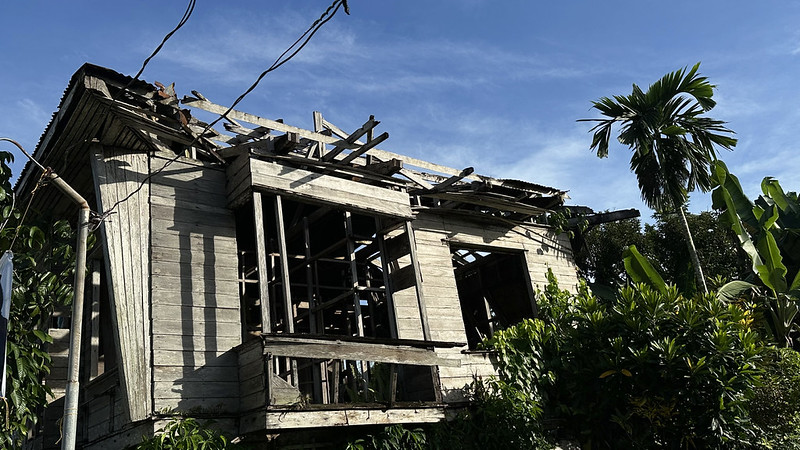
Tropical Storm Washi devastated the Philippines on 16 and 17 December 2011, leaving 957 dead and 1,582 injured (Commission on Human Rights of the Philippines 2022: 34). Each year, the Philippines is hit by an average of 20 tropical cyclones (PAGASA n.d.). While it is one of the most climate-vulnerable countries (Adel et al. 2025), it has only contributed 0.7 percent to historic GHG emissions and its per capita emissions in 2023 were 2.7 metric tons of carbon dioxide equivalent (Climate Change Tracker n.d.). It is not a major emitter. Several countries in the Asia-Pacific region are similarly vulnerable but are not major emitters. That the burden of climate change impacts falls disproportionately on those who have hardly contributed to causing it sits at the heart of the quest for climate justice. Climate justice is understood here as referring to the ways in which “climate change impacts people differently, unevenly, and disproportionately, as well as redressing the resultant injustices in fair and equitable ways” (Sultana 2022: 120).

One pathway for the pursuit of climate justice lies in litigation. While discussions of accountability for climate impacts have traditionally focused on countries, there is a growing focus on corporations as their role in climate change processes is better understood (Wright and Nyberg 2024). One area of climate litigation is particularly relevant to corporate climate accountability—transnational cases filed by individuals or communities from the Global South against high GHG-emitting corporations in the courts of their home jurisdiction in the Global North. These plaintiffs are bringing claims in their own capacity or on behalf of deceased relatives to seek compensation from defendant corporations that have allegedly caused the plaintiffs’ injuries through their material contribution to causing climate change. These cases are, therefore, also referred to as “polluter pays cases” (Setzer and Higham 2024: 31) and “loss and damage litigation” (Tigre and Wewerinke-Singh 2023: 440). This case study uses the phrase “transnational climate litigation” to emphasize the cross-border element whereby plaintiffs from Global South jurisdictions in the Asia-Pacific region are suing major carbon emitters headquartered in Global North jurisdictions in Europe.
Because most climate lawsuits are filed and decided in domestic courts, climate litigation might be regarded as a local (and localized) phenomenon in which each case must be assessed within its own context. From the outset, however, both practitioners and scholars of climate litigation have conceived of the field in a broader sense. It is common for climate litigation to be described as “transnational” in nature or part of a “global” climate justice movement (Setzer and Benjamin 2020; Affolder and Dzah 2024). For example, the Climate Litigation Network (CLN) describes itself as follows: “the Urgenda Foundation, the environmental organization who brought the case [ Urgenda Foundation v. State of the Netherlands1], set up the [CLN] to harness this legal strategy, support other cases against big polluters and strengthen the growing wave of climate litigation” (Climate Litigation Network n.d.).
In its landmark report looking back on 10 years of climate litigation, the CLN takes the position that there have been significant linkages between cases around the world as courts have built on each other’s decisions. It uses the term “global legal architecture” to describe the “composite and overarching nature” of judicial decisions and advisory opinions from domestic, regional, and international courts (Maxwell et al. 2025: 25).
Against this background, this case study considers transnational climate litigation to identify how such cases within or originating from the Asia-Pacific region address access to justice, rights protection, inclusion, public participation, and human rights.
1. Case Studies in Transnational Climate Litigation in the Asia-Pacific Region
1.1. Asmania et al. v. Holcim AG
The plaintiffs are four residents of the island of Pari in Indonesia, which has seen increased flooding due to rising sea levels. Over the past 11 years, the island has lost about 10 percent of its land area. The defendant, Holcim, is a Swiss company that is one of the world’s largest producers of cement and other construction materials. In February 2023, Asmania and his co-plaintiffs filed a claim in the Swiss courts against Holcim2 seeking compensation for loss and damage, a contribution to the cost of climate adaptation measures on Pari, and a judicial order declaring that Holcim had to reduce its carbon dioxide emissions by 43 percent by 2030. The lawsuit is grounded in private law (the Swiss Code of Obligations) and is based on the argument that Holcim has incurred extra-contractual liability for causing harm to the residents of Pari through its contribution to climate change. On 17 December 2025, the Cantonal Court of Zug decided that the plaintiffs had a right to have their case heard by the court. The court rejected Holcim’s argument that the plaintiffs’ claim was not a private law matter falling within the jurisdiction of a civil court because it concerns the global issue of GHG emissions and thus has a public law nature (Loyens & Loeff 2026). It held that the claim concerned private law obligations even though climate policy is public in nature. Further, the court held that “court decisions do not replace democratically legitimized climate protection policy but complement it” (ECCHR 2025).
The proceedings remain ongoing. The December 2025 decision addressed whether the claim could proceed as a private law matter before a Swiss civil court; it did not determine Holcim’s liability or the remedies sought by the plaintiffs. Nevertheless, the decision illustrates a potential legal pathway for people affected by climate change outside Switzerland to pursue private law claims against companies domiciled there. Whether similar claims can proceed and ultimately succeed will depend on the applicable legal requirements and the circumstances of each case. The implications of this potential pathway for access to justice are discussed further in 2: Considerations for Democracy.
1.2. Casquejo and Others v. Shell Plc and Another
Survivors of Super Typhoon Rai (“Odette”), which hit the Philippines on 16 December 2021 with devastating consequences, have brought proceedings against Shell3, a major oil and gas company, for causing personal injury, psychological trauma, loss of cultural rights, and loss of earnings. The plaintiffs’ central claim is that Shell materially contributed to anthropogenic climate change, which significantly increased the likelihood and severity of Typhoon Odette, thereby increasing the damage sustained by the plaintiffs (Hausfeld 2025).
The claimants filed proceedings against Shell in the High Court of England and Wales on 9 December 2025. They brought the claim in England and Wales on the basis that Shell is domiciled in the United Kingdom. The claimants maintain that Philippine law applies to their claims under the Rome II Regulation4 because the alleged damage occurred in the Philippines. Their legal arguments, as outlined in the letter before action, include negligence, unjust enrichment, alleged violations of the constitutional right to a balanced and healthful ecology, and alleged climate misinformation or denial (Hausfeld 2025). The dissemination of climate misinformation is alleged to breach a duty to act in accordance with “morals, good customs [and] public policy,” a provision contained in article 21 of the Philippines’ Civil Code,5 which the Human Rights Commission of the Philippines identified in its 2022 National Inquiry on Climate Change Report as a possible route for holding large carbon emitters liable for climate-related harm (Commission on Human Rights of the Philippines 2022: 109).
The case has been reported as the first UK legal claim seeking damages from an oil company for climate-related impacts associated with an extreme weather event (McGrath 2025). It is noteworthy that the case originates in the Asia-Pacific region, where several countries are among the world’s most climate-vulnerable. The Philippines is taking an active role in highlighting the importance of the loss and damage agenda across Southeast Asia and is seeking to position the region to play a proactive role in global climate negotiations on this issue (Department of Environment and Natural Resources 2025).
Alongside the transnational proceedings against Shell, legislative proposals in the Philippines have sought to establish mechanisms for corporate accountability for climate-related loss and damage. House Bill No. 9609, introduced in November 2023, proposed compensation mechanisms and broad standing provisions for people affected by climate change, including minors and future generations. A bill addressing the same subject, House Bill No. 10423, was introduced in the 20th Congress in July 2026 and, as of October 2026, remains under consideration by the House Committee on Climate Change.6 These proposals illustrate a domestic legislative approach to corporate climate accountability that could complement transnational litigation.
1.3. Pakistani Farmers v. RWE and Heidelberg Materials (the Climate Cost Case)
In 2022, unprecedented extreme rainfall submerged almost a third of Pakistan. The floods caused more than 1,700 deaths and affected approximately 33 million people, of whom an estimated 8 million were displaced (British Red Cross n.d.). The combined damage and economic losses were estimated at more than USD 30 billion (Government of Pakistan 2022).
Thirty-nine farmers from the Sindh region, which was most severely affected by the floods, brought legal proceedings in December 2025 seeking partial compensation for their lost income and damage to their crops. Their claim is brought against two major carbon-emitting companies in Germany, Heidelberg Materials and RWE7, based on a widely recognized principle of civil law, enshrined in section 823 of the German Civil Code, that the perpetrator of a harmful act must compensate for the damage caused.8
The case builds upon the legal foundations established in Saúl Luciano Lliuya v. RWE,9 where a Peruvian farmer and mountain guide residing in Huaraz, Peru, sued Germany’s largest electricity producer, RWE, over the increased flood risk to his property associated with the expansion of a glacial lake. The lawsuit was brought under section 1004 of the German Civil Code, which states: “If the ownership is interfered with by means other than removal or retention of possession, the owner may require the disturber to remove the interference. If further interferences are to be feared, the owner may seek a prohibitory injunction.” It is typically invoked when people seek relief from neighbors for damage or potential harm to their property. As Noah Walker-Crawford puts it in his fascinating account of this case, “In their arguments, Saul’s lawyers expand the legal conception of neighborliness to encompass relations across the planet: as climate change connects RWE and Saul, it makes them neighbors” (Walker-Crawford 2023: 78). Saúl Luciano Lliuya v. RWE AG alleged that the increased flood risk to his property from the substantial growth of the glacial lake, which might overflow or breach its dam, is “interference” caused by RWE as property owner.
The Higher Regional Court of Hamm ultimately dismissed the claim because the plaintiff had not demonstrated a sufficiently imminent risk of damage to his property. However, the case is groundbreaking in that the court accepted, in principle, that corporations responsible for large-scale emissions can be held liable under German civil law for climate-related harm occurring abroad. The court also stated: “The distance between the source of the disturbance and the affected property is irrelevant; proximity is not a prerequisite—both according to the wording and the meaning and purpose of [section 1004 of the German Civil Code]”.10
Because their claim seeks compensation for damage that has already occurred rather than for potential future harm, the Pakistani farmers may be better placed to overcome the evidentiary hurdles that proved insurmountable to Saúl Luciano Lliuya v. RWE AG, although it ought to be noted that the plaintiffs relied on different civil code provisions in the two cases. The law is on firmer ground when the litigation concerns damage that has already occurred and the plaintiffs approach the courts for a remedy to restore them to the position they would have been in had the damage not occurred, while cases seeking monetary contribution toward preventive strategies to reduce the risks of damage (e.g., flooding) are rare. This makes it more challenging for the plaintiffs in these cases to overcome evidentiary burdens. In this Climate Cost Case, scientific evidence that shows how climate change has increased the likelihood and severity of flooding will be presented to the court (Kaminski 2025).
2. Considerations for Democracy
Climate litigation cases involving judicial review, whether administrative or constitutional, often raise questions about the appropriate role of the courts and the separation of powers. In such cases, judges “have highlighted the shortcomings of representative majoritarian politics and emphasized the role of judicial review in ensuring that the democratic process does not become distorted by its own limitations” (Eckes 2025: 71).
Transnational private law claims against corporations raise different democracy-related questions from constitutional or administrative challenges to government climate policy. The cases discussed above primarily concern the responsibility of corporations rather than the legality or adequacy of government action. Their private law character is therefore important to how courts justify exercising jurisdiction. In Asmania et al. v. Holcim AG, for example, the defendant company argued that the claim was not a private law matter falling within the jurisdiction of a civil court because it concerned the global issue of climate change and thus had a public law nature (Loyens & Loeff 2026). The court rejected this argument and held that, even though climate policy is public in character, this dispute concerned private law claims such as personality rights under the Swiss Civil Code.
It is tempting to conclude at this juncture that transnational private law climate litigation does not raise meaningful considerations for democracy, but doing so would ignore the multiple aspects of democracy beyond majoritarianism. Transnational private law claims against corporations raise different democracy-related questions from constitutional or administrative challenges to government climate policy. Although these claims primarily seek to establish corporate responsibility rather than directly challenge public policy, judicial decisions in such cases may intersect with regulatory choices and broader questions about the respective roles of courts and elected institutions. Their democratic significance also extends to whether climate-affected communities can access courts outside their home countries and participate effectively in proceedings. The turn to private law claims in civil courts opens a novel pathway for foreigners to seek climate justice through the courts of the jurisdiction where the harm-causing company is domiciled. Such claims may enhance access to justice while also enabling the pursuit of accountability, transparency, and the protection of human rights.
It would, however, be unrealistic to rely on transnational climate litigation alone to advance corporate climate accountability. Such cases are expensive, requiring a lot of time and resources, considering that defendants are wealthy corporations which have the resources to finance protracted and complex legal proceedings. The strategic planning behind such cases takes years, and considerable resources can be required to address novel questions of law and evidence. Claimants, advocates, and environmental defenders who file these high-profile cases against well-known carbon majors may also face greater public scrutiny, placing them at risk of physical threats, legal tactics intended to intimidate and distract (for example, strategic lawsuits against public participation—so-called SLAPP suits), and other forms of harassment (Forst 2025). These financial, legal, and personal barriers may limit the number of affected communities able to pursue transnational climate claims and the extent to which litigation can strengthen access to justice, participation, and rights protection. Nevertheless, individual cases may contribute to wider legal and public debates about corporate climate responsibility, particularly where their outcomes clarify the availability of remedies and inform subsequent litigation or regulatory action. Their broader democratic significance will depend not only on the judgments delivered but also on the accessibility of these legal pathways, the implementation of remedies, and their interaction with other mechanisms of climate governance.
References
Adil, Lina, David Eckstein, Vera Künzel, and Laura Schäfer. 2025. Climate Risk Index 2026. Germanwatch. https://www.germanwatch.org/en/cri.
Affolder, Natasha, and Godwin E. K. Dzah. 2024. “The Transnational Exchange of Law Through Climate Change Litigation.” In Research Handbook on Climate Change Litigation, edited by Francesco Sindico, Kate McKenzie, Gastón Medici-Colombo, and Lennart Wegener. Edward Elgar Publishing. https://doi.org/10.4337/9781800889781.00017.
British Red Cross. n.d. “2022 Pakistan Floods: 1,700 Killed and Millions Affected.” Accessed 5 August 2026. https://www.redcross.org.uk/stories/disasters-and-emergencies/world/climate-change-and-pakistan-flooding-affecting-millions.
Climate Change Tracker. n.d. “Philippines’ Greenhouse Gas Emissions.” Accessed 15 May 2026. https://climatechangetracker.org/nations/greenhouse-gas-emissions/philippines.
Climate Litigation Network. n.d. “Climate Litigation Network.” Accessed 5 August 2026. https://climatelitigationnetwork.org/.
Commission on Human Rights of the Philippines. 2022. National Inquiry on Climate Change Report. https://chr.gov.ph/chr-resource/national-inquiry-on-climate-change-report/.
Department of Environment and Natural Resources. 2025. “Philippines Hosts First Regional Policy Dialogue on Loss and Damage for Southeast Asia.” Eco-Business, 25 August. https://www.eco-business.com/press-releases/philippines-hosts-first-regional-policy-dialogue-on-loss-and-damage-for-southeast-asia/.
ECCHR (European Center for Constitutional and Human Rights). 2025. “Swiss Court Accepts Climate Lawsuit Against Holcim.” 22 December. https://www.ecchr.eu/en/press-release/zuger-gericht-erklaert-klimaklage-gegen-holcim-fuer-zulaessig/.
Eckes, Christina. 2025. “Strategic Climate Litigation in Europe: What Conception(s) of Democracy in Judicial Reasoning?” In Let the Courts Decide? The Potential and Limitations of Climate Litigation from a Democracy Perspective, edited by Michele Poletto and Sharon Pia Hickey. International IDEA. https://doi.org/10.31752/idea.2025.70.
Forst, Michel. 2025. Report on Key Trends and Threats Regarding Environmental Defenders Identified by the Special Rapporteur on Environmental Defenders. ECE/MP.PP/2025/20, 10 September. United Nations Economic Commission for Europe. https://unece.org/environment/documents/2025/09/reports/item-7-b-ii-report-key-trends-and-threats-regarding.
Hausfeld. 2025. “Shell Hit with Legal Action over Climate Damages by Typhoon Odette Survivors.” 23 October. https://www.hausfeld.com/en-de/news/shell-hit-with-legal-action-over-climate-damages-by-typhoon-odette-survivors.
Kaminski, Isabella. 2025. “Pakistani Farmers to Sue German Polluters over Climate-Linked Flood Damage.” The Guardian, 28 October. https://www.theguardian.com/environment/2025/oct/28/pakistani-farmers-to-sue-german-polluters-over-climate-linked-flood-damage.
Loyens & Loeff. 2026. “Swiss Court Declares Private Climate Lawsuit Against a Corporation Admissible for the First Time—Why It Matters for Swiss Companies?” 6 January. https://www.loyensloeff.com/insights/news--events/news/swiss-court-declares-private-climate-lawsuit-against-a-corporation-admissible-for-the-first-time--why-it-matters-for-swiss-companies/.
Maxwell, Lucy, Sarah Mead, Dennis van Berkel, Joe Udell, and Elizabeth Donger. 2025. Laying the Foundations for Our Shared Future: How Ten Years of Climate Cases Built a Legal Architecture for Climate Protection. Climate Litigation Network. https://climatelitigationnetwork.org/tenyearsclimatelitigation/.
McGrath, Matt. 2025. “Shell Facing First UK Legal Claim over Climate Impacts of Fossil Fuels.” BBC, 11 December. https://www.bbc.com/news/articles/c0r9p1ypyjyo.
PAGASA (Philippine Atmospheric, Geophysical and Astronomical Services Administration). n.d. “Tropical Cyclone Information.” Accessed 20 October 2026. https://www.pagasa.dost.gov.ph/climate/tropical-cyclone-information.
Pakistan, Government of. 2023. “Pakistan Floods 2022 Impact Assessment.” In Pakistan Economic Survey 2022–23, Annex III. Finance Division, Ministry of Finance. https://www.finance.gov.pk/survey_2023.html.
Setzer, Joana, and Lisa Benjamin. 2020. “Climate Litigation in the Global South: Constraints and Innovations.” Transnational Environmental Law 9 (1): 77–101. https://doi.org/10.1017/S2047102519000268.
Setzer, Joana, and Catherine Higham. 2024 . Global Trends in Climate Change Litigation: 2024 Snapshot. Grantham Research Institute on Climate Change and the Environment, London School of Economics and Political Science. https://www.lse.ac.uk/granthaminstitute/publication/global-trends-in-climate-change-litigation-2024-snapshot/.
Sultana, Farhana. 2022. “Critical Climate Justice.” The Geographical Journal 188 (1): 118–24. https://doi.org/10.1111/geoj.12417.
Tigre, Maria Antonia, and Margaretha Wewerinke-Singh. 2023. “Beyond the North–South Divide: Litigation’s Role in Resolving Climate Change Loss and Damage Claims.” Review of European, Comparative & International Environmental Law 32 (3): 439–52. https://doi.org/10.1111/reel.12517.
Walker-Crawford, Noah. 2023. “Climate Change in the Courtroom: An Anthropology of Neighborly Relations.” Anthropological Theory 23 (1): 76–99. https://doi.org/10.1177/14634996221138338.
Wright, Christopher, and Daniel Nyberg. 2024. “Corporations and Climate Change: An Overview.” WIREs Climate Change 15 (6): e919. https://doi.org/10.1002/wcc.919.
Abbreviations
CLN Climate Litigation Network GHG Climate Litigation Network GHG Greenhouse gas
About the Author
Jolene Lin is Associate Professor of Law at the National University of Singapore and Director of the Asia-Pacific Centre for Environmental Law. Her research focuses on climate change litigation and recent publications include Governing Climate Change: Global Cities and Transnational Lawmaking (Cambridge University Press, 2018), Climate Change Litigation in the Asia Pacific (Cambridge University Press, 2020), and Litigating Climate Change in the Global South (Oxford University Press, 2024), which won the 2025 European Society of International Law Collaborative Book Prize and the 2025 Australia and New Zealand Society of International Law Book Prize. She is also involved in global climate justice philanthropic initiatives.


© 2026 International Institute for Democracy and Electoral Assistance
International IDEA publications are independent of specific national or political interests. Views expressed in this publication do not necessarily represent the views of International IDEA, its Board or its Council members.
With the exception of any third-party images and photos, the electronic version of this publication is available under a Creative Commons Attribution-NonCommercial-ShareAlike 4.0 (CC BY-NC-SA 4.0) licence. You are free to copy, distribute and transmit
the publication as well as to remix and adapt it, provided it is only for non-commercial purposes, that you appropriately attribute the publication, and that you distribute it under an identical licence. For more information visit the Creative Commons website:
http://creativecommons.org/licenses/by-nc-sa/4.0
Design and layout: International IDEA
DOI: https://doi.org/10.31752/45015
ISBN: 978-91-8137-242-7 (PDF)
ISBN: 978-91-8137-243-4 (HTML)


