


Institutional Innovations for Future Generations
The Experience of Climate Change

This report examines how democratic institutions can better represent and protect the interests of future generations, particularly in the context of climate change and environmental degradation. It argues that current governance systems are ill-equipped to address long-term challenges effectively, due mainly to a short-term bias associated with the length of electoral cycles, political incentives and the difficulties of determining the precise interests of future generations.
Climate change is a paradigmatic example of these challenges, as failure to act in the present may disproportionately affect young people and future generations, who are not directly represented in political decision making. The report therefore explores how democratic systems can become more ‘future-regarding’ through institutional innovations that embed long-term thinking into governance.
Chapter 1 examines constitutional reforms. Constitutions are inherently future-oriented, as they establish enduring frameworks intended to guide societies across generations, and they increasingly include provisions relating to future generations, environmental protection, sustainability and climate change. These provisions range from symbolic references in constitutional preambles to legally enforceable rights and duties. Many constitutions now recognize the right to a healthy environment or impose obligations on countries to preserve ecosystems and natural resources for future generations.
Three main areas of constitutional innovation are presented. The first concerns ecological protection, including constitutional rights to a clean and healthy environment, duties to conserve biodiversity, protections for natural resources and recognition of the rights of nature itself. Such provisions can strengthen accountability and empower courts, civil society and citizens to challenge environmentally harmful policies. The second area concerns economic stewardship. Several constitutions now include mechanisms designed to prevent future generations from inheriting unsustainable debt burdens or depleted natural resources. These include debt limits, sustainable development clauses, and sovereign wealth or future-generations funds. The third area concerns climate governance. A growing number of constitutions explicitly address climate mitigation, adaptation, resilience and international cooperation, reflecting recognition of the fact that climate change is a transboundary issue threatening not only ecosystems but also the foundations of democratic self-government and human well-being.
Chapter 2 considers parliamentary innovations. National parliaments play a critical role in shaping long-term outcomes through lawmaking, budgeting and executive oversight. However, they are also susceptible to short-term political pressures and incentives and need to navigate a difficult trade-off between accountability to current voters and long-term action. Frequent political turnover can also undermine policy continuity, particularly in areas such as climate change where sustained long-term action is required.
To address these challenges, parliaments in many countries are experimenting with new practices and institutional arrangements. The report emphasizes the value of employing scientific and technical expertise, considering complementary inputs from participatory and deliberative processes, and adopting strategic foresight and anticipatory governance as innovative methodologies to support decision making. Parliaments are also increasingly employing framework legislation, which establishes long-term policy goals and institutional responsibilities, and are well placed to strengthen oversight of governments’ implementation of international commitments. The report also highlights the potential of special parliamentary bodies, such as committees for the future and future-focused caucuses, as avenues for a more future-oriented parliamentary debate, and examines various proposals to reform electoral systems to further include young people in the political process. In particular, the report presents arguments for lowering the voting age to 16, narrowing the gap between the voting age and the age of eligibility to stand for election, and employing ‘youth quotas’.
In Chapter 3, the report examines dedicated stand-alone institutions for future generations with advisory and oversight responsibilities, such as commissioners, ombudspersons and research bodies. These institutions are designed to bring long-term perspectives into policymaking and show promise in advocating for the interests of those not yet born. Their functions typically include research, policy advice, public education, coordination across government sectors and monitoring government performance. Most such institutions rely primarily on advocacy, reporting and convening rather than legally binding authority. Nevertheless, they can play an important role in shaping public debate, encouraging coordination and strengthening accountability.
Successful design of such dedicated institutions should combine clear but flexible mandates, legal protections, independence, transparency, diverse expertise and accountability mechanisms, while remaining adaptable through ongoing review and innovation. Operationally, these institutions need strong networks across politics, civil society, media and government, as well as public participation and ethical safeguards. Broader public and political support can be built through gradual and effective advocacy and capacity building, leveraging successful examples and visible champions.
The report concludes that no single reform can overcome short-termism on its own. Rather, protecting future generations requires a combination of constitutional safeguards, future-oriented parliamentary procedures, independent oversight institutions, scientific expertise and meaningful public participation. Climate change underlines the urgency of building governance systems capable of balancing present needs with long-term responsibilities. Ultimately, the report argues that future-oriented governance should not be understood as limiting democracy, but rather as strengthening democratic legitimacy by ensuring that today’s decisions preserve the conditions under which future generations can continue to exercise meaningful choice.
Climate policies continue to fall short of commitments made under the 2015 Paris Agreement, and greenhouse gas emissions keep increasing globally despite pledges made by 190 countries to transition towards net zero over the coming 25 years (International Energy Agency n.d.). As a result, at the time of writing, the goal of limiting global temperature increase to 1.5°C above pre-industrial levels appears increasingly out of reach. While it is unfair to generalize, and countries’ performances vary widely, it is nevertheless symptomatic that no mention of a fossil fuel phase-out was included in the final text of the highly anticipated Conference of the Parties to the United Nations Framework Convention on Climate Change, held in Brazil in 2025.
In addition, in the current global geopolitical context, marked by growing polarization, populism, and mis- and disinformation, promoting climate action seems to be losing political momentum in major countries around the world. The escalation of military conflicts in Ukraine since 2022 and in the Middle East in 2025–2026 has further contributed to a refocusing of political attention towards and financial investment in defence and security, away from international cooperation and multilateral assistance, including programmes seeking to address the climate crisis (International Climate and Democracy Coalition 2025; OECD 2026).
Ineffective action on climate change is, at its core, a governance issue and perhaps the most glaring example of the failure of many political systems to address complex long-term challenges effectively, despite increasing awareness that action today, or lack thereof, will have significant impacts in the future and affect the interests of future generations. However, beyond the need to navigate the current environment, the long-term balance of societies and economies ultimately depends on the health of the planet and the availability of natural resources, as well as the effective management of related issues such as biodiversity and public health.
In this regard, well-functioning democracies are best placed to provide institutional responses to long-term challenges, including climate change, mainly thanks to their inherent strengths—free circulation of information, popular participation in decision making, transparency and accountability (Jacobs 2011; Lindvall 2021). While it is true that autocratic regimes exercise greater control over the machinery of the state and face less internal opposition, there is no evidence or guarantee that they will use those powers in a future-regarding manner and in the common interest rather than for the benefit of a few in the present (Kyllönen, MacKenzie and Setälä 2023).
However, as the political theorist Mark E. Warren (2023) puts it, ‘better does not mean sufficient’, and democratic systems have repeatedly demonstrated their vulnerability to short-termism, or political myopia. This refers to the tendency to neglect issues such as environmental protection, investment in human capital and public debt, whose costs and benefits become fully apparent only in the long term and disproportionately affect young people and future generations (Lindvall 2021; Smith 2021; Warren 2023).
Short-termism affects different democratic systems to varying degrees, depending on specific political cultures and institutional designs (Caluwaerts and Vermassen 2023). It is also worth mentioning that the very concept and scope of intergenerational justice have been questioned in political philosophy, with arguments ranging from the irreconcilability of present and future interests to the responsibility of each generation to address the challenges it faces (Pasek 1992).
Nevertheless, this study argues that protecting the interests of future generations does not necessarily imply a zero-sum trade-off with those of present generations, and that the two can ultimately converge. Moreover, the impacts of phenomena such as climate change have the potential to profoundly alter the preconditions for life and well-being in many areas of the planet over the long term and therefore cannot be ignored indefinitely.
Indeed, it is widely accepted today that democratic systems have a duty to take the future into account, as evidenced by several well-established principles of democratic governance.1 At a minimum, future generations will need to meet their basic human needs, including access to a healthy environment, clean air, food and water. In addition, it may be assumed that they will value security, self-determination, a resilient economy, and a just distribution of costs and benefits (Rose 2019).
However, significant challenges stand in the way. Electoral cycles shaped by three- to five-year political terms, together with governmental instability in a range of countries, underlie the tendency of politicians and governments to prioritize immediate gains over long-term sustainability and equity, leading to inaction or delayed action and higher costs. In addition, the representation of future generations presents a unique complication: they do not yet exist, and their voices cannot be directly heard. The context in which they will be living and their precise interests cannot be identified with certainty, and conflicting points of view are likely to exist among them, as they do within political communities at any given time.
To remain credible and viable, democratic systems must strike a careful balance between accountability to current voters and responsiveness to long-term challenges that have the potential to profoundly affect the future shape of societies. Striking this balance requires consideration of both the demand side of democratic processes—the preferences, expectations and forms of engagement of citizens, campaigners and key political actors—and the supply side: the capacity of governments, and institutions in general, to deliver for the long term (Boston 2021).
This report contributes to discussions on how democratic institutions can better represent and protect the interests of future generations. It does so by examining a range of innovations that democratic systems around the world have recently explored, debated and adopted, with a particular emphasis on climate change and the environment. Based on a combination of desk research, analysis of climate legislation databases, and interviews with relevant experts and stakeholders, the report focuses on innovations related to three sets of democratic institutions—constitutions, national parliaments, and dedicated advisory and oversight bodies.
The executive branch is not examined in the same level of detail, although it is obviously a key actor when it comes to addressing climate change and protecting the interests of future generations (through its various constitutive components, such as ministries, agencies and planning bodies at both the national and local levels). Given that a substantial body of literature on long-term policy evaluation already exists (OECD 2025; Scheer et al. 2025), the report focuses instead on the enabling conditions and accountability mechanisms required to ensure that government functions effectively.
In Chapter 1, Sharon Pia Hickey considers constitutional innovations for future generations, including how constitutions can entrench a long-term vision for governance through ecological, financial and climate change provisions.
In Chapter 2, Michele Poletto reviews a series of potential innovations and reforms relating to the way national parliaments operate, in terms of both methodologies adopted and parliamentary bodies established to focus on the future, in order to better represent and protect the interests of future generations.
In Chapter 3, Alina Averchenkova and Aishwarya Machani examine dedicated stand-alone advisory and oversight institutions for future generations, with a clear mandate to bring considerations of future generations and intergenerational equity into decision making.
Bearing in mind that these approaches are context-dependent and, in many instances, subject to differing policy priorities, the report evaluates the potential and limitations of innovations and reforms across the three areas in terms of effectiveness, feasibility and democratic legitimacy. Finally, it offers a series of recommendations on the way forward for more future-regarding climate action in particular, and more future-oriented democratic governance in general.
References
Boston, J., ‘Assessing the options for combatting democratic myopia and safeguarding long-term interests’, Futures, 125 (2021), pp. 1–13, <https://doi.org/10.1016/j.futures.2020.102668>
Caluwaerts, D. and Vermassen, D., ‘Democratic institutions and future generations’, in M. K. MacKenzie, M. Setälä and S. P. Kyllönen (eds), Democracy and the Future: Future-Regarding Governance in Democratic Systems (Edinburgh: Edinburgh University Press, 2023), pp. 173–92
International Climate and Democracy Coalition, ‘Mission Statement: International Climate and Democracy Coalition’, November 2025, <https://www.idea.int/icdc>, accessed 5 May 2026
International Energy Agency, Climate Pledges Explorer, [n.d.], <https://www.iea.org/data-and-statistics/data-tools/climate-pledges-explorer>, accessed 7 May 2026
Jacobs, A. M., Governing for the Long Term: Democracy and the Politics of Investment (Cambridge: Cambridge University Press, 2011)
Kyllönen, S., MacKenzie, M. K. and Setälä, M., ‘The challenges and possibilities of future-regarding governance’, in M. K. MacKenzie, M. Setälä and S. P. Kyllönen (eds), Democracy and the Future: Future-Regarding Governance in Democratic Systems (Edinburgh: Edinburgh University Press, 2023), pp. 1–16
Lindvall, D., Democracy and the Challenge of Climate Change, International IDEA Discussion Paper 3/2021 (Stockholm: International IDEA, 2021), <https://doi.org/10.31752/idea.2021.88>
Organisation for Economic Co-operation and Development (OECD), Government at a Glance 2025 (Paris: OECD Publishing, 2025), <https://doi.org/10.1787/0efd0bcd-en>, accessed 27 April 2026
—, ‘A historic decline in foreign aid: Preliminary 2025 ODA data’, 9 April 2026, <https://www.oecd.org/en/data/insights/data-explainers/2026/04/a-historic-decline-in-foreign-aid-preliminary-2025-oda-data.html>, accessed 11 May 2026
Pasek, J., ‘Obligations to future generations: A philosophical note’, World Development, 20/4 (1992), pp. 513–21, <https://doi.org/10.1016/0305-750X(92)90040-3>
Rose, M., ‘All-affected, non-identity and the political representation of future generations: Linking intergenerational justice with democracy’, in T. Cottier, S. Lalani and C. Siziba (eds), Intergenerational Equity: Environmental and Cultural Concerns (Leiden, Netherlands: Brill Academic Publishers, 2019), pp. 32–51
Scheer, D., Venghaus, S., Sardo, S., Stark, S., Kuppler, S., Schmidt, M. W. and Hoyer-Klick, C., ‘No easy way out: Towards a framework concept of long-term governance’, Energy, Sustainability and Society, 15/9 (2025), pp. 1–22, <https://doi.org/10.1186/s13705-025-00513-3>
Smith, G., Can Democracy Safeguard the Future? (Cambridge: Polity Press, 2021)
Warren, M. E., ‘Three challenges for long-term decision-making in democracies: Boundaries, knowledge and incentives’, in M. K. MacKenzie, M. Setälä and S. P. Kyllönen (eds), Democracy and the Future: Future-Regarding Governance in Democratic Systems (Edinburgh: Edinburgh University Press, 2023), pp. 19–37
Sharon Pia Hickey
1.1. Overview
Constitutions are, implicitly, institutions for future generations. They are created with the intention of enabling, guiding and binding successive governments through an overarching blueprint for the future. Constitutional provisions form a social contract between the state and its people, intended to endure beyond a single electoral cycle, government or, indeed, generation. Constitutions also perform two other functions that are particularly relevant for future generations: by articulating national values, they provide a foundation for long-term planning and governance; and by protecting fundamental rights, they become a legal tool for safeguarding the interests of future generations.
Yet democracies are structured around the principles of elections, representation and participation, which allow for direct political accountability. As discussed in the Introduction, this model entails a fundamental limitation for future citizens: without a political voice, they cannot take part in decisions taken today that will greatly impact them in the future and, in the case of climate change, even more profoundly than today’s voters.
Elected officials need to be responsive to the needs of their constituents and are therefore concerned with, and rewarded for, identifying and responding to their current demands and aspirations. The business of governing leaves little bandwidth or incentive for action on long-term challenges, such as climate change and fiscal sustainability. Executives are also concerned with other, sometimes more pressing, democratic and geopolitical pressures such as security concerns, mis- and disinformation, and economic uncertainty (Bisarya and Rogers 2023; Berk 2025). Constitution-makers, then, must grapple with designing responsive and accountable political institutions in the present while also preserving the conditions for democratic choice in the future.
Debates about the permanence of constitutions are long-standing. In 1789 one of the US Founding Fathers, Thomas Jefferson, famously asked whether one generation has the right to constitutionally bind another. The ‘wicked problem’ of climate change, however, involving complex social, political, economic and environmental factors, reframes the question. The issue is perhaps no longer whether one generation may bind the next but whether failing to act will bind future generations even more severely. Our future selves might even endorse constitutional constraints. Indeed, experiments show that when people are asked to deliberate as an imagined future generation, they are more likely to support long-term and transformative public policy positions (Hara et al. 2019, 2021). One way of bypassing the trade-offs necessary for day-to-day governance is through self-commitment via constitutional provisions. The force of such commitments, however, depends not only on constitutional text but also on implementation.
This chapter asks how constitutional design can institutionalize the protection of future generations and evaluates which types of provisions show promise in shaping long-term policymaking. It provides an overview of current examples before exploring three areas of constitutional innovation: (a) ecological protection; (b) economic stewardship; and (c) climate change governance, together with case studies that illustrate the complexities of constitutionalizing innovations for future generations.
1.2. Constitutional provisions on future generations: Typologies, framing and legal significance
Constitutional provisions on future generations are among the most striking forms of constitutional innovation. They express an unusual form of legal altruism—a concern for those who cannot yet participate in political life but whose lives will be shaped by decisions taken today. They also give constitutional law a distinctive temporal orientation, requiring values, rights, duties and principles to be understood in relation to not only present needs but also future requirements. There has been a significant increase in the number of national constitutions that explicitly reference ‘future generations’, from fewer than 10 before the late 1960s to more than half of the world’s national constitutions by 2021 (Araújo and Koessler 2021).
This is especially significant in relation to natural resource governance, environmental protection and economic development, which fundamentally shape the conditions of life, livelihood opportunities, and economic and social possibilities available to young people and those yet to be born. This does not mean that the interests of present and future generations are necessarily opposed. On the contrary, many measures that protect future generations, including climate action, environmental protection and sustainable governance of natural resources, also benefit people living today. The distinct constitutional concern is not a simple conflict between present and future generations, but the need to ensure that decisions taken now do not impose accumulating risks, depleted resources or indefensibly narrowed choices on those who come later.
Several factors explain the growing number of references to future generations in constitutions. Constitutional ideas are increasingly migrating and converging across the world, and constitution-makers are drawing more extensively on international law, incorporating shared standards, principles and even common language into domestic frameworks. As a result, constitutional provisions circulate globally, while ideally being adapted to national contexts. At the same time, as the crises of climate change, biodiversity loss and pollution intensify, constitution-makers are increasingly considering the value, and perhaps even the necessity, of embedding legal innovations addressing these challenges into fundamental law.
Provisions concerning future generations take myriad forms. They range from symbolic references, most commonly found in preambles, to directive principles that guide state policy, duties that impose obligations on the state or individuals, and specific legal entitlements assigned to current and future generations. Illustrative examples of these varying types of provisions are set out in Table 1.1. Since the 1990s there has also been a discernible shift towards sharper normative formulations, with modern constitutions more likely to use concrete language such as ‘rights’, ‘benefits’, ‘needs’ and ‘responsibility’ in relation to future generations, rather than more abstract values such as ‘liberty’ or ‘prosperity’ (Araújo and Koessler 2021: 21–23).
| Provision type | Constitution | Section | Text |
|---|---|---|---|
| Symbolic | Kenya (2010) | Preamble | We, the people of Kenya - ... RESPECTFUL of the environment, which is our heritage, and determined to sustain it for the benefit of future generations …. |
| Directive principle | Malawi (1994) | Chapter III. Fundamental Principles, 13. Principles of National Policy | The State shall actively promote the welfare and development of the people of Malawi by progressively adopting and implementing policies and legislation aimed at achieving the following goals …. accord full recognition to the rights of future generations by means of environmental protection and the sustainable development of natural resources; …. |
| State duty | Dominican Republic (2015) | Title II. On Fundamental Rights, Guarantees and Duties, Chapter I. Fundamental Rights, Section IV. On Collective Rights and the Environment | Preventing contamination, protecting and maintaining the environment for the enjoyment of present and future generations constitute duties of the State. |
| Right | Bolivia (2009) | Chapter V. Social and Economic Rights, Section I. Environmental Rights | Everyone has the right to a healthy, protected, and balanced environment. The exercise of this right must be granted to individuals and collectives of present and future generations, as well as to other living beings, so they may develop in a normal and permanent way. |
These innovations are found across levels of governance, including in substate constitutions that govern units below the national level, such as states, provinces and regions. This is significant since decisions impacting future generations are also made at the regional and local levels, in particular regarding issues of land use, infrastructure development, environmental regulation and climate adaptation. Nevertheless, implementation will depend on the degree of decentralization, available powers and resources, and the institutional capacity of the substate unit (Fenna, Jodoin and Setzer 2023).
In all cases, the inclusion of future generations within constitutions is an important innovation. The examples in Table 1.1 show that these provisions can be understood across several interrelated dimensions—their temporal horizon, legal strength and policy focus.
First, these provisions extend the temporal horizon of law beyond those currently alive. They compel governments to recognize that today’s decisions will impact young people and future generations, who will inherit the social, economic and ecological consequences of current governance choices. For example, a constitutional commitment to climate action compels the state to consider how current emissions will impact the risks for future generations. By avoiding or mitigating these consequences, provisions concerning future generations become a mechanism for intergenerational justice, addressing the accumulation of state action and inaction over time. Such provisions also raise a more contested spatial question: if the unborn do not yet constitute a distinct political constituency, then which (or perhaps whose) future generations are being protected? These provisions may therefore function both as commitments to a state’s future citizens or descendants, particularly evident in provisions relating to national development, and as openings for broader debates about transboundary harm, international cooperation and the unequal distribution of risks, benefits and burdens among peoples, countries and generations.
Second, these provisions differ considerably in legal strength. A symbolic reference or directive principle, for example, may influence constitutional interpretation, but it may not be sufficient to compel action by the government or legislature. By contrast, provisions framed as rights or duties are more likely to impose legal obligations on the state, requiring concrete action and accountability. A right to a healthy environment for present and future generations, for example, is more likely to create grounds for challenging laws and policies that cause environmental harm. A state duty to preserve natural resources for future generations may likewise create an obligation for state bodies to disclose information or justify decisions impacting those resources. Judges will also look to the framing, wording and placement of a provision in a constitution to determine whether it can serve as a basis for accountability. The growing wave of climate litigation around the world is also instructive in this regard, as courts are increasingly drawing on constitutions and international environmental law and norms to interpret state obligations (Bookman et al. 2025).
Third, provisions concerning future generations span diverse policy areas. Some are ecological, relating to a healthy environment and the sustainable use of natural resources. Others are financial, preventing the ‘undue burden’ of public debt on future generations. Climate change clauses focus on addressing long-term climate risks and preparing for their impacts through mitigation and adaptation. They recognize that climate change will shape the environmental, social, economic and, arguably, democratic conditions in which future generations live and exercise their rights. This focus is consistent with comparative research showing that provisions regarding future generations often cluster around the environment, natural resources and public finance, even where the constitutional language varies (Araújo and Koessler 2022). Finally, representational provisions seek to ensure political representation of the interests of future generations, including by establishing institutional proxies.
The following sections examine the first three domains—ecological protection, fiscal responsibility and climate change governance. Constitutional provisions relating to political and institutional representation are also central to discussions of innovations for future generations, but they are examined separately in Chapters 2 and 3, as they raise distinct institutional and democratic design questions.
It is necessary to reiterate that constitutional recognition alone does not guarantee meaningful protection for future generations. The implementation and impact of constitutional provisions depend on the legal system, institutional capacity, political will, judicial interpretation, and broader social and economic priorities. There may also be circumstances in which ordinary legislation is a more appropriate vehicle for supporting the interests of future generations, given its greater flexibility and adaptability to changing needs. However, constitutional foundations confer a higher legal status on such commitments, enabling them to endure and guide governments, parliaments, public bodies, courts and societies over time. They also tend to have the advantage of being more difficult to amend, typically requiring a significant parliamentary majority or even a referendum to change. Even where constitutional provisions are not directly enforceable in court, they may still influence the development of legislation and policy and inform how related constitutional duties and rights are judicially interpreted over time.
1.3. Ecological innovations for future generations
The first category of provisions concerns the protection of nature and the environment (see Table 1.2 for illustrative examples). These types of provisions are perhaps the most intuitive, since they aim to secure the material conditions necessary to sustain life, on which all other rights depend. Some constitutions recognize a human right to a clean, healthy, safe, satisfactory or ecologically balanced environment, sometimes expressly extending that right to present and future generations. Bolivia’s 2009 Constitution, for example, recognizes the right to a healthy, protected and balanced environment, and provides that this right must be granted to individuals and collectives of ‘present and future generations, as well as to other living beings’ (article 33). Others frame environmental protection as a state duty, requiring the state to prevent pollution, protect biodiversity, conserve natural resources, preserve ecosystems or maintain ecological balance, including ‘for the benefit of present and future generations’ (Maldives, 2008 Constitution, article 22).
| Topic | Constitution | Section | Text |
|---|---|---|---|
| Environmental right | Fiji (2013) | Chapter II. Bill of Rights | Every person has the right to a clean and healthy environment, which includes the right to have the natural world protected for the benefit of present and future generations through legislative and other measures. |
| Rights of nature | Ecuador (2008) | Rights of Nature, Chapter 7 | Nature, or Pacha Mama, where life is reproduced and occurs, has the right to integral respect for its existence and for the maintenance and regeneration of its life cycles, structure, functions and evolutionary processes …. |
| Environmental governance | Germany (1949) | II. The Federation and the Länder | Mindful also of its responsibility toward future generations, the state shall protect the natural foundations of life and animals by legislation and, in accordance with law and justice, by executive and judicial action, all within the framework of the constitutional order. |
| Natural resource protection and sustainability | Maldives (2008) | Chapter II. Fundamental Rights and Freedoms | The State has a fundamental duty to protect and preserve the natural environment, biodiversity, resources and beauty of the country for the benefit of present and future generations. |
| Protection of ecosystems of special importance | Brazil (1988) | Title VIII. The Social Order, Chapter VI. The Environment | The Brazilian Amazonian Forest, the Atlantic Forest, the Serra do Mar, the Pantanal of Mato Grosso, and the Coastal Zone are part of the national patrimony, and they shall be utilized, as provided by law, under conditions assuring preservation of the environment, including use of natural resources. |
| Creation of protected area | Portugal (1976) | Part I. Fundamental Rights and Duties, Title III. Economic, Social and Cultural Rights and Duties, Chapter II. Social Rights and Duties | In order to ensure enjoyment of the right to the environment within an overall framework of sustainable development, … the state shall be charged with: …. Creating and developing natural and recreational reserves and parks and classifying and protecting landscapes and places, in such a way as to guarantee the conservation of nature and the preservation of cultural values and assets that are of historic or artistic interest; …. |
| Requirement for environmental impact assessment | Thailand (2017) | Chapter V. Duties of the State | In regard to any undertaking by the State or that the State will permit any person to carry out, if such undertaking may severely affect the natural resources, environmental quality, health, sanitation, quality of life or any other essential interests of the people or community or environment, the State shall undertake to study and assess the impact on environmental quality and health of the people or community and shall arrange a public hearing of relevant stakeholders, people and communities in advance in order to take them into consideration for the implementation or granting of permission as provided by the law. …. |
A smaller group of constitutions adopt a more eco-centric approach, including recognition of the rights of nature or duties to protect the planet. Ecuador’s Constitution recognizes that Mother Earth (‘Pachamama’) ‘has the right to integral respect for its existence and for the maintenance and regeneration of its life cycles, structure, functions and evolutionary processes’, and allows all individuals, communities, peoples and nations to call on public authorities to enforce those rights (Ecuador, 2008 Constitution, article 71). Still others establish more specific ecological commitments, such as minimum forest cover (see Case Study 1.1), protected areas, protections for fragile or threatened ecosystems, and requirements for environmental impact assessments for development projects.
Some constitutions embed procedural innovations by allowing individuals, communities, civil society organizations or public interest stakeholders to seek a judicial order pre-emptively to protect nature and prevent environmental harm. Kenya’s 2010 Constitution, for example, allows a person to go to court where the right to a clean and healthy environment ‘is being or is likely to be’ denied, violated, infringed or threatened, without needing to show that anyone has suffered a loss or injury, which is traditionally required when seeking court intervention (article 70(1) and (3)).
Protecting forests, biodiversity or fragile ecosystems may also generate tensions by constraining development, limiting land use and affecting livelihoods. Environmental protection is especially important where conservation policies intersect with Indigenous peoples’ rights, local community participation, economic development, energy needs or climate adaptation. Yet these tensions do not necessarily undermine ecological constitutionalism. Rather, they illustrate the importance of designing institutions and participatory processes that can balance environmental protection for future generations with democratic inclusion and meaningful consultation.
Bhutan’s constitutional protection of the environment for future generations provides a particularly useful lens through which to examine how ambitious constitutional commitments can be translated into law, policy and public finance (see Case Study 1.1). While the legal framework is significant, political leadership and institutional capacity have also been key, including to nurture the social legitimacy and incentives needed to make these commitments operational. Bhutan’s experience demonstrates how strong constitutional protections for the environment are not necessarily incompatible with development. Rather, protections for future generations must be accompanied by inclusive decision making and equitable burden sharing between countries and generations (Torras Vives, Tashi and Singay 2023).
Case Study 1.1. Bhutan’s Constitution secures forest cover in perpetuity for future generations
Bhutan’s 2008 Constitution contains a comparatively rare type of constitutional provision—a fixed commitment to maintain ‘a minimum of sixty percent of Bhutan’s total land … under forest cover for all time’ (article 5(3)). This provision operates within a broader constitutional architecture influenced by Mahayana Buddhist principles that emphasize harmony with nature and responsibility towards future beings. The Constitution thus frames environmental stewardship as an imperative and as a shared responsibility of the state and citizens: article 5(1) designates every Bhutanese citizen as ‘a trustee of the Kingdom’s natural resources and environment for the benefit of the present and future generations’, while article 5(4) empowers Parliament to enact legislation to ensure the sustainable use of natural resources with the goal of maintaining intergenerational equity.

Photo: The Khamsum Yulley Namgyal Temple in Bhutan, by Penden Wangchuk, Unsplash, 12 October 2025.
To operationalize these constitutional commitments, Bhutan has enacted comprehensive legislative and fiscal mechanisms. The 2023 Forest and Nature Conservation Act and the 2025 fifth National Biodiversity Strategies and Action Plan explicitly incorporate intergenerational language and principles (Royal Government of Bhutan 2025: 69; UNDP 2025b), and the Biodiversity and Climate Expenditure Review is an innovative tool for monitoring the use of natural resources (UNDP 2025a), rooted in Bhutan’s distinctive development philosophy of Gross National Happiness (Ura et al. 2023; OECD 2024). Enshrined in article 9 of the Constitution, Gross National Happiness prioritizes collective well-being and environmental sustainability over conventional indices of economic development (Wangdi, Lhendup and Wangdi 2013: 2).
Thanks to sustained political will, Bhutan has exceeded its constitutional commitment and maintained approximately 71 per cent forest cover, thus becoming the only carbon-negative country in the world to date (World Bank 2024a; Asian Forest Cooperation Organization 2021). The World Bank has described Bhutan as achieving significant economic and development progress while preserving the environment, at the same time emphasizing the need for Bhutan to diversify economic activity, create private sector jobs and strengthen climate resilience to sustain green growth (World Bank 2024b).
1.4. Economic stewardship innovations for future generations
The second set of constitutional provisions, relating to responsible economic planning and management, seek to address a central challenge of intergenerational governance: how the benefits and burdens of economic decision making, and the need to fund urgent public goods in the present, should be distributed over time (see Table 1.3 for illustrative examples). Determining this distribution is a crucial part of the puzzle of protecting future generations and, indeed, the environment. Around the world, levels of public debt (also called sovereign debt) have risen astronomically in recent decades, with the result that global public debt may exceed 100 per cent of global gross domestic product (GDP) by the end of the decade (Dabla-Norris, Gaspar and Poplawski-Ribeiro 2025). Debt is not inherently deleterious, but factors such as ageing populations, security and defence spending, and costs associated with the climate transition are contributing to growing concerns about the sustainability of its trajectory. In some countries, public debt can also become a significant obstacle to a green transition: where debt levels are high and natural resources abundant, governments may become structurally reliant on extraction to repay creditors, stabilize public finances and maintain access to international credit markets. Debt and extraction may therefore become mutually reinforcing, limiting the scope for the political, social and financial investments necessary for long-term sustainable development (Bolton et al. 2023; Gonon et al. 2026).
| Topic | Constitution | Section | Text |
|---|---|---|---|
| Sustainable development | France (1958) | Charter for the Environment | In order to ensure sustainable development, choices designed to meet the needs of the present generation should not jeopardize the ability of future generations and other peoples to meet their own needs …. |
| Sustainable development | Uganda (1995) | National Objectives and Directive Principles of State Policy | i. The State shall promote sustainable development and public awareness of the need to manage land, air, water resources in a balanced and sustainable manner for the present and future generations. ii. The utilization of the natural resources of Uganda shall be managed in such a way as to meet the development and environmental needs of present and future generations of Ugandans; …. |
| Fiscal prudence and public debt | Bhutan (2008) | Finance, Trade and Commerce | The Government shall exercise proper management of the monetary system and public finance. It shall ensure that the servicing of public debt will not place an undue burden on future generations. |
| Environmental and fiscal sustainability | Portugal (1976) | Part I. Fundamental Rights and Duties, Title III. Economic, Social and Cultural Rights and Duties, Chapter II. Social Rights and Duties | 2. … the state shall be charged with: …. h. Ensuring that fiscal policy renders development compatible to the protection of the environment and the quality of life. |
| Budgetary discipline and long-term planning | Germany (1949) | Article 115 | 1. The borrowing of funds and the assumption of surety obligations, guarantees, or other commitments that may lead to expenditures in future fiscal years shall require authorisation by a federal law specifying or permitting computation of the amounts involved. 2. Revenues and expenditures shall in principle be balanced without revenue from credits. This principle shall be satisfied when revenue obtained by the borrowing of funds does not exceed 0.35 percent in relation to the nominal gross domestic product …. |
| Public debt ceiling | Poland (1997) | Article 216(5) | It shall be neither permissible to contract loans nor provide guarantees and financial sureties which would engender a national public debt exceeding three-fifths of the value of the annual gross domestic product. |
| Intergenerational benefit sharing | South Sudan (2011) | Chapter IV. Sources of Revenue | The National Government shall establish a Future Generation Fund from its share of net oil revenue. |
| Long-term natural resource stewardship | Norway (1814) | E. Human Rights | Natural resources shall be managed on the basis of comprehensive long-term considerations which will safeguard this right for future generations as well. |
| Intergenerational equity in public finance | Kenya (2010) | Chapter 12. Public Finance, 201. Principles of public finance | The burdens and benefits of the use of resources and public borrowing shall be shared equitably between present and future generations. |
Constitutional clauses related to economic stewardship seek to regulate government borrowing and spending, encouraging long-term fiscal responsibility, sustainability and intergenerational equity, and requiring transparency, legislative oversight and accountability (Abebe 2022). Such provisions encompass a wide range of organizing principles and mechanisms. Several constitutions explicitly frame fiscal governance and economic activity within the broader constitutional framework of sustainable development, meaning that economic growth alone is not treated as the ultimate objective but is balanced against environmental protection, social welfare and intergenerational equity. Portugal’s 1976 Constitution, for example, requires fiscal policy to render development compatible with environmental protection and quality of life (article 66(2)(h)), while the Maldives’ 2008 Constitution requires the state to pursue economic and social development through ‘ecologically balanced sustainable development’, taking measures ‘to foster conservation, prevent pollution, the extinction of any species and ecological degradation from any such goal’ (article 22).
Some provisions focus primarily on limiting the transfer of unsustainable debt burdens to future generations. Supporters of this approach view fiscal discipline as essential to preventing excessive burdens for future generations and necessary for promoting intergenerational justice (Beckman 2016; Fuest 2019; Waldhoff 2024). Examples include Germany’s constitutional ‘debt brake’, which limits federal borrowing to 0.35 per cent of GDP (Germany, 1949 Constitution, article 115(2)), and Poland’s constitutional debt ceiling, which prohibits public debt from exceeding three-fifths of annual GDP (Poland, 1997 Constitution, article 216(5)). Detractors, however, point to the impact of rigid borrowing limits on urgently needed investments, including those required for the green transition. Several authors have argued that rigid debt rules may lead governments to cut spending or raise taxes during recessions, precisely when the economy needs to be stimulated (Bodmer 2006: 309; Portes and Wren-Lewis 2015). Others refer to an ‘investment bias’, whereby debt limits can result in underinvestment, which can slow long-term economic growth and innovation, ultimately having a negative impact on future generations (Beljean and Geier 2013: 126; Pfeil and Feld 2024: 9). Overly restrictive fiscal policy may therefore have counterproductive effects, and carefully managed public debt can help protect and improve the welfare of both current and future citizens.
Other provisions seek to balance fiscal governance with broader principles of equitable distribution, including Kenya’s constitutional requirement that the ‘burdens and benefits of the use of resources and public borrowing be shared equitably between present and future generations’ (Kenya, 2010 Constitution, article 201(c)). Finally, recognizing the volatility and finite nature of certain natural resources, some constitutions have incorporated mechanisms for intergenerational sharing of natural resource revenues. South Sudan’s Constitution requires the establishment of both an Oil Stabilization Fund and a Future Generations Fund to be financed through the central government’s net oil revenue (South Sudan, 2011 Constitution, article 178), although these mechanisms have yet to become fully operationalized as of 2026. Other examples include Alaska’s constitutionally established Permanent Fund, Norway’s Government Pension Fund Global and Nigeria’s Future Generations Fund, which use resource revenues to support long-term savings.
Economic stewardship provisions represent innovations aimed at protecting future generations from inheriting unsustainable debt burdens, fiscal crises or depleted resources, while also encouraging governments to maintain fiscal resilience during periods of economic instability. Their practical effect, however, varies considerably. Some provisions have been relied upon by courts to guide government action towards long-term financial planning for future generations (e.g. Constitutional Council of France, Decision No. 2023-1066 QPC of 27 October 2023; Gikonyo v National Assembly of Kenya and others, [2024] KEHC 10886 (KLR)). Other provisions depend on legislation for their enactment and implementation. Even judicial recognition is not decisive, as courts may interpret such provisions narrowly, give government wide discretion, or set high thresholds for judicial review (e.g. Greenpeace Nordic Association and Nature and Youth v Ministry of Petroleum and Energy, HR-2020-2472-P (2020)). Ultimately, debates about constitutional economic stewardship cannot be separated from broader questions concerning the economic model of the state, including the extent of reliance on extractive industries, the management of finite natural resources and the political feasibility of a just transition away from carbon-intensive development pathways.
Switzerland’s constitutional ‘debt brake’ provides a useful case study of constitutional design aimed at establishing intergenerational economic responsibility (see Case Study 1.2). Like other economic stewardship provisions, it can be understood as a fiscal tool rather than an automatic safeguard for future generations. The intergenerational impacts depend on whether it can prevent the accumulation of unsustainable public debt for future taxpayers while retaining sufficient flexibility to allow long-term investment and address the economic and social needs of current generations, including in times of crisis.
Case Study 1.2. Switzerland’s ‘debt brake’, a constitutional mechanism for fiscal sustainability and long-term planning
Switzerland’s debt brake is embedded in article 126 of the 1999 Federal Constitution. It was approved through a constitutional referendum in 2001, supported by a large majority—85 per cent—of voters and introduced in 2003 (Swiss Confederation 2024). The amendment requires the Confederation to ‘maintain its income and expenditure in balance over time’, thereby institutionalizing disciplined public spending to avoid chronic budget deficits. The debt brake establishes a yearly cap on federal spending that is adjusted over time based on economic conditions. It emerged in response to rising deficits and stagnating growth during the 1990s, when debt levels increased across federal and cantonal governments. The spending limit is determined through a formula designed to balance the budget over the longer term, saving during periods of surplus and allowing increased spending in times of crisis (Hofman 2023; Swiss Confederation 2024; Jansen and Moore 2026).
The Constitution also provides for an increase in the debt ceiling in exceptional circumstances, subject to safeguards (article 126(3)–(4)). This exception clause was invoked during the Covid-19 pandemic, with temporary overspending requiring qualified-majority parliamentary approval and repayment timelines. This balance between stringency and flexibility is intended to allow the debt brake to adapt to crises without undermining Switzerland’s long-term fiscal stability goals (Gesley 2016; Mosler and Schaltegger 2024; Kharrat and Fano 2025).

Photo: Symbolic illustration of long-term fiscal planning, by Morgan Housel, Unsplash, 18 June 2020.
Having been approved by referendum, the debt brake enjoys considerable social legitimacy, prevents the accumulation of unsustainable debt, and anticipates demographic challenges such as ageing populations and increasing social insurance needs. Overall, the debt brake has been successful. Switzerland has one of the lowest public-debt-to-GDP ratios in Europe (Allen 2023) and, contrary to some critiques, federal investment levels have increased since its implementation (Bodmer 2006; Beljean and Geier 2013; Mosler and Schaltegger 2024).
1.5. Climate change innovations for future generations
The third category of constitutional innovation concerns climate change specifically, the main focus of this report and a challenge of immense scale and complexity with a profoundly intergenerational dimension. Climate change intensifies multiple ecological crises—including biodiversity loss, pollution, desertification and resource scarcity—while simultaneously threatening the social, economic and democratic conditions necessary for future generations to flourish (Lindvall 2021). Unlike many policy and governance challenges, climate change unfolds over long time horizons. Nevertheless, its effects are already being felt with increasing intensity, including in relation to core democratic processes such as elections, which are increasingly disrupted by floods, wildfires and heatwaves (Asplund et al. 2026). Climate change also raises fundamental issues of intergenerational justice, since current actions are causing cumulative and irreversible harms that disproportionately affect younger people and those yet to be born, despite their minimal contribution to present emissions. Constitutional responses to climate change therefore seek to institutionalize long-term obligations relating to mitigation, adaptation and ecological stewardship, rather than relying on ad hoc responses to the growing imperative to act (see Table 1.4 for illustrative examples).
| Topic | Constitution | Section | Text |
|---|---|---|---|
| Climate neutrality | Luxembourg (1868) | Section 4. Constitutional Objectives | The State is committed to combating climate change and working towards climate neutrality. …. |
| Climate change and adaptation | Tuvalu (2023) | Part 1. The State and the Constitution, Tuvalu Statehood | The State of Tuvalu within its historical, cultural, and legal framework shall remain in perpetuity in the future, notwithstanding the impacts of climate change or other causes resulting in loss to the physical territory .... Tuvalu is committed to: (a) Protecting and conserving its land area, territorial waters and airspace … and retaining its Statehood …; (b) Responding to climate change, which threatens the security and survival of its people and its land. The commitment of Tuvalu to responding to the threat of climate change recognises … the need for international co-operation to address climate change and to protect those that are most affected. |
| Renewable energy and environmentally friendly technology | Dominican Republic (2015) | Title II. On Fundamental Rights, Guarantees and Duties, Chapter I. Fundamental Rights, Section IV. On Collective Rights and the Environment | Preventing contamination, protecting and maintaining the environment for the enjoyment of present and future generations constitute duties of the State. Consequently: …. The State shall promote, in the public and private sector, the use of alternative and non-contaminating technologies and energies. …. |
| Protection of ecosystems of special importance | Ecuador (2008) | Title V. Territorial Organization of the State, Chapter 2. Organization of the Territory *** Title V. Territorial Organization of the State, Chapter 3. Decentralized Autonomous Governments and Special Systems | The territory of the Amazon provinces is part of an ecosystem that is necessary for the environmental balance of the planet. This territory shall constitute a special territorial district, for which there will be integrated planning embodied in a law including social, economic, environmental and cultural aspects, with land use development and planning that ensures the conservation and protection of its ecosystems and the principle of sumak kawsay (the good way of living). *** The province of Galapagos shall have a special system of government, [the Governing Council]. Its planning and development shall be organized on the basis of strict adherence to the principles of conservation of the natural heritage of the State and the good way of living, pursuant to the law … |
| Disaster risk reduction | Nepal (2015) | Part 4. Directive Principles, Policies and Responsibilities of the State | The State shall formulate and pursue a policy of designing a pre-warning system, disaster preparedness, rescue, relief works and rehabilitation in order to minimize the risks of natural disasters. |
| Embedding the precautionary principle | Zambia (1991) | Part XIX. Land, Environment and Natural Resources | The management and development of Zambia’s environment and natural resources shall be governed by the following principles: where there are threats of serious or irreversible damage to the environment, lack of full scientific certainty shall not be used as a reason for postponing cost-effective measures to prevent environmental degradation …. |
| Commitment to transboundary cooperation | Ghana (1992) | Chapter 6. The Directive Principles of State Policy, 36. Economic Objectives | The State shall take appropriate measures needed to protect and safeguard the national environment for posterity; and shall seek co-operation with other states and bodies for purposes of protecting the wider international environment for mankind. |
There are currently few explicit constitutional provisions on climate change, although this is likely to change in the future (Martinez Toral et al. 2021; Hickey 2025). Early examples demonstrate how some constitutions expressly commit the state to combating climate change or achieving climate neutrality, such as Luxembourg’s updated constitutional commitment that ‘[t]he State is committed to combating climate change and working towards climate neutrality’ (Luxembourg, 1868 Constitution (amended 2022), article 41). Others constitutionalize adaptation, resilience and the protection of vulnerable ecosystems, particularly in countries already experiencing severe climate impacts (e.g. Ecuador, 2008 Constitution, articles 250 and 258). Zambia embeds the environmental-law precautionary principle by requiring preventive environmental action even where scientific certainty is incomplete (Zambia, 1991 Constitution, article 255(c)).
Climate-related constitutionalism has also increasingly incorporated principles of transboundary cooperation and shared responsibility, reflecting the reality that climate change cannot be addressed solely within national borders. For example, Colombia’s Constitution commits the state to ‘cooperate with other nations in the protection of the ecosystems located in the border areas’ (Colombia, 1991 Constitution, article 80). Côte d’Ivoire’s Constitution, meanwhile, provides for the establishment of intergovernmental organizations for ‘cooperation in environmental protection and management of natural resources’ (Côte d’Ivoire, 2016 Constitution, articles 124–135), while Ghana’s 1992 Constitution commits the state to ‘seek co-operation with other states and bodies for purposes of protecting the wider international environment for mankind’ (article 36(9)). In this way, climate clauses increasingly connect constitutional law to international environmental law, transboundary cooperation and evolving conceptions of the requirements of international climate justice.
Tuvalu’s constitutional response to climate change provides one of the clearest and most ambitious examples of climate constitutionalism currently in force (see Case Study 1.3). Unlike more general environmental clauses, Tuvalu’s 2023 Constitution treats climate change not only as an ecological issue but also as a constitutional problem of survival, sovereignty and justice between present and future generations. In doing so, Tuvalu’s approach pushes constitutional law into areas traditionally governed by international law, including questions of statehood itself.
Case Study 1.3. Tuvalu’s Constitution embeds climate governance and perpetual statehood for future generations
Tuvalu’s 2023 Constitution contains some of the most expansive climate change–related constitutional innovations currently in force. Framing climate change as a concern of both security and survival, section 2 declares that the state shall continue ‘in perpetuity’ even in the event of the loss of physical territory. It also commits the state to responding to climate change in line with regional and international environmental law, the requirements of mitigation and adaptation, common but differentiated responsibilities, and international cooperation (sections 2(5)(b) and 2(6)). Climate change is also emphasized in the Constitution’s Preamble, which describes it as an ‘imminent existential threat’ to Tuvalu’s physical, sovereign and cultural survival and calls for urgent global action. Tuvalu’s Constitution therefore introduces a significant innovation by redefining statehood independently of the continued physical existence of territory (Buchanan 2023). These climate change amendments were passed unanimously by Parliament in September 2021, following a constitutional review process that started in 2016. Fundamental to their adoption was a 2022 report issued by Tuvalu’s Constitutional Review Parliamentary Select Committee, which argued that climate change needed to be formally recognized in the Constitution because it posed severe threats to the nation, especially in the face of rising sea levels and increasingly frequent cyclones.
Beyond the constitutional amendments, Tuvalu has adopted a series of initiatives aimed at operationalizing the principle of state continuity in the face of climate change. The adoption of Nationally Determined Contribution 3.0 in 2023 reflects an ambitious mitigation strategy, committing the country to an 80 per cent reduction in energy-sector emissions below 2014 levels by 2035 and a zero-carbon development pathway by 2050 (Government of Tuvalu 2025). Complementing these efforts, the Tuvalu Coastal Adaptation Project, supported by the Green Climate Fund, seeks to strengthen coastal resilience and protect vulnerable shorelines through adaptation infrastructure and climate-risk planning systems (UNDP Pacific Office n.d.).
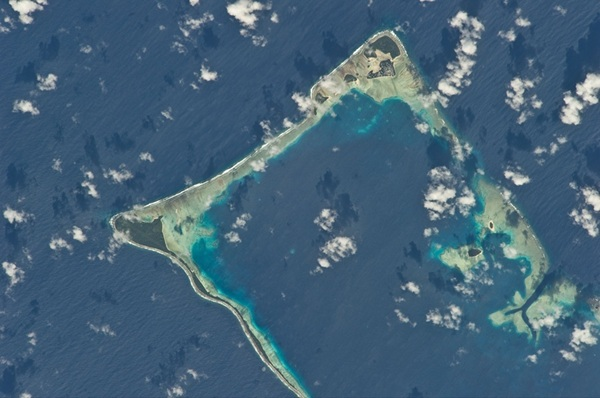
Photo: Satellite view of the Nukufetatu Atoll, Tuvalu. Courtesy of the Earth Science and Remote Sensing Unit, NASA Johnson Space Center, <https://eol.jsc.nasa.gov/SearchPhotos/photo.pl?mission=ISS023&roll=E&frame=26523>, accessed 10 June 2026.
Scholars and policymakers have questioned whether constitutional continuity and Tuvalu’s proposal for a form of digital statehood can genuinely preserve self-determination without habitable territory (Green and Guilfoyle 2024; Mariconda 2025; Prema and Ov 2025). Moreover, Tuvalu’s strategy, and the fulfilment of its constitutional aspirations, remains heavily dependent on international recognition, external financial support and geopolitical partnerships. These tensions became particularly evident following the Australia–Tuvalu Falepili Union Treaty (2023), which formally recognizes the continuity of Tuvalu’s sovereignty despite sea-level rise and establishes a pathway for Tuvaluans to live and work in Australia. Along with concerns about public consultation and transparency surrounding the Treaty, article 4(4) states that Tuvalu must ‘mutually agree’ with Australia on any security-related arrangements with third parties, raising sovereignty concerns due to what some see as a potential ‘neo-colonial’ constraint on Tuvalu’s foreign policy (Green and Guilfoyle 2024; Gamboa and Goh 2025; Mariconda 2025). Yet these critiques and concerns do not diminish Tuvalu’s bold stance and precedent-setting constitutional provisions for environmental governance and perpetual statehood in the face of climate change.
1.6. Concluding remarks
Constitutions are designed to endure. This makes them unique tools for establishing standards of care owed to future generations beyond the necessary constraints of everyday governance. In this way, creative constitutional designs addressing ecological, financial, representational and climate change matters operate as a form of insurance against some of the limitations of human foresight. Indeed, stewardship of the planet and of the conditions of life for our grandchildren, great-grandchildren and beyond has broad moral and ethical appeal, with many people viewing climate change as a major threat (Poushter et al. 2025), but institutional mechanisms are needed to translate compassion and goodwill towards future generations into action. At the same time, the means of achieving a safe, healthy and ecologically resilient future are contested, and how best to balance current and future needs remains an ecological, economic and political question.
Increasingly useful contributions to this debate are the concepts of intergenerational equity and intertemporal freedom, which have shaped recent climate litigation—the idea that present choices should not consume too much (ecologically, financially or institutionally), thereby leaving future generations with burdens that unconscionably narrow their opportunities for democratic choice. The purpose of constitutional innovations for future generations is therefore not to freeze politics or to decide the future in advance, but to preserve the conditions under which those who come later can still make meaningful choices for themselves.
In this regard, constitution-makers, governments, legislators and advocates seeking constitutional reform may be inspired by innovations that show promise in integrating the interests of future generations into decision making:
- Constitutions can incorporate provisions that commit the state to safeguarding the political and ecological foundations of life for future generations, including through environmental rights, state duties, sustainable development principles, natural resource governance, public finance rules and climate change obligations.
- Constitutional climate provisions can support mitigation, adaptation, resilience and international cooperation, and should be informed by the best available science, including carbon budgets where relevant. Given international climate commitments, more ambitious provisions integrating climate science into decision making and promoting a just transition may also be considered.
- Constitutions can help mainstream long-term and intergenerational thinking across all levels of government. Doing so may require national, subnational and local authorities to assess and explain laws, budgets, infrastructure projects and natural resource development from an intergenerational perspective, while ensuring coordination among governments on environmental and climate-related mandates.
- Constitutional design can guarantee procedural rights that help operationalize commitments to future generations, including access to information, participation in environmental decision making and access to justice. These guarantees can also be enhanced through broad standing rules in public interest litigation, allowing individuals, communities and stakeholder organizations to advocate for the fulfilment of constitutional obligations.
- Constitutions can provide a strong foundation for the representation of future generations, including in parliament (see Chapter 2) and through proxy institutions (see Chapter 3). In the latter case, constitutions can underpin the autonomy, independence and funding of such institutions, with the aim of insulating them from undue political interference.
No single constitutional clause can correct short-termism on its own, and constitutional commitments should also be linked to institutions capable of implementing them—from parliaments to environmental agencies, and from audit bodies to advisory institutions. In formulating new provisions, it is incumbent upon constitution-makers to seek to incorporate the views and priorities of civil society, including young people, Indigenous peoples, women and communities particularly vulnerable to climate change. The business community and financial sector should also be invited to engage in this process, as key stakeholders in creating and maintaining sustainable economies.
By future-proofing governance, such constitutional innovations can also strengthen democratic practice—by deepening participation, requiring justification from decision makers, expanding opportunities for transparency and accountability, and preserving the conditions for democratic self-government across generations.
References
Abebe, A. K., ‘Taming the spectre of unsustainable public debt in Africa: A heightened role for constitutions’, in C. M. Fombad and N. Steytler (eds), Constitutionalism and the Economy in Africa (Oxford: Oxford University Press, 2022), pp. 359–74
Allen, M., ‘Extraordinary Swiss spending meets the Debt Brake’, Swissinfo, 13 December 2023, <https://www.swissinfo.ch/eng/business/explainer-extraordinary-swiss-spending-meets-the-debt-brake/49056574>, accessed 24 March 2026
Araújo, R. C. and Koessler, L., ‘The Rise of the Constitutional Protection of Future Generations’, Legal Priority Project, LPP Working Paper No. 7-2021, 1 October 2021, <http://dx.doi.org/10.2139/ssrn.3933683>
—, ‘The rise of the constitutional protection of future generations’, Verfassungsblog, 12 August 2022, <https://verfassungsblog.de/the-rise-of-the-constitutional-protection-of-future-generations/>, accessed 25 May 2026
Asian Forest Cooperation Organization, ‘An overview of forestry in Bhutan: Current situation and challenges’, 20 December 2021, <https://afocosec.org/an-overview-of-forestry-in-bhutan-current-situation-and-challenges/>, accessed 16 April 2026
Asplund, E., Birch, S. and Martínez i Coma, F., Managing Natural Hazards and Climate Risks in Elections (Stockholm: International IDEA, 2026), <https://doi.org/10.31752/98760>
Beckman, L., ‘Power and future people’s freedom: Intergenerational domination, climate change, and constitutionalism’, Journal of Political Power, 9/2 (2016), pp. 1–19, <http://dx.doi.org/10.1080/2158379X.2016.1191159>
Beljean, T. and Geier, A., ‘The Swiss debt brake: Has it been a success?’, Swiss Society of Economics and Statistics, 149/2 (2013), pp. 115–35, <https://doi.org/10.1007/BF03399384>
Berk, M., Designing for Resilience: Building Institutions to Safeguard Information Ecosystems (Stockholm: International IDEA, 2025), <https://doi.org/10.31752/idea.2025.91>
Bisarya, S. and Rogers, M., Designing Resistance. Democratic Institutions and the Threat of Backsliding (Stockholm: International IDEA, 2023), <https://doi.org/10.31752/idea.2023.76>
Bodmer, F., ‘The Swiss debt brake: How it works and what can go wrong’, Swiss Journal of Economics and Statistics, 142/3 (2006), pp. 307–30, <https://ideas.repec.org/a/ses/arsjes/2006-iii-1.html>, accessed 15 June 2026
Bolton, P., Buchheit, L., Gulati, M., Panizza, U., Weder di Mauro, B. and Zettelmeyer, J., ‘On debt and climate’, Oxford Open Economics, 2 (2023), pp. 1–6, <https://doi.org/10.1093/ooec/odad005>
Bookman, S., Doyle, A., Eckes, C., Hall, C., McKenzie, K., Simon, A. S., Tigre, M. A. and Wegener, L., Let the Courts Decide? The Potential and Limitations of Climate Litigation from a Democracy Perspective (Stockholm: International IDEA, 2025), <https://doi.org/10.31752/idea.2025.70>
Buchanan, K., ‘Tuvalu: Constitutional amendment enshrines statehood in perpetuity in response to climate change’, Law Library of Congress, 29 September 2023, <https://www.loc.gov/item/global-legal-monitor/2023-09-28/tuvalu-constitutional-amendment-enshrines-statehood-in-perpetuity-in-response-to-climate-change/>, accessed 11 May 2026
Constitutional Review Parliamentary Select Committee, ‘Final Report: Constitutional Review Parliamentary Select Committee’, December 2022, <https://perma.cc/X884-FXKC>, accessed 12 May 2026
Dabla-Norris, E., Gaspar, V. and Poplawski-Ribeiro, M., ‘Rising global debt requires countries to put their fiscal house in order’, International Monetary Fund [blog], 23 April 2025, <https://www.imf.org/en/blogs/articles/2025/04/23/rising-global-debt-requires-countries-to-put-their-fiscal-house-in-order>, accessed 25 May 2026
Fenna, A., Jodoin, S. and Setzer, J., Climate Governance and Federalism: A Forum of Federations Comparative Policy Analysis (Cambridge: Cambridge University Press, 2023)
Fuest, C., ‘The debt brake is the target of criticism – but it supports sustainable fiscal policy’, ifo Institute, ifo Viewpoint 208, 25 October 2019, <https://www.ifo.de/en/opinion/2019-10-25/ifo-viewpoint-208-debt-brake-target-criticism-it-supports-sustainable-fiscal>, accessed 11 June 2026
Gamboa, L. and Goh, D., ‘Australia–Tuvalu Falepili Union: The first bilateral climate mobility treaty’, Carnegie Endowment, 9 September 2025, <https://carnegieendowment.org/research/2025/09/australia-tuvalu-falepili-union-the-first-bilateral-climate-mobility-treaty>, accessed 12 May 2026
Gesley, J., ‘Switzerland: Implementation of Article 126 of the Swiss Constitution – The “Debt Brake”’, Law Library of Congress, June 2016, <https://tile.loc.gov/storage-services/service/ll/llglrd/2016591729/2016591729.pdf>, accessed 1 April 2026
Gonon, M., Godin, A., Daumas, L., Althouse, J. and Svartzman, R., ‘Chronicle of a debt foretold: Green debt strategies in a fossil fuel-dependent economy’, International Review of Economics and Finance, 109 (2026), pp. 1–24, <https://doi.org/10.1016/j.iref.2026.105301>
Government of Tuvalu, ‘Nationally Determined Contribution (NDC) 3.0’, September 2025, <https://unfccc.int/sites/default/files/2025-09/Tuvalu%20NDC%203.0%20-%20Secretariat%20Submission%20FINAL.pdf>, accessed 11 May 2026
Green, A. and Guilfoyle, D., ‘The Australia-Tuvalu Falepili Union Treaty: Statehood and security in the face of anthropogenic climate change’, American Journal of International Law, 118/4 (2024), pp. 684–703, <https://doi.org/10.1017/ajil.2024.54>
Hara, K., Kitakaji, Y., Sugino, H., Yoshioka, R., Takeda, H., Hizen, Y. and Saijo, T., ‘Effects of experiencing the role of imaginary future generations in decision-making: A case study of participatory deliberation in a Japanese town’, Sustainability Science, 16 (2021), pp. 1001–16, <https://doi.org/10.1007/s11625-021-00918-x>
Hara, K., Yoshioka, R., Kuroda, M., Kurimoto, S. and Saijo, T., ‘Reconciling intergenerational conflicts with imaginary future generations: Evidence from a participatory deliberation practice in a municipality in Japan’, Sustainability Science, 14 (2019), pp. 1605–19, <https://doi.org/10.1007/s11625-019-00684-x>
Hickey, S. P., Environmental Protection in Constitutions Assessment Tool (Stockholm: International IDEA, 2025), <https://doi.org/10.31752/idea.2025.17>
Hofman, R., ‘Debt brake: The Swiss experience’, in A. Farazmand (ed.), Global Encyclopedia of Public Administration, Public Policy, and Governance, 2nd edn (New York: Springer International Publishing, 2022), pp. 2907–15
Jansen, D. W. and Moore, T. I., ‘Report on Switzerland’s Debt Brake’, Private Enterprise Research Center, Texas A&M University, 23 January 2026, <https://oaktrust.library.tamu.edu/items/d23b1d25-e876-45ed-90c0-8b49d7ebd1c1>, accessed 1 April 2026
Kharrat, K. and Fano, A., ‘Fiscal Rules: International Strategies for Managing Government Debt and Deficits’, Bipartisan Policy Center, 6 August 2025, <https://bipartisanpolicy.org/issue-brief/fiscal-rules-international-strategies-for-managing-government-debt-and-deficits/>, accessed 20 March 2026
Lindvall, D., Democracy and the Challenge of Climate Change, International IDEA Discussion Paper 3/2021 (Stockholm: International IDEA, 2021), <https://doi.org/10.31752/idea.2021.88>
Mariconda, A., ‘Advancing climate-related obligations through security concerns: Lessons from the Falepili Union Treaty’, Questions of International Law, 112 (2025), pp. 3–25
Martinez Toral, K., Higham, C., Setzer, J., Ghaleigh, N. S., Welikala, A. and Arena, C., ‘The 11 nations heralding a new dawn of climate constitutionalism’, Grantham Research Institute on Climate Change and the Environment, 2 December 2021, <https://www.lse.ac.uk/granthaminstitute/news/the-11-nations-heralding-a-new-dawn-of-climate-constitutionalism/>, accessed 25 May 2026
Mosler, M. and Schaltegger, C., ‘The Swiss debt brake is democratic, strict, transparent, and binding: A model to follow?’, The Economists’ Voice, 21/1 (2024), pp. 213–18, <https://doi.org/10.1515/ev-2024-0021>
Organisation for Economic Co-operation and Development (OECD), ‘Bhutan’s Gross National Happiness (GNH) Index’, 23 August 2024, <https://www.oecd.org/en/publications/well-being-knowledge-exchange-platform-kep_93d45d63-en/bhutan-s-gross-national-happiness-gnh-index_ff75e0a9-en.html>, accessed 21 April 2026
Pfeil, C. F. and Feld, L. P., ‘Does the Swiss debt brake induce sound federal finances? A synthetic control analysis’, Public Finance Review, 52/1 (2024), pp. 3–41, <https://doi.org/10.1177/10911421231191566>
Portes, J. and Wren-Lewis, S., ‘Issues in the design of fiscal policy rules’, The Manchester School, 83/S3 (2015), pp. 25–86, <https://doi.org/10.1111/manc.12118>
Poushter, J., Fagan, M., Smerkovich, M. and Prozorovsky, A., ‘International opinion on global threats’, Pew Research Center, 19 August 2025, <https://www.pewresearch.org/global/2025/08/19/international-opinion-on-global-threats/>, accessed 25 May 2026
Prema, E. and Ov, R., ‘Climate change, statelessness, and digital sovereignty: Safeguarding island nationhood’, Kent Law Review, 10/1 (2025), pp. 5–17
Royal Government of Bhutan, Ministry of Agriculture and Livestock, National Biodiversity Centre, ‘National Biodiversity Strategies and Action Plan of Bhutan 2025’, 2025, <https://www.moenr.gov.bt/wp-content/uploads/2023/09/NBSAP-2025-Bhutan-1.pdf>, accessed 11 April 2026
Swiss Confederation, Federal Department of Finance, ‘Debt brake’, 10 April 2024, <https://www.efd.admin.ch/en/the-debt-brake>, accessed 20 March 2026
Torras Vives, G., Tashi, S. and Singay, J., ‘Of dragons, data and clouds: Bhutan’s journey into carbon markets, technology, and a resilient future’, World Bank [blog], 19 October 2023, <https://blogs.worldbank.org/en/climatechange/dragons-data-and-clouds-bhutans-journey-carbon-markets-technology-and-resilient>, accessed 25 May 2026
United Nations Development Programme (UNDP), ‘Tracking nature for fiscal foresight: Bhutan validates its second biodiversity and climate expenditure review’, 19 August 2025a, <https://www.undp.org/bhutan/news/tracking-nature-fiscal-foresight-bhutan-validates-its-second-biodiversity-and-climate-expenditure-review>, accessed 21 April 2026
—, ‘Bhutan unveils 5th National Biodiversity Strategy and Action Plan’, 16 September 2025b, <https://www.undp.org/bhutan/news/bhutan-unveils-5th-national-biodiversity-strategy-and-action-plan>, accessed 25 May 2026
UNDP Pacific Office, ‘Tuvalu Coastal Adaptation Project’, [n.d.], <https://www.undp.org/pacific/tcap>, accessed 11 May 2026
Ura, K., Alkire, S., Wangdi, K., Phuntsho, J. and Zangmo, T., ‘GNH 2022’, Centre for Bhutan and GNH Studies, May 2023, <https://www.bhutanstudies.org.bt/wp-content/uploads/2025/01/2022-GNH-Survey-Report_compressed.pdf>, accessed 21 April 2026
Waldhoff, C., ‘The debt brake as a means of intertemporally safeguarding freedom: On the ruling of the German Federal Constitutional Court on the Second Supplementary Budget Act 2021’, European Constitutional Law Review, 20/4 (2024), pp. 699–712, <https://doi.org/10.1017/S1574019624000221>
Wangdi, T., Lhendup, P. and Wangdi, N., ‘An Analysis of Forestry Policy, Acts and Rules of Bhutan to Mainstream Climate Change Adaptation’, Regional Climate Change Adaptation Knowledge Platform for Asia, Partner Report Series No. 13, January 2013, <https://www.weadapt.org/wp-content/uploads/2023/05/an_analysis_of_forestry_policy_acts_and_rules_of_bhutan_to_mainstream_climate_change_adaptation_2013.pdf>, accessed 17 April 2026
World Bank, ‘Bhutan Country Environmental Analysis: Taking the Green Growth Agenda Forward’, February 2024a, <https://documents1.worldbank.org/curated/en/099031124064513492/pdf/P1765551e2cf100fd1b2f71e406524b802a.pdf>, accessed 21 April 2026
—, ‘Bhutan: Climate resilience, natural capital and quality jobs key to sustainable, inclusive growth’, 12 March 2024b, <https://www.worldbank.org/en/news/press-release/2024/03/11/building-climate-resilience-harnessing-natural-capital-and-creating-quality-jobs-are-key-to-sustainable-and-inclusive-gr>, accessed 25 May 2026
Constitutions
Bhutan, Kingdom of, Constitution of the Kingdom of Bhutan (2008), <https://www.constituteproject.org/constitution/Bhutan_2008>, accessed 7 June 2026
Bolivia, Plurinational State of, Constitution of the Plurinational State of Bolivia (2009), <https://www.constituteproject.org/constitution/Bolivia_2009>, accessed 7 June 2026
Brazil, Federative Republic of, Constitution of the Federative Republic of Brazil (1988), <https://www.constituteproject.org/constitution/Brazil_2017>, accessed 7 June 2026
Colombia, Republic of, Political Constitution of Colombia (1991), <https://www.constituteproject.org/constitution/Colombia_2015>, accessed 7 June 2026
Côte d’Ivoire, Republic of, Constitution of the Republic of Côte d’Ivoire (2016), <https://www.constituteproject.org/constitution/Cote_DIvoire_2016>, accessed 7 June 2026
Dominican Republic, Constitution of the Dominican Republic (2015), <https://www.constituteproject.org/constitution/Dominican_Republic_2015>, accessed 7 June 2026
Ecuador, Republic of, Constitution of the Republic of Ecuador (2008), <https://www.constituteproject.org/constitution/Ecuador_2021>, accessed 7 June 2026
Fiji, Republic of, Constitution of the Republic of Fiji (2013), <https://www.constituteproject.org/constitution/Fiji_2013>, accessed 7 June 2026
France, French Republic, Constitution of the French Republic (1958), <https://www.constituteproject.org/constitution/France_2008>, accessed 7 June 2026
Germany, Federal Republic of, Basic Law for the Federal Republic of Germany (1949), <https://www.constituteproject.org/constitution/German_Federal_Republic_2014>, accessed 7 June 2026
Ghana, Republic of, Constitution of the Republic of Ghana (1992), <https://www.constituteproject.org/constitution/Ghana_1996>, accessed 7 June 2026
Kenya, Republic of, Constitution of Kenya (2010), <https://www.constituteproject.org/constitution/Kenya_2010>, accessed 7 June 2026
Luxembourg, Grand Duchy of, Constitution of the Grand Duchy of Luxembourg (1868), <https://legilux.public.lu/eli/etat/leg/constitution/1868/10/17/n1/consolide/20230701>, accessed 7 June 2026
Malawi, Republic of, Constitution of the Republic of Malawi (1994), <https://www.constituteproject.org/constitution/Malawi_2017>, accessed 7 June 2026
Maldives, Republic of, Constitution of the Republic of Maldives (2008), <https://www.constituteproject.org/constitution/Maldives_2008>, accessed 7 June 2026
Nepal, Federal Democratic Republic of, Constitution of Nepal (2015), <https://www.constituteproject.org/constitution/Nepal_2015>, accessed 7 June 2026
Norway, Kingdom of, Constitution of the Kingdom of Norway (1814), <https://www.constituteproject.org/constitution/Norway_2016>, accessed 7 June 2026
Poland, Republic of, Constitution of the Republic of Poland (1997), <https://www.constituteproject.org/constitution/Poland_2009>, accessed 7 June 2026
Portugal, Portuguese Republic, Constitution of the Portuguese Republic (1976), <https://www.constituteproject.org/constitution/Portugal_2005>, accessed 7 June 2026
South Sudan, Republic of, Transitional Constitution of the Republic of South Sudan (2011), <https://www.constituteproject.org/constitution/South_Sudan_2011>, accessed 7 June 2026
Switzerland, Swiss Confederation, Federal Constitution of the Swiss Confederation (1999), <https://www.constituteproject.org/constitution/Switzerland_2014>, accessed 7 June 2026
Thailand, Kingdom of, Constitution of the Kingdom of Thailand (2017), <https://www.constituteproject.org/constitution/Thailand_2017>, accessed 7 June 2026
Tuvalu, The Constitution of Tuvalu Act 2023, <https://tuvalu-legislation.tv/cms/images/LEGISLATION/PRINCIPAL/1986/1986-0001/1986-0001_2.pdf>, accessed 7 June 2026
Uganda, Republic of, Constitution of the Republic of Uganda (1995), <https://www.constituteproject.org/constitution/Uganda_2017>, accessed 7 June 2026
Zambia, Republic of, Constitution of Zambia (1991), <https://www.constituteproject.org/constitution/Zambia_2016>, accessed 7 June 2026
Michele Poletto
2.1. Overview
In democratic systems, national parliaments embody the principle of political representation, and the ultimate responsibility of elected representatives is to defend the interests of the citizens who choose them. However, decisions made by parliaments not only concern the electorate they are directly accountable to, but also have long-term effects on the world that young and future generations will live in. Issues such as climate change and environmental protection, infrastructure development, fiscal policies, education and public health are good examples. By passing new legislation, overseeing the activities of the executive and approving national budgets in these areas, parliaments can, through their action or inaction today, significantly impact society tomorrow (Caluwaerts and Vermassen 2023).
While members of parliament (MPs) are aware of these responsibilities, they are also susceptible to the short-term bias discussed in this report. Given the short electoral cycles that structure their mandates, most commonly four to five years, MPs have an obvious incentive to prioritize legislation which shows results within a limited timeframe and to avoid imposing immediate costs on the electorate. A recent study carried out in the United Kingdom, for instance, shows that MPs are significantly less willing to advocate for decarbonization and the transition towards net zero when doing so exposes them to potential electoral losses in their constituencies (Geese and Sullivan-Thomsett 2026).
In addition, frequent changes in governing parties and parliamentary majorities are a typical feature of democracies and an essential element of the democratic principle of the peaceful transfer of power. At the same time, they make it more difficult to ensure policy continuity and consistency over time, as political strategies can be deprioritized or reversed, thereby discouraging members from investing their political capital in long-term initiatives. An extreme case in point is the status of the United States with respect to the Paris Agreement on Climate Change, shifting from party to non-party four times between 2016 and 2026.
Moreover, vested interests and established economic powers often exert pressure on elected officials to protect existing assets and privileges, irrespective of future impacts, as is very apparent from the history of the fossil-fuel sector. Evidence suggests that large oil and gas companies have been aware of the climate-altering effects of burning fossil fuels since the late 1950s, yet for decades they consistently denied or cast doubt on the scientific evidence through their lobbying efforts (Merner et al. 2025).
Finally, as discussed in the Introduction, future generations do not yet exist and cannot be consulted directly, which makes it difficult to establish unequivocally what their needs and interests will be (Warren 2023). Assessing long-term developments entails a great deal of complexity and uncertainty and, in addition to clear trade-offs, decision makers need to consider potential unintended consequences and unpredictable emerging factors.
To counter these pressures and manage such risks, parliaments around the world are exploring a number of different future-regarding innovations (Kyllönen, MacKenzie and Setälä 2023) in their working modalities and internal structures. This chapter reviews several of them, from relatively simple and already partly established practices to deeper and more ambitious structural reforms, to assess their potential to correct, or at least minimize, the negative impact of short-termism.
First, the incorporation of inputs that introduce a long-term perspective into parliamentary proceedings, such as expert advice and recommendations arising from deliberative processes, will be discussed. Second, improvements in the way parliaments exercise their lawmaking and oversight functions will be considered, ranging from the use of framework laws to oversight of the implementation of multilateral commitments and safeguards in voting systems. Third, the concept of ‘strategic foresight’ and its application to parliamentary affairs will be introduced. Fourth, different options for the establishment of dedicated parliamentary bodies for the future will be presented. Lastly, several proposals to reform electoral laws and expand the application of the principle of representation will be evaluated.
2.2. Including external inputs in parliamentary debates
A first dimension to consider when it comes to better equipping parliaments to address long-term challenges is the incorporation of relevant inputs from science and civil society into political debate. For instance, access to and the use of research and technical expertise are critical tools for parliamentary action. Projecting action into the future and assessing the long-term impact of policy decisions require the ability to draw on the best available evidence and to analyse complex data sets, such as climate models or demographic projections. While legal studies traditionally dominated in parliamentary affairs, since the 1970s a growing number of legislative assemblies have introduced technology assessment units and in-house scientific research teams (Koskimaa and Raunio 2023), which provide MPs with valuable access to dedicated technical expertise and analysis.
Such services improve members’ understanding of complex issues, strengthen their ability to take informed decisions and, in certain contexts, can help redress a structural imbalance with the executive when it comes to access to information, as governments control the various branches of state administration and the data they generate. Research services have the potential to significantly strengthen parliaments’ capacity both to formulate legislation and to oversee the work of governments (Global Partners Governance 2017). A 2025 study identified at least 131 examples of parliamentary research services across the world, covering approximately 60 per cent of the parliaments listed by the Inter-Parliamentary Union (Ward and Monaghan 2025). As one example, the Library of the Australian Parliament recently produced an analysis titled ‘Addressing the Biodiversity, Climate and Pollution Crises’ to help members understand the interlinkages between three planetary crises and to address them more effectively (United Nations Climate Change 2022; Parliament of Australia 2025). Technical support can also be sought externally by inviting independent, non-partisan experts to address parliamentary committees and inquiries or to consult with individual MPs. In addition, parliamentary services can work with practitioner organizations and maintain rosters of experts to be engaged as needed, depending on the legislative agenda.
While MPs are ultimately accountable to voters and need to keep their interests and preferences in mind as their first guiding principle, incorporating scientific and analytical expertise can enhance both the credibility of parliaments and the effectiveness of legislative outputs. It can be argued that the quality of political debate improves when impartial analysis informs discussions, allowing disagreements to focus more on differences in values than on disputes over facts (Global Partners Governance 2017).
Another set of inputs that can enrich the legislative process and make it more responsive to emerging long-term challenges comes from participatory and deliberative democratic practices, such as public hearings, deliberative polls, participatory budgeting, citizens’ assemblies, and citizens’ juries and panels, which are designed to involve citizens in policy debates and policymaking and have become increasingly relevant in recent years. Climate assemblies, in particular, are structured exercises which bring together diverse groups of randomly selected citizens to learn about, discuss and ultimately deliberate on climate-related issues (Curato et al. 2024). According to the Knowledge Network on Climate Assemblies, approximately 230 climate assemblies have taken place worldwide since the 1970s, either at the national or local level. Some high-profile examples include the 2019 French Citizens’ Convention on the Climate and two series of local environmental assemblies held in Brazil and Colombia between 2021 and 2023 (Smith 2025). Overall, more than 40 per cent of all citizens’ assemblies conducted in Organisation for Economic Co-operation and Development (OECD) countries since the mid-2000s have focused on environmental issues (OECD 2025).
Research has shown that deliberative processes, when well designed and conducted, help participants develop a more forward-looking attitude, as they gain access to new information and learn about the future implications of current policies (MacKenzie 2021). Recommendations issued as part of such processes are also often more ambitious and far-reaching than official political agendas (Smith 2023). On the other hand, citizens’ assemblies tend to be short-term exercises, and their outcomes often remain disconnected from institutional policymaking processes. In addition, the degree of representativeness of these exercises and the legitimacy of their recommendations as true reflections of the general public’s preferences remain subjects of debate (Lafont 2015).
Participatory and deliberative mechanisms cannot and should not replace representative institutions, but they can play a valuable complementary role. Better embedding them within institutional processes, and within parliamentary debates in particular, can help enrich policymaking and make elected representatives more sensitive to long-term challenges, while preserving their ultimate decision-making authority (Smith 2021; International IDEA et al. 2025). For instance, turning sectoral citizens’ assemblies into permanent forums, or establishing mechanisms and spaces for the regular examination of their recommendations by national parliaments, could create the conditions necessary for integrating their contributions more meaningfully into the legislative process (Niessen and Reuchamps 2022).
Several examples illustrate this trend. Between 2016 and 2019 the Irish Parliament organized a national Climate Assembly and debated its recommendations, in 2019 the UK House of Commons called for citizens’ assemblies on social care and the energy transition, and in 2023 the German Bundestag employed the same tool to consult citizens on nutrition policy (International IDEA et al. 2025). In 2023–2024 Belgium adopted new provisions allowing its Federal Parliament to establish so-called mixed committees composed of MPs and randomly selected citizens, tasked with examining specific topics and issuing recommendations that are subsequently considered by Parliament (Kingdom of Belgium 2023, 2024).
2.3. Tools for forward-looking lawmaking and oversight
A second area to consider when it comes to improving parliamentary practices for the future concerns the way national parliaments exercise their legislative and oversight prerogatives. Parliaments have the core responsibility of lawmaking, incorporating international treaties into domestic law and overseeing the action of the executive branch. In so doing, they not only ensure that legislation is adequate and consistent at every level, but they also have a duty to translate citizens’ preferences and expectations into policy (Welsch 2025).
When it comes to long-term challenges such as climate change, parliaments can utilize overarching framework legislation, which sets overall goals and outlines long-term strategies for a given policy area. As of 2024 approximately 60 countries had introduced climate change framework laws, which establish the strategic policy direction and the institutional arrangements for their respective national climate change agendas. Research shows that such comprehensive and far-reaching legal instruments can help address governance challenges, consolidate political consensus and improve accountability, although sustained political commitment and public engagement are needed to realize their full potential (Averchenkova et al. 2024).
At the same time, parliaments can also play a more incisive role in overseeing the adoption and implementation of international commitments made by governments within the framework of multilateral agreements, such as the Nationally Determined Contributions (NDCs) or under national biodiversity strategies and action plans. In recent years, particularly ahead of the submission of the third round of NDCs in 2025, observers called for more extensive parliamentary involvement in relation to these crucial policy documents (Jimenez Aybar 2025). While the responsibility for developing and implementing them lies with governments, parliaments can contribute meaningfully by ensuring that the pledges are ambitious, consistent and actionable; that they take citizens’ views and interests into consideration; and that adequate financial resources are made available for proper and timely implementation (IPU 2024).
In addition to being involved in formulating commitments, parliaments could also play a stronger role as national guardians of implementation. While the formulation of national strategies and plans such as NDCs and national biodiversity strategies and action plans is mandated for states parties under international agreements, these documents do not generally create binding obligations regarding implementation or final outcomes. By regularly monitoring the executive’s actions—for instance, through progress reporting requirements or periodic hearings—and by ensuring that governments do not promote policies that directly contradict their stated commitments, parliaments can help fill a crucial gap in the implementation of international agreements (IPU 2024). As one example, the Environment and Climate Committee of the Jordanian Parliament recently discussed the implementation of the country’s NDC with the minister of the environment during an event organized in coordination with the Westminster Foundation for Democracy (Jordan News Agency 2026). Mechanisms and experiences of this kind exist, but their use remains sporadic and largely unstructured.
Finally, evidence suggests that majoritarian, two-party systems are more exposed to short-term bias than consensus-based, multiparty democracies, where political polarization tends to be lower, authority is more fragmented, and there is greater scope for forming coalitions around issues of common interest (Caluwaerts and Vermassen 2023). In this regard, it has been argued that the introduction of multiple veto points can provide additional tools and safeguards for the protection of future generations (Smith 2021). At the same time, a careful balance must be struck between the need to ensure governability—that is, maintaining decision-making processes that are smooth and responsive—and the willingness to introduce safeguards concerning the long-term impact of policymaking.
For instance, in relation to parliamentary decision-making procedures, some observers advocate for the use of submajority rules (Ekeli 2016). According to this logic, exceptions to standard majority rules2 would be permitted if a predefined minimum number of legislators—for instance, one-third of members—raise concerns about the future impact of proposed legislation. By exercising this prerogative, a minority could delay the adoption of the measure in question for a specified period of time, pending further examination, a judicial ruling or until the next election, and therefore until a fresh mandate has been granted to the assembly. As an alternative, and depending on the constitutional and legal framework, a minority bloc could call for a popular referendum on the contested legislative measure and thus refer the matter back to the electorate.
While submajority rules are already used in parliaments and other institutions, including the US Congress, for preliminary and procedural issues (Vermeule 2005), such an expanded application remains untested in practice and would considerably raise the profile and significance of the model. At the same time, observers have drawn attention to the possible risk of strategic abuses that would need to be considered and managed should specific minorities resort to the mechanism instrumentally to block undesired legislation in the name of future generations (Ekeli 2016).
2.4. Strategic foresight
Going one step further, innovative methodological approaches and guiding principles can help foster a more forward-looking political culture. In this regard, the concepts of ‘strategic foresight’ and ‘anticipatory governance’ have gained momentum in governance circles in recent years and could be employed more extensively by parliaments as well. Strategic foresight (or simply foresight) can be defined as a structured methodology for exploring possible future developments, identifying emerging trends and risks, and preparing for long-term uncertainty (UK Government Office for Science 2021).
Rather than forecasting the most likely future outcomes, strategic foresight explores multiple potential scenarios related to selected dimensions of the present, such as political and social developments, the state of the economy, or climate change and environmental conditions. Drivers, influencing factors and early indicators (or signals) are taken into consideration, and different future pathways are designed. These alternative scenarios are typically defined as continuation, decline or collapse, and moderate or transformative improvement. In this framework, the agency of the actors involved acquires particular importance, as scenarios emerge from the interaction between emerging trends and alternative policy choices (see Figure 2.1).
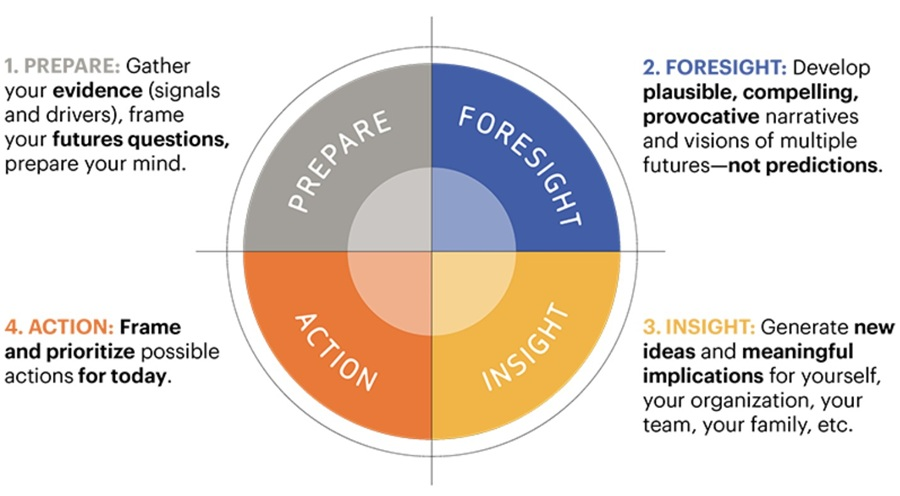

In 2024 and 2025 International IDEA conducted a series of strategic foresight workshops with relevant stakeholders, mainly from academia and civil society, on the future of democracy in South Asia, Southern Africa and the Western Balkans (Bali et al. 2024; Runey and Kenny 2025; Gola and Bloom 2026). Participants considered how key influencing factors, including climate change and environmental degradation, migration, geopolitics, civic space and artificial intelligence, might impact democracy and polities, and which courses of action could increase the likelihood of preferred outcomes. Significantly, climate-related pressures were identified as primary concerns for the future in all three regions, with the potential to exacerbate existing social, political and economic challenges.
When it comes to public administration, Finland and Singapore have been leaders in introducing the use of strategic foresight to manage uncertainty in their policymaking processes since the early 1990s. While in Singapore strategic foresight is used mainly by the executive (through a Centre for Strategic Futures embedded within the Prime Minister’s Office; see Chapter 3: Dedicated institutions for future generations), in Finland the methodology is applied consistently across institutions, constituting what has been described as a ‘national foresight system’ (Djakonoff, Chua and Febriastati 2022).
Finland’s approach revolves around coordination among dedicated bodies, including the independent Futures Research Centre, the Parliamentary Committee for the Future, the National Foresight Network of data producers and the Government Foresight Group. Today, Finland’s system is considered the most advanced foresight practice globally and has been instrumental in fulfilling ambitious policy commitments, such as the 2035 low-carbon roadmaps. The Finnish example also shows that such a methodology is successful when foresight capacity is embedded across governance systems, creating demand, ensuring quality and sustaining engagement, while weak coordination across different institutions has been shown to reduce the ultimate impact (UK Government Office for Science 2021).
In Latin America, countries such as Brazil, Chile, Mexico and Uruguay promote the concept of ‘anticipatory governance’ (Congreso Futuro 2024). Similar to strategic foresight, anticipatory governance refers to actions intended to manage emerging technological or socio-economic trends while they are still not fully developed and therefore remain susceptible to influence (Vásquez, Pizarro and Bustamante 2025). Applied to public governance, the concept translates into a proactive approach that integrates foresight, innovation and continuous learning in support of public policy goals (Tõnurist and Hanson 2020). In Africa, the continent with the youngest population and the strongest projected demographic growth in the coming decades, Kenya is considering the incorporation of the foresight methodology into fiscal planning through the Parliamentary Budget Office, alongside the introduction of a legislative tool for intergenerational impact assessments. In addition, Nigeria is debating the development of a national foresight capacity programme and a foresight compliance evaluation mechanism (SOIF 2025).
Finally, at the supranational level, some international organizations, such as the European Union, the OECD and the United Nations Development Programme (UNDP), are also adopting the strategic foresight and anticipatory governance approaches. The European Commission in particular has been gradually incorporating the methodology into its governance processes since 2021, including in the areas of climate resilience and digital transformation, and promotes an EU-wide Foresight Network (European Commission 2025).
2.5. Parliamentary institutions for the future
Closely related to the introduction of the concepts of strategic foresight and anticipatory governance is the establishment of dedicated parliamentary committees or other bodies for the future or future generations. Modifications to parliamentary rules of procedure and the establishment of new parliamentary actors are perhaps the most visible sign of how the debate on future generations is influencing the work of legislative assemblies around the world.
Since the adoption of the 1992 UN Framework Convention on Climate Change, an upward trend in the establishment of dedicated parliamentary committees focusing on climate and the environment has been observed, with almost all parties to the convention now having dedicated spaces for parliamentary debate, although with different institutional designs and levels of authority. In addition, committees dedicated to science, technology and innovation exist in many national parliaments, which, by their very nature, adopt a future-regarding approach.
However, this section considers parliamentary bodies and parliament-linked institutions specifically tasked with a broad mandate relating to the future or future generations. Four main categories have been identified: (a) parliamentary committees, with either the full right to propose legislation or more limited advisory functions; (b) parliamentary commissioners or ombudspersons, individual representatives or offices attached to parliaments with advisory, oversight or inquiry roles; (c) cross-party parliamentary groupings, which bring together MPs interested in and committed to anticipatory governance; and (d) research institutes and think tanks (similar to those described earlier but with a specific mandate for future-regarding research and advice; see 2.2: Including external inputs in parliamentary debates). It is worth noting that these institutions differ significantly in their composition, mandate and degree of autonomy.
As of 2026, 19 such bodies have been established around the world—with a marked acceleration after 2010—15 of which are still active (see Table 2.1). Among them, 12 can be classified as parliamentary committees, 2 as commissioners or ombudspersons, 3 as cross-party parliamentary groupings and 2 as parliamentary research institutes. Six have been established in Europe, five in Latin America, four in Asia and the Pacific, and one in Africa.
| Country | Name | Parent parliament | Years of activity |
|---|---|---|---|
| Parliamentary committees for the future or for future generations | |||
| Finland | Committee for the Future | Eduskunta (unicameral) | 1993–present |
| Chile | Committee on Future Challenges, Science, Technology and Innovation | Senate | 2011–present |
| Brazil | Committee for the Future | Federal Senate | 2013–2023 |
| Austria | Committee on Innovation, Technology and the Future | Bundesrat (upper house) | 2015–present |
| Iceland | Future Committee | Althing (unicameral) | 2018–present |
| Argentina | Future Committee | Senate | 2019 |
| The Philippines | Committee on Sustainable Development Goals, Innovation and Futures Thinking | Senate | 2019–present |
| Lithuania | Committee for the Future | Seimas (unicameral) | 2020–present |
| Uruguay | Special Futures Committee | Chamber of Senators | 2020–present |
| Paraguay | Special Committee for the Future for Mid- and Long-term Strategic Affairs | Chamber of Deputies | 2022–2023 |
| Paraguay | Permanent Advisory Committee on Science, Technology, Innovation and the Future | Senate | 2023–present |
| Germany | Parliamentary Advisory Council on Sustainable Development and Future-Related Matters | Bundestag (federal parliament) | 2025–present |
| Commissioners or ombudspersons | |||
| Israel | Commissioner for Future Generations | Knesset (unicameral) | 2001–2006 |
| Hungary | Ombudsman for Future Generations | National Assembly (unicameral) | 2007–present |
| Cross-party parliamentary groupings | |||
| UK | All-Party Parliamentary Group for Future Generations | House of Lords and House of Commons | 2017–present |
| Australia | The Australian Parliamentary Group for Future Generations | House of Representatives and Senate | 2022–present |
| Kenya | Senate Futures Caucus | Senate | 2024–present |
| Parliamentary research institutes or think tanks | |||
| Estonia | Foresight Centre | Riigikogu (unicameral) | 2017–present |
| South Korea | National Assembly Futures Institute | National Assembly (unicameral) | 2018–present |
The goal of such bodies, and of parliamentary committees in particular, is to stimulate political debate about the future and encourage other committees and the executive to consider the long-term impacts of their decisions. The UN defines them as ‘parliamentary bodies responsible for issues related to anticipating and prospecting the future in the context of parliamentary activity’ (UNDP LAC 2024: 18). More broadly, the Inter-Parliamentary Union describes them as ‘Institutions specifically established to debate and assess long-term challenges and explore potential solutions. They aim to meaningfully contribute to anticipatory governance by helping parliaments proactively address emerging challenges and opportunities’ (IPU 2025b).
The best-known example in this category, and a pioneering institution in this field, is Finland’s Parliamentary Committee for the Future. Established in 1993, at a critical historical juncture for the country following the end of the Cold War, the Committee was made permanent in 2000 (Koskimaa and Raunio 2024). The Committee does not take part in routine legislative work; rather, its main task is to respond to the government’s ‘Report on the Future’, a document presented once during each parliamentary term which addresses long-term issues requiring particular attention, such as sustainable growth and geopolitical and demographic developments. Although the Committee does not discuss specific pieces of legislation, its work has proven instrumental in stimulating debate on the long-term implications of current policies and in promoting a cross-cutting future-regarding perspective within Parliament.
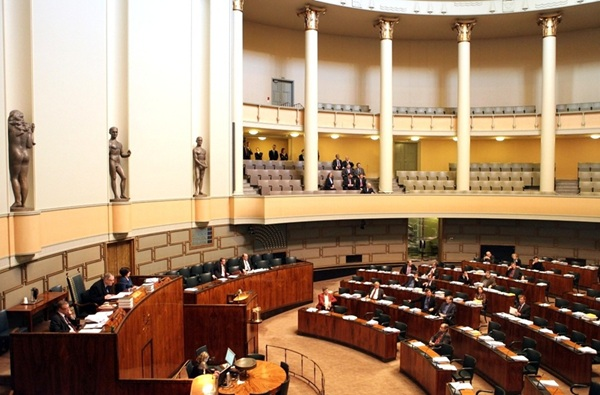
A similar example, particularly relevant to environmental and climate-related issues, is the Parliamentary Advisory Council for Sustainable Development and Future-Related Matters of the German Bundestag, established in 2004 and performing a similar non-legislative role in overseeing and advising Parliament and other institutions on sustainability strategies, including the implementation of the UN Sustainable Development Goals (Smith 2023). Significantly, a proposal to create a new Parliamentary Committee for the Future in the UK Parliament is also being promoted and discussed in Westminster (Tully 2024; UK House of Commons Liaison Committee 2024).
In Latin America, the Committee on Future Challenges, Science, Technology and Innovation of the Chilean Senate was established in 2011, followed by similar institutions in Brazil, Paraguay and Uruguay. The Committee focused on integrating forward-looking and interdisciplinary thinking into policymaking, bringing together experts, politicians and citizens to discuss and deliberate on long-term issues, such as environmental protection, bioethical questions and digitalization. In particular, it contributed to raising public awareness of climate change and positioning it as a key concern in Chile, as well as supporting the establishment of the Ministry of Science, Technology, Knowledge and Innovation in 2018 (Vásquez, Pizarro and Bustamante 2025).
In Asia, the Committee on Sustainable Development Goals, Innovation and Futures Thinking of the Philippines’ Senate, created in 2019, has contributed significantly to establishing a future-oriented governance framework in the country. For instance, the Committee has promoted bills such as the 2022 Sustainable Budgeting Act, aimed at integrating the principle of sustainability into national and local budgeting; the 2025 Sustainable Cities and Communities Act; and the 2026 Green Procurement Act, designed to help local and national authorities improve their administrative and procurement procedures.
In Africa, members of the Senate Futures Caucus in Kenya are promoting internal reforms to further institutionalize future-regarding parliamentary procedures and advocating for the creation of a Parliamentary Committee for Future Generations (SOIF 2025).
Despite their growing influence, these innovative parliamentary arrangements have not always endured. An interesting example is the independent Commissioner for Future Generations established by the Knesset, the Israeli Parliament, in 2001. Shlomo Shoham, the only official to ever perform this role, from 2002 to 2006, had the authority to scrutinize parliamentary activity by requesting information and delaying legislation in order to provide opinions on matters with potential long-term implications for future generations. The influence of the commissioner quickly became apparent, as its authority extended to all parliamentary matters except foreign policy and attracted criticism ostensibly due to its costs and perceived interference in the proceedings of other committees. The Knesset abolished the post after a single parliamentary term. Similarly, the Parliamentary Commissioner for Future Generations of Hungary (see Chapter 3: Dedicated institutions for future generations), established with comparable powers in 2007, was subsequently demoted to the role of Ombudsman for Future Generations (formally the Deputy to the Commissioner for Fundamental Rights) in 2011 (Smith 2021). In other cases, such as in Argentina and Brazil, dedicated parliamentary committees were discontinued following changes in parliamentary majorities or in the role of their main political sponsors.
Overall, a review of the activities of parliamentary bodies for the future, and of parliamentary committees for future generations in particular, indicates a number of clear benefits, as these committees can help institutionalize anticipatory rather than reactive governance; address emerging challenges; encourage parliaments to adopt a longer-term perspective on risks, costs and benefits; and build consensus around long-term legislation. However, thus far these actors have failed to secure binding powers and equal standing with other parliamentary committees (Smith 2021). It can be argued that these parliamentary experiences are most successful when they are separated from day-to-day legislative activity and political pressures, allowing them to adopt non-partisan, consensus-based and evidence-informed positions. Conversely, they have often attracted criticism when they have questioned or intervened in the decision-making process. In this regard, the functions of these parliamentary bodies can usefully be complemented by independent stand-alone authorities, as discussed in Chapter 3.
At the international level, the first World Summit of the Committees of the Future took place in Finland in 2022 and focused on the environment and climate change, technology and interparliamentary cooperation. It was followed by two further summits, held in Uruguay and Chile in 2023 and 2025, respectively, focusing primarily on digitalization and artificial intelligence. The final outcome document of the third Summit recommended that countries ‘build national capacity for anticipatory governance’ and integrate it into national development strategies, as well as ‘establish or strengthen committees of the future or similar structures to systematically address future-oriented challenges’ and ‘create an obligation for government to report to parliament on a regular basis on medium- and long-term strategic plans and hold government to account for progress and setbacks’ (IPU 2025a). Overall, the outputs of these gatherings contributed to the 2024 UN Summit of the Future and to the adoption of the UN Declaration on Future Generations (United Nations n.d.).
2.6. Electoral laws and political rights
The last section of this chapter examines possible reforms to and innovations in the electoral systems that lie at the heart of the principle of political representation and through which parliamentary assemblies receive their mandates. Proposals in this area are among the most difficult parliamentary innovations to implement, as they require constitutional reforms or new electoral laws, and fewer examples and best practices exist. However, they should be considered as well when exploring the full extent and potential evolution of the debate on future generations (John and MacAskill 2021).
A first area of debate focuses on the length of parliamentary terms. Given that short electoral cycles are among the drivers of political myopia, it can be argued that lengthening parliamentary terms could promote policy continuity and ease (or delay) re-election pressures on MPs, enabling them to concentrate on forward-looking policies. The prevailing norm for parliamentary term lengths around the world is currently between 4 and 5 years,3 and proposals have been advanced to extend them to 9, 10 or even 15 years (Birch 2023).
However, there is no evidence that extending parliamentary terms would automatically improve the future-regarding quality of lawmaking, and the net benefits of such reforms are unclear. Such a modification would also entrench the choice of elected representatives for longer periods, thereby reducing accountability. This drawback could be mitigated through staggered elections and partial renewals of parliamentary assemblies—for instance, every five years (a sort of repeated partial mid-term elections). In a context of low public trust in political institutions, however, the acceptability of a reform which further insulates elected representatives from public scrutiny is unlikely to be very high.
A second set of proposed modifications to electoral systems focuses on the minimum age to vote and stand for elections. Due to the increasing life expectancy in many countries, electorates are becoming progressively older and, arguably, more inclined to protect existing assets and interests rather than focus on long-term challenges. Several ideas have been put forward to correct this age-related imbalance, including weighting votes differently according to age (attributing greater weight to younger citizens’ votes), granting additional votes to parents or guardians of minors through so-called Demeny voting (Demeny 1986) or even, more controversially, disenfranchising elderly voters altogether beyond a certain age threshold. However, these proposals appear difficult to implement, as they raise complex questions about political equality, run counter to the historical trend of expanding voting rights rather than restricting them (Smith 2021), and may conflict with international human rights standards on political participation (under the International Covenant on Civil and Political Rights). In addition, the underlying assumption that older voters and citizens without children are necessarily less concerned with the future and future generations is itself open to question.
A different, more progressive and potentially more promising line of proposals aims instead to lower the voting age (Joshi 2026). While leaving the rights of the rest of the electorate unchanged, this kind of reform expands political rights and encourages civic engagement among young people. As of 2026, in over 90 per cent of countries and territories holding elections around the world, the minimum voting age is 18. Approximately 5 per cent of countries grant voting rights to 16- and 17-year-olds as well, mostly in Europe and Latin America, while in the remaining 4 per cent the threshold is between 19 and 25, mostly in the Middle East and Asia and the Pacific (ACE Electoral Knowledge Network n.d.b).4 The movement to lower the voting age to 16 is gaining momentum, and established democracies, including Australia and the UK, are currently formulating legislation to do so.
Critics question the maturity and decision-making capacity of younger people to participate in elections, as well as their susceptibility to manipulation and disinformation, but these claims, at least when it comes to 16- and 17-year-olds, have largely been disproved by recent neurological research (Icenogle et al. 2019). By contrast, advocates see lowering the voting age as part of an ongoing historical trend towards expanding the franchise (before World War II, the minimum voting age was almost universally 21) and point to the potential benefits of strengthening the voice of younger generations (Wall 2021; UNICEF n.d.).
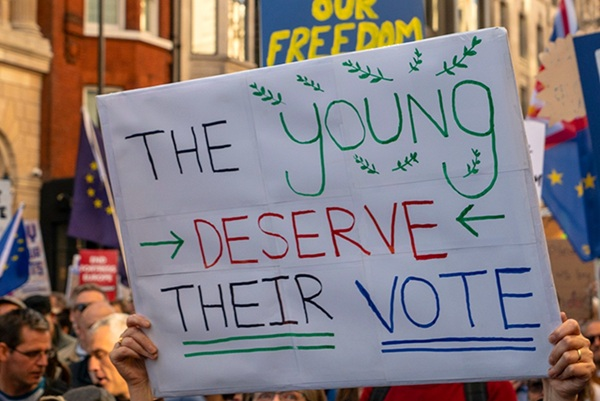
A parallel area of reform focuses on the right to stand for election and the level of youth representation in parliaments. On the one hand, advocates propose removing minimum age requirements for candidacy where they exist, thereby closing the gap between voting age and candidacy age (ACE Electoral Knowledge Network n.d.a). Among OECD member countries, for instance, the minimum age to run for parliament still varies considerably, with approximately 40 per cent of countries requiring candidates to be at least 21 years old (OECD 2024).
On the other hand, youth quotas on electoral ballots (seats reserved for candidates under a certain age) are increasingly being introduced in parliaments around the world (Bidadanure 2016). As of 2025 youth quotas were mandatory for electoral lists in seven countries, while reserved seats for MPs under 40, 35 or 30 years of age, depending on the individual case, had been adopted in eight more countries,5 mostly in Africa, once again illustrating the influence of the specific demographic trends in the region (Joshi 2026). In addition, according to a survey on institutions for the future conducted in 2024, youth quotas enjoyed substantial support in all countries considered6 (Fairbrother 2024).
The logic underlying such proposals is that promoting younger citizens’ participation in elections and political representation is likely to improve the protection of younger and future generations. Opinion polls disaggregated by age can help gauge the potential impact of such reforms on climate policies, for instance. The Peoples’ Climate Vote, a global survey conducted by the UNDP and the University of Oxford in 2021 and 2024, shows that respondents under 18 are consistently the group most likely to consider climate change to be an emergency, although concern among older generations is increasing as well (UNDP 2021, 2024).
A final set of potential electoral reforms focuses on the idea of designating proxy representatives of future generations to sit in national parliaments alongside traditionally elected MPs (Dobson 1996; Ekeli 2016). While institutional actors with proxy representation functions have been appointed in a number of countries since the early 1990s (Rose 2024), including the Commissioners for Future Generations in Israel and Hungary (see 2.5: Parliamentary institutions for the future), their role is clearly distinct from that of elected representatives. Similarly, in the case of parliamentary committees for the future, members are invited to act in the name of future generations, but they are elected by the current electorate, and their mandate is not exclusively concerned with long-term policy issues.
The idea of reserving parliamentary seats for representatives of future generations, with the exclusive duty of acting in their interests, is compelling but currently remains untested beyond symbolic initiatives. In addition, several questions come to mind with regard to both the selection of such proxy representatives and their role. Would they be elected in the same manner as MPs or appointed through a different process, and if so, by whom? Their powers could mirror those of other parliamentarians, including proposal rights (the ability to propose new legislation) and lawmaking powers (the ability to vote for or against bills). Alternatively, their remit could be limited to functions such as assessing the long-term impact of policies, reviewing implications for future generations or overseeing the implementation of long-term commitments.
An even more radical proposal along these lines involves establishing an entirely separate upper house (also referred to as a ‘third chamber’ in bicameral systems, or the ‘fourth power’) dedicated to representing future generations and interacting with the main chamber or chambers as a co-legislator. This idea effectively reproduces the logic of bicameralism, often found in federal systems, replacing the territorial dimension of federal and state representation with a temporal dimension based on present and future generations (Tremmel 2015; John and MacAskill 2021).
2.7. Concluding remarks
Parliamentarians, like all political actors, are subject to multiple short-term pressures and often struggle to deal with the complexity and uncertainty of the future. While MPs are accountable to their voters and need to respond first and foremost to them, it has been shown that future-regarding tools, independent voices and evidence-based information and methodologies can significantly enrich political debate and help make governance systems more future-oriented and responsive to the interests of future generations.
In this regard, legislative assemblies around the world have been exploring, over the past few decades, a range of innovations and reforms which, although still relatively recent and in need of further testing, show promise for fostering more future-regarding lawmaking and oversight, including in relation to climate change and environmental policies:
- Parliaments can incorporate internal and external scientific and analytical expertise into their work to clarify the premises of their policy debates, rely on sound evidence and help correct imbalances in access to information compared with other institutional actors.
- Parliaments can be instrumental in closing the gap between participatory and deliberative processes and institutional procedures. While citizens’ deliberation cannot and should not replace representative democracy, it can complement the work of parliaments and improve both the quality and the legitimacy of policymaking.
- Parliaments can make use of long-term framework legislation and exercise closer oversight of the implementation of governmental commitments under multilateral agreements. By extending the time horizon of legislative and policy initiatives, elected representatives can help create long-term accountability.
- Parliaments can promote internal future-regarding institutional cultures by adopting strategic foresight and anticipatory governance as guiding principles of their work.
- Parliaments can establish innovative committees for the future and other dedicated parliamentary bodies focused on long-term issues, which have demonstrated clear value in strengthening political mandates for future generations.
- Parliaments can encourage young people’s political engagement by lowering the minimum voting age to 16, by narrowing the gap between voting rights and eligibility to stand for election, and by introducing youth quotas.
Each of these innovations contributes to the design of more future-regarding legislative assemblies, but no single solution is sufficient on its own to correct existing biases and imbalances. Efforts should therefore be made in parallel on all the above-mentioned dimensions, and new processes and actors need to be adequately empowered if they are to perform their functions meaningfully.
Finally, reforms should be both legitimate and politically viable. MPs need to strike the right balance between long-term considerations and accountability to current voters, as well as between safeguards for the future and effective governance in the present. This is not an easy task and, in order to be truly effective, parliamentary innovations need to be part of broader institutional reforms and contribute to the development of future-oriented cultures and institutional systems.
References
ACE Electoral Knowledge Network, ‘Voting age: What is the legal voting age in the national elections?’, [n.d.a], <https://aceproject.org/epic-en/CDTable?view=country&question=VR001>, accessed 27 April 2026
—, ‘Youth and elections’, [n.d.b], <https://aceproject.org/ace-en/topics/yt/default>, accessed 4 May 2026
Averchenkova, A., Higham, C., Chan, T. and Keuschnigg, I., ‘Impacts of Climate Framework Laws: Lessons from Germany, Ireland and New Zealand’, The Grantham Research Institute on Climate Change and the Environment, Policy Report, 14 March 2024, <https://www.lse.ac.uk/granthaminstitute/publication/impacts-of-climate-framework-laws/>, accessed 15 April 2026
Bali, B., Postigo Sánchez, I., Domínguez, D. and Towriss, D., Imagining Democratic Futures: Southern Africa Foresight Report 2025, International IDEA Discussion Paper 6/2024 (Stockholm: International IDEA, 2024), <https://doi.org/10.31752/idea.2024.106>
Belgium, Kingdom of, Loi établissant les principes du tirage au sort des personnes physiques pour les commissions mixtes et les panels citoyens organisés à l'initiative de la Chambre des représentants [Act Establishing the Principles for the Random Selection of Individuals for Joint Committees and Citizen Panels Organized at the Initiative of the House of Representatives], Belgiumlex [Official Gazette of Belgium], 2 March 2023, <https://www.ejustice.just.fgov.be/cgi/article.pl?language=fr&sum_date=2026-06-08&pd_search=2023-04-03&numac_search=2023030780&page=1&lg_txt=F&caller=list&2023030780=2&choix1=et&choix2=et&exp=Loi+%E9tablissant+les+principes+du+tirage+au+sort+des+personnes+physiques+pour+les+commissions+mixtes+et+les+panels+citoyens+&fr=f&nl=n&du=d&trier=promulgation>, accessed 8 June 2026
—, Loi établissant les principes du tirage au sort des personnes physiques pour les commissions mixtes et les panels citoyens organisés à l'initiative du Sénat [Act Establishing the Principles for the Random Selection of Individuals for Joint Committees and Citizen Panels Organized at the Initiative of the Senate], Belgiumlex [Official Gazette of Belgium], 9 April 2024, <https://www.ejustice.just.fgov.be/cgi/article.pl?language=fr&sum_date=2026-06-08&pd_search=2024-06-03&numac_search=2024005084&page=1&lg_txt=F&caller=list&2024005084=0&choix1=et&choix2=et&exp=Loi+%E9tablissant+les+principes+du+tirage+au+sort+des+personnes+physiques+pour+les+commissions+mixtes+et+les+panels+citoyens+&fr=f&nl=n&du=d&trier=promulgation>, accessed 8 June 2026
Bidadanure, J., ‘Youth quotas, diversity, and long-termism: Can young people act as proxies for future generations?’, in I. González-Ricoy and A. Gosseries (eds), Institutions for Future Generations (Oxford: Oxford University Press, 2016), pp. 266–81
Birch, S., ‘Voting for the future: Electoral institutions and the time horizons of democracy’, Political Studies Review, 22/4 (2023), pp. 762–83, <https://doi.org/10.1177/14789299231204550>
Caluwaerts, D. and Vermassen, D., ‘Democratic institutions and future generations’, in M. K. MacKenzie, M. Setälä and S. P. Kyllönen (eds), Democracy and the Future: Future-Regarding Governance in Democratic Systems (Edinburgh: Edinburgh University Press, 2023), pp. 173–92
Congreso Futuro, Gobernanza Anticipatoria. Una institucionalidad de prospectiva para Chile (Biblioteca del Congreso Nacional de Chile, 2024)
Curato, N., Smith, G., Willis, R. and Rosén, D., Deliberative Democracy and Climate Change: Exploring the Potential of Climate Assemblies in the Global South, (Stockholm: International IDEA, 2024), <https://doi.org/10.31752/idea.2024.34>
Demeny, P., ‘Pronatalist policies in low-fertility countries: Patterns, performance, and prospects’, Population and Development Review, 12 (1986), pp. 335–58, <https://doi.org/10.2307/2807916>
Djakonoff, V., Chua, M. Y. and Febriastati, A., ‘Foresight and policymaking: Lessons from Singapore and Finland’, Demos Helsinki, 26 September 2022, <https://demoshelsinki.fi/foresight-policymaking-singapore-finland>, accessed 20 April 2026
Dobson, A., ‘Representative democracy and the environment’, in W. Lafferty and J. Meadowcroft (eds), Democracy and the Environment (Cheltenham: Edward Elgar Publishing, 1996), pp. 124–39, <https://doi.org/10.4337/9781035351886.00014>
Ekeli, K. S., ‘Electoral design, sub-majority rules, and representation for future generations’, in I. González-Ricoy and A. Gosseries (eds), Institutions for Future Generations (Oxford: Oxford University Press, 2016), pp. 214–27
European Commission, Foresight Report 2025 – Resilience 2.0: Empowering the EU to Thrive amid Turbulence and Uncertainty (Luxembourg: Publications Office of the European Union, 2025), <https://commission.europa.eu/strategy-and-policy/strategic-foresight/2025-strategic-foresight-report_en>, accessed 20 April 2026
Fairbrother, M., ‘Potential Institutions for Future Generations: What Do Current Generations Think? Results from a Six-Country Public Opinion Survey’, Institute for Future Studies, March 2024, <https://globalchallenges.org/survey-on-potential-institutions-for-future-generations-2024/>, accessed 27 April 2026
Geese, L. and Sullivan-Thomsett, C., ‘High emissions, low engagement? How members of parliament represent the carbon footprint of their constituents’, European Journal of Political Research, 65/2 (2026), pp. 544–68, <https://doi.org/10.1017/S1475676526100681>
Global Partners Governance, ‘Information and Expertise for Parliaments’, Guide to Parliaments, Paper 7, 2017, <https://gpgovernance.net/publications/guide-to-parliaments-paper-7-information-and-expertise-for-parliaments/>
Gola, G. and Bloom, E., Imagining Democratic Futures: The Western Balkans in 2040, International IDEA Discussion Paper 4/2026 (Stockholm: International IDEA, 2026), <https://doi.org/10.31752/16088>
Icenogle, G., Steinberg, L., Duell, N., Chein, J., Chang, L., Chaudhary, N., Di Giunta, L., Dodge, K. A., Fanti, K. A., Lansford, J. E., Oburu, P., Pastorelli, C., Skinner, A. T., Sorbring, E., Tapanya, S., Uribe Tirado, L. M., Alampay, L. P., Al-Hassan, S. M., Takash, H. M. S. and Bacchini, D., ‘Adolescents’ cognitive capacity reaches adult levels prior to their psychosocial maturity: Evidence for a “maturity gap” in a multinational, cross-sectional sample’, Law and Human Behavior, 43/1 (2019), pp. 69–85, <https://doi.org/10.1037/lhb0000315>
International IDEA, Women and Youth in Democracy Initiative, Inter Pares, International Parliament Engagement Network and University of Leeds, Deliberative Engagement 2025: Guides on Citizen Engagement for Parliaments (Stockholm: International IDEA, 2025), <https://doi.org/10.31752/idea.2025.50>
Inter-Parliamentary Union (IPU), Parliamentary Oversight of National Climate Commitments: A Toolkit for Parliamentarians (IPU, 2024), <https://www.ipu.org/resources/publications/toolkits/2024-11/parliamentary-oversight-national-climate-commitments>, accessed 5 May 2026
—, ‘Third World Summit of the Committees of the Future’, 13 and 14 January 2025a, <https://www.ipu.org/event/third-world-summit-committees-future>, accessed 23 April 2026
—, ‘Proactive parliaments: How committees of the future address emerging challenges’, 28 February 2025b, <https://www.ipu.org/news/case-studies/2025-02/proactive-parliaments-how-committees-future-address-emerging-challenges>, accessed 23 March 2026
Jimenez Aybar, R., ‘Parliamentary oversight: The key to effective climate action’, Westminster Foundation for Democracy, 5 June 2025, <https://www.wfd.org/commentary/parliamentary-oversight-key-effective-climate-action>, accessed 23 April 2026
John, T. M. and MacAskill, W., ‘Longtermist institutional reform’, in N. Cargill and T. M. John (eds), The Long View: Essays on Policy, Philanthropy, and the Long-Term Future (Longview Philanthropy, 2021), pp. 45–60
Jordan News Agency, ‘Parliamentary committee reviews climate commitments, NDC implementation’, 15 March 2026, <https://petra.gov.jo/en/news/parliamentary-committee-reviews-climate-commitments-ndc-implementation>, accessed 5 May 2026
Joshi, D., Youth Participation in National Parliaments: 2025 – The Voices of Young MPs (Geneva: Inter-Parliamentary Union, 2026), <https://www.ipu.org/resources/publications/reports/2026-04/youth-participation-in-national-parliaments-2025>, accessed 4 May 2026
Koskimaa, V. and Raunio, T., ‘Political institutions and long-term policymaking: How parliamentary future committees can make a difference’, European Journal of Risk Regulation, 14/4 (2023), pp. 686–96, <https://doi.org/10.1017/err.2023.85>
—, ‘Expanding anticipatory governance to legislatures: The emergence and global diffusion of legislature-based future institutions’, International Political Science Review, 45/2 (2024), pp. 261–77, <https://doi.org/10.1177/01925121221134995>
Kyllönen, S., MacKenzie, M. K. and Setälä, M., ‘The challenges and possibilities of future-regarding governance’, in M. K. MacKenzie, M. Setälä and S. P. Kyllönen (eds), Democracy and the Future: Future-Regarding Governance in Democratic Systems (Edinburgh: Edinburgh University Press, 2023), pp. 1–16
Lafont, C., ‘Deliberation, participation, and democratic legitimacy: Should deliberative mini-publics shape public policy?’, Journal of Political Philosophy, 23/1 (2015), pp. 40–63, <https://doi.org/10.1111/jopp.12031>
MacKenzie, M. K., Future Publics: Democracy, Deliberation, and Future-Regarding Collective Action, (Oxford: Oxford University Press, 2021), <https://www.scopus.com/pages/publications/85143791857>
Merner, D., Mulvey, K., Peterson, L. and Shulman, S., ‘Decades of Deceit: The Case against Major Fossil Fuel Companies for Climate Fraud and Damages’, Union of Concerned Scientists, May 2025, <https://doi.org/10.47923/2025.15837>
Niessen, C. and Reuchamps, M., ‘Institutionalising citizen deliberation in parliament: The permanent citizens’ dialogue in the German-speaking community of Belgium’, Parliamentary Affairs, 75/1 (2022), pp. 135–53, <https://doi.org/10.1093/pa/gsaa056>
Organisation for Economic Co-operation and Development (OECD), Youth Policy Toolkit (Paris: OECD Publishing, 2024), <https://www.oecd.org/en/publications/oecd-youth-policy-toolkit_74b6f8f3-en.html>, accessed 4 May 2026
—, Government at a Glance 2025 (Paris: OECD Publishing, 2025), <https://doi.org/10.1787/0efd0bcd-en>, accessed 27 April 2026
Parliament of Australia, ‘Addressing the Biodiversity, Climate and Pollution Crises’, Parliamentary Library, Issues and Insights, May 2025, <https://www.aph.gov.au/About_Parliament/Parliamentary_departments/Parliamentary_Library/Research/Issues_and_Insights/48th_Parliament/Climateandbiodiversitycrises>, accessed 2 May 2026
Rose, M., ‘Institutional proxy representatives of future generations: A comparative analysis of types and design features’, Politics and Governance, 12 (2024), <https://doi.org/10.17645/pag.7745>
Runey, M. and Kenny, E., Imagining Democratic Futures: South Asia Foresight Report 2025, International IDEA Discussion Paper, February 2025 (Stockholm: International IDEA, 2025), <https://doi.org/10.31752/idea.2025.1>
Smith, G., Can Democracy Safeguard the Future? (Cambridge: Polity Press, 2021)
—, ‘Democratic design for future-regarding institutions’, in M. K. MacKenzie, M. Setälä and S. P. Kyllönen (eds), Democracy and the Future: Future-Regarding Governance in Democratic Systems (Edinburgh: Edinburgh University Press, 2023), pp. 157–72
—, ‘Climate Assemblies: Emerging Trends, Challenges and Opportunities’, Knowledge Network on Climate Assemblies, 19 June 2025, <https://www.knoca.eu/current-trends/climate-assemblies-emerging-trends-challenges-and-opportunities>, accessed 27 April 2026
School of International Futures (SOIF), ‘Africa paving the way: Highlights from the first instalment of our “Declaration on Future Generations Dialogue Series”’, 21 February 2025, <https://soif.org.uk/blog/africa-paving-the-way-highlights-from-the-first-instalment-of-our-declaration-on-future-generations-dialogue-series>, accessed 22 April 2026
Tõnurist, P. and Hanson, A., ‘Anticipatory Innovation Governance: Shaping the Future through Proactive Policy Making’, OECD Working Papers on Public Governance, No. 44, 24 December 2020, <https://www.oecd.org/en/publications/anticipatory-innovation-governance_cce14d80-en.html>, accessed 3 May 2026
Tremmel, J., ‘Parliaments and future generations: The four-power-model’, in D. Birnbacher and M. Thorseth (eds), The Politics of Sustainability: Philosophical Perspectives (London: Routledge/Earthscan, 2015), pp. 212–33
Tully, C., ‘Politicians, future generations and protecting democracy’, School of International Futures, 31 May 2024, <https://soif.org.uk/blog/politicians-future-generations-and-protecting-democracy>, accessed 27 April 2026
United Nations, Declaration on Future Generations, [n.d.], <https://www.un.org/en/summit-of-the-future/declaration-on-future-generations>, accessed 11 May 2026
United Nations Children’s Fund (UNICEF), ‘Should children vote? Understanding the debate’, [n.d.], <https://www.unicef.org/innocenti/should-children-vote>, accessed 27 April 2026
United Nations Climate Change, ‘What is the triple planetary crisis?’, 13 April 2022, <https://unfccc.int/news/what-is-the-triple-planetary-crisis>, accessed 18 May 2026
United Nations Development Programme (UNDP), ‘Peoples’ Climate Vote 2021’, January 2021, <https://peoplesclimate.vote/document/Peoples_Climate_Vote_Report_2021.pdf>, accessed 3 May 2026
—, ‘Peoples’ Climate Vote 2024’, June 2024, <https://peoplesclimate.vote/document/Peoples_Climate_Vote_Report_2024.pdf>, accessed 3 May 2026
United Nations Development Programme, Latin America and the Caribbean (UNDP LAC), ‘The Use of Futures in Parliaments: A Guide for Transformative Action’, Policy Documents Series No. 54, 23 September 2024, <https://www.undp.org/latin-america/publications/use-futures-parliaments>, accessed 31 March 2026
UK Government Office for Science, ‘Features of Effective Systemic Foresight in Governments around the World’, School of International Futures, 11 May 2021, <https://www.gov.uk/government/publications/features-of-effective-systemic-foresight-in-governments-globally>, accessed 22 April 2026
UK House of Commons, ‘Promoting National Strategy: How Select Committee Scrutiny Can Improve Strategic Thinking in Whitehall’, First Report of Session 2023–24, 23 May 2024, <https://committees.parliament.uk/publications/45149/documents/223586/default>, accessed 5 May 2026
Vásquez, J. M., Pizarro, P. and Bustamante, A., Anticipatory Governance and Legislative Foresight: An Imperative for Latin America and the Caribbean (United Nations Economic Commission for Latin America and the Caribbean, 2025), <https://www.cepal.org/en/publications/82028-anticipatory-governance-and-legislative-foresight-imperative-latin-america-and>, accessed 3 May 2026
Vermeule, A., ‘Submajority rules: Forcing accountability upon majorities’, The Journal of Political Philosophy, 13/1 (2005), pp. 74–98, <https://doi.org/10.1111/j.1467-9760.2005.00214.x>
Wall, J., Give Children the Vote: On Democratizing Democracy (London: Bloomsbury Publishing, 2021)
Ward, V. and Monaghan, M., ‘Parliamentary research services: Mapping the territory’, Humanities and Social Sciences Communications, 12 (2025), <https://doi.org/10.1057/s41599-025-05381-y>
Warren, M. E., ‘Three challenges for long-term decision-making in democracies: Boundaries, knowledge and incentives’, in M. K. MacKenzie, M. Setälä and S. P. Kyllönen (eds), Democracy and the Future: Future-Regarding Governance in Democratic Systems (Edinburgh: Edinburgh University Press, 2023), pp. 19–37
Welsch, H., ‘Are national climate change mitigation pledges shaped by citizens’ mitigation preferences? Evidence from globally representative data’, Ecological Economics, 230 (2025), pp. 1–14, <https://doi.org/10.1016/j.ecolecon.2025.108520>
Alina Averchenkova and Aishwarya Machani
3.1. Overview
In addition to the constitutional provisions and parliamentary initiatives for future generations explored earlier in the report, this chapter considers specialized stand-alone advisory and oversight institutions for future generations. These types of bodies can be broadly divided into two categories: (a) dedicated institutions with a clear mandate to bring future generations or intergenerational equity into decision-making processes (such as commissioners and ombudspersons); and (b) sustainability- or climate-focused institutions tasked with taking a long-term planning perspective (an indirect focus on future generations) (Dirth and Kormann da Silva 2022). This chapter focuses on the former.
Dedicated institutions for future generations have grown in number and popularity since the turn of the century, catalysed by growing disillusionment with the inability of existing governance systems to overcome short-term bias in decision making, the positive experiences of pioneering institutions for the future and international advocacy culminating in the United Nations Declaration on Future Generations. A recent survey of public opinion in six countries (Brazil, India, Italy, Nigeria, Sweden and the United States) revealed high levels of public support for such institutions, over 75 per cent, and more than half of respondents in Brazil, India and Nigeria (all ‘future majority’7 countries) expressed support for an expert council for the future and a representative for future generations, respectively (Fairbrother 2024).
When designed to be politically independent from government, dedicated future-focused institutions are expected to be able to consider longer-term dynamics without needing to balance them against short-term needs (e.g. Dirth and Kormann da Silva 2022). Dedicated institutions for future generations have been lauded for their potential to promote long-term governance and protect the rights and interests of future generations (Mackenzie 2021) by taking the following actions:
- identifying emerging issues and solutions that might otherwise be overlooked (research and advice);
- educating policy actors and the public and equipping them to make future-oriented decisions (capacity building);
- ensuring that future generations are considered in political debates and decision-making processes (advocacy);
- facilitating dialogue on and cross-governmental action for the future (convening and coordination); and
- monitoring and challenging the actions and inactions of policy actors (monitoring and enforcement).
Evidence shows, however, that the ability of these institutions to fulfil these functions depends on their mandate, political access, resources and the context in which they operate.
This chapter synthesizes the existing academic literature on such institutions with original findings from seven expert interviews conducted between March and April 2026 with practitioners, researchers and advocates working on institutions for future generations across multiple regions. The interviews were conducted based on anonymity to allow for an open assessment of key challenges. The chapter reviews the variety of existing institutional approaches and global trends, presents lessons learned on the challenges and opportunities affecting the impact of institutions for future generations, and draws policy recommendations on their design and operation.
3.2. Institutional approaches
3.2.1. Types and functions of institutions
There are several major models of dedicated institutions for future generations (see Table 3.1 for examples):
- formal independent commissioners or ombudspersons (single-person or multi-person, e.g. Hungary, Malta and Wales) selected on the basis of their expertise, generally from among scientists, lawyers and former politicians, with government or parliament having no authority to direct their activities (Rose 2024) (see Case Study 3.1);
- research bodies within government (e.g. in Canada and Singapore);
- informal and subnational commissioners or ombudspersons, such as an Indigenous commission rooted in traditional governance systems in Cameroon, the informal commissioner in Amsterdam (at the Amsterdam University Medical Center), and the subnational commission in the Balearic Islands (see Case Studies 3.2 and 3.3); or
- dedicated parliamentary committees or caucuses focused on future generations (e.g. Chile, Finland, Kenya and Uruguay), discussed in Chapter 2 of this report.
| Country | Institution | Year | Governance level | Model | Position in the governance system |
|---|---|---|---|---|---|
| Amsterdam (University Medical Center) | Future Generations Commissioner | 2024 | Institutional/non-governmental | Commissioner (single-person) | Within a higher-education institution |
| Cameroon (Mbessa) | Indigenous Commissioner for Future Generations | 2024 | Subnational (traditional) | Commissioner (multi-person) | Connected to traditional governance structure |
| European Union | Commissioner for Intergenerational Fairness | 2024 | Supranational | Commissioner (single-person) | Within the executive, in the College of Commissioners |
| Hungary | Deputy Commissioner for Future Generations | 2012 | National | Ombudsperson | Within the national human rights institution; accountable to Parliament |
| Malta | Guardian of Future Generations | 2012 | National | Commissioner (multi-person) | Connected to the Ministry for Sustainable Development |
| Mexico (National Autonomous University of Mexico) | World Centre for the Defender of Future Generations | 2024 | Institutional/non-governmental | Research body | Within a higher-education institution |
| Netherlands | (Acting) Ombudsperson for Future Generations | 2016 | Institutional/non-governmental | (Informal) Ombudsperson | Self-appointed |
| Scotland | Scotland’s Futures Forum | 2005 | Devolved | Research body | Owned by Scottish Parliamentary Corporate Body |
| Singapore | Centre for Strategic Futures | 2009 | National | Research body | Within the Prime Minister’s Office |
| Spain (Balearic Islands) | Commission for the Well-being of Future Generations | 2023 | Subnational | Commissioner (multi-person) | Connected to regional government |
| Wales | Future Generations Commissioner | 2015 | Devolved | Commissioner (single-person) | Statutory independent officer; accountable to Parliament |
Case Study 3.1. The Welsh Commissioner for Future Generations
Established under the 2015 Well-being of Future Generations Act, the Welsh Commissioner for Future Generations is widely cited as an exemplary dedicated institution for future generations. The occasion of the act’s 10th anniversary provides an opportunity to reflect on its impact and lessons learned. The commissioner’s impact is inseparable from that of the act as a whole, since the act provides the commissioner with both a mandate and a framework for action. It is also difficult to distinguish the impact of the act from that of other factors. However, several key areas of impact emerged from interviews and from a review of the act by Welsh Parliament’s Equality and Social Justice Committee (2026).
Policy impact. The commissioner has influenced specific policy decisions as well as broader systemic change. One of the most frequently cited examples is the commissioner’s key role in overturning the plan to spend GBP 1.4 billion (USD 1.9 billion) on a 22.5-kilometre extension of a major motorway bypassing Newport in 2019. The commissioner argued that the road was incompatible with the Well-being of Future Generations Act on environmental, financial and equity grounds. She suggested that the financial resources could be better spent on providing an improved, integrated public transport system which would make a real difference to the 25 per cent of Welsh families with no access to a car (Future Generations Commissioner for Wales n.d.). The first minister at the time publicly confirmed that the act had been instrumental in the decision. The decision to overturn the plan has helped catalyse a broader shift in Welsh transport policy, with Wales’s national transport plan prioritizing active travel, rejecting the building of new roads as the default option, and pledging to increase investment in public transport as well as walking and cycling paths. Other policy initiatives in which the commissioner has played a role include reform of the school curriculum (2022) and a government pilot of universal basic income (2025).
Community action. The commissioner helps raise awareness of the act, encouraging one community, for example, not only to add solar panels to a community hall but also to direct the energy generated by the panels to a local health service. The commissioner also acts as a champion and advocate for sustainable food policies—for example, by supporting the work of Food Sense Wales, which collaborates with local authorities and farmers across Wales to provide fresher, locally grown vegetables in primary schools (Future Generations Commissioner for Wales n.d.).
Ways of thinking and innovation. The commissioner encourages institutions at all levels of governance to think about the wider, and especially long-term, implications of their decisions. Examples of such future-oriented thinking include initiatives such as Hwb Dyfodol, which provides training in futures thinking, as well as day-to-day interventions, such as connecting civil servants across departments to collaborate on affordable housing. According to one interviewee, these efforts have helped to embed future-oriented thinking into the ‘DNA of Wales’.
One interviewee with direct experience of working in an office representing future generations described a distinctive operational strategy of identifying ‘frustrated champions’ throughout public systems—individuals who had long recognized better ways of doing things but were constrained by institutional inertia. The legislation gave them ‘a tool or a piece of law that they could wave’ to advance changes internally. The commissioner’s role was then to showcase their work, connect them with peers and intervene with senior leaders to remove institutional blockages. One example involved a director of estates who, when relocating to a new office, redesigned the procurement framework so that all furniture was recycled and carpeting was purchased from a social enterprise whose profits funded carpeting for low-income families, generating widespread interest from other organizations seeking to replicate the approach.
Photo: Derek Walker, the Welsh Commissioner for Future Generations, visiting a community-supported agriculture project in 2024, by Huw John.
The commissioner also actively advocates for dedicated institutions for future generations worldwide and shares lessons through platforms such as the Network of Institutions and Leaders for Future Generations.
Factors of success. Two interviewees closely involved or familiar with the work of the commissioners over time highlighted several strengths that have contributed to the impact. These include the following: (a) a broad and clear mandate that is not diluted by responsibility for other demographic groups (e.g. children and young people); (b) universal applicability across all levels of governance, allowing the commissioner to adopt a ‘helicopter view over all aspects of public policy’ in the words of one interviewee; (c) a shared vision based on seven long-term well-being goals that help break down silos and enable change to filter through to communities, which is essential for achieving cultural change; (d) enforcement powers through the Future Generations Report and the section 20 review power (used twice by the first Commissioner for Future Generations); and (e) the fact that the act was collectively developed through a national conversation, making it ‘a people’s act’ that is difficult to challenge or reverse.
Areas for improvement. According to several interviewees, measures that could strengthen impact include the following: (a) strengthening enforcement powers—for example, by allowing the commissioner to initiate legal challenges where a public body’s decisions are deemed contrary to the goals of the act; (b) resolving accounting issues that prevent reserve carry-over for section 20 reviews; (c) establishing a complementary parliamentary body for future generations and potentially shifting responsibility for appointing the commissioner from government to Parliament. Two interviewees also cautioned that the office of the commissioner is not immune to political dynamics, highlighting parliamentary elections in May 2026 as a potential turning point for the political support it has enjoyed over the past decade.
Despite their different forms, evidence suggests that institutions for future generations appear to fulfil similar functions, constrained by their inability to enforce decisions. A review of institutions by Rose (2024) found that almost all proxy institutions for future generations (institutions with a direct mandate to represent future generations) possess only soft powers, including outreach, consultation, independent policy recommendation and review, while only one operational proxy institution was found to have hard powers—the Welsh Future Generations Commissioner. Under section 20 of the 2015 Well-being of Future Generations Act, the commissioner has the authority to review and make recommendations to public bodies; these bodies are required to publish a response to the recommendations explaining why, where relevant, any recommendations have not been followed. However, even the Welsh Future Generations Commissioner has limited powers—for example, the commissioner lacks a legal right to action or suspensive veto (Rose 2024). As one interviewee closely involved with the work of the commissioner acknowledged, in practice the commissioner ‘doesn’t have the power to stop things from happening’.
Among the interviewees, there was no strong preference for one institutional model over another. Several highlighted the complementarity of commissioners, which tend to focus on advocacy and convening, with research bodies and parliamentary committees, which tend to focus on research and monitoring, respectively, noting that the choice between models depends on a country’s political and territorial structure. One interviewee also emphasized that the institutional models described above should not be seen as the only options and called for greater creativity in the design of dedicated institutions for future generations.
3.2.2. Geographic distribution and global trends
Dedicated institutions for future generations have largely been established in the Global North, particularly in Europe (Rose 2024). This does not mean that future-oriented practices are less prevalent in the Global South; rather, they tend to be less institutionalized and are therefore under-recognized by the field. Indeed, one interviewee for this study suggested that while the concept of intergenerational equity may be more institutionally codified in the Global North, it may be more culturally embedded in the Global South. Moreover, institutions for future generations established thus far in the Global South appear to differ from their Global North counterparts both in the part of the governance system to which they tend to be anchored—in parliament in the Global South versus in the executive in the Global North—and in the thinking that underpins them.
Discussing these spatial differences, one interviewee contended that it is unsurprising that dedicated institutions for future generations are concentrated in the Global North, since high-income countries have greater capacity to create and maintain new institutions, a greater need to address short-term biases in political decision making and greater historical debts to future generations. They suggested that, given that the majority of people between now and 2100 will be born in the Global South (Steven and Francuz 2021), dedicated institutions for future generations in the Global North should adopt a spatial, as well as temporal, perspective on equity, considering spillover effects and taking steps to rebalance power and resources with their Global South counterparts.
However, some interviewees cautioned against drawing broad conclusions about the Global South. There, the evolution of future-focused institutions is connected with regional or national culture and politics: in Asia, for example, Western practices are being fused with Asian philosophy (SOIF 2022). An interviewee with extensive experience in Latin America noted that politicians in the region show increasingly ‘much greater receptivity [and] much more sensitivity’ to the discourse on future generations but sometimes struggle to translate this enthusiasm into practice. Another interviewee described two parallel trends in Latin America: (a) established foresight institutions in Chile and Uruguay operating technocratically with limited public engagement; and (b) emerging civil society coalitions in Brazil and Colombia using bottom-up approaches linked to climate activism. A foundation based in Spain is channelling advocacy focused on future generations through universities in Mexico (National Autonomous University of Mexico) and Argentina (University of Belgrano) as a bridge to political action, creating Centres for the Defender of Future Generations to build academic capacity before seeking legislative change.
The example of Cameroon illustrates the potential for institutions for future generations to emerge within traditional governance systems. Five Indigenous commissions for future generations have been established within Indigenous kingdoms, operating outside the formal state system. These are rooted in the cultural concept of the king as custodian of the ‘seeds’ of humanity. This example suggests that existing mappings in the literature likely undercount institutional innovations in the Global South, particularly those operating through non-state governance structures.
Another notable trend is that countries in which dedicated institutions for future generations have been established are relatively small or young democracies. One interviewee attributed this pattern to several factors, including a greater willingness to experiment, less vocal opposition from established media and fewer contentious policy areas (such as foreign policy) that could complicate the application of a lens through which to view future generations. Similarly, there has been a proliferation in recent years of dedicated institutions for future generations at the subnational level. For example, the Balearic Islands in Spain passed a Future Generations Act through a citizen petition process (although the commission it mandated had not yet been established at the time of writing), the Canary Islands have signed a declaration on future generations, and a county in California has endorsed the UN Declaration on Future Generations and plans to appoint a local representative.
Case Study 3.2. Indigenous Commissioner for Future Generations (Mbessa, Cameroon)
The Mbessa Indigenous Commissioner for Future Generations demonstrates a fundamentally different model—a multi-member commission (around 12 members at the time of writing) created by the King of Mbessa. Membership is co-opted on the basis of institutional standing, demographic balance (age and gender) and skills (e.g. expertise in agriculture or medicine), with members selected by the chair rather than elected.
The commission’s work plan focuses on building upon Indigenous thinking and practices (e.g. traditions relating to seed protection, consumption of local and seasonal food, and the use of local plants for medicine and building), while also challenging unsustainable traditional practices where necessary, such as hunting of royal animals. It addresses urgent issues with implications for future generations (health, education, transport and environmental degradation from coffee and eucalyptus cultivation). It also seeks to conserve Indigenous culture, including the unwritten language, and promotes community engagement through workshops, football matches and the development of an authentic shared vision for Mbessa rather than importing an agenda from the Global North. The commission also aspires to lead by example, inspiring change in other kingdoms and at the municipal, local, regional and national levels.

Photo: A traditional leader in Cameroon, by Vincent Lockhart, Unsplash, 21 December 2020.
The model has now spread to five traditional kingdoms covering approximately 60,000–80,000 people, and advocacy is under way at the national level for the establishment of a parliamentary committee for future generations. However, the impact to date has been limited due to conflict in the anglophone region of Cameroon, challenges associated with navigating traditional governance structures and severely limited resources.
Case Study 3.3. Future Generations Commissioner, Amsterdam University Medical Center
Established within the Amsterdam University Medical Center in 2015, the Future Generations Commissioner focuses on health and well-being. The commissioner’s impact to date includes growing interest within the Center in the relationship between its work and future generations, influencing research and the training of new healthcare professionals, and shaping political debate by engaging with Parliament—for instance, through the symbolic 2026 initiative of granting a seat to future generations on the House of Representatives’ Committee on Health, Welfare and Sport. At the international level, the commissioner contributed to the UN Declaration on Future Generations from a scientific, medical and biological perspective.
One interviewee familiar with the case suggested that framing intergenerational health in personal terms was more effective than abstract language: asking ‘What would you wish for your children?’ proved more resonant than discussing future generations as an unseen group. A key challenge identified was balancing external advocacy with internal change: without credible internal examples, the commissioner’s narrative risks lacking credibility. One interviewee noted initial scepticism among hospital staff, who were trained to treat disease and did not see a role for the institution in prevention, let alone in considering the health of future generations. Building internal credibility through concrete examples of intergenerational health research therefore proved essential before external advocacy could be effective.

Photo: A miniature chair presented by the Amsterdam Academic Medical Center (UMC) Commissioner to the members of the House of Representatives’ Committee on Health, Welfare and Sport as a symbolic representation of a seat for future generations, Amsterdam UMC.
The commissioner operates largely on a voluntary basis, with minimal support from a non-governmental organization, which highlights the resource constraints facing institutions operating outside the formal structures of state governance.
3.3. Impact, challenges and opportunities
Given the small number and novelty of dedicated advisory institutions for future generations, it is difficult to draw general conclusions about their impact. However, the case studies below illustrate the range of impacts these institutions can have, as well as the factors that constrain or amplify them. Despite variation among dedicated advisory institutions for future generations, their impact and longevity appear to be hindered or enabled by several common factors.
3.3.1. Decision-making power and legitimacy
The literature documents a fundamental tension: institutions need sufficient power to effect change while avoiding being perceived as democratically illegitimate (Von Knebel 2023). As noted above, the majority of dedicated institutions for future generations are advisory bodies, possessing soft, rather than hard, powers, which limits their ability to influence political decision making (Rose 2024). This limitation has prompted calls for entrusting them with greater power. Greater power, however, comes with its own challenges.
Evidence also suggests that when these institutions are entrusted with greater power, they may attract political opposition. The Israeli Knesset Commissioner for Future Generations and the Hungarian Ombudsman for Future Generations, for example, were endowed with hard powers, including a suspensive veto and legal right to action, but they were viewed as overly intrusive and dissolved in 2005 and 2011, respectively (Von Knebel 2023; see also Chapter 2: Parliamentary innovations). These experiences have prompted calls for a more measured approach—accountability mechanisms that are strong enough to effect change but restrained enough to avoid being perceived as democratically illegitimate. One potential solution, drawn from climate governance, is to require mandatory government consideration of advice at critical policy stages, accompanied by a public explanation when that advice is not followed (Averchenkova et al. 2024).
Evidence also suggests that dedicated institutions for future generations do not necessarily make democratic systems more democratic (Smith 2019; MacKenzie 2021). Granting such institutions the power to vote in decision-making processes, for example, is likely to raise questions about both their legitimacy and their ability to make judgements about the interests of future generations—a heterogenous, silent demographic (Smith 2019; MacKenzie 2021). To enhance legitimacy, scholars have suggested embedding systematic public participation through deliberative mini-publics (Smith 2019; Von Knebel 2023).
Interview findings strongly reinforce this point. The Welsh national conversation in 2014 was foundational, generating ownership among communities working on public health, culture and equity according to two interviewees. In Cameroon, plans for door-to-door consultation represent, in the words of another interviewee, ‘something that never happened in the history of my community’. These examples suggest that legitimacy is built through sustained engagement that connects future generations to people’s real concerns.
3.3.2. Political access and independence
Rose (2024) finds that dedicated advisory institutions for future generations have limited access to decision-making processes. While many such institutions participate in the initial (agenda setting) and final stages (policy implementation and evaluation) of policymaking processes, few are involved in the middle stages (policy formulation and adoption), meaning they are largely excluded from the core of policymaking (Rose 2024). One reason for this exclusion is institutional anchoring: many dedicated institutions for future generations are located within the executive rather than the legislature. Another barrier is insufficient political support: two interviewees for this study noted that even governments that establish dedicated institutions for future generations often lack the political will and openness necessary to truly empower them.
Although proxy institutions are intended to operate independently, they have been vulnerable to dissolution when governments change (Jones, O’Brien and Ryan 2018). As Smith (2019: 7) notes, ‘Institutions designed to challenge short-termism themselves become victims of short-term politics.’ Interviewees emphasized that independence from political power is essential. One stated directly that institutions fail ‘when they’re not independent’. Cross-party political support for these institutions emerged as the most consistently cited protective factor. One interviewee noted that future generations can appeal across the political spectrum—as a matter of social justice for the centre-left, effective governance for centrists and long-term competitiveness for the right.
A clear legal mandate also appears to provide protection and greater legitimacy. Multiple interviewees emphasized that legislation offers a durable foundation for institutions representing the interests of future generations. The Welsh example was repeatedly cited as demonstrating that a statutory footing provides resilience against political change. One interviewee highlighted the significance of the fact that Wales’s Well-being of Future Generations Act applies duties not only to the Welsh Government but also to local government and all of the institutions in between, thereby creating system-wide obligations.
3.3.3. Resources and capacity
Dedicated institutions for future generations require sufficient resources to operate independently and credibly. Several interviewees noted, however, that many of these institutions lack the financial, human and technical capacity needed to carry out their core functions effectively, let alone to invest in systemic solutions such as foresight training or long-term decision-making frameworks. At its peak, the budget of the first Welsh Future Generations Commissioner was GBP 1.8 million (USD 2.4 million)—a figure that may be difficult to reconcile with the office’s mandate and ambitions. In Cameroon, the Indigenous commissions operate without dedicated budgets, a situation that is compounded, according to one interviewee, by the collapse of international development funding following recent geopolitical shifts. Another interviewee noted that practitioners in this field often experience significant isolation due to a lack of ‘connective tissue’ for capacity building, while competition among the small number of networks and organizations working in this space risks further fragmenting already scarce resources.
As with power, however, evidence suggests that securing additional resources for such institutions can create risks. The reallocation of federal resources to the Israeli Knesset Commissioner for Future Generations, for example, attracted criticism and was ultimately cited as a reason for dissolving the institution in 2005 (Von Knebel 2023).
3.3.4. The temporal challenge
Underlying the power, access and resource constraints facing dedicated institutions for future generations is the tension between the long-term nature of the challenges they are intended to address and the short-term dynamics of the political systems within which they operate. Fundamentally transforming governance systems to accommodate the interests of future generations requires a cultural shift; such a shift takes time, requires sufficient and sustained capacity, and is difficult to evaluate. One interviewee noted, for example, that it took at least eight years for the impact of the Welsh Future Generations Commissioner to become measurable.
By contrast, electoral cycles of three to five years mean that the political circumstances in which dedicated institutions for future generations operate are constantly evolving. These institutions must therefore continually adapt and demonstrate their value. Failure to do so leaves them vulnerable to disempowerment or dissolution, especially if they have been established by governments without cross-party support (Jones, O’Brien and Ryan 2018). It also means that, at least in democratic contexts, they must maintain support among both the public and the media to avoid becoming a contentious political issue. Maintaining such support is particularly challenging given that a key function of dedicated institutions for future generations is to advocate for policies that meet long-term needs, sometimes at the expense of short-term political priorities. The central challenge, therefore, is to demonstrate the value of the long term in the short term. The difficulty of doing so threatens the longevity of dedicated institutions for future generations (Von Knebel 2023), especially at a time when politics is extremely myopic.
3.3.5. Framing and narrative
Interview findings reveal persistent challenges around framing. One interviewee noted that ‘future generations appeal to the people who are already working in this space, but that space is so limited’. The EU has experimented with ‘the future is calling’ as an alternative framing. In Cameroon, where ‘future generations’ can sound ‘Western’, lacking a direct equivalent in local languages, culturally resonant concepts—such as the king caring for the ‘seeds’ of humanity—offer promising anchoring points.
Multiple interviewees emphasized that the human and ethical dimension is the most effective entry point, particularly with politicians: in the words of one interviewee, ‘a politician would have to be a very bad person to tell you, look, I genuinely don’t care about my great-great-grandchild’. Another interviewee described how using an empty chair at events to represent the great-great-grandchildren of attendees and asking them what they would do today to help them made an otherwise abstract concept tangible. Overall, framing intergenerational equity in personal terms seems to be more effective than abstract language when discussing future generations as an unseen group.
Multiple interviewees also emphasized that grounding the narrative in present realities is essential—in Cameroon, water, roads, health and food security; in the medical centre, personal health experiences; in Wales, jobs, housing and community. One interviewee cautioned against relying exclusively on a climate lens, warning that ‘people might put it in the same box and stitch it away’. The Welsh approach of seven cross-cutting well-being goals was widely cited as effective precisely because it avoided reducing the agenda to any single policy domain.
3.3.6. International drivers
Global catalysts provide entry points for advocacy for the creation of dedicated institutions for future generations, including the Maastricht Principles on the Human Rights of Future Generations (2023), the UN Declaration on Future Generations (2024) and the International Court of Justice advisory opinion on climate change (2025). There is interest within the UN system in supporting dedicated institutions for future generations, including through the Group of Friends led by Jamaica and the Netherlands, the Pact for the Future implementation team, and the UN Futures Lab. Platforms such as the Network of Institutions and Leaders for Future Generations, the ImPACT Coalition, and the School of International Futures also provide opportunities for learning and collaboration.
Several interviewees identified a growing sense of democratic crisis as a potential driver for the establishment of such institutions. One observed that ‘this fairly seismic political shift that’s happening in many parts of the world’ is ‘unnerving even the most loyal supporters of the current system to say, actually, we’re going to have to do something different’. Another noted that new, often younger, politicians are increasingly drawn to the future generations agenda. At the same time, interviewees also cautioned that governments tend to ‘jump to the easiest things to do’, such as creating foresight units or well-being frameworks, without pursuing the deeper systems transformation that is needed.
3.3.7. Relationship with climate governance
A systematic review of climate-related constitutions (n = 13) and climate framework laws (n = 72) undertaken for this study reveals that 77 per cent of climate-related constitutions and 33 per cent of climate framework laws make a principle-level commitment to future generations (see Figure 3.2 and Chapter 1: Constitutional innovations for future generations). Although none explicitly refer to institutions for future generations, many refer to institutions concerned with the long term, the future, or children and young people, including independent climate advisory bodies with mandates to integrate a long-term perspective. The absence of references to existing institutions for future generations across both climate-related constitutions and climate framework laws represents a missed opportunity to reinforce the long-term perspective that such institutions can bring to climate policy.
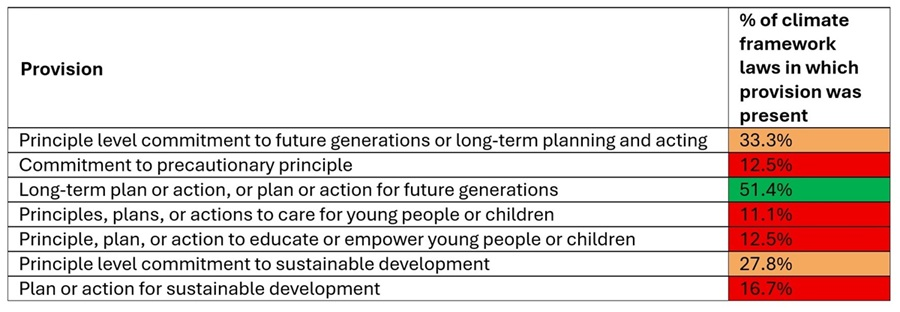
Interview findings add important context to this gap. One interviewee noted that the relationship between intergenerational equity and climate change is ‘more fruitful in the legal space’ than in individual institutions, emphasizing the structural limitations of climate-focused institutions, such as climate advisory bodies: ‘the Climate Change Commission reports to the Climate Change Minister or the Environment Minister and nobody else sees it as their business’. They also reported that, in practice, cooperation between climate advisory bodies and institutions for future generations was limited partly due to resource constraints.
At the same time, research on the impact of climate laws in multiple countries shows that statutory independent expert advisory bodies on climate change, such as Ireland’s Independent Climate Change Advisory Council, New Zealand’s Climate Change Commission or the United Kingdom’s Climate Change Committee, have been instrumental in introducing long-term perspectives into climate policymaking and in mainstreaming those perspectives in other relevant policy areas (Averchenkova, Fankhauser and Finnegan 2021a, 2021b; Averchenkova et al. 2024).
At the time of writing, 24 European countries either already had a functioning climate advisory body or had passed laws to create one, although these bodies vary in mandate, design and impact. Similar institutions are also being established beyond Europe. The member-led International Climate Councils Network now brings together 28 expert bodies that formally advise governments on climate policy, including councils in Australia, Brazil, Canada, Chile, Guatemala, New Zealand, Nigeria, the Philippines, Mexico and South Africa, among other countries.
Another institutional innovation emerging in the context of climate governance is just transition commissions, which are tasked with bringing both intra- and intergenerational equity into climate policymaking. For example, the recently established Just Transition Commission in Ireland advises the Irish Government on how to ensure a fair and equitable transition to climate neutrality that is inclusive and supports workers, communities and those most affected by change. Its functions include preparing evidence-based research to inform long-term climate policy, evaluating and advising on the integration of just transition principles into national and sectoral climate policies, and supporting the National Dialogue on Climate Action and sector-specific dialogues.
While dedicated institutions for future generations, statutory climate advisory bodies and just transition institutions each have their own specific mandates, they are all directly relevant to addressing short-termism in policymaking and strengthening strategic foresight. Although their interaction may have been limited thus far, it will be important to maximize synergies and enhance their collective impact, while also avoiding unnecessary overlap in their work. For example, Ireland explicitly addressed the relationship between the Just Transition Commission and the Climate Change Advisory Council when establishing the former and encouraged collaboration between the two bodies.
3.4. Concluding remarks
Protecting future generations is not an abstract exercise but a practical governance challenge that must be anchored in present realities, sustained through political consensus, adequately resourced and integrated into decision-making systems. Institutions for future generations are rapidly evolving governance innovations, but they remain at a relatively early stage. Evidence from interviews suggests that there is both a need for dedicated, visible champions of future generations and an imperative to embed long-term thinking into the machinery of governance. The former should catalyse the latter rather than substitute for it.
3.4.1. Advocacy
Dedicated institutions for future generations are still novel. Those interested in advocating for them therefore face an uphill battle. Interviewees shared several suggestions that may be helpful:
- Take a gradual approach, building awareness and support over time through strategic investment in initiatives such as research or litigation on related issues.
- Build a wide base of support, including by identifying and cultivating champions from different backgrounds.
- Collaboratively develop narratives that connect with people’s concerns. The concepts of ‘future generations’ and ‘intergenerational equity’ are abstract. Advocacy should therefore speak to tangible issues, such as health or political polarization (depending on what is relevant) and connect them to human concerns, such as caring for children or grandchildren.
- Use a cross-cutting framework for future generations work rather than focusing only on climate change, as doing so risks making the strategy too narrow and more politically vulnerable.
- Draw on successful case studies to show the practical impact of institutions for future generations.
- Seize windows of opportunity created by political or socio-economic developments.
3.4.2. Design
Despite their limited number, some lessons are emerging about how to design effective dedicated institutions for future generations; others can be drawn from the experiences of other advisory bodies, including climate advisory bodies.
- Collaboratively develop goals or a mandate through deliberative processes involving civil society and/or citizens. This can help ensure that the body meets the needs and expectations of the governance system in question and secures support for or a sense of collective ownership of the body.
- Establish a mandate that is specific enough not to be conflated with the mandates of other advisory bodies (e.g. those focused on children or young people) but broad enough to allow the body to exercise oversight of the whole governance system.
- Embed the body’s mandate in legal frameworks, such as constitutions or laws, to provide clarity and legitimacy and safeguard against backsliding.
- Consider multi-member bodies to ensure that the institution is not dependent on the will or popularity of a single person. Civil society networks should be involved in nominating or appointing members.
- Select members not only for subject-matter expertise but also for strong communication skills: they must be able to elucidate and explain the interests of future generations.
- Ensure independence and transparency through appointment procedures and operational arrangements to ensure legitimacy and strengthen cross-party support:
- Select members through transparent procedures (e.g. public calls, independent selection panels and published criteria) and in their personal capacity based on professional expertise and qualifications, avoiding political representation.
- Legally anchor independence through laws or regulations rather than relying on informal arrangements.
- Furnish the body with guaranteed and sufficient financial and human resources to maintain independence, while avoiding attracting political opposition. Consider starting with a small budget and increasing it over time.
- Ensure that accountability mechanisms are strong enough to effect change but measured enough not to be perceived as democratically illegitimate. Consider mechanisms such as mandatory government response to the body’s recommendations.
When designing such institutions, it is important to remember that these lessons are only now emerging, that they are based on a small sample size and that various models are possible. In this context, it is imperative to adopt an iterative approach to design. Periodic opportunities to review and upgrade dedicated institutions for future generations should be built into their mandates. While learning from the experience of examples worldwide, it is also important to leave space for innovative and bold design. This is what the future demands.
3.4.3. Operation
Establishing a dedicated institution for future generations is not the end goal. While institutionalization can help focus attention and resources on an issue and safeguard against backsliding, it does not guarantee that the interests of future generations will be protected. Even well-designed institutions with mandates embedded in legal frameworks are not immune to political dynamics. Dedicated institutions for future generations should therefore take the following steps:
- Develop a strong network of champions with key actors inside and outside government. It is important to secure the support of (a) politicians across the political spectrum, which helps build legitimacy and mitigate political attacks; (b) civil servants, who can act as an extension of the body or as a support system within government; (c) civil society, including private sector actors, which can play a vital role in mobilizing public awareness and support and holding government accountable; and (d) the media, which act as an intermediary between such bodies and the public and therefore help shape whether the body is seen as legitimate and effective. One measure to consider could be establishing a multi-stakeholder futures committee to bring outsiders in.
- Invest in capacity building and futures literacy across all institutions to help mainstream futures thinking and to foster collaboration for the future (e.g. UN Futures Lab).
- Embed public participation into activities through digital polls (e.g. Taiwan), face-to-face workshops and conversations (e.g. Wales) and deliberative mini-publics.
- Adopt a code of conduct to ensure that the body carefully considers the moral, ethical and financial implications of its work and minimizes grounds for criticism.
These efforts must be underpinned by research into how to measure and demonstrate the impact of dedicated institutions for future generations.
3.4.4. Complementary mechanisms
Dedicated institutions for future generations are not the only mechanism for promoting long-term thinking. Nor can they systematically transform governance alone. They should be seen as one possible mechanism and used alongside others that may be equally effective, or at least complementary, in helping to build futures capacity and literacy.
Complementary mechanisms include intergenerational impact assessment (e.g. Canada) and sovereign wealth funds (e.g. Norway); legislation (e.g. constitutional provisions, climate framework laws and litigation, as in Colombia and Goa); research, in collaboration with civil society, to explore questions such as how to evaluate these institutions and improve foresight; and deliberative mini-publics to develop a collective vision for the future.
References
Averchenkova, A., Fankhauser, S. and Finnegan, J. J., ‘The impact of strategic climate legislation: Evidence from expert interviews on the UK Climate Change Act’, Climate Policy, 21/2 (2021a), pp. 251–63, <https://doi.org/10.1080/14693062.2020.1819190>
—, ‘The influence of climate change advisory bodies on political debates: Evidence from the UK Committee on Climate Change’, Climate Policy, 21/9 (2021b), pp. 1218–33, <https://doi.org/10.1080/14693062.2021.1878008>
Averchenkova, A., Higham, C., Chan, T. and Keuschnigg, I., ‘Impacts of Climate Framework Laws: Lessons from Germany, Ireland and New Zealand’, The Grantham Research Institute on Climate Change and the Environment, Policy Report, 14 March 2024, <https://www.lse.ac.uk/granthaminstitute/publication/impacts-of-climate-framework-laws/>, accessed 15 April 2026
Dirth, E. and Kormann da Silva, N., ‘Building Our Common Future: The Role of the Network of Institutions for Future Generations in Safeguarding the Future’, ZOE Institute for Future-fit Economies, October 2022, <https://zoe-institut.de/en/publication/building-our-common-future/>, accessed 12 June 2026
Fairbrother, M., ‘Potential Institutions for Future Generations: What Do Current Generations Think? Results from a Six-Country Public Opinion Survey’, Institute for Future Studies, March 2024, <https://globalchallenges.org/survey-on-potential-institutions-for-future-generations-2024/>, accessed 27 April 2026
Future Generations Commissioner for Wales, ‘Impact of the Act’, [n.d.], <https://futuregenerations.wales/explore/impact/impact-of-the-act/>, accessed 30 May 2026
Jones, N., O’Brien, M. and Ryan, T., ‘Representation of future generations in United Kingdom policy-making’, Futures, 102 (2018), pp. 153–63
MacKenzie, M.K., ‘There is no such thing as a short-term issue’, Futures, 125 (2021), <https://doi.org/10.1016/j.futures.2020.102652>
Rose, M., ‘Institutional proxy representatives of future generations: A comparative analysis of types and design features’, Politics and Governance, 12 (2024), <https://doi.org/10.17645/pag.7745>
School of International Futures (SOIF), ‘Mapping Existing Foresight and Futures Organisations in the Global South’, 2022
Smith, G., ‘Enhancing the legitimacy of offices for future generations: The case for public participation’, Political Studies, 68/4 (2019), pp. 996–1013, <https://doi.org/10.1177/0032321719885100>
Steven, D. and Francuz, B., Future Thinking and Future Generations: Towards a Global Agenda to Understand, Act for, and Represent Future Generations in the Multilateral System (Washington, DC: UN Foundation and Center on International Cooperation, 2021)
Von Knebel, M., ‘Cross-country comparative analysis and case study of institutions for future generations’, Futures, 151 (2023), <https://doi.org/10.1016/j.futures.2023.103181>
Welsh Parliament, ‘Equality and Social Justice Committee’, Sixth Senedd Legacy report, March 2026, <https://business.senedd.wales/mgIssueHistoryHome.aspx?IId=37371>, accessed 16 June 2026
The struggle of democracies to integrate future interests is baked into their design, which is organized around elections, fixed mandates, legislative compromise, and the need to remain responsive to voters. The resulting short-termism may therefore be understood as a by-product of democratic accountability which needs to be mediated through incentives and guardrails for future generations. Climate change makes this challenge even more urgent. Nevertheless, this report illustrates that innovations for future generations are no longer a theoretical concern at the margins of democratic governance; they are already emerging across constitutions, parliaments and dedicated institutions, and they enjoy considerable public support.
Chapter 1 showed how rights, duties, laws and policies directed towards long-term sustainability are reflected in many countries’ foundational legal texts. Provisions on future generations, environmental protection, natural resources, public finances and climate change can establish durable standards of care and create legal hooks for accountability. At their best, these provisions do not freeze governance or democratic decision making but instead provide guidance and guardrails that preserve future generations’ ability to make democratic choices for themselves.
Chapter 2 provided insights into the ways in which long-term choices can be proposed, debated and legitimized through parliamentary processes and innovations, including committees for the future, strategic foresight, citizen input through deliberative processes, framework legislation, and reforms designed to encourage youth representation and political participation. These mechanisms can provide parliaments with tools to reach more consensus-based and evidence-informed decisions regarding the future, while helping them fulfil their mandate to represent current voters.
Chapter 3 illustrated how dedicated institutions for future generations—such as formal and informal commissioners, guardians, ombudsperson institutions and advisory bodies—can help keep long-term interests at the centre of day-to-day governance through their roles in research, advice, advocacy, convening, coordination and enforcement. They can be particularly effective when they are independent; provided with clear mandates, relevant expertise and sufficient resources; and able to maintain two-way communication between the public and decision makers.
These innovations also provide an opportunity to discuss the renewal of democracy more broadly, with the goal of making it more responsive to young people, who are increasingly mobilizing around corruption, social inequality and economic pressures, all of which are likely to be exacerbated by climate change. They also serve as a reminder that the cumulative effects of present decisions are not an abstract concern for future voters, and that responding to these challenges is part of building the resilience and legitimacy of governance systems.
Lastly, the work of protecting future generations is not the responsibility of any single institution. The effective implementation of innovative solutions requires a collective, systemic effort and the consolidation of a more forward-looking and collaborative political culture. Key operational implications include the need for interinstitutional coordination, context-specific design and sustained political commitment. Citizens, elected officials and other political actors are all part of the equation, and both the scientific community and wider civil society have roles to play in navigating difficult trade-offs and striving to look further into the future.
Alina Averchenkova is an expert in climate governance and international development and works as a Distinguished Policy Fellow at the Grantham Research Institute on Climate Change and the Environment at the London School of Economics and Political Science. Alina’s experience also includes working for the United Nations, international sustainability consultancies and think tanks. She is a co-founding member of the Knowledge Network on Climate Assemblies and the International Climate and Democracy Coalition.
Sharon Pia Hickey is a lawyer and Programme Officer in International IDEA’s Constitutional Governance and Rule of Law Programme, where she focuses on constitutional process and design, with a particular emphasis on environmental protection, climate justice and women constitution makers. Previously, she worked at Cornell Law School, where she taught in the Gender Justice Clinic and served as Director of Research and Advocacy at the Cornell Center on the Death Penalty Worldwide.
Aishwarya Machani is a Policy Analyst at the Grantham Research Institute on Climate Change and the Environment at the London School of Economics and Political Science, focusing on climate governance and public participation. Her experience includes working at the Iswe Foundation on global deliberative participation, the Coalition for a Global Citizens’ Assembly and the United Nations Foundation. Aishwarya is a member of the Global Citizens’ Assembly Network.
Michele Poletto is an expert in environmental governance and sustainable development and works as Adviser on Climate Change and Democracy in International IDEA’s Political Participation and Representation Programme. Prior to joining the Institute, he worked for over 15 years on environmental and humanitarian programmes in Africa, Europe and Latin America within the UN system, including with the UN Environment Programme and the UN High Commissioner for Refugees.
- These principles include sustainability, according to which the well-being of current generations should not be prioritized to the detriment of future generations, as well as the All-Affected Principle, which states that all those impacted by a decision should be considered and ideally included in decision-making processes.
- Either a simple majority, where 50 per cent of members plus one can approve an act, or a supermajority, where a specific higher percentage of members is required.
- The longest parliamentary term globally is six years, in Liberia and Yemen.
- The data do not distinguish between democratic and non-democratic elections.
- Burkina Faso, Guinea, Kenya, Morocco, the Philippines, Rwanda, Uganda and Zimbabwe.
- Brazil, India, Italy, Nigeria, Sweden and the United States.
- Countries where fewer people are alive today than will be born this century (Steven and Francuz 2021).
Abbreviations
| GDP | Gross domestic product |
|---|---|
| MP | Member of parliament |
| NDC | Nationally Determined Contribution |
| OECD | Organisation for Economic Co-operation and Development |
| UNDP | United Nations Development Programme |
This report was conceptualized by International IDEA’s Climate Change and Democracy team and edited by Michele Poletto and Sharon Pia Hickey.
We would like to sincerely thank Alina Averchenkova and Aishwarya Machani (from the Grantham Research Institute on Climate Change and the Environment at the London School of Economics and Political Science) for their fundamental contribution to the report, and we are also grateful to the seven experts who kindly participated in the research interviews.
Among International IDEA staff, we would like to acknowledge Silvena Velikova for her significant research and drafting contributions; Agnes Rocksén and Pauline Uhrmeister for their research support; and Adem Abebe, Aurélie Bellon, Matthias Jäger, Jonathan Murphy, David Rosén, Ingrid Walker and Elin Westerling for their feedback throughout the conceptualization and drafting process.
Finally, we would like to thank Katarzyna Gardapkhadze, Director of Global Programmes at International IDEA, for her advice and contributions, as well as Tahseen Zayouna, Publications Officer, for overseeing the production process.
The development of this report was made possible by a grant from the Federal Ministry of Economic Cooperation and Development of Germany. Nothing herein necessarily constitutes the views of the Ministry.


© 2026 International Institute for Democracy and Electoral Assistance
International IDEA publications are independent of specific national or political interests. Views expressed in this publication do not necessarily represent the views of International IDEA, its Board or its Council members.
With the exception of any third-party images and photos, the electronic version of this publication is available under a Creative Commons Attribution-NonCommercial-ShareAlike 4.0 (CC BY-NCSA 4.0) licence. You are free to copy, distribute and transmit the publication as well as to remix and adapt it, provided it is only for non-commercial purposes, that you appropriately attribute the
publication, and that you distribute it under an identical licence. For more information visit the Creative Commons website: <http://creativecommons.org/licenses/by-nc-sa/4.0/>.
International IDEA
Strömsborg
SE–103 34 Stockholm
SWEDEN
Tel: +46 8 698 37 00
Email: info@idea.int
Website: <https://www.idea.int>
Cover illustration: ‘Generations looking forward’, by Vicky Hughes.
Design and layout: International IDEA
Copyeditor: Curtis Budden
DOI: <https://doi.org/10.31752/17702>
ISBN: 978-91-8137-171-0 (PDF)
ISBN: 978-91-8137-172-7 (HTML)


