


Influence and Political Integrity
Mapping Regulatory Frameworks for Influencers in Elections

The research team is grateful to Dr. Samuel Woolley for his feedback and suggestions and for the work of the many research assistants who collected evidence from the various jurisdictions covered by this report: Hana Allal, Dr. Isadora Borges Monroy, Dr. Alexandra Boutopoulou, Isabella Busby, Kevin Carrasco, Elliott Y. N. Cheung, Ellie Eunsol Cho, Fadel Gueye, Natalia Hadei, Rishi Kalaga, Hestutomo Kuncoro, Michelle Nidoy, Nathan Kazmir Poklar, J. Valentina Rojas, Maya Sinclair, and Andreea Stancea.
The team also thanks colleagues at International IDEA—Khushbu Agrawal, Katarzyna Gardapkhadze, Yukihiko Hamada, and Agnes Rocksén—for their careful review and thoughtful comments on various drafts of this report.
The authors are grateful to Vera Chrobok who oversaw the production of the report, and to Curtis Budden, Tahseen Zayouna, Jorge Sagastume, Jenefrieda Isberg, and Zin Mar Aye for their support in editorial, design, and administrative tasks.
This report draws on research supported by the Social Sciences and Humanities Research Council of Canada.
Political influencers have become a regular feature of election campaigns. Parties, candidates, third parties, and foreign actors engage them to reach voters, sometimes covertly. Much of their value comes from appearing independent, but that is also what makes their role hard to see. When paid or coordinated support is presented as personal opinion, voters cannot tell who is speaking on whose behalf, and regulators struggle to trace spending or detect coordinated or foreign influence. At the same time, most electoral frameworks were not designed with influencers in mind.
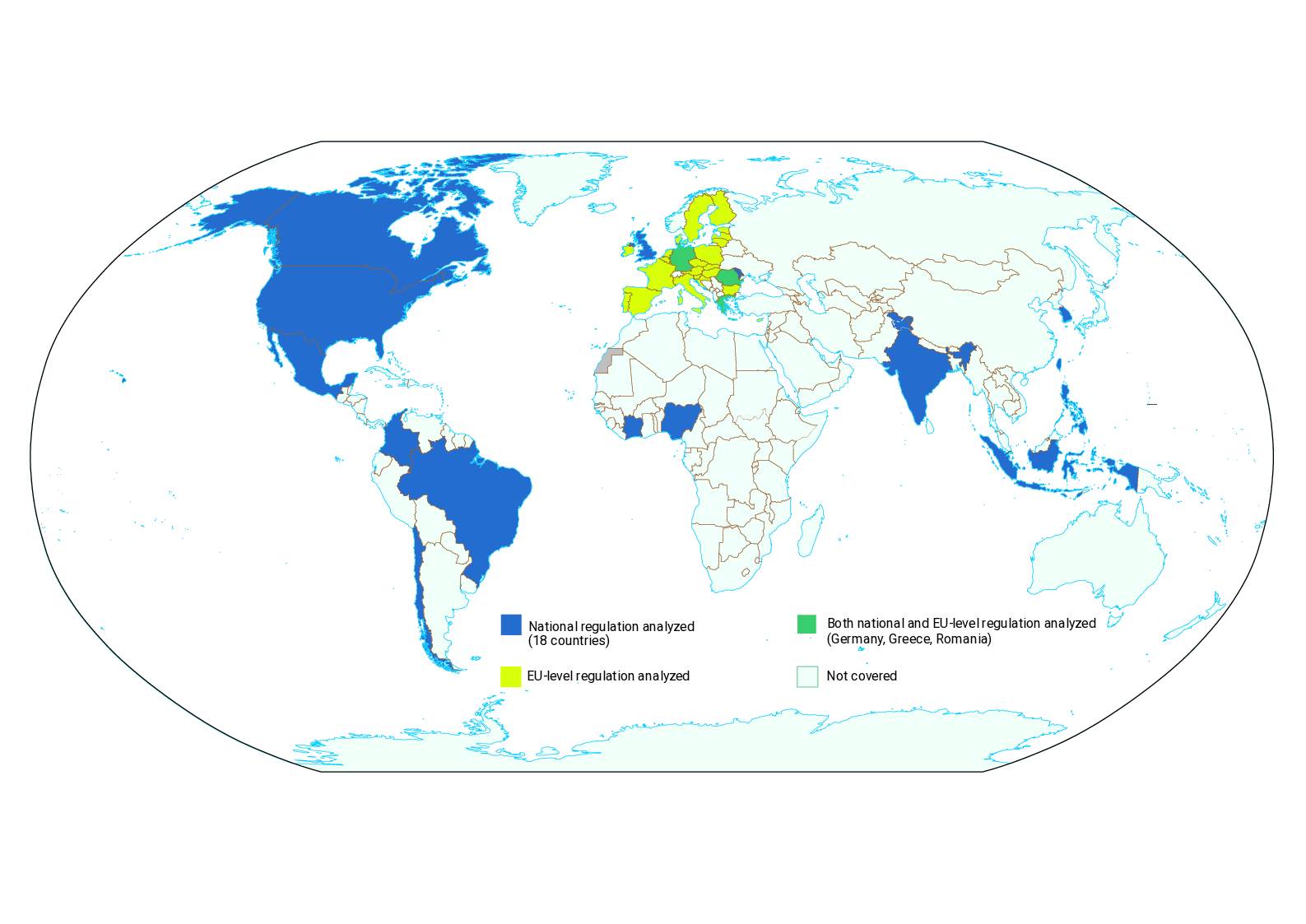
This report draws on a systematic review of laws, regulations, and guidelines across 18 countries and the European Union to examine existing national and international approaches to political influencers. In the analysis of frameworks (chapter 1) and definitions (chapter 2), the report identifies five key findings:
- Influencers are regulated by extension, not by design. Hardly any jurisdiction has adopted influencer-specific electoral law. Instead, influencer activity is regulated by existing political finance and electoral communication rules, which usually do not mention influencers specifically.
- Payment is the main regulatory trigger, but it misses politically consequential activity. Most frameworks depend on traceable payment. This leaves nonmonetary compensation, off-platform or subcontracted payments, and coordination without formal payment largely outside their reach. “Organic” expression is protected unless payment or coordination is proven, so campaigns and influencers have an incentive to make coordinated activity look organic.
- The most developed influencer rules exclude political content. Commercial advertising frameworks sometimes impose detailed disclosure obligations but often exclude political content. As a result, the same influencer may face extensive obligations when promoting a product and none when promoting a candidate.
- Definitions are rare and inconsistent. Few electoral frameworks define influencers, while definitions borrowed from advertising or tax law were not designed for political contexts, focus on commercial payment, and can miss unpaid, informally compensated, or smaller actors.
- Enforcement and data access lag behind. Enforcement is often complaint-driven, and electoral management bodies (EMBs) may lack the mandate or capacity to monitor influencer activity. Limited access to platform data makes the scale of that activity hard to assess. Ad libraries that capture only on-platform payments make the gap worse.
In chapter 3, the report makes 17 recommendations in five areas:
- Foundations for effective regulation. Activity-based definitions of influencers, data access for regulators and researchers, and safeguards for freedom of expression built into regulatory design.
- Beyond the payment trigger. Recognizing nonmonetary compensation, closing the subvendor loophole, and requiring disclosure of payment or coordination in influencer content itself.
- Platform design. Ad libraries that capture influencer content however payment is routed, and an end to treating political advertising bans as a substitute for transparency.
- Enforcement capacity. Dedicated, proactive EMB units, monitoring that reaches smaller accounts, coordination between agencies, and clear guidance for influencers.
- Emerging gaps. Artificial intelligence (AI)-generated influencers, foreign interference that does not rely on funding, and the boundary between influencers and journalists.
Most recommendations fall to EMBs and legislators. Others are directed at policymakers responsible for advertising, platform, and foreign-interference rules; platforms themselves; and international organizations. Taken together, the recommendations offer policymakers a concrete starting point for deciding not only whether to act but how.
I.1. Who Are Influencers and What Are Their Roles in Elections?
Popular online personalities who cultivate a following on social media and other digital platforms—commonly known as influencers—have become increasingly visible actors in electoral politics worldwide. Political parties, candidates, governments, civil society organizations, and foreign actors have used influencers for purposes ranging from voter outreach and civic engagement to covert shadow campaigning, disinformation, and coordinated foreign interference operations. As the vignettes at the end of this introduction illustrate, influencers play a range of roles in politics and are engaged by a variety of actors. These contrasting uses demonstrate the growing, but contested, role of influencers in elections around the world and raise a central question: who counts as an influencer?
Throughout this report, “influencer” is used as a shorthand term, while recognizing that the literature and regulatory frameworks employ a range of overlapping labels, including “content creator,” “creator,” and “social media influencer,” as well as platform-specific terms such as “YouTuber” and “Instagrammer.”
Defining who counts as an influencer is highly contested. Academic traditions have approached the concept in different ways. Early work focused on opinion leaders and parasocial relationships, while more recent scholarship examines self-branding and hybrid forms of political communication (Stehr et al. 2015; Sikorski et al. 2025). Regardless of their focus, these approaches converge on a key insight: rather than constituting a discrete and bounded category, influencers are best understood as a multifaceted phenomenon, with the boundaries between influencers, activists, journalists, celebrities, commentators, and political actors becoming increasingly porous (Dubois and Dommett 2025).
Influencers can therefore take subtly different forms. This has important regulatory implications, as legal and policy frameworks often depend on stable distinctions between personal expression, advertising, journalism, political advocacy, and campaign activity. This report adopts an intentionally broad working definition, understanding influencers who have an impact on elections as “popular social media personalities who create content that includes at least some or occasional political references, with which they reach a dispersed audience and build a personal brand as well as (parasocial) relationships with their followers” (Rothut 2025). This breadth is necessary because many election-relevant influencers fall outside the traditional categories used in electoral and communications regulation. These include AI-generated or synthetic personas, whose regulatory status remains an open question in most jurisdictions.
The working definition adopted in this report differs from definitions used outside academia, which reflect distinct priorities. The advertising and marketing industry categorizes influencers primarily by follower count—nano, under 10,000; micro, 10,000–100,000; macro, 100,000–1 million; and mega or celebrity, above 1 million—treating political engagement as a situational attribute rather than a defining feature (Conde and Casais 2023). This approach captures reach but not the nature, intent, or sponsorship conditions of political communication. Moreover, high follower counts are an imperfect proxy for influence, particularly within segmented or highly engaged niche communities. Legal and regulatory definitions remain comparatively rare in electoral law. Where they do exist, they are typically derived from consumer protection or advertising regulation rather than election-specific frameworks.
How an influencer is defined has direct consequences for whether they are visible to regulation. A framework based on compensation will capture formal paid partnerships but miss organic or unpaid partisan actors. Approaches based on follower thresholds identify large accounts but may overlook smaller, highly networked actors who may exert disproportionate influence within targeted niche communities. As this report demonstrates, most electoral regulatory systems were not designed with influencers in mind. Where existing regimes do apply to influencers, definitional mismatches between commercial and electoral frameworks can create gaps between legal categories and actual influencer practices.
These definitional choices also have broader implications for electoral integrity. Gaps or inconsistencies in how influencers are defined can undermine transparency and accountability in electoral communication, making it harder to identify coordinated campaigns, track political spending, and assess the origins of election-related content. As political communication increasingly takes place through influencer networks, uncertainty about who qualifies as an influencer can make it more difficult to apply legal requirements consistently and for voters to make well-informed decisions.
A previous report (Dubois and Stahl 2025) identified several roles that influencers perform in electoral contexts, including advertisers, celebrity endorsers, campaign volunteers, media outlets, data brokers, journalists, and lobbyists. These roles are not mutually exclusive, and influencers frequently move between them, blurring the boundaries between influencers and other political actors. This fluidity can create regulatory challenges, particularly when influencers engage in both legitimate and contested practices simultaneously, including undisclosed paid promotion, circumventing campaign rules, and informal shadow campaigning outside formal disclosure systems. The following examples illustrate these roles and some of the associated regulatory challenges.
Covert paid campaigning, Nigeria
Ahead of Nigeria’s 2023 presidential election, a BBC investigation found that political parties were secretly paying social media influencers approximately USD 45,000 per campaign, alongside gifts, government contracts, and promises of political appointment. Those involved described the practice as “an industry” (Nwonwu et al. 2023). Influencers were recruited to promote party candidates and disseminate disinformation about opponents, which subsequently spread from social media to mainstream news coverage and offline political discourse. While the use of paid influencers for political campaigning was not explicitly prohibited under Nigerian law at the time, certain forms of false information were prohibited, highlighting the regulatory ambiguity surrounding influencer-based political campaigning.1
Payment and disclosure, United States
During the 2024 election cycle, social media platforms such as TikTok and Instagram featured political content encouraging users to register to vote or support presidential candidates (Kern 2024; Zakrzewski 2024). Behind the scenes, political action committees (PACs) and other political groups spent millions of dollars paying influencers to produce such content. However, federal election rules did not generally require influencers to disclose that they had been compensated for a post by a politician or PAC. In some cases, influencers were discouraged from disclosing such payments to avoid violating platform rules, including TikTok’s ban on political advertising (Kern 2024; Zakrzewski 2024). The result is an opaque social media landscape where transparency is optional or even discouraged.
Campaign partners, India
Ahead of India’s 2024 Lok Sabha (the lower house of parliament) general election, the Bharatiya Janata Party developed a structured approach to influencer engagement, including a gathering of approximately 500 social media influencers across lifestyle, food, music, and entertainment at a cricket stadium in Mumbai. Local party units were also encouraged to expand influencer outreach at the district level (Mollan 2024). This relatively formal and visible approach illustrates the increasing institutionalization of influencer engagement in electoral campaigns. The Election Commission of India requires pre-certification of political advertisements on social media and the inclusion of spending on social media campaigning in election expenditure reporting. However, rules apply to candidates and political parties; how to treat content posted by others was left for further consideration (ECI 2024a). As influencer engagement does not constitute a distinct regulatory category, whether existing requirements apply to such activity depends on factors including whether it constitutes political advertising or reportable campaign expenditure.
Influencer disclosure requirements, Philippines
As influencers have taken on a more prominent role in Philippine politics, especially as undisclosed campaigners for politicians such as former President Rodrigo Duterte, the Commission on Elections (COMELEC) adopted new influencer regulations ahead of the 2025 midterm elections aiming at increased transparency (ABS-CBN News 2025). All influencer endorsements—paid or unpaid—are treated as expenses or donations and must be disclosed under penalty of perjury, meaning that individuals who knowingly disclose false or misleading information may face legal sanctions (ABS-CBN News 2025; Sampang 2025).
News influencers, Chile
In Chile, where more than 60 percent of residents use social media as a source of news, millions follow news-oriented accounts and channels on Facebook, Instagram, and YouTube. Some are the digital outlets of traditional media—television stations, radio stations, and newspapers—while others are run by news influencers: independent content creators who report and comment on current affairs, and who are increasingly challenging legacy media as Chileans’ primary source of news (González 2025; Fernández and Núñez-Mussa 2025). News influencers offer value as an alternative source of accessible news, but they also blur regulatory lines between journalists and individuals expressing their opinions. As long as they do not receive compensation for their posts, Chilean law leaves them largely unregulated (SERVEL 2025).
Influencers as civic opposition, Indonesia
Ferry Irwandi, an Indonesian influencer with a large online following, emerged as a leading figure opposing the government during the demonstrations that took place in 2025, using social media to disseminate information and mobilize public participation (Novianto et al. 2026). The Indonesian National Armed Forces alleged that some of Ferry’s online content involved defamation of public institutions with his videos, although it eventually backed down (Fajri 2025). Ferry’s case can be understood as an example of how regulations on influencer content could be used to target and silence influencers, especially those critical of the government.
Foreign influence, Romania
During Romania’s 2024 presidential election, declassified intelligence documents identified coordinated online activity involving influencers, automated engagement, and opaque funding that amplified the visibility of one of the candidates, Călin Georgescu (Leloup et al. 2024). Influencers were reportedly paid to promote content favorable to Georgescu without disclosing its political nature, while coordinated and inauthentic accounts allegedly generated false support by inflating engagement with the content (Ings 2025). Romanian authorities concluded that the scale and sophistication of the campaign were consistent with the involvement of a foreign state actor, amid wider concerns of Russian interference. The first round of the election was subsequently annulled. The case illustrates how influencer networks can be integrated into broader foreign influence operations that undermine electoral transparency and integrity (Ross et al. 2024). Following the annulment, the European Commission opened formal proceedings against TikTok over claims of foreign information manipulation and interference, along with concerns about undisclosed paid political content (European Commission 2024). TikTok subsequently reported that it had banned 27,217 inauthentic accounts associated with a network that had sought to promote the Alliance for the Union of Romanians and, to a lesser extent, Georgescu (TikTok 2024).
AI influencers, Brazil
Ahead of Brazil’s 2026 elections, AI-generated political influencers emerged as a new challenge for electoral regulation. One prominent example is “Dona Maria,” a hyper-realistic AI-generated elderly woman whose social media profile attracted hundreds of thousands of followers through emotionally charged videos criticizing President Luiz Inácio Lula da Silva, the Supreme Federal Court, and left-wing actors, leading to several parties asking the Superior Electoral Court (Tribunal Superior Eleitoral, TSE) to suspend the profile (G1 2026). At the same time, a study published in May 2026 found that most AI-generated political avatars examined on Brazilian social media did not disclose their artificial nature, despite TSE rules requiring labels for AI-generated electoral content (Cócolo 2026). The spread of these avatars exposes a growing enforcement gap: although Brazil’s 2024 electoral reforms prohibited deepfakes and mandated AI disclosure, synthetic influencers continue to operate in a gray zone between satire, propaganda, and coordinated disinformation.
Influencer partnerships for voter outreach, Canada
Ahead of Canada’s 2019 federal election, Elections Canada planned to use social media influencers as part of its voter information campaign to encourage young people to register to vote. The initiative included a video featuring 13 Canadian influencers and was intended to help reduce the registration gap among electors aged 18–24 (Elections Canada n.d.). During the final vetting process, however, Elections Canada identified past activities by some of the participating influencers that could be perceived as partisan. The video was subsequently cancelled because of a potential risk to Elections Canada’s nonpartisanship and neutrality (Elections Canada n.d.). The case illustrates the importance for electoral management bodies (EMBs) of considering influencers’ previous public activities when assessing potential partnerships and the reputational risks associated with influencer outreach.
I.2. Purpose and Scope
This report aims to support policymakers considering whether and how to respond to the growing role of political influencers. It examines national and international responses to political influencers in the context of election campaigns, focusing on laws, regulations, and related guidelines across 18 countries and the European Union.
The analysis is based on a systematic search of publicly available information, including government websites and news coverage, in particular from relevant authorities and databases in each country, as well as laws, regulations, or proposals relating to influencers—including those described as content creators, celebrities, and social media figures. The research team drew on knowledge of the political and legal systems in the jurisdictions examined and conducted searches in both local languages and English. Although the resulting dataset is not comprehensive, the search criteria were designed to provide a broad overview of existing approaches to political influencers.
Notably, laws, regulations, and related guidelines cannot be fully understood independently of their specific context, case law, and court rulings, and laws and regulations at different levels of government. Accordingly, this report does not seek to provide a definite assessment of how the use of influencers in elections would be treated under the law of each jurisdiction. Such an assessment would require jurisdiction-specific legal expertise and consideration of the circumstances of individual cases.
The report provides an overview of the electoral and non-electoral legal and policy responses to political influencers identified across the selected jurisdictions. Chapter 1 examines efforts to adapt or update electoral and non-electoral laws and regulatory frameworks. Chapter 2 examines explicit and implicit definitions contained in laws, regulations, and guidelines. Chapter 3 discusses emerging concerns and the role of technology platforms. The report concludes with recommendations for EMBs, policymakers, legislators, and other relevant actors.
1.1. Introduction
This chapter examines current responses to the growing role of influencers, focusing on the laws, regulations, and guidelines identified across the jurisdictions reviewed. Given the report’s focus on influencers active in electoral contexts, particular attention is paid to efforts to expand existing systems of political oversight to influencer activity.
| Framework | Summary | Target | Trigger |
|---|---|---|---|
| 1. Political finance and spending controls | |||
| Campaign finance and political advertising | Regulates influencer activity as campaign expenditure, captured via broad definitions of election advertising; influencers are rarely named explicitly. | Parties, candidates, and campaigns | Payment or campaign expenditure |
| Third-party political advertising | Regulates external actors engaging in political communication independently of official campaigns; influencers may be subject to third-party obligations. | Third parties; influencers when acting independently or spending money | Compensation (thresholds vary by jurisdiction) |
| Foreign interference | Captures influencers indirectly who receive foreign funding, act under foreign direction, or participate in foreign influence operations. | Foreign funding relationships; influencers receiving foreign support of acting under foreign direction | Foreign funding, direction, or control |
| Electoral corruption and anti-bribery provisions | Applies where influencer payments constitute illegal inducement, bribery, or corruption rather than solely undisclosed campaign expenditure. | Influencers, intermediaries, campaigns, donors, and parties | Bribery, undue influence, or illicit financing |
Key tensions Nonmonetary compensation. Access, gifts, reciprocal promotion, or informal coordination fall outside these frameworks. Payment transparency. Enforcement depends on traceable payments; covert or third-party payments limit oversight. Unpaid activity. Uncompensated activity falls outside political finance rules despite its potential electoral impact. | |||
| 2. Electoral communication | |||
| Electoral propaganda and campaign communication | Regulates influencer content when it qualifies as electoral communication, particularly during campaign or blackout periods. | Parties, candidates, campaigns, and other online actors | Content, election period, payment, or formal coordination |
| Election fairness and transparency | Regulates the integrity of electoral communication, including manipulated or misleading content and coordinated inauthentic activity. | Influencers, campaigns, parties, platforms, or other users, depending on the framework | Misleading content, use of AI, or inauthentic behavior |
| Platform obligations during elections | Establishes obligations for platforms, such as advertising repositories, content moderation, or cooperation with electoral authorities. | Platforms, sometimes subject to size | Political content, election period, and platform size |
Key tensions Ambiguous paid vs. organic boundary. Such ambiguity raises questions about what constitutes paid content and whether uncompensated influencer activity falls within regulatory frameworks. Incentives to mimic private expression. Campaigns and influencers are incentivized to make coordinated or paid political activity appear organic and spontaneous in order and to evade regulation. Platform transparency gaps. Platforms classify content as political advertising only when payment flows through their systems. Detection of synthetic or coordinated content. Attributing AI-generated or coordinated content remains technically difficult. | |||

| Framework | Summary | Target | Trigger | |
|---|---|---|---|---|
| 1. Media and advertising | ||||
| Consumer protection and advertising frameworks | Statutory or self-regulatory frameworks governing commercial advertising disclosure; political advertising is often excluded. | Influencers, advertisers, and brands | Sponsorship or commercial relationship | |
| Broadcast and audiovisual media | Regulates broadcasters and audiovisual services; may regulate influencer activity when content is distributed through these channels or when the boundary with broadcasters is legally ambiguous. | Broadcasters and audiovisual services; influencers when appearing on regulated channels | Political content and timing | |
| Digital services and platform regulation | Mirrors election-period platform obligations but on an always-on basis. | Platforms and, indirectly, users | Harmful or illegal content and systemic risk | |
Key tensions Influencers as incidental subjects. Influencers are subject to these frameworks only when performing roles that the frameworks were designed to regulate. Political advertising exclusions. Commercial frameworks are most developed but often explicitly exclude political advertising. Asymmetric disclosure requirements. An influencer promoting a product faces extensive obligations; the same influencer promoting a candidate faces none. | ||||
| 2. Influencer classification and status | ||||
| Taxation | Defines or classifies influencer activity for taxation and revenue collection purposes. | Influencers | Income or monetization | |
| Professional classification | Regulates influencer activity through formal recognition or classification as a profession. | Influencers | Formal legal classification or recognition | |
Key tensions Misaligned classification systems. Tax and commercial frameworks define influencers using criteria that differ from those relevant for electoral oversight. Lack of election-specific definitions. | ||||
As summarized in tables 1.1A and 1.1B, existing regulations and newer responses address influencer activity through both electoral and non-electoral frameworks. Although these frameworks are presented separately for analytical purposes, in practice they frequently overlap, with issues such as campaign finance, third-party spending, foreign influence, transparency, and political advertising often addressed through the same legal instruments. Drawing on examples from the jurisdictions reviewed, the following sections examine the mechanisms policymakers are using and the specific provisions being adopted to address influencer activity.
1.2. Responding to Influencers via Electoral Regulation
Electoral regulation varies internationally, with jurisdictions adopting different approaches to oversight. Across those reviewed for this report, two approaches predominate—political finance and electoral communication.
1.2.1. Political Finance and Spending Controls
In many jurisdictions, electoral activity is governed through political finance laws and regulations. This type of framework is evident across much of the sample, including in Brazil, Canada, the EU, and the Republic of Korea. Such frameworks typically include rules on donations, spending limits and periods, disclosure of expenditure, and financial reporting, with the broader aims of promoting transparency and preventing corruption. The review also identified examples of jurisdictions adapting existing electoral finance law in response to the growing role of influencers.
Campaign finance and political advertising laws and regulations govern campaign expenditure and paid political communication. They may establish spending limits and disclosure requirements, determine which expenses must be reported and counted toward spending limits, and regulate political advertising. In many jurisdictions, these frameworks also establish the conditions under which political actors, including parties and candidates, may engage with external parties for campaign-related communication.
Parties and campaigns may therefore be subject to disclosure requirements, spending limits, and reporting obligations when engaging influencers to produce, post, or share content, affecting the types of services that can be commissioned, and whether influencers can be engaged to communicate on behalf of the hiring party. Influencers can, in this context, function as campaign service providers even when they are not explicitly identified as such in legislation. Their activities may instead be captured through broader definitions of election advertising. Notably, non-advertising services that could be provided by influencers may remain outside these frameworks. The following examples illustrate how these approaches operate in practice.
Canada is one of the few jurisdictions in which electoral authorities have clarified the rules around influencer expenditures (Elections Canada 2020). In 2020, the chief electoral officer provided interpretation guidelines explicitly including influencers as potential advertisers, explaining that in such instances obligations related to spending limits, disclosure, as well as transparency mechanisms apply (Elections Canada 2020). The EU has also listed influencers as examples of political advertising.2 In Chile, influencers are not explicitly identified in electoral law, but political advertising is defined broadly enough to encompass their activities (SERVEL 2025). In practice, any paid political communication disseminated during electoral campaigns may fall under campaign finance regulations, meaning that expenditures on influencer-based political propaganda must be formally declared to electoral authorities. This requirement is central to ensuring transparency and accountability in campaign financing. However, when such expenditures are not reported, it becomes significantly more difficult for regulators to monitor, audit, and enforce compliance, limiting their capacity to effectively oversee political advertising in digital environments.
In some jurisdictions, existing laws regulate who may provide campaign-related services or the channels through which such services may be provided, potentially encompassing influencers. In the Republic of Korea, for example, the 2026 Public Official Election Act restricts who may legally place online advertising for election campaigning, effectively prohibiting campaigns from commissioning or paying influencers outside the permitted scope.3 A different approach is found in Indonesia, where the General Elections Commission (Komisi Pemilihan Umum) enforces an account registration system: political parties may campaign through pre-registered accounts only, meaning that commissioning influencer activity through unregistered channels is entirely prohibited.4 In Brazil, the restriction is even more explicit on the demand side: while individuals, including influencers, may express political support, campaigns are prohibited from hiring or compensating “natural persons” to disseminate electoral content, and individuals themselves are barred from paying for the promotion or mass-distribution such content.5 In the United States, by contrast, influencers can be paid without a disclosure requirement (Ghosh 2025).
Taken together, these examples illustrate different ways in which existing electoral frameworks can regulate the engagement of influencers: restricting what must be declared as campaign expenditure—Canada (Elections Canada 2020) and most EU jurisdictions with campaign finance frameworks6—restricting who may campaign (Republic of Korea7), which accounts may be used (Indonesia8), and restricting whether individuals can be hired or financially engaged in campaign dissemination (Brazil9).
Third-party advertising regulates the obligations of external actors that engage in political communication but are not an official campaign, candidate, or political party. This category typically includes individuals, organizations, and other entities acting independently or semi-independently in the electoral process. Depending on the jurisdiction, third parties may be required to register with electoral authorities, comply with spending limits and reporting requirements, or observe restrictions on coordination with official campaigns.
Within this framework, influencers may fall under the category of third parties and become subject to these obligations. Depending on the applicable rules, this may require them to report funding received from campaigns, disclose sponsorship in their content, or formally register with an EMB before engaging in political communication. The following examples illustrate how third-party frameworks can apply to influencer activity.
In the United Kingdom, 2025 Electoral Commission guidance on imprints for nonparty campaigners explicitly identifies influencers as potential third-party actors: when publishing content on behalf of a candidate, influencers must comply with existing regulations, including the requirement to include clear imprints disclosing who paid for or authorized the material (Electoral Commission n.d.). In the Philippines, registration is not tied to a minimum spending threshold; instead, actors must register with COMELEC when they are compensated for participation in campaign-related activities.10 In Canada, according to the Political Financing Handbook for Third Parties, Financial Agents and Auditors, third parties that engage in regulated activities supporting or opposing a candidate or issue must meet reporting and compliance requirements once their spending exceeds CAD 500 (USD 350) (Elections Canada 2024).
Foreign interference frameworks in elections address whether political funding, direction, or control originates from foreign actors and whether such involvement is prohibited or subject to disclosure requirements. These frameworks commonly restrict contributions by foreign governments, individuals, corporations, or other foreign interests to domestic campaign activity. The International Institute for Democracy and Electoral Assistance’s (International IDEA) Political Finance Database indicates that currently 129 countries prohibit donations from foreign interests to political parties (International IDEA n.d.). These frameworks increasingly intersect with concerns about foreign information manipulation and interference, which can involve coordinated efforts by foreign actors to influence public opinion and democratic processes through both financial and nonfinancial means (Sicurella and Morača 2025).
Here again, despite foreign interference through the payment of influencers being a frequently reported issue (Sicurella and Morača 2025), influencers are rarely identified explicitly in the relevant legal frameworks. Instead, regulation generally focuses on the underlying foreign funding, direction, or control. These frameworks may therefore apply to influencers when they receive foreign-sourced payments or act under the direction or control of foreign actors. However, contemporary influence operations do not necessarily rely on direct financial transactions, and payments may also be routed through intermediaries. Other activities, such as coordinated amplification networks—for example, when social media users or bots are paid to amplify particular content through interactions—strategic messaging guidance, or the dissemination of narratives developed by foreign actors, may fall outside political finance frameworks focused primarily on financial transactions.
In Taiwan, concerns about foreign political influence are addressed through national security and cross-strait relations frameworks rather than influencer-specific election rules. The 2020 Anti-Infiltration Act11 prohibits political donations, lobbying, campaign support, and other political activities conducted on behalf of “foreign hostile forces,” while the 1992 Act Governing Relations Between the People of the Taiwan Area and the Mainland Area restricts politically collaborative activities connected to Chinese entities or interests.12 In the EU, Regulation 2024/900 restricts the provision of political advertising services to certain third-country sponsors during the three months preceding an election or referendum organized at the EU, national, regional, or local level.13 Because the regulation expressly encompasses political advertising disseminated through influencers, these restrictions may also apply where influencers are used to disseminate paid political advertising on behalf of third-country sponsors.
Electoral corruption and anti-bribery provisions criminalize certain forms of financial or material inducement in electoral contexts, including bribery, undue influence, or illicit financing. Such provisions are typically grounded in general criminal law rather than election-specific regulation and establish legal thresholds where financial relationships become criminal offenses rather than administrative violations.
Within this framework, payments to or by influencers may give rise to criminal liability where they constitute bribery, undue influence, or other forms of illicit financing rather than merely undisclosed or excessive campaign expenditure. Such provisions may therefore become relevant where influencer-related financial arrangements bypass or evade standard campaign finance regulations.
In Romania, the investigation of Bogdan Peșchir illustrates how general anti-bribery provisions can be applied to influencer activity. In March 2025, Peșchir was charged with 265 counts of voter bribery after allegedly distributing over EUR 380,000 (USD 425,000) through TikTok’s virtual gifting system to livestreamers who produced or amplified content supportive of the candidate Călin Georgescu (
Regulated Entities and Regulatory Triggers
Political financing frameworks are designed to follow campaign money and target those who hire influencers, such as political parties, campaigns, and third-party organizations. In some jurisdictions, however, influencers themselves may also be directly subject to regulatory requirements. In the Philippines, for example, COMELEC explicitly classifies paid digital influencers as individual contractors subject to reportorial requirements, placing obligations on influencers themselves rather than reaching them only through those who hire them.14 Influencers are also a unit of regulation under some electoral corruption and anti-bribery provisions when found to participate in illicit payment arrangements. In addition, Brazil’s TSE framework prohibits individuals from boosting or monetizing electoral content, which includes ordinary social media users as a primary unit.15 Similarly, Côte d’Ivoire16 and the Philippines17 do not allow non-registered social media accounts to boost content on the platforms.
Across these frameworks, a payment or financial transaction is a common regulatory trigger, although the applicable thresholds and the actors subject to them vary by jurisdiction. In Canada, for example, there is a CAD 500 (USD 350) threshold before a third-party must register as such (Elections Canada 2024), whereas in Texas, influencers must disclose when they receive compensation of USD 100 or more.18 In the Philippines, there is no minimum expenditure threshold for a campaign commissioning or compensating an external actor such as an influencer; all must be reported.19
Key Tensions
Within this framework, financial transactions are the ultimate focus. The presence of compensation between an influencer and a campaign therefore provides a potential point of regulation. However, reliance on financial transactions can also create regulatory gaps:
- Nonmonetary compensation. Campaigns that compensate influencers through nonmonetary means such as access, gifts, reciprocal promotion, or informal coordination commonly fall outside these frameworks.
- Payment transparency. Enforcement may depend on explicit evidence of payment, limiting oversight. Influencers may not be regulated where payment is not transparent or traceable—for example, when they are paid by third parties or covertly.
- Unpaid activity. Unpaid political influencer activity falls outside financing rules, despite its potential impact.
These limitations have been explicitly acknowledged in regulatory instruments or guidance in some jurisdictions and may also arise where existing frameworks rely primarily on financial transactions to trigger regulatory obligations (Hernández Cadena et al. 2018).
Moldova’s case illustrates an alternative enforcement approach, showing a willingness to move beyond explicit proof of payment. The Central Electoral Commission of Moldova (Comisia Electorală Centrală a Republicii Moldova) sanctioned the Democracy at Home Party (Partidul Democrația Acasă) for failing to disclose online political expenditure, citing inauthentic coordinated behavior involving 17 influencers on TikTok (Radio Europa Liberă Moldova 2025). Although the party leader denied any paid advertising and argued that such spending was not possible on the platform, the commission inferred the existence of financial resources from the scale of the activity. Meanwhile, the EU, in defining political advertising, applies nonmonetary criteria, including right of use and contractual arrangements, and states that determining the commercial nature of a message requires consideration of its content, objective, and language.20
1.2.2. Electoral Communication
A second form of electoral regulation focuses on electoral communication rather than political finance. Across the jurisdictions reviewed, this approach is evident in countries including Colombia, Côte d’Ivoire, and Mexico, to name just a few. These frameworks regulate different aspects of political communication, including electoral propaganda and campaign communication, electoral fairness and transparency, and election-specific requirements for technology platforms. Depending on the jurisdiction, they may regulate the content of political communication, when it may be disseminated, who may disseminate it, and the conditions under which it becomes subject to electoral oversight.
Rules on electoral propaganda and campaign communication establish the conditions under which political communication can be produced and disseminated. Depending on the jurisdiction, these frameworks may consider the content of the communication, the actors involved, and the timing of its dissemination. Relevant criteria may include, for example, whether a message promotes or opposes a candidate, party, or political position; whether it is disseminated during a regulated campaign period; and whether payment or formal coordination is involved.
Within this framework, these regulations can help determine whether a given influencer’s content is regulated political speech or unregulated personal expression. Regulations may apply to influencer content when it meets the relevant criteria concerning content, timing, and coordination or payment. This has so far been the most common regulatory mechanism used to regulate influencers in elections.
Mexico enforces a three-day pre-election blackout period (veda electoral) during which political campaigning is prohibited.21 In 2021, following a complaint by the National Action Party (Partido Acción Nacional), the National Electoral Institute (Instituto Nacional Electoral, INE) determined that an influencer had acted in coordination with the Ecologist Green Party of Mexico (Partido Verde Ecologista de México, PVEM) during this restricted period. The INE concluded that this constituted unlawful campaigning, resulting in sanctions against both the party and the influencer (INE 2021). However, in SUP-RAP-180/2023 and related cases, the Electoral Tribunal of the Federal Judiciary (Tribunal Electoral del Poder Judicial de la Federación, TEPJF) overturned sanctions against the influencer Mariana Rodríguez Cantú, holding that posts by individuals, including commercial influencers, should be presumed spontaneous unless party coordination or compensation is proven.22 Together, these cases illustrate both the enforcement potential and the limits of regulating influencer activity during elections.
In Chile, social media platforms are now treated similarly to traditional media, such as newspapers and radio stations, particularly with regard to transparency and campaign spending controls. However, some differences remain. For example, certain community radio stations are prohibited from broadcasting electoral propaganda, while social media platforms are primarily regulated through disclosure and reporting requirements.23
Election fairness and transparency measures aim to ensure that the political communication environment is free from manipulation and that audiences can identify who is speaking and on whose behalf. These measures include prohibitions on coordinated inauthentic behavior and deepfakes, as well as conduct standards. More recently, provisions specifically targeting AI-generated, synthetically manipulated, or digitally altered content in electoral contexts have also been developed.
Notably, a number of transparency mechanisms are embedded within the rules on third-party advertising discussed previously, including digital imprint requirements and disclosure obligations for paid political content. Third-party frameworks in many jurisdictions therefore operate at both the financial and communication levels, considering both an influencer’s role in the financial architecture of a campaign and the content and transparency of their communication.
While elsewhere, such as the UK, influencers are explicitly identified as third-party actors for the purposes of applying restrictions (Electoral Commission n.d.), references to “channels and profiles of individuals with a large following” in Brazil appear in a permissive context: these actors are explicitly permitted to publish political content, including when participating in coordinated activities, provided that other electoral rules are observed.24
AI disclosure requirements are also becoming more common. Several jurisdictions have introduced restrictions on deepfakes or AI-generated or manipulated content in electoral contexts. Côte d’Ivoire’s High Authority for Audiovisual Communication (Haute Autorité de la Communication Audiovisuelle, HACA) Decision No. 2025-01025 and the Republic of Korea’s 2026 Public Official Election Act amendment, for example, contain provisions regulating the use of such content during election periods).26 India’s Election Commission has also progressively strengthened its guidance on AI-generated content in political communication, including through requirements to label synthetic or AI-generated campaign content and guidance against the use of manipulated content to spread false or misleading information (ECI 2024b, 2025a, 2025b).
During elections, platforms are required under election law to fulfill specific duties, which may include registering, publishing, and providing data on political advertising to electoral authorities, including through election advertisement libraries. These may also include obligations to cooperate with electoral authorities during election periods or to remove prohibited content within specified time frames. Platforms may also have obligations under more general regulatory frameworks instead of, or in addition to, the election-specific obligations identified here.
Some countries, such as Canada, require certain online platforms to maintain political advertising libraries.27 In Côte d’Ivoire, Decision No. 2025-010/HACA of 16 September 2025 establishes obligations for digital platforms to cooperate with the HACA, including in relation to prohibited content.28 However, implementation remains uneven. Several jurisdictions, particularly smaller markets, reported difficulties with obtaining platform cooperation or enforcing transparency requirements in practice, particularly where regulatory capacity is limited or where platforms have invested fewer resources in local election oversight and compliance mechanisms (Privacy International 2021).
More general content integrity and platform regulation frameworks may also regulate individuals who post harmful, false, or manipulative content or the platforms that host such content, regardless of whether the content is election-related or disseminated during an election period. These frameworks may therefore also apply to influencers active in electoral contexts who produce or disseminate the types of content they regulate.
Regulated Entities and Regulatory Triggers
Electoral communication rules typically focus on the communication itself rather than solely on the identity of the person disseminating it. Regulation may be triggered by factors including the type of content and its timing: content must qualify as regulated political communication and fall within a defined campaign period. Payment or formal coordination may also be relevant, depending on the applicable framework. In Colombia, for example, the National Electoral Council (Consejo Nacional Electoral, CNE) regulates social media posts during the 60 days before voting if they constitute electoral publicity and are not disseminated in a spontaneous manner.29 Brazil’s TSE applies to natural persons during the campaign period of three months, which means that influencers, along with a wide variety of other actors, could be included.30 That said, Mexico provides a clear example where influencers are the unit of regulation, with not only the previous PVEM case regarding influencer activity during the pre-election blackout period but also an additional decision by the TEPJF in which 76 influencers were ordered to collectively pay a fine of MXN 800,000 (approximately USD 45,000) for violating election laws (García 2022). Election fairness and transparency rules often focus on whoever is publishing or financing the dissemination of political materials, which can include influencers when they are the main responsible party or when they are part of a wider coordinated effort. The trigger is typically publication or dissemination; however, provisions on coordinated inauthentic behavior are instead triggered by the mode of operation rather than by content or payment. The unit of regulation for platform obligations is the platforms themselves, sometimes limited to platforms of a certain size.
Key Tensions
These electoral communication frameworks focus on what is said, when it is said, and under what conditions it is subject to electoral oversight, creating a set of rules that must balance transparency and fairness with private political expression. Communication from influencers blurs this boundary and creates several tensions for regulators:
- Ambiguous boundaries between paid and organic content. Determining whether political content has been paid for or is organic presents challenges and raises questions about how “paid” is defined, and about whether uncompensated political content created by influencers can or should be regulated.
- Incentives to mimic private expression. When political expression is protected unless compensation is proven, campaigns have incentives to work with influencers in ways that preserve the appearance of organic expression, and influencers are incentivized to appear to share opinions as private individuals.
- Platform transparency gaps. Platforms may classify content as political advertising only when payment flows through their systems, potentially encouraging off‑platform compensation and undermining ad libraries intended to support public scrutiny.
- Detection of synthetic or coordinated content. Identifying AI‑generated or coordinated political content at scale and attributing it to specific actors within short electoral timelines remain technically difficult, limiting enforcement of newer AI‑related provisions.
These tensions are crystallized by explicit protections for spontaneous or organic expression across several jurisdictions. For example, the Philippines amended COMELEC Resolution No. 11064, Guidelines on the Use of Social Media, Artificial Intelligence, and Internet Technology for Digital Election Campaign, to allow private individuals to create social media accounts used primarily to promote or oppose a candidate without having to register with COMELEC’s Education and Information Department, as previously required.31 Similarly, Colombia’s CNE explicitly excluded spontaneous posts from its definition of political propaganda,32 while Mexico’s TEPJF held that organic expression is unregulated unless party coordination can be demonstrated.33
These protections reflect legitimate free-expression concerns, but they simultaneously create conditions under which campaigns can structure influencer interactions to remain outside regulatory reach. Campaigns can structure interactions to appear organic, and platforms can miss political content that bypasses their systems. Effective regulation will require tools that preserve genuine personal expression while identifying when ostensibly private speech functions as coordinated electoral communication.
1.3. Responding to Influencers via Non-Electoral Regulation
Beyond election-specific laws, regulations, and guidelines, broader frameworks can also affect influencers in elections. This section reviews frameworks that are commonly used to address influencer activity more generally, reflecting their relevance in election contexts.
1.3.1. Media and Advertising
In many countries, oversight of the media environment includes regulation or scrutiny of commercial advertising and consumer protection standards, broadcast and audiovisual regulation, and general digital services. Within the jurisdictions reviewed, this type of regime is evident in Indonesia, Nigeria, and the UK, among others (CAP 2010; Dewan Periklanan Indonesia 2020; ARCON 2023). None of these frameworks were designed specifically for electoral contexts or with influencers in mind, but they are included here because they shape the environment in which influencer activity takes place.
Consumer protection and advertising frameworks are mainly statutory or self-regulatory frameworks that govern commercial advertising practices, with the disclosure of sponsored content and prohibitions on misleading representations among their key areas. While these frameworks are very common, there are clear limitations, particularly in the case of guidelines from self-regulatory bodies, which are not statutory regulations. Furthermore, these frameworks typically exclude political advertising, meaning that political content produced by influencers often falls outside their scope, creating a gap whereby influencer practices are more developed in commercial contexts than in electoral ones.
In Nigeria, the Advertising Regulatory Council of Nigeria is a statutory body with jurisdiction over advertising, including advertising involving influencers.34 In the UK, the Advertising Standards Authority and the UK Code of Non-Broadcast Advertising and Direct & Promotional Marketing (CAP Code) govern commercial influencer disclosure but explicitly exclude political advertising (CAP 2010). Having detailed commercial influencer regulation alongside an explicit exclusion of political content is a common feature across multiple advertising regulatory bodies.35 Greece’s Advertising Self-Regulation Council offers a further example: its 2024 Influencer Marketing Annex to the Hellenic Code of Advertising and Communication Practice applies to digital commercial communication but does not cover political advertising, which falls outside the annex’s scope by virtue of its commercial framing (SEE 2024).
Broadcast and audiovisual media frameworks govern the conduct of broadcasters and audiovisual media services, including impartiality requirements, airtime rules, political advertising standards, and content obligations. Although these frameworks were designed in the context of broadcasting, they are being adapted to different digital environments.
Influencers are sometimes captured by these frameworks when their content is distributed through regulated audiovisual channels or when the boundary between an influencer and a broadcaster becomes legally ambiguous. This is particularly relevant as livestreaming and podcast formats grow and the line between broadcasters and influencers becomes increasingly blurred.
Nigeria’s Broadcasting Code governs political messaging, sponsorship disclosure, and content standards for broadcast media, which may apply when influencers appear on television or radio during election periods (National Broadcasting Commission 2019). The 2001 Philippines’ Fair Election Act established airtime limits and political advertising rules for broadcast media that COMELEC has since attempted to apply to social media by interpretive extension.36 In Colombia, rules governing access to the electromagnetic spectrum create a similar legacy regulatory architecture that does not translate easily to social media contexts.37
Digital services and platform regulations mirror platform regulations during elections but operate on an ongoing basis. These frameworks govern platform obligations, most often with respect to advertising transparency systems, content moderation, and systemic risk obligations. In this case, moderation tends to be much broader, focusing on issues such as hate speech, incitement to violence, and, in some cases, the spread of disinformation. Legislation within this framework has the platforms themselves as the primary unit of regulation, establishing penalties for noncompliance.
Within this framework, influencer content may be indirectly affected by platform moderation systems, transparency requirements, and rules governing harmful or deceptive content, even when influencers themselves are not the primary target of regulation. Unlike election-related regulation, which is often focused on particular time periods, media and advertising frameworks apply continuously.
The EU’s 2022 Digital Services Act (DSA) is a prominent example of such an instrument, with the most stringent obligations applying to very large online platforms. It addresses influencer activity primarily through platform-level transparency, content moderation, and systemic risk requirements rather than through direct rules on individual creators.38 The case of Romania’s annulled 2024 presidential election illustrates both the reach and limits of the framework. While TikTok was already subject to DSA systemic risk obligations before the vote, the European Commission opened formal proceedings specifically concerning election-related risks only after the vote (European Commission 2024).
Other examples include Indonesia’s Ministry of Communications and Information Technology Regulation No. 5 of 2020, which requires platforms to remove certain prohibited content deemed urgent, including content that disturbs public order, within four hours of notification.39 Moldova’s Law No. 221/2025 on video-sharing platforms introduces advertising disclosure mechanisms and content moderation obligations, including safeguards against hate speech, terrorism, child exploitation, and fascist, racist, or xenophobic content.40 Similarly, India’s 2021 Information Technology Rules establish platform content takedown obligations that apply during election periods, among other contexts.41
Key Tensions
Media and advertising frameworks regulate communication through standards developed for traditional media and advertising environments, where roles and disclosure obligations are relatively clearly defined. Within these regimes, influencers are regulated only when they perform functions that the framework already covers. However, these frameworks typically exclude political content. As a result, political influencer content often falls outside these frameworks, creating several key tensions:
- Influencers as incidental subjects of regulation. Media and advertising rules govern influencers only when they perform roles that those frameworks were originally designed to regulate, leaving ambiguity about when influencer activity qualifies as advertising or media content.
- Political advertising exclusions. Commercial advertising rules contain well-developed influencer‑specific obligations, but they often exclude political advertising, while political communication frameworks may lack provisions tailored to influencer‑driven media environments.
- Asymmetric disclosure requirements. An influencer promoting a commercial product may face extensive disclosure and transparency obligations, while the same influencer promoting a political candidate may face fewer or no equivalent obligations under existing frameworks.
As a result of these tensions, similar influencer practices can trigger strict disclosure requirements in commercial contexts but may remain unregulated when used for political promotion.
1.3.2. Influencer Classification and Status
A further area of non-electoral regulation concerns explicit responses to influencers as a broad social phenomenon (i.e., not just as an electoral consideration). Within the jurisdictions reviewed, this form of regulation exists in Brazil,42 Indonesia,43 and Taiwan44 and is under consideration in Colombia (Llano 2025). These frameworks include regulations that formally recognize or classify influencers as a defined legal category, as workers, taxpayers, or members of a regulated profession, and establish associated rights, obligations, and definitions. While they do not directly affect the regulation of influencers in elections, they create a regulatory infrastructure that could conceivably be used to support electoral oversight or as a base for election-specific laws. These frameworks are relatively scarce and fall most often into two categories: (a) taxation; and (b) occupational and professional status recognition.
Taxation frameworks define or classify influencers for revenue collection purposes. While not designed for electoral application, tax registration infrastructure could, in theory, create a record of who influencers are and what they earn, which could have secondary utility for electoral oversight.
The Chilean case offers an example: influencers and content creators are subject to taxation on the income they generate through digital platforms, as the Internal Revenue Service (Servicio de Impuestos Internos, SII) considers these activities an economic undertaking whose earnings must be declared and taxed accordingly. This income can take multiple forms, including sponsorships and advertising, affiliate marketing commissions, paid online events and live streams, donations or tips, subscriptions to exclusive content, pay-per-view sales, referral commissions, and the sale of the creator’s own physical or digital products. The tax treatment applicable to each creator depends primarily on who their clients are, whether they provide services to users of national or foreign platforms or to companies, or whether they sell products and services directly through their own business. This distinction determines the specific tax obligations that apply, including income tax and, where relevant, value-added tax, as well as the corresponding requirements for registering and declaring the activity with the SII.
Several other countries, including Germany (Bayerisches Landesamt für Steuern 2020), Indonesia,45 the Philippines,46 and Taiwan,47 have introduced definitions or guidance clarifying how influencer activities are treated for tax purposes. Beyond definitional efforts, enforcement has also intensified in some jurisdictions. In the Republic of Korea, authorities have expanded investigations into undeclared income from social media activities (Korea Herald and Asia News Network 2025). In Mexico, the Tax Administration Service (Servicio de Administración Tributaria) has increased taxes for influencers, and the Financial Intelligence Unit (Unidad de Inteligencia Financiera) investigated at least 64 “influencers for connections to crime groups and money laundering” (Graham 2025; SAT n.d.). In Romania, the National Agency for Fiscal Administration (Agenția Națională de Administrare Fiscală) launched a targeted audit program in November 2025, assessing compliance by comparing declared income with indicators such as online activity, audience reach, and observable lifestyle (Accace 2025).
Occupation and professional status classification may also be used to regulate influencers through their classification as members of a recognized occupation or profession, potentially triggering associated rights and obligations and, in some cases, credentialing requirements. These professional status frameworks are still emerging.
In early 2026, Brazil enacted the Law on the Multimedia Professional, formally recognizing and regulating a professional category whose scope encompasses influencer activities.48 This development is widely interpreted as an initial step toward more structured influencer regulation in the country, including the potential expansion of rules around digital responsibility.
Key Tensions
These frameworks were developed for commercial, administrative, or tax purposes rather than political communication. This misalignment generates several tensions for electoral oversight.
- Misaligned classification systems. Frameworks that define influencers for tax or commercial purposes rely on criteria that differ from those relevant for electoral or political communication.
- Lack of election-specific definitions. Across jurisdictions examined, there is no consistent, agreed-upon definition of an influencer designed specifically for electoral purposes.
2.1. Introduction
With an understanding of the frameworks in mind, this chapter explores the varied ways in which influencers are defined, implied, or left undefined across the laws, regulations, and guidelines collected for this report. Across the materials examined, explicit definitions of influencers remain rare, particularly in electoral frameworks. Rather than defining influencers as a distinct category of political actor, most jurisdictions identify them indirectly, focusing on the contractual relationships and payments they receive, encompassing their activities within definitions of electoral communication, or considering the public nature of their communication. Ultimately, definitional gaps shape whether influencer activity becomes visible to electoral oversight, whether transparency or other regulations apply to these actors, and whether enforcement bodies can distinguish organic political expression from paid or coordinated campaign activity.
2.2. Varied Terms
There is no common or universally accepted vocabulary used to refer to influencers. Different countries, institutions, and even regulatory frameworks within the same jurisdiction use a range of overlapping terms. Most jurisdictions explicitly use the English-derived term “influencer” or its local-language equivalent. Some regulations also use more specific variations of the term to clarify the digital nature of influencer activity, such as “digital influencer” or “social media” influencer. Other commonly used terms include “content creator,” “digital content creator,” “social media associates” (Philippines49); activity-specific terms such as “blogger” and “streamer” (Côte d’Ivoire50 and Mexico); and platform-specific terms such as “YouTuber” and “TikToker” (Mexico) (San Martín 2022). Some jurisdictions use adjacent commercial terms such as “brand ambassador” or “endorser” (Nigeria) (ARCON 2023). A notable variation is Côte d’Ivoire, which considers activists, bloggers, and influencers within the same framework, although they are treated as distinct categories.51 These labels sometimes emphasize different dimensions of influence—content production, platform identity, audience reach, or commercial endorsement. However, because many frameworks do not define these terms, the distinctions between them are often unclear.
2.3. Definitions in Electoral Frameworks
In their electoral frameworks, most jurisdictions do not formally define influencers or the related terms and synonyms noted above. Across the jurisdictions examined, only Canada provides particularly clear guidance on the meaning of “influencer” in an electoral context. Elections Canada relies on the Government of Canada’s general definition of an influencer—“a person or a group who has a strong online presence and is frequently targeted by marketing professionals to promote brands on social media”—in its interpretation note explaining how partisan and election advertising rules apply to influencers (Elections Canada 2020; Government of Canada n.d.).
More commonly, regulations encompass influencers by defining electoral advertising and third-party activity broadly enough to include influencer-like activity. As a result, influencers are typically included when they can be considered service providers, third-party advertisers, or contractors within existing campaign and electoral frameworks. Some frameworks refer to influencers explicitly, but only as examples within broader categories. The EU framework, for instance, states that political advertising may include “promotion of something or someone integrated into content, such as product placement, influencers and other endorsements.”52 This reflects an activity-based model in which influencer relevance depends on the nature and circumstances of the communication rather than on influencer status as a distinct regulatory category. Similarly, some jurisdictions incorporate influencers within broader definitions of third-party actors. In the Philippines, “contractors” include “digital influencers engaged in political advertising contracts,” while “social media associates” are defined functionally as “contractors whose primary duty is to promote the election or defeat of any candidate through social media interactions and engagement.”53
2.3.1. Public vs. Private Communication
While electoral frameworks across jurisdictions rarely define influencers directly, some draw a boundary between public (and therefore regulated) communication and private or personal (and therefore unregulated) communication.
Chile, Colombia, the Philippines, and the Republic of Korea explicitly exclude certain forms of individual expression from electoral regulations, typically grounded in protections for freedom of expression. In Chile, private communication is defined around the absence of payment and its placement within the private sphere (SERVEL 2025). Colombia focuses on the spontaneity of expression, distinguishing it from paid or coordinated activity that could constitute electoral propaganda.54 The Republic of Korea adopts a similar distinction, differentiating simple expressions of opinion from election campaigning.55 In the Philippines, COMELEC amended a prior registration requirement for individuals or entities operating platforms primarily used to promote or oppose candidates, citing constitutional protections of freedom of expression.56
Other jurisdictions define communication through payment, promotion, or amplification. In the United States, Federal Election Commission (FEC) regulations treat content placed or promoted for a fee on digital platforms as public communication, effectively classifying non-boosted social media content as private and outside the scope of regulations (Stoetzer 2024). Despite calls to require paid political influencers to disclose compensation from political organizations, the FEC has not adopted such a requirement (Ghosh 2025). The so-called subvendor loophole can further complicate the distinction between organic and paid content, as payments made through intermediaries may make the ultimate recipients of campaign spending more difficult to identify.
Lastly, Côte d’Ivoire stands out by introducing a quantitative threshold: content produced by bloggers or influencers with at least 25,000 followers is not considered private correspondence and is subject to the legal framework governing audiovisual communication, including applicable content standards and sanctions.57
2.4. Explicit Definitions in Broader Frameworks
Influencers are often defined outside electoral law, especially in advertising and consumer protection frameworks, taxation guidance, and, less frequently, platform regulation or general media legislation. These definitions are usually functional, focusing on the activities performed; economic, centering on the receipt of compensation in exchange for promoting products, services, or brands; or both. Advertising and consumer protection frameworks often define influencers through their role in commercial endorsement and sponsored communication. For example, both Chile’s consumer protection guidance and the Advertising Standards Council of India’s guidelines define influencers as individuals or groups with power to influence or affect people’s purchasing decisions and opinions because of their credibility, authority, knowledge, position, or relationship with their audiences (India, Department of Consumer Affairs 2023). While these frameworks start to address the underlying influence mechanisms of content creators and go beyond purely payment-based definitions, their focus on commercial endorsements means they can fail to capture politically relevant behaviors and dynamics, such as unpaid advocacy or community ties.
Taxation frameworks, by contrast, tend to define influencers economically, treating them as individuals earning income through digital content creation, sponsorships, advertising, or platform monetization. For instance, the Philippines defines influencers as “all taxpayers, individuals or corporations, receiving income, in cash or kind, from any social media site and platform ... in exchange for services performed as bloggers, video bloggers or vloggers or as an influencer, in general, and from any other activities performed on such social media sites and platforms.”58 Although these taxation and administrative definitions are a relevant first step toward regulating influencers in many countries, their focus on economic earnings does not address relevant forms of influence in political contexts or forms of nonmonetary compensation, such as collaborations.
2.5. Key Tensions
Across jurisdictions and frameworks, and even within the same framework, there are no standardized definitions of influencers. Instead, countries use a wide range of overlapping terms, often without clear conceptual distinctions between them. In many cases, influencers are not regulated as a distinct category of political actors; rather, frameworks address activities associated with influencers and regulate them as part of electoral advertising or as third parties. Where definitions exist, most often outside electoral frameworks, they are still predominantly economic and functional, defining influencers through their role in advertising, sponsorship, paid dissemination, or campaign activity.
This creates three important regulatory challenges:
- Payment-focused definitions. Definitions based on political advertising or third-party activity may miss influencer activity when compensation is informal, undisclosed, or routed through intermediaries.
- Focus on advertising. A focus on advertising leaves other roles played by influencers—such as news providers, endorsers, campaign volunteers, and others—unconsidered by regulatory frameworks, which in turn can create regulatory gaps and grey areas.
- Inconsistent terminology. Inconsistent terminology across and within jurisdictions generates ambiguity about which online actors are regulated by electoral, transparency, or disclosure rules, particularly when terms are used interchangeably without clear differentiation. This can create enforcement issues.
Together, these developments suggest that influencer regulation in elections is currently evolving through the adaptation of existing advertising, campaign, and communication frameworks rather than through the creation of coherent or unified regulatory models specifically designed for influencer-driven political communication.
Looking forward, virtual influencers are an emerging category that some jurisdictions, such as India, have explicitly distinguished from human influencers. Virtual influencers are fictional characters or “persons” who behave similarly to influencers (India, Department of Consumer Affairs 2023). However, most countries have not addressed this distinction, and there may also be hybrid human–virtual influencers that are difficult to categorize. Furthermore, since the technologies behind virtual influencers may be similar to those used for deepfakes or may apply generative AI tools, the regulation of virtual influencers is likely to be complex.
3.1. Introduction
This report sets out to support policymakers and EMBs considering whether and how to respond to the rise of influencers active in election contexts. To do so, the report examines national and international responses to influencers in the context of election campaigns, scrutinizing laws, regulations, and related guidelines issued by 18 countries and the EU. Across chapters 1 and 2 of this report, several cross-cutting patterns emerged that inform the recommendations that follow.
First, the most common approach across jurisdictions is to adapt to existing frameworks, with hardly any jurisdictions creating influencer-specific electoral law from scratch. Most commonly, influencers are regulated through existing political finance and electoral communication frameworks. Payment is the most common trigger for regulation, with these frameworks relying heavily on the ability to track money flows in order to be applicable. However, the limitations of payment as a proxy for politically consequential influencer activity are increasingly apparent. Beyond election-specific laws and regulations, commercial advertising frameworks contain some of the most developed influencer-specific provisions, yet these are often self-regulatory approaches and commonly exclude political content. AI disclosure requirements are a rapidly evolving area of regulation, emerging across Brazil, Côte d’Ivoire, India, and the Republic of Korea between 2024 and 2026. Finally, enforcement in the cases examined is often complaint-driven and reactive. While the report did not audit enforcement practices, it identified some prominent cases (e.g., Brazil, Mexico, and Romania) in which enforcement processes were initiated following complaints or legal action by political actors rather than independently by regulatory authorities.
In this chapter, the report considers the lessons that EMBs, legislators, and other policy audiences can draw from the review. In particular, it identifies key areas in which existing law, regulations, or guidelines (electoral or otherwise) can be revised or extended to respond to the rise of influencers.
3.2. Foundations for Effective Regulation
Before offering recommendations related to specific themes, the report identifies three that are cross-cutting and foundational.
3.2.1. Recommendations
Develop a Clear Definition of Influencers that Reflects Election Contexts
EMBs and legislators should develop definitions that focus on the activities and behaviors of influencers rather than on particular types of actors or audience size, to encompass a variety of actors using influencer tactics. For example, the UK’s digital imprints guidance offers a useful example of a more flexible approach to defining influencers in electoral contexts. Rather than relying on one definition, the guidance focuses on the electoral activities performed and includes practical examples involving influencers in several roles, clarifying how electoral rules apply across different forms of digital campaigning. Crucially, influencers should not be understood exclusively as advertisers; incorporating examples to illustrate the diverse ways in which influencer activity can feature in an election campaign could therefore be helpful.
Ensure Data Access for Regulators and External Researchers
Legislators should work with platforms to create pathways for regulatory and researcher access to data. Existing international efforts demonstrate the importance of introducing legislation to mandate platform disclosure of data or creating data intermediaries to host legally managed social media data. Action by policymakers is important to ensure that influencer activity can be traced, its effects understood, and alternative regulatory responses developed and tested.
Build Free-Expression Safeguards into Regulatory Design
All actors designing, implementing, or updating regulatory frameworks should ensure that new definitions, disclosure requirements, monitoring mechanisms, and other measures are explicitly tested against the risk of inadvertently restricting genuine organic political expression. This is not a simple task and will require further research and continual review as norms of online political communication continue to evolve.
3.3. Beyond the Payment Trigger
Almost all frameworks identified in the review require traceable formal payment. In-kind compensation, access, gifts, and informal coordination may consequently fall outside their regulatory reach. Standards for assessing the value of in-kind contributions and requirements for reporting in-kind contributions are also rare. Furthermore, payments often take place outside the social media platform or online space where the influencer shares their content, which complicates attempts to identify compensated influencer activity. Off-platform payment can also circumvent platforms’ internal regulations or terms of service, as well as transparency or tracking mechanisms built into those systems. Thus, while payment may seem relatively visible, it can be an unreliable proxy for influencer activity. Campaigns, third parties, foreign actors, and influencers alike all understand the rules and develop ways to work around them, which means frameworks anchored solely on payment will consistently miss activity, notably activity that may be among the most politically consequential. This is a gap that several jurisdictions explicitly acknowledge.
Furthermore, there is limited and inconsistent access to platform data—data that are important for developing alternatives to the current paid or organic paradigm—on influencer activity, making it difficult to assess the extent to which such activity is shaping elections. For example, when compensation occurs off-platform, social media content may appear organic when it is not. Election-time behavior that was incentivized through informal briefings or access to resources outside an election may also appear organic and, depending on context, may be better understood as partially compensated. Reliance on the organic/paid distinction can therefore incentivize actors to create the appearance of organic behavior. While some definitions distinguish spontaneous expression from coordinated behavior, there is little guidance on how to differentiate between the two. Similarly, other approaches, such as distinctions between the private or public spheres, as in Chile, do not necessarily provide detailed guidance on how these distinctions should be applied (SERVEL 2025). Lastly, definitions based on follower count, such as those used in Côte d’Ivoire, may fail to account for nano- and micro-influencers who have small but highly engaged followings (Korzynski et al. 2025).
3.3.1. Recommendations
Recognize and Regulate Both Monetary and Nonmonetary Forms of Compensation
EMBs should clarify that nonmonetary compensation is still considered compensation, and legislators should update laws and regulations accordingly. EMBs should update guidelines with practical examples illustrating the many ways influencers can be compensated (e.g., directly, via platforms’ advertising systems, through gifts, or through exclusive access), providing clear instructions for enforcement. Transparency and disclosure requirements should apply regardless of whether compensation is provided on or off the online platform on which the content is ultimately posted. The EU’s 2024 Political Advertising Regulation provides an example of an approach that explicitly recognizes nonmonetary compensation, including in-kind benefits.59
Close the Subvendor Loophole by Extending Disclosure Obligations to Intermediaries
Legislators should require disclosure and reporting obligations to apply not only to direct payment relationships but also to contractors hired by campaigns or third parties to engage influencers. EMBs should clarify in guidance that subcontracted influencer work counts as campaign expenditure, regardless of the number of intermediary steps involved.
Consider Disclosure Requirements for Coordination or Access Arrangements Without Formal Compensation
Legislators, policymakers, and EMBs should approach this issue carefully to avoid inadvertently restricting genuine organic expression. Such an intervention could, for example, help address influencers involved in coordinated efforts to distort public opinion or manipulate trends or recommendation systems. Further study and policy development are required. For example, the Philippines’ 2025 House Bill No. 6313 targets coordinated online political manipulation, including troll farms and astroturfing, reflecting an effort to address influence operations that may not involve formal compensation.60
Mandate Disclosure of Payment or Coordination in Content Created by Influencers
Policymakers should consider applying existing advertising frameworks to those posting political messages on behalf of, in coordination with, or in exchange for payment by a political actor. The most developed influencer-specific regulations are found in commercial advertising standards, yet these often explicitly exclude political content. Policymakers and EMBs should consider requiring disclosures that identify content as election campaign material to ensure that viewers can identify the nature of influencer content. The EU’s Political Advertising Regulation provides one example, requiring transparent information to identify the political nature of content.61
3.4. Platform Design
Social media and other platforms commonly implement design and policy choices that can affect both transparency and the enforcement of electoral regulation. For example, while TikTok prohibits paid political advertising, the case of Romania illustrates that political influencer activity can nevertheless take place on the platform, including through arrangements involving off-platform payments (BROD 2024). Similarly, advertising libraries are typically designed to include only content paid for through the platform’s own advertising system, a limitation that may also incentivize off-platform compensation. At the same time, influencer activity can affect platforms’ algorithms and recommendation systems. Where influencers act in a coordinated manner, such activity may amplify the apparent popularity of candidates or ideas, which may in turn affect their visibility through recommendation systems and trends. Greater transparency around the functioning of these algorithmic systems, including their susceptibility to manipulation, is therefore important.
3.4.1. Recommendations
Require Platforms to Monitor and Address Online Manipulation
Legislators should design platform regulations and obligations in ways that anticipate attempts at circumvention, similar to Moldova’s efforts to implement the EU’s DSA, which extends platform responsibilities beyond political advertisements to address broader forms of online manipulation and coordinated influence activity (Vypritskikh 2026).62 Transparency around algorithmic amplification, including how recommendation systems may be manipulated through coordinated influencer activity, should be a specific platform obligation during election periods.
Require Advertising Libraries to Include Influencer Content Regardless of How Payment is Routed
Legislators and EMBs should work with platforms to ensure that political advertising libraries are not limited to content paid for through the platform’s own advertising system. Libraries should include content that meets the applicable definition of political advertising or electoral communication, including content paid for off-platform or through intermediaries. Where platforms cannot technically enforce this independently, EMBs should consider requiring disclosure from campaigns and influencers directly. Off-platform compensation should not be exempt from disclosure and transparency requirements consistent with the EU DSA’s broader approach.
Avoid Blanket Platform Bans on Political Advertising as a Substitute for Transparency
Legislators and EMBs should make clear that platforms’ bans on political advertising are not a substitute for transparency mechanisms. Such bans do not necessarily prevent influencer activity related to elections, particularly where compensation or coordination takes place outside the platform’s own advertising system. Bans on political advertising should be accompanied by appropriate content monitoring and disclosure mechanisms for so-called organically distributed political content that falls within applicable regulatory frameworks.
3.5. Enforcement Capacity and EMB Jurisdiction
While some influencer-relevant frameworks exist, they are not consistently applied, nor do EMBs always have the authority or technical capacity to monitor influencer activity. Frameworks that are not effectively enforced can create the appearance of regulatory coverage where effective oversight is limited.
For example, following Mexico’s 2021 elections, the TEPJF fined 76 influencers who coordinated content with a party during the blackout period, showing that enforcement is possible. By contrast, when the INE sanctioned both a political party and an influencer for campaigning during a similar blackout period, the Electoral Tribunal overturned the decision, finding no evidence of payment despite the connection between the influencer and the candidate—demonstrating jurisdictional limits (García 2022). More broadly, some of the cases examined in Brazil, Mexico, and Romania were initiated following complaints or legal action by political actors rather than independently by regulatory authorities. This reliance on complaint-driven enforcement may contribute to uneven oversight.
3.5.1. Recommendations
Establish a Dedicated Unit for Detection and Enforcement of Regulations
EMBs should establish a dedicated unit for detection and enforcement of regulations with a proactive mandate. These units could combine legal, digital investigation, campaign finance, and platform governance expertise to identify potential violations.
Develop Approaches that Identify Smaller-Scale Influencer Accounts
EMBs and researchers should not rely exclusively on high follower or engagement metrics when attempting to identify or monitor accounts. This is a challenging task that will require further research to identify relevant accounts without unintentionally creating chilling effects on freedom of expression.
Establish Interagency Coordination Mechanisms for Influencer Oversight
Policymakers should establish formal coordination mechanisms between bodies responsible for political finance, electoral communication, platform regulation, anticorruption enforcement, and foreign interference. Multiple regulatory frameworks can apply to the same influencer activity, as illustrated by the Romanian case, which involved electoral authorities, the Constitutional Court, DSA enforcement bodies, and national prosecutors operating under different mandates. EMBs should have clear protocols for referring cases to other relevant authorities and for receiving referrals in return. International organizations, including International IDEA, can support such efforts by developing shared frameworks and facilitating cross-jurisdictional exchange among electoral authorities.
Develop Clear Guidelines for Influencers on Their Obligations During Election Periods
EMBs should provide clear guidance to help influencers understand when election-related content becomes regulated activity and what obligations may apply. This guidance should include practical examples of key regulatory triggers and the corresponding obligations. Similarly, platforms should create complementary guidelines outlining what is and is not permitted in relation to payment for, and disclosure of, political activity, as well as the consequences of violating those rules.
3.6. Emerging Gaps
The speed of both technical and campaigning innovation can outpace regulation. AI-generated and synthetic or AI-enhanced human personas, foreign interference through nonfinancial means (e.g., ideological direction and coordinated amplification), and the increasingly blurred boundary between journalists and influencers as influencers become news sources are all examples of emerging areas of concern. While these emerged as concerns in the analysis, there is little clarity on how they should be addressed in most jurisdictions examined.
3.6.1. Recommendations
Clarify How Rules Apply to AI-Generated and AI-Enhanced Influencers
Legislators and policymakers should clarify whether existing definitions of influencers extend to synthetic actors. Disclosure requirements should apply where AI-generated and AI-enhanced content is used in political promotion, while also considering how these actors may be embedded in coordinated influence operations. For example, India’s advertising framework begins to address this issue by defining virtual influencers and recognizing that they may perform functions similar to those of human influencers (India, Department of Consumer Affairs 2023).
Extend Foreign-Interference Frameworks Beyond Financial Flows
Foreign-interference frameworks should account not only for foreign funding but also for other forms of electoral manipulation, including strategic direction, coordinated amplifications, and narrative dissemination by foreign actors. Canada’s proposed 2026 Strong and Free Elections Act provides one example of an effort to broaden electoral safeguards, including provisions addressing foreign influence and deceptive electoral deepfakes, as well as other nonfinancial forms of electoral manipulation.63
Clarify the Journalist–Influencer Boundary
Legislators should examine whether and under what circumstances influencers should be treated as journalists rather than as other kinds of actors, such as campaign service providers or third parties. The category of influencer is too broad to assume that all such actors should be defined and regulated in the same way, or that an individual influencer’s status remains static. For example, Côte d’Ivoire applies media obligations to online actors with at least 25,000 followers, illustrating one approach to distinguishing such actors from ordinary users. However, follower thresholds do not necessarily reflect actual influence or political impact.64
ABS-CBN News. 2025. “Comelec Wants to Know How Much Candidates Spent on Influencer Campaigns.” 13 February. https://www.abs-cbn.com/news/nation/2025/2/13/comelec-wants-to-know-how-much-candidates-spent-on-influencer-campaigns-1523.
Accace. 2025. “Tax Audit Actions in Romania: Large Taxpayers, Artists and Content Creators Under Scrutiny.” 25 November. https://www.accace.com/tax-audit-actions-in-romania/.
Ad Standards (Canada). n.d. “About Us.” Accessed 20 June 2026. https://adstandards.ca/about/.
ARCON (Advertising Regulatory Council of Nigeria). 2023. Nigerian Code of Advertising. https://advertcouncil.gov.ng/documents/Code%20of%20Advertising.pdf.
Bayerisches Landesamt für Steuern. 2020. Ich bin Influencer. Muss ich Steuern zahlen? [I’m an influencer: Do I have to pay taxes?]. https://www.lfst.bayern.de/steuerinfos/zielgruppen/influencer.
BROD (Bulgarian-Romanian Observatory of Digital Media). 2024. “Analysis of the 2024 Romanian Presidential Elections: The Role of Social Media and Emerging Political Trends.” European Digital Media Observatory, 26 November. https://edmo.eu/edmo-news/analysis-of-the-2024-romanian-presidential-elections-the-role-of-social-media-and-emerging-political-trends/.
CAP (Committee of Advertising Practice). 2010. The CAP Code: The UK Code of Non-Broadcast Advertising and Direct and Promotional Marketing. https://www.asa.org.uk/static/c6be0fb9-2c66-4248-ba5b824bf26fd3d3/888ec0a3-989c-4b8a-8878dee14087b71c/The-CAP-Code.pdf.
Cócolo, Victória. 2026. “Brasil tem 18 ‘Donas Marias’, e a maioria delas não informa que é IA” [Brazil has 18 “Dona Marias,” and most of them don’t disclose that they are AI]. G1, 20 May. https://g1.globo.com/politica/eleicoes/2026/noticia/2026/05/20/maioria-dos-avatares-politicos-criados-por-ia-nas-redes-nao-informa-uso-da-tecnologia-diz-estudo.ghtml.
CONAR (Conselho Nacional de Autorregulamentação Publicitária). n.d. “CONAR.” Accessed 20 June 2026. http://www.conar.org.br/.
Conde, Rita, and Beatriz Casais. 2023. “Micro, Macro and Mega-Influencers on Instagram: The Power of Persuasion via the Parasocial Relationship.” Journal of Business Research 158. https://doi.org/10.1016/j.jbusres.2023.113708.
Costiță, George. 2025. “Bogdan Peșchir, arestat preventiv. „Bogpr” ar fi trimis aproape un milion de dolari către 265 de persoane ca să voteze cu Călin Georgescu” [Bogdan Peșchir, pre-trial detention: “Bogpr” allegedly sent almost a million dollars to 265 people to vote for Călin Georgescu]. Europa Libera Romania, 21 March. https://romania.europalibera.org/a/bogdan-peschir-bogpr-urmarit-penal-ar-fi-trimis-aproape-un-milion-de-dolari-catre-265-de-persoane-ca-sa-voteze-cu-calin-georgescu-/33355167.html.
Deutscher Werberat. n.d. “English Keyfacts.” Accessed 20 June 2026. https://werberat.de/english-keyfacts/.
Dewan Periklanan Indonesia. 2020. Etika Pariwara Indonesia: Amandemen 2020 [Indonesian advertising code: 2020 amendment]. https://sireka.pom.go.id/download/information/64/ETIKA%20PARIWARA%20INDONESIA%20AMANDEMEN%202020.
Dubois, Elizabeth, and Katharine Dommett. 2025. “Reconceptualising Political Influencers: An Alternative Means of Definition and Analysis.” New Media & Society, 28 (10): 5749–67. https://doi.org/10.1177/14614448251395272.
Dubois, Elizabeth, and Louise Stahl. 2025. Influencers and Elections: The Many Roles Content Creators Play. Pol Comm Tech Lab, University of Ottawa. https://www.polcommtech.com/research/influencers-and-elections.
ECI (Election Commission of India). 2024a. “No. ECUPN/3: General Elections to Lok Sabha and Legislative Assemblies of Andhra Pradesh, Arunachal Pradesh, Odisha & Sikkimr 2024 - Media Coverage During the Period Referred to in Section 126 of the R.P. Act, 1951 and Other Guidelines Regarding.” Press note, 2 April. ECI. https://www.eoiparis.gov.in/content/ECI%20Guidelines.pdf.
ECI (Election Commission of India). 2024b. “ECI Directs Responsible and Ethical Use of Social Media Platforms by Political Parties and Their Representatives.” Press release. 6 May. https://www.pib.gov.in/PressReleasePage.aspx?PRID=2019760.
ECI (Election Commission of India). 2025a. “Advisory for Labelling Synthetic/AI Generated Content Used by Political Parties for Election Campaigning–Reg.” 16 January. https://www.eci.gov.in/eci-backend/public/api/download?url=LMAhAK6sOPBp%2FNFF0iRfXbEB1EVSLT41NNLRjYNJJP1KivrUxbfqkDatmHy12e%2FzX%2FLARKC1lI3JwqUiIIk3e%2B7gOOlUZXPW%2BNP40Y7lTYHctZoALayD8g8gQjxekHZkSIq%2Fi7zDsrcP74v%2FKr8UNw%3D%3D.
ECI (Election Commission of India). 2025b. “Advisory on Responsible Use and Disclosure of Synthetically Generated Information and AI-Generated Content During Elections – Reg.” 24 October. https://www.eci.gov.in/eci-backend/public/api/download?url=LMAhAK6sOPBp%2FNFF0iRfXbEB1EVSLT41NNLRjYNJJP1KivrUxbfqkDatmHy12e%2FzX%2FLARKC1lI3JwqUiIIk3e%2B7gOOlUZXPW%2BNP40Y7lTYHctZoALayD8g8gQjxekHZkSIq%2Fi7zDsrcP74v%2FKr8UNw%3D%3D.
Elections Canada. 2020. “Partisan and Election Advertising on the Internet.” November. https://www.elections.ca/res/gui/app/2020-05/2020-05_e.pdf.
Elections Canada. 2024. Political Financing Handbook for Third Parties, Financial Agents and Auditors. November. https://www.elections.ca/pol/thi/ec20227/ec20227_e.pdf.
Elections Canada. n.d. “Video Featuring Social Media Influencers—CEO Appearance: Supplementary Estimates (B) 2019–20.” Accessed 16 June 2026. https://www.elections.ca/content.aspx?section=abo&dir=comp/mar1220&document=influcam&lang=e.
Electoral Commission (UK). n.d. “What Information Must You Include in the Imprint?” Accessed 20 June 2026. https://www.electoralcommission.org.uk/imprints-non-party-campaigners-scottish-parliamentary-elections-and-council-elections-scotland/what-information-must-you-include-imprint.
European Commission. 2024. “Commission Opens Formal Proceedings Against TikTok on Election Risks Under the Digital Services Act.” Press release. 16 December. https://ec.europa.eu/commission/presscorner/detail/en/ip_24_6487.
Fajri, Daniel Ahmed. 2025. “TNI Claims Ferry Irwandi’s Content Misleading and Disrupts Stability.” Tempo, 12 September. https://en.tempo.co/read/2048299/tni-claims-ferry-irwandis-content-misleading-and-disrupts-stability.
Fernández, Francisco Javier, and Enrique Núñez-Mussa. 2025. “Chile.” Reuters Institute, 17 June. https://reutersinstitute.politics.ox.ac.uk/digital-news-report/2025/chile.
G1. 2026. “PT, PV e PCdoB pedem ao TSE suspensão de perfis de ‘Dona Maria’, personagem criada por IA” [PT, PV, and PCdoB ask the TSE to suspend profiles of “Dona Maria,” a character created by AI]. 26 April. https://g1.globo.com/politica/noticia/2026/04/26/pt-pv-e-pcdob-pedem-ao-tse-suspensao-de-perfis-de-dona-maria-personagem-criada-por-ia.ghtml.
García, Ariadna. 2022. “Multan a influencers por violar veda electoral 2021” [Influencers fined for violating the 2021 election ban]. El Universal, 23 March. https://www.iecm.mx/www/ut/ucs/INFORMA/marzo22m/INFOM230322/F2.pdf.
Ghosh, Saurav. 2025. “Campaign Finance Regulations Must Address Influencers and Streaming Platforms to Protect Voters.” Campaign Legal Center, 15 December. https://campaignlegal.org/update/campaign-finance-regulations-must-address-influencers-and-streaming-platforms-protect-voters.
González, Esteban. 2025. “‘News influencers’ chilenos: La batalla cultural por la hegemonía en YouTube” [Chilean “news influencers”: The cultural battle for dominance on YouTube]. La Tercera, 9 February. https://www.latercera.com/la-tercera-domingo/noticia/news-influencers-chilenos-la-batalla-cultural-por-la-hegemonia-en-youtube/3DT4M2JABVHKTE7F5WBFC4FVFA/.
Government of Canada. n.d. “Social Media Glossary.” Accessed 8 July 2026. https://www.btb.termiumplus.gc.ca/publications/media-soc-eng.html.
Graham, Thomas. 2025. “In a War in Mexico Between Cartel Factions, Influencers Become Targets.” The Guardian, 3 September. https://www.theguardian.com/world/2025/sep/03/mexico-influencers-drug-cartel-war.
Hernández Cadena, Fabián, Angela Liliana Morales, Phillipe Camiña, Juan David Vargas Pulido, and Camilo Espeleta. 2018. “Impacto de las redes sociales en el proceso electoral colombiano” [The impact of social media on the Colombian electoral process]. In Medios de Comunicación, Redes Sociales y Democracia: Elecciones presidenciales y legislativas 2018 [The media, social media and democracy: The 2018 presidential and parliamentary elections], edited by Equipo Técnico Observatorio de Medios de Comunicación y Democracia. Misión de Observación Electoral. https://www.moe.org.co//wp-content/uploads/2019/01/Libro-monitoreo.pdf?_gl=1\ey3rx6\_ga\MTM2OTI3ODA4My4xNzgxOTk3MDk4\_ga_3CLQ9344BS\czE3ODE5OTcwOTckbzEkZzEkdDE3ODE5OTc0MjEkajYwJGwwJGgw.
India, Department of Consumer Affairs. 2023. Endorsements Know-Hows! For Celebrities, Influencers and Virtual Influencers on Social Media Platforms. Ministry of Consumer Affairs, Food and Public Distribution. https://consumeraffairs.gov.in/public/upload/admin/cmsfiles/whatsnews/Know-hows_Endorsements_For_CelebritiesInfluencers__Virtual_Influencers_on_Social_Media_Platforms_whatsnews.pdf.
INE (Instituto Nacional Electoral). 2021. “El INE ordena retirar la campaña de propaganda del PVEM a través de ‘influencers’” [The INE orders the PVEM to withdraw its propaganda campaign featuring “influencers”]. Press release. 6 June. https://centralelectoral.ine.mx/2021/06/06/el-ine-ordena-retirar-la-campana-de-propaganda-del-pvem-a-traves-de-influencers/.
Ings, Rowan. 2025. “The TikTokers Accused of Triggering an Election Scandal.” BBC, 30 April. https://www.bbc.com/articles/cqx41x3gn5zo.
International IDEA. n.d. “Political Finance Database.” Accessed 17 June 2026. https://www.idea.int/data-tools/data/question?question_id=9194&database_theme=302.
Kern, Rebecca. 2024. “Seeing a Viral Pro-Biden TikTok? A PAC Might Have Paid for It.” POLITICO, 23 January. https://www.politico.com/news/2024/01/23/biden-campaign-social-media-influencers-00136389.
Korea Herald and Asia News Network. 2025. “South Korea Targets High-Earning YouTubers in Widening Tax Crackdown.” Inquirer.net, 14 July. https://globalnation.inquirer.net/284722/south-korea-targets-high-earning-youtubers-in-widening-tax-crackdown.
Korzynski, Pawel, Olga Protsiuk, Julie Guidry Moulard, and Varsha Jain. 2025. “Opinion Leadership in a Digital Age: The Rise of Nano and Micro-Influencers.” Telematics and Informatics 102. https://doi.org/10.1016/j.tele.2025.102328.
Leloup, Damien, Florian Reynaud, and Jean-Baptiste Chastand. 2024. “Influencers, Bot Accounts and Illegal Ads: The Troubling Interference Campaign That Annulled Romania’s Election.” Le Monde, 13 December. https://www.lemonde.fr/en/pixels/article/2024/12/13/influencers-bot-accounts-and-illegal-ads-the-troubling-interference-campaign-that-annulled-romania-s-election_6736047_13.html.
Llano, Luisa María. 2025. “Senado le apuesta a la regulación de la actividad de los influencers” [The Senate is pushing for regulations of influencer activity]. Senado de la República de Colombia, 13 July. https://www.senado.gov.co/index.php/el-senado/noticias/6638-senado-le-apuesta-a-la-regulacion-de-la-actividad-de-los-influencers.
Mollan, Cherylann. 2024. “Lok Sabha 2024: The Influencers Driving India’s Big Election.” BBC, 4 May. https://www.bbc.com/news/world-asia-india-68920953.
National Broadcasting Commission (Nigeria). 2019. Nigeria Broadcasting Code. 6th ed. https://www.nbc.gov.ng/nbcode/.
Novianto, Hibatulloh Akbar, Denddy Frianto, and Hilmi Ash Shidiqi. 2026. “Transformasi peran aktor intermediary dalam aktivisme digital: Studi kasus Ferry Irwandi dalam demonstrasi Agustus 2025” [The transformation of intermediary actors’ roles in digital activism: A case study of Ferry Irwandi in the August 2025 demonstrations]. Jurnal Ilmu Sosial Ilmu Politik Universitas Jambi 10 (1): 89–100. https://doi.org/10.22437/jisipunja.v10i1.53985.
Nwonwu, Chiagozie, Fauziyya Tukur, and Yemisi Oyedepo. 2023. “Nigeria Elections 2023: How Influencers Are Secretly Paid by Political Parties.” BBC, 18 January. https://www.bbc.com/news/world-africa-63719505.
Privacy International. 2021. “Online Political Ads – A Study of Inequality in Transparency Standards.” 15 January. http://privacyinternational.org/news-analysis/4370/online-political-ads-study-inequality-transparency-standards.
RAC (Romanian Advertising Council). n.d. “Romanian Advertising Council.” Accessed 20 June 2026. https://www.rac.ro/en.
Radio Europa Liberă Moldova. 2025. “CEC lasă Curtea Constituțională să decidă dacă anulează sau confirmă rezultatele ‘Democrației Acasă’ de la parlamentare” [The Central Election Commission leaves it up to the Constitutional Court to decide whether to annul or uphold the results of “Democracy at Home” in the parliamentary elections]. 3 October. https://moldova.europalibera.org/a/cec-lasa-curtea-constitutionala-sa-decida-daca-anuleaza-sau-confirma-rezultatele-democratiei-acasa-de-la-parlamentare/33548191.html.
Ross, Tim, Carmen Paun, and Andrei Popoviciu. 2024. “Romanian Court Cancels Presidential Election amid Russian Influence Fears.” POLITICO, 6 December. https://www.politico.eu/article/romania-court-cancels-presidential-election-runoff-tiktok-russian-influence-calin-georgescu/.
Rothut, Sophia. 2025. “Promoting Politics: Political Social Media Influencers, Their Online Engagement, and Implications for Democracy.” American Behavioral Scientist. https://doi.org/10.1177/00027642251344206.
Sampang, Dianne. 2025. “Comelec Eyes Presumption of Paid Endorsement of Influencers.” Inquirer.net, 28 January. https://www.inquirer.net/426709/comelec-eyes-presumption-of-paid-endorsement-of-influencers/.
San Martín, Neldy. 2022. “Morenista presenta iniciativa para regular a influencers y que paguen impuestos; esto propone” [Morenista introduces bill to regulate influencers and require them to pay taxes; here’s what it proposes]. Proceso, 18 May. https://www.proceso.com.mx/nacional/politica/2022/5/18/morenista-presenta-iniciativa-para-regular-influencers-que-paguen-impuestos-esto-propone-285670.html.
SAT (Servicio de Administración Tributaria). n.d. “Régimen de las Actividades Empresariales con ingresos a través de plataformas tecnológicas” [Regulations governing business activities generating revenue through technology platforms]. Accessed 28 June 2026. https://www.sat.gob.mx/portal/public/personas-fisicas/regimen-de-las-actividades-empresariales-con-ingresos-a-traves-de-plataformas-tecnologicas.
SEE (Advertising Self-Regulation Council). 2024. Parartima 9: Influencer Marketing. Ellinikoú Kódika Diafímisis – Epikoinonías (EKD-E) [Appendix 9: Influencer Marketing. Greek Code of Advertising and Communication (EKD-E)]. https://www.see.gr/wp-content/uploads/2025/02/%CE%A0%CE%91%CE%A1%CE%91%CE%A1%CE%A4%CE%97%CE%9C%CE%91-9-INFLUENCER-MARKETING-2024.pdf.
SERVEL (Servicio Electoral de Chile). 2025. Manual de propaganda electoral: Elecciones presidenciales y parlamentarias 2025 [Handbook on election campaigning for the 2025 presidential and parliamentary elections]. August. https://repodocgastoelectoral.blob.core.windows.net/public/Presidencial_Parlamentaria_2025/Definitivas/Manual_Propaganda_2025.pdf.
Sicurella, Federico Giulio, and Tijana Morača. 2025. Analysing Enablers and Incentives of Election-Related Foreign Information Manipulation and Interference: A Global Methodology. International IDEA. https://doi.org/10.31752/idea.2025.48.
Sikorski, Christian von, Pascal Merz, Raffael Heiss, Kathrin Karsay, Brigitte Naderer, and Desirée Schmuck. 2025. “The Political Role of Social Media Influencers: Strategies, Types, and Implications for Democracy—An Introduction.” American Behavioral Scientist. https://doi.org/10.1177/00027642251344208.
Šlerka, Josef. 2025. “Step by Step Through Calin Georgescu’s TikTok Campaign Playbook.” Vsquare, 29 May. https://vsquare.org/step-by-step-through-calin-georgescus-tiktok-campaign-playbook/.
Stehr, Paula, Patrick Rössler, Friederike Schönhardt, and Laura Leissner. 2015. “Parasocial Opinion Leadership: Media Personalities’ Influence within Parasocial Relations: Theoretical Conceptualization and Preliminary Results.” International Journal of Communication 9: 982–1001. https://ijoc.org/index.php/ijoc/article/view/2717.
Stoetzer, Paul. 2024. “Commission Updates Regulations to Address Technological Advances.” Federal Election Commission, 20 February. https://www.fec.gov/updates/commission-updates-regulations-to-address-technological-advances/.
TikTok. 2024. “Continuing to Protect the Integrity of TikTok During Romanian Elections.” 6 December. https://newsroom.tiktok.com/continuing-to-protect-the-integrity-of-tiktok-during-romanian-elections?lang=en-150.
Vypritskikh, Anna. 2026. “Регулирование соцсетей в Молдове: Когда утвердят закон” [Regulirovanie sotssetei v Moldove: Kogda utverdyat zakon; Regulation of social networks in Moldova: When the law will be approved]. NewsMaker, 4 February. https://newsmaker.md/ru/regulirovanie-soczsetei-v-moldove-vlasti-rasskazali-kogda-utverdyat-zakon.
Zakrzewski, Cat. 2024. “The New Dark Money: How Influencers Get Paid Big Bucks to Court Your Vote.” Washington Post, 26 October. https://www.washingtonpost.com/technology/2024/10/26/social-media-influencers-election-money-campaigns/.
Jurisdictions Included
Brazil, Canada, Chile, Colombia, Côte d'Ivoire, the European Union, Germany, Greece, India, Indonesia, Mexico, Moldova, Nigeria, the Philippines, the Republic of Korea, Romania, Taiwan, the United Kingdom, and the United States.
Overview of the Process
Research assistants were hired and trained to collect data from each of the 19 selected jurisdictions. Jurisdictions were selected in order to gain a broad understanding of possible frameworks used in democracies from every major region in the world. The research assistants were selected based on their political knowledge and ability to conduct research in the relevant local languages. They completed two rounds of data collection.
During the first round, they followed a detailed set of instructions (provided below), completing both a narrative overview and a laws-and-regulations tracking spreadsheet. Next, one of the report authors manually reviewed all the data to ensure the quality and rigor of the data collection. Claude Pro (Sonnet 4.6) was also used to perform a supplementary quality-control check. Once the first round of data collection was completed, the data was uploaded to Claude, which was prompted to review them for inconsistencies or errors. In the second round, research assistants were given a specific list of items to review based on these quality-control checks.
Research Assistant Guide
Note: This guide was provided to the research assistants who collected data for this report. They also received training during a virtual meeting on how to apply it.
Overview
This guide ensures that all researchers collect comparable, comprehensive, and well-sourced information on:
- how each jurisdiction defines social media influencers;
- how influencer activity during elections is regulated;
- what enforcement bodies exist and what sanctions or compliance mechanisms apply; and
- key gaps, controversies, or notable cases.
You should make a copy of this guide and paste it into a new tab in this document. Then fill out the sections as you progress through each step.
Step 1. Identify Relevant Authorities and Databases
Task
Identify the main national-level governmental bodies that we might expect to be involved in governing influencer activity during elections. Below is a list of some of the main kinds of bodies that you should seek out. Identify the name and website for each. As you progress through data collection, you may identify other bodies to add to this list.
Note: In some jurisdictions there may be organizations outside of government which are relevant to include. For example, if advertising is self-regulated by some external body you should include it here and note that it is external to the government but nevertheless relevant. Please also include bodies that might provide interpretation notes or guidelines on if and how existing laws and regulations apply.
- Election management body:
- Political finance oversight body:
- Communications regulator:
- Advertising/consumer protection agency:
- Data protection authority:
- Tax law/revenue agency:
- Other:
Note: At this stage we are focused only on the national level but please take note of anything from subnational levels that is explicitly related to influencers and elections. You do not have to do a deep dive into all subnational bodies but instead if you come across it in your searching, simply take note. There is a space in the final section to include these notes.
Task
Identify any databases of laws and regulations within the assigned country (national level). Name them and provide the website link.
Add here:
Step 2. Identify Keywords and Search Strings (English and Local Languages)
Task
Translate the search strings below into the local language(s) and modify as needed.
You will use these to search through any databases as well as the websites of relevant governmental bodies identified in the previous step and supplement your data collection with a series of Google searches.
Note: If your database or website does not support Boolean searching, you will have to perform several searches to obtain similar results. Make notes of what you searched.
Note: These search strings are intentionally broad, but if there are too many results to reasonably review, you can try narrowing them down. Make notes of what you searched.
Search strings for Boolean searching:
“influencer*” OR “content creator*” OR “celebrities” OR “social media” AND “election*” OR “campaign” OR “political ad” OR “political advertisement” OR “election ads” OR “election advertisement”
Add:
- Search strings for Google:
- Influencer election COUNTRY law OR regulation
- Content creator election COUNTRY law OR regulation
- Political social media influencer COUNTRY law OR regulation
- Influencer marketing election COUNTRY law OR regulation
Add:
Task
Supplement your searches of these specific sources with a Google search using the search strings below (translated into the local language[s] as well as in English). If you find evidence of some law, regulation, guidelines, etc. attempt to track it back to an official source and add that to the spreadsheet. If no official source can be found, you can track the secondary source in the spreadsheet. You are free to add additional search strings based on what makes sense in your assigned country; just note them below.
Step 3. Track Official Sources
Task
Navigate to the Country Analysis Tracker and open the tab assigned to your country. Identify the two-letter country identifier for your assigned country to use in the unique ID. For example, in the spreadsheet you will see example rows with the unique identifier starting with “CA” for Canada.
Using the search strings translated in Step 2, search through all databases and websites identified in Step 1. Add all sources of laws, regulations, administrative guidelines, codes of conduct, or other official sources that you believe are relevant to a discussion of the laws and regulations that govern the activities of influencers in elections. Each piece of legislation, regulation, or guideline should be its own row.
Next, supplement your searching of these specific sources with a Google search using the search strings in Step 2 (perform searches in both the local language[s] and English). If you find evidence of some law, regulation, guidelines, etc. attempt to track it back to an official source and add that to the spreadsheet. If no official source can be found, you can track the secondary source in the spreadsheet. You are free to add additional search strings based on what makes sense in your assigned country; just note them below.
Fill in all columns in the spreadsheet for each new row you add. Note that the columns and response options have been predetermined in an attempt to ensure consistency across the countries being analyzed. If any of them are not workable, please let the project team know, and we can develop an alternative approach on a case-by-case basis.
Step 4. Terms for Influencers
Task
Identify any terms used for influencers or other characterizations of influencer activities. These should be tracked in the country-specific tab of the Country Analysis Tracker (columns shaded in pink).
Examples of terms:
- Influencer
- Content creator
- Digital celebrity
- Micro-celebrity
- Etc.
Examples of characterizations:
- Celebrity receiving money in exchange for promoting a campaign
- Makes political digital content in return for a placement fee
Task
Once you have found new terms for influencers, also add them to the “Terms” tab in the Country Analysis Tracker. If the term is already in the tracker in Column A then you should add the term to the corresponding cell for your assigned country and add the translation for that term in the local language(s). If the term is not already in the tracker, please add it to the list in Column A as well as to the corresponding cell for your assigned country.
Task
As new terms are identified, you may wish to add them to your search terms and repeat searches of your identified websites and databases. You are doing this to the point of saturation. In other words, once you are convinced you have identified all the relevant laws, regulations, guidelines, etc. you no longer have to continue adding new search terms.
Examples. Are there any noteworthy examples of influencers in recent elections in the assigned country? Briefly describe them, including links to relevant sources.
Step 5. Summary
Based on your reading of the collected content, respond to the following questions. Note, if there is not enough available information, you should use a search engine such as Google to see if you can find answers to the questions. If you do find answers through searching secondary sources you should try to track this back to official documentation and add it to the spreadsheet. If you cannot find official documentation, please make a note of that below and provide a link to the secondary source you found.
- Are voluntary political endorsements regulated?
- Are foreign influencers addressed?
- Are there any political spending limits involving influencers?
- Which of the following best describes the country?
- No regulations or laws related to influencers
- Regulations or laws under consideration but not yet implemented
- Advertising-only framework (consumer protection but no political rules)
- Other legal frameworks in play (e.g., election transparency, digital services, foreign interference)
- Are there any subnational laws, regulations, or guidelines specific to influencers in elections that emerged from your searches that we should be aware of?
- Is there anything else we should know?
- Nigeria. 2022. Electoral Act, 2022. Official Gazette. https://placng.org/i/wp-content/uploads/2022/02/Electoral-Act-2022.pdf.
- European Union. 2024. Regulation (EU) 2024/900 of the European Parliament and of the Council of 13 March 2024 on the Transparency and Targeting of Political Advertising. Official Journal of the European Union, 20 March. https://eur-lex.europa.eu/eli/reg/2024/900/oj/eng.
- Republic of Korea. 2026. 공직선거법 [Gongjik seongeobeop; Public Official Election Act]. Act No. 21754, 2 June. https://www.law.go.kr/%EB%B2%95%EB%A0%B9/%EA%B3%B5%EC%A7%81%EC%84%A0%EA%B1%B0%EB%B2%95.
- Indonesia. Komisi Pemilihan Umum. 2023. Peraturan Komisi Pemilihan Umum Nomor 15 Tahun 2023 tentang Kampanye Pemilihan Umum [General Elections Commission Regulation No. 15 of 2023 Concerning General Election Campaigns]. https://peraturan.bpk.go.id/Details/263594/peraturan-kpu-no-15-tahun-2023.
- Brazil. Tribunal Superior Eleitoral. 2024. Resolução No. 23.732, de 27 de fevereiro de 2024 [Resolution No. 23.732 of 27 February 2024]. https://www.tse.jus.br/legislacao/compilada/res/2024/resolucao-no-23-732-de-27-de-fevereiro-de-2024.
- European Union, Regulation (EU) 2024/900.
- Republic of Korea, Public Official Election Act, Act No. 21754, 2 June 2026.
- Indonesia, Komisi Pemilihan Umum, General Elections Commission Regulation No. 15 of 2023 Concerning General Election Campaigns.
- Brazil, Tribunal Superior Eleitoral, Resolution No. 23.732 of 27 February 2024.
- Philippines. Commission on Elections. 2021. Resolution No. 10730, Rules and Regulations Implementing Republic Act No. 9006, Otherwise Known as the “Fair Election Act,” in Connection with the 9 May 2022 National and Local Elections. https://comelec.gov.ph/php-tpls-attachments/2022NLE/Resolutions/com_res_10730.pdf.
- Taiwan. 2020. 反滲透法 [Fan Shentou Fa; Anti-Infiltration Act]. https://law.moj.gov.tw/ENG/LawClass/LawAll.aspx?pcode=A0030317.
- Taiwan. 1992. 臺灣地區與大陸地區人民關係條例 [Act Governing Relations Between the People of the Taiwan Area and the Mainland Area]. Amended 8 June 2022. https://law.moj.gov.tw/ENG/LawClass/LawAll.aspx?pcode=Q0010001.
- European Union, Regulation (EU) 2024/900.
- Philippines. Commission on Elections. 2024. Resolution No. 11064, Guidelines on the Use of Social Media, Artificial Intelligence, and Internet Technology for Digital Election Campaign and the Prohibition and Punishment of Its Misuse for Disinformation and Misinformation in Connection with the 2025 National and Local Elections and the BARMM Parliamentary Elections. 17 September. https://comelec.gov.ph/php-tpls-attachments/2025NLE/Resolutions/com_res_11064.pdf.
- Brazil, Tribunal Superior Eleitoral, Resolution No. 23.732 of 27 February 2024.
- Côte d’Ivoire. Haute Autorité de la Communication Audiovisuelle (HACA). 2025. Décision n° 2025-010/HACA du 16 septembre 2025 portant encadrement de l’usage des plateformes de contenus numériques, des réseaux sociaux et de l’intelligence artificielle en période électorale [Decision No. 2025-010/HACA of 16 September 2025, Establishing Guidelines for the Use of Digital Content Platforms, Social Media, and Artificial Intelligence During Election Periods]. https://www.haca.ci/sites/default/files/2025-10/8%20DECISION%20N%C2%B02025-010-%20REGULATION%20DES%20PLATEFORMES%20ET%20DES%20RESEAUX%20SOCIAUX%20EN%20PERIODE%20ELECTORALE.pdf.
- Philippines, Commission on Elections, Resolution No. 11064, 17 September 2024.
- Texas Ethics Commission. 2017. Rules, Chapter 26: Political and Legislative Advertising. https://www.ethics.state.tx.us/rules/commission/ch26.php.
- Philippines, Commission on Elections, Resolution No. 11064, 17 September 2024.
- European Union, Regulation (EU) 2024/900.
- Mexico. 2014. Ley General de Instituciones y Procedimientos Electorales [General Law of Electoral Institutions and Procedures]. https://www.gob.mx/segob/documentos/ley-general-de-instituciones-y-procedimientos-electorales.
- Mexico. Tribunal Electoral del Poder Judicial de la Federación. 2023. Recurso de revisión del procedimiento especial sancionador. SUP-REP-180/2023 y acumulado. [Appeal for review of the special disciplinary proceedings. SUP-REP-180/2023 and related cases]. https://www.te.gob.mx/media/SentenciasN/pdf/Superior/SUP-REP-0180-2023.pdf.
- Law No. 21.693, which amended Chile’s electoral law, introduced new rules for political advertising on radio, print media, social media, and digital platforms. Under these rules, media companies and digital platforms must inform the Electoral Service (SERVEL) of who paid for electoral advertising and the amount spent within four days of entering into the relevant agreement. Failure to comply may result in financial penalties. See Chile. 2024. Ley No. 21.693, modifica diversos cuerpos legales, para perfeccionar el sistema electoral y realizar las elecciones municipales y regionales del año 2024 en dos días [Law No. 21.693 amending various statutes to improve the electoral system and hold the 2024 municipal and regional elections over two days]. https://www.bcn.cl/leychile/navegar?idNorma=1206110.
- Brazil, Tribunal Superior Eleitoral, Resolution No. 23.732 of 27 February 2024.
- Côte d’Ivoire. Haute Autorité de la Communication Audiovisuelle (HACA). Decision No. 2025-010/HACA of 16 September 2025.
- Republic of Korea, Public Official Election Act, Act No. 21754, 2 June 2026.
- Canada. 2000. Canada Elections Act. S.C. 2000, c. 9, s. 325.1(2). https://laws-lois.justice.gc.ca/PDF/E-2.01.pdf.
- Côte d’Ivoire. Haute Autorité de la Communication Audiovisuelle (HACA). Decision No. 2025-010/HACA of 16 September 2025.
- Colombia. 2011. Ley Estatutaria 1475 de 2011 [Statutory Law No. 1475 of 2011]. 14 July. https://www.funcionpublica.gov.co/eva/gestornormativo/norma.php?i=43332.
- Brazil, Tribunal Superior Eleitoral, Resolution No. 23.732 of 27 February 2024.
- Philippines. Commission on Elections. Resolution No. 11064, 17 September 2024.
- Colombia, Statutory Law No. 1475 of 2011.
- Mexico, Tribunal Electoral del Poder Judicial de la Federación, SUP-REP-180/2023 and related cases.
- Nigeria. 2022. Advertising Regulatory Council of Nigeria Act, 2022. Act No. 23. Official Gazette, A 717. https://advertcouncil.gov.ng/_arcon_act.php.
- These include Brazil’s National Council for Advertising Self-Regulation (Conselho Nacional de Autorregulamentação Publicitária, CONAR), Ad Standards in Canada, the German Advertising Standards Council (Deutscher Werberat), and the Romanian Advertising Council (Consiliul Român Pentru Publicitate, RAC) (CONAR n.d.; Ad Standards n.d.; Deutscher Werberat n.d.; RAC n.d.).
- Philippines. 2001. Republic Act No. 9006, An Act to Enhance the Holding of Free, Orderly, Honest, Peaceful and Credible Elections Through Fair Election Practices. Approved 12 February 2001. https://issuances-library.senate.gov.ph/sites/default/files/2025-04/RA%209006.pdf.
- Colombia. Consejo Nacional Electoral. 2021. Resolución No. 5879 de 2021.1 October.
- European Union. 2022. Regulation (EU) 2022/2065 of the European Parliament and of the Council of 19 October 2022 on a Single Market for Digital Services and Amending Directive 2000/31/EC (Digital Services Act). Official Journal of the European Union L 277/1, 27 October. https://eur-lex.europa.eu/eli/reg/2022/2065/oj/eng.
- Indonesia. 2020. Peraturan Menteri Komunikasi dan Informatika Nomor 5 Tahun 2020 tentang Penyelenggara Sistem Elektronik Lingkup Privat [Regulation of the Minister of Communication and Informatics No. 5 of 2020 Concerning Private Electronic System Providers]. Berita Negara Republik Indonesia 2020, No. 1376. https://peraturan.bpk.go.id/Details/203049/permenkominfo-no-5-tahun-2020.
- Moldova. 2025. Lege nr. 221 din 10 iulie 2025 pentru modificarea Codului serviciilor media audiovizuale al Republicii Moldova nr. 174/2018 [Law No. 221 of 10 July 2025 Amending the Audiovisual Media Services Code of the Republic of Moldova No. 174/2018]. https://www.legis.md/cautare/getResults?doc_id=150262&lang=ro.
- India. 2023. Information Technology (Intermediary Guidelines and Digital Media Ethics Code) Rules, 2021. Updated 6 April 2023. Ministry of Electronics and Information Technology. https://www.meity.gov.in/static/uploads/2024/02/Information-Technology-Intermediary-Guidelines-and-Digital-Media-Ethics-Code-Rules-2021-updated-06.04.2023-.pdf.
- Brazil. 2026. Lei No. 15.325, de 6 de janeiro de 2026 [Law No. 15.325 of 6 January 2026]. https://www2.camara.leg.br/legin/fed/lei/2026/lei-15325-6-janeiro-2026-798628-publicacaooriginal-177700-pl.html.
- Indonesia. Ministry of Finance. 2023. Peraturan Menteri Keuangan Nomor 168 Tahun 2023 tentang Petunjuk Pelaksanaan Pemotongan Pajak atas Penghasilan Sehubungan dengan Pekerjaan, Jasa, atau Kegiatan Orang Pribadi [Minister of Finance Regulation No. 168 of 2023 Concerning Guidelines for the Implementation of Withholding Tax on Income in Connection with Work, Services, or Activities of Individuals]. 29 December. https://peraturan.bpk.go.id/Details/286951/pmk-no-168-tahun-2023.
- Taiwan. Ministry of Finance. 2025. 個人於網路發表創作或分享資訊課徵綜合所得稅作業規範 [Geren yu Wanglu Fabiao Chuangzuo huo Fenxiang Zixun Kezheng Zonghe Suodeshui Zuoye Guifan; Operation Directions on the Levy of Income Tax on Individuals Who Publish Creative or Informational Content Online]. Decree No. 11404615670, 23 December. https://law-out.mof.gov.tw/EngLawContent.aspx?lan=E&id=20800.
- Indonesia, Ministry of Finance, Regulation No. 168 of 2023.
- Philippines. Bureau of Internal Revenue. 2021. Revenue Memorandum Circular No. 97-2021, Taxation of Any Income Received by Social Media Influencers. 16 August. https://bir-cdn.bir.gov.ph/local/pdf/RMC%20No.%2097-2021%20(1).pdf.
- Taiwan, Ministry of Finance, Decree No. 11404615670, 23 December 2025.
- Brazil, Law No. 15.325 of 6 January 2026.
- Philippines. House of Representatives. 2025. House Bill No. 6313, An Act Providing for the Fair Use of Social Media, Artificial Intelligence, and Internet Technology for the Holding of Free, Orderly, Honest, Peaceful, and Credible Elections. Filed 24 November. https://docs.congress.hrep.online/legisdocs/basic_20/HB06313.pdf.
- Côte d’Ivoire. 2022. Loi n° 2022-979 du 20 décembre 2022 modifiant la Loi n° 2017-868 du 27 décembre 2017 portant régime juridique de la communication audiovisuelle [Law No. 2022-979 of 20 December 2022 Amending Law No. 2017-868 of 27 December 2017 on the Legal Framework for Audiovisual Communication]. https://www.haca.ci/sites/default/files/2023-01/LOI%20n%C2%B02022%20MODIFIANT%20LA%20LOI%20n%C2%B02017%20COMM%20AUDIOVISUELLE-compress%C3%A9%20%281%29.pdf.
- Côte d’Ivoire, Law No. 2022-979 of 20 December 2022.
- European Union, Regulation (EU) 2024/900.
- Philippines, Commission on Elections, Resolution No. 10730, 2021.
- Colombia. Consejo Nacional Electoral. 2023. Auto CNE-ACM-127-2023. 28 June. https://ia800500.us.archive.org/3/items/auto-consejo-nacional-electoral-contra-darlin-lenis/AUTO-Consejo%20Nacional%20Electoral%20contra%20Darlin%20Lenis.pdf.
- Republic of Korea, Public Official Election Act, Act No. 21754, 2 June 2026.
- Philippines. Commission on Elections. Resolution No. 11064, 17 September 2024.
- Côte d’Ivoire, Law No. 2022-979 of 20 December 2022.
- Philippines, Bureau of Internal Revenue, Revenue Memorandum Circular No. 97-2021.
- European Union, Regulation (EU) 2024/900.
- Philippines, House of Representatives, House Bill No. 6313, 24 November 2025.
- European Union, Regulation (EU) 2024/900.
- Moldova, Law No. 221 of 10 July 2025.
- Canada. House of Commons. 2026. Bill C-25, An Act to Amend the Canada Elections Act and to Enact An Act to Change the Names of Certain Electoral Districts, 2026 (Strong and Free Elections Act). As passed by the House of Commons, 11 June. https://www.parl.ca/documentviewer/en/45-1/bill/C-25/third-reading.
- Côte d’Ivoire. Haute Autorité de la Communication Audiovisuelle. 2023. Charte des réseaux sociaux [Social media policy]. https://www.haca.ci/sites/default/files/2_PROJET-DE-CHARTE-DES-ACTIVISTES-BLOGUEURS-ET-INFLUENCEURS-DE-COTE-DIVOIRE-DU-17-05-2023.pdf.
Abbreviations
| AI | Artificial intelligence |
|---|---|
| CNE | Consejo Nacional Electoral (National Electoral Council, Colombia) |
| COMELEC | Commission on Elections (Philippines) |
| DSA | Digital Services Act (European Union) |
| EMB | Electoral management body |
| FEC | Federal Election Commission (United States) |
| HACA | Haute Autorité de la Communication Audiovisuelle (High Authority for Audiovisual Communication, Côte d’Ivoire) |
| INE | Instituto Nacional Electoral (National Electoral Institute, Mexico) |
| PAC | Political action committee |
| PVEM | Partido Verde Ecologista de México (Ecologist Green Party of Mexico) |
| SII | Servicio de Impuestos Internos (Internal Revenue Service, Chile) |
| TEPJF | Tribunal Electoral del Poder Judicial de la Federación (Electoral Tribunal of the Federal Judiciary, Mexico) |
| TSE | Tribunal Superior Eleitoral (Superior Electoral Court, Brazil) |


© 2026 International Institute for Democracy and Electoral Assistance
This publication is independent of specific national or political interests. Views expressed in
this publication do not necessarily represent the views of International IDEA, its Board, or its
Council members.
With the exception of any third-party images and photos, the electronic version of this publication
is available under a Creative Commons Attribution-NonCommercial-ShareAlike 4.0 (CC BY-NCSA
4.0) licence. You are free to copy, distribute, and transmit the publication as well as to remix
and adapt it, provided it is only for non-commercial purposes, that you appropriately attribute the
publication, and that you distribute it under an identical licence. For more information visit the
Creative Commons website: http://creativecommons.org/licenses/by-nc-sa/4.0/.
International IDEA
Strömsborg
SE–103 34 Stockholm
SWEDEN
Tel: +46 8 698 37 00
Email: info@idea.int
Website: https://www.idea.int
Cover illustration: Miguel González/Pexels. Used under the Pexels licence; modified from
the original.
Design and layout: International IDEA
Copyeditor: International IDEA and Curtis Budden
DOI: https://doi.org/10.31752/40049
ISBN: 978-91-8137-236-6 (PDF)
ISBN: 978-91-8137-237-3 (HTML)


