Press freedom is once again under siege in Latin America
Disclaimer: Opinions expressed in this commentary are those of the author and do not necessarily represent the institutional position of International IDEA, its Board of Advisers or its Council of Member States.
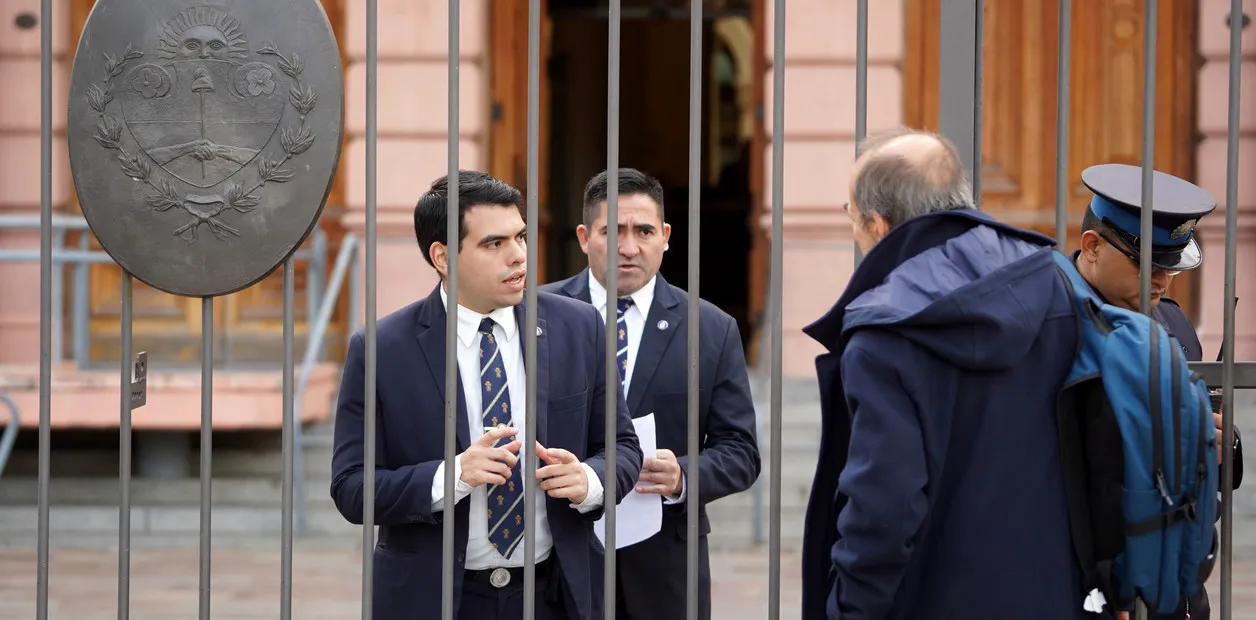
The decision comes amid escalating confrontations with the press and is based on two official arguments: an investigation into alleged foreign infiltration of media outlets and a criminal complaint for alleged illegal espionage against two journalists from the Todo Noticias channel. As part of the measure, existing press credentials were suspended and fingerprint access was revoked, leaving the Executive branch's activities without on-site coverage until the legal case progresses and the accreditation system is redefined.
At the other end of the region, the United States announced the revocation of visas for members of the Board of Directors of the Costa Rican newspaper La Nación, without explanation or clear procedures. An independent newspaper, with 79 years of history, that has been investigating cases of government corruption, is being attacked by a foreign government without, so far, any condemnation from its own government.
Both decisions are among the most recent attacks against journalism and the press. This is an attack on the very quality of democratic systems, on press freedom, and on the right to expression. Indeed, press freedom has declined globally to its lowest level since 1975, according to the latest report from International IDEA, The Global State of Democracy.
The most drastic setbacks in the region and the world are occurring in contexts of extreme violence or consolidated authoritarian regimes, such as Haiti, Cuba, Venezuela, and Nicaragua. There, the persecution and attacks on journalists undoubtedly represent a serious violation of human rights.
Situations like those experienced by Guatemalan journalist José Rubén Zamora, who specializes in uncovering corruption cases and the relationship between politics and organized crime in his country, are becoming increasingly common. Zamora, who faces up to 40 years in prison, has finally been released after more than three years in jail. A judge granted him house arrest to continue a criminal case that, according to civil society organizations and the Inter-American System of Justice, has been marred by irregularities and violations of his right to due process.
Zamora's case illustrates how journalists in Latin America have become one of the groups most vulnerable to judicial persecution, public harassment by authorities, and violence from criminal organizations.
Between 2018 and 2024, more than 900 journalists have been forced into exile in Latin America, according to UNESCO data, while at least 142 journalists have been murdered and another 51 have disappeared while carrying out their work between 2017 and 2025, according to Reporters Without Borders' press barometer. The countries with the highest number of journalist murders in Latin America are Mexico (79), Colombia (15), Honduras (13), Brazil, and Haiti (10 each). Female journalists are also victims of sexual harassment and constant intimidation on social media and in the virtual sphere.
These figures reflect that attacks on the press also occur in democratic regimes. Latin America and the Caribbean have fallen in the International IDEA Press Freedom Index to levels similar to those of 1990. This is due to a clear reduction in civic space and democratic erosion, driven by high political polarization, the rise of authoritarian governments with illiberal characteristics—which do not tolerate dissent—and the expansion of criminal organizations with tentacles that permeate the economy and politics. Therefore, attacks on the press come not only from governments, but also from autonomous security and justice agencies, as well as from organized crime and actors involved in corruption networks.
Thus, the media, which worldwide are struggling for survival in the face of the impact of artificial intelligence, social media, and new forms of communication, also face unprecedentedly adverse political and security contexts in Latin America.
But beyond these setbacks, efforts are underway to strengthen the integrity of the media ecosystem, and the region boasts three countries at the top of the rankings: Costa Rica (4th), Chile (5th), and Uruguay (20th). Fortunately, bucking the trend, Costa Rica's Law for Freedom of Journalistic Practice came into effect in March, eliminating prison sentences for journalists convicted of libel and slander, thus strengthening press freedom and reducing self-censorship, according to International IDEA.
Governments and organizations seeking to strengthen democracy must reinforce these measures. Protecting press freedom and access to information requires coordinated efforts from justice institutions, parliaments, civil society, international cooperation agencies, as well as the communications and private sectors. In addition to addressing violence and criminal prosecution, effective funding mechanisms are needed for independent and traditional media outlets to enable them to resist and survive. But it is also necessary to counter hate speech, disinformation, and attacks against the media emanating from political actors themselves.
Freedom of the press is an indispensable condition for the political freedoms of democracy to remain strong. Defending democracy in Latin America means speaking out, but to do so, we must ensure spaces where all voices can be heard.
Original content published in Clarín, 6 May 2026.


About the authors