International IDEA's rule-of-law, democratic resilience recommendations shape EU enlargement thinking
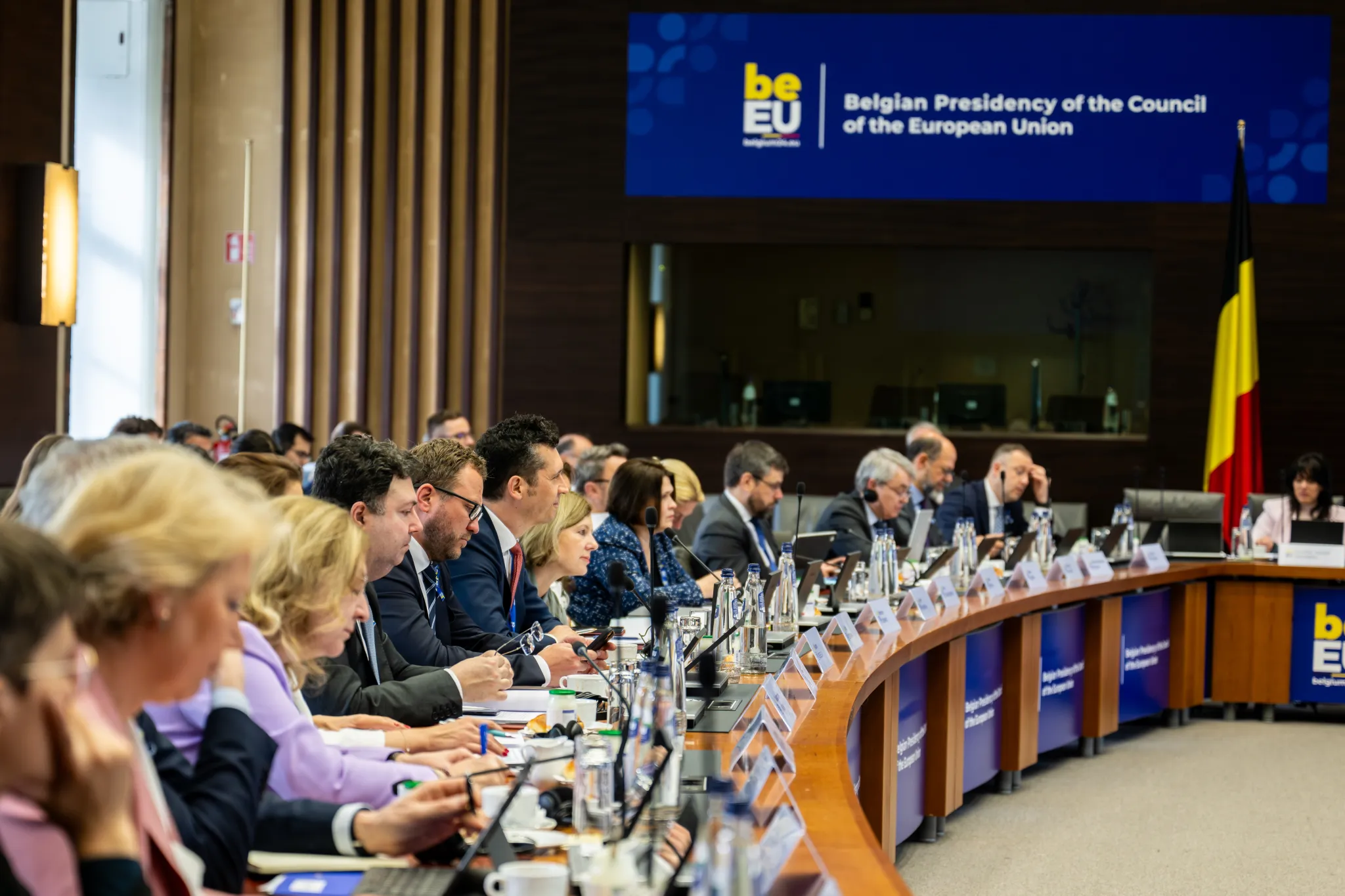
In 2024, International IDEA partnered with the Belgian Presidency of the Council of the EU to assess how an enlarged EU could maintain and strengthen the rule of law at its core. The recommendations set out in the paper “Towards an Enlarged Union: Upholding the Rule of Law” informed discussions among EU ministers at the informal General Affairs Council held on 29–30 April 2024 under the Belgian Presidency.
Two years later, on 6 October 2026, the European Commission issued its Communication on “Preparing for a Wider Union”. The Communication provides a good opportunity to assess the extent to which International IDEA’s recommendations are reflected in the Commission’s latest policy thinking and proposals.
Both documents rest on two similar assumptions: first, that enlargement is in the EU’s strategic interest given the current geopolitical context; and second, that preparing for a strong and wider union requires a dual approach. Such an approach entails advancing reforms, particularly in relation to fundamental values, in candidate countries through enlargement policy, while preparing the EU from within by ensuring that its internal policies and tools – especially those related to the rule of law – are sufficiently robust and remain so.
A careful reading of the Communication shows that many of the operational recommendations formulated by International IDEA have been incorporated in the Commission’s thinking. In particular, the Communication strongly reflects the following recommendations:
- Making participation in the European Public Prosecutor’s Office (EPPO) a requirement and a key preparatory priority for new Member States (International IDEA’s recommendation 1.A).
- Extending the EU’s internal rule-of-law monitoring to candidate countries (recommendations 1.C-D).
- Ensuring systematic follow-up to rule-of-law recommendations and monitoring their implementation (recommendations 1.B-D).
- Making greater use of qualified majority voting (QMV) on rule-of-law matters, including by moving intermediate accession decisions away from unanimity and towards QMV (recommendations 1.C and 3D).
- Applying strong rule-of-law conditionality, including through the EU Charter of Fundamental Rights, to the EU budget and to pre-accession funding specifically (recommendations 2.A-C).
- Gradually integrating candidate countries into EU agencies, networks and structures dealing with the rule of law (recommendation 3.A).
- Embedding stronger and more durable rule-of-law safeguards in accession treaties (recommendation 5.B).
The topic of democratic resilience deserves a specific mention. In its policy paper, International IDEA strongly argued for broader democratic issues – in particular electoral integrity and risks relating to disinformation – to be more fully integrated into the EU’s internal rule-of-law framework (recommendations 1.D and 5.A). Two years later, the need to strengthen democratic resilience in both EU Member States and candidate countries, including through initiatives such as the European Democracy Shield and its Centre for Democratic Resilience, is explicitly recognised and has become a critical priority.
However, some of International IDEA’s longer-term proposals for treaty changes and broader EU institutional reform in the area of the rule of law (e.g. recommendations 2.E, 3.B-C and 5.C) are not explicitly addressed in the Commission Communication at this stage. The role of civil society as a key actor in monitoring and upholding the rule of law also (recommendations 4.A-B) receives limited attention. As the Communication represents an important step in preparing the Union for future enlargements, it will be important to assess whether these issues receive greater attention as the discussion advances and the EU’s enlargement agenda unfolds.
Continued monitoring will therefore be essential, beginning with an assessment of the Council’s and European Parliament’s responses to the Commission’s Communication. Tracking these next steps will be particularly important as negotiations on the next EU Multiannual Financial Framework unfold, given their direct implications for the EU’s internal and enlargement policies, budgets and instruments.


About the authors