Q&A: Emmanuel Akinwotu on migration, borders and democracy in West Africa

Disclaimer: Opinions expressed in this commentary are those of the authors and do not necessarily represent the institutional position of International IDEA, its Board of Advisers or its Council of Member States. This interview has been edited for length and clarity.
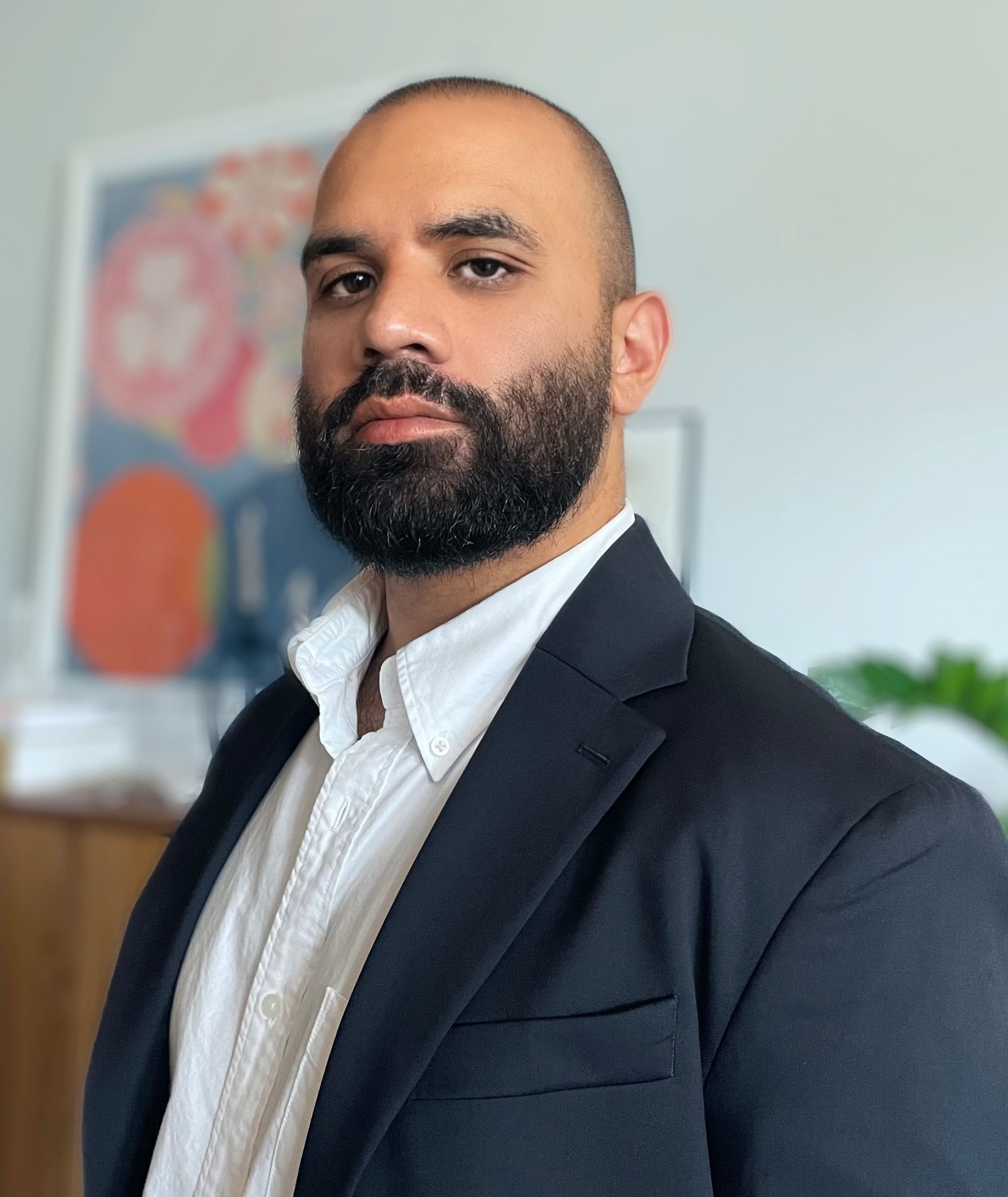
Cross-border movement has long shaped life in West Africa, where trade routes, ethnic ties and shared markets stretch across national borders. To explore how these dynamics intersect with governance and democratic life, Binto Bali spoke with Emmanuel Akinwotu, international correspondent for NPR and former West Africa correspondent for The Guardian. Having recently travelled the Lagos–Abidjan corridor, Akinwotu reflects on how migration, economic connectivity and identity shape people’s everyday interactions with the state—echoing themes highlighted in the Global State of Democracy 2025 report, particularly around intraregional migration, representation, and how mobile populations experience state authority.
Your reporting highlights how socially and economically connected the region is, particularly along the Lagos–Abidjan corridor. How does that connectivity shape people’s relationship to the nation state?
This region is defined by constant movement of both people and goods crossing borders that are relatively recent constructs. Many of these states have existed for around 65 years, but many groups and ethnicities within them have resided across this region for centuries.
We encountered border communities operating seamlessly across both sides, with traders and travelers, some from ethnic groups like the Ewe people in Ghana, Togo and other parts of West Africa, ferrying goods from Lomé to Accra, sometimes living in border towns between Togo and Ghana. The corridor acts as a kind of extended nation of various people, moving somewhat seamlessly through several cities in various countries.
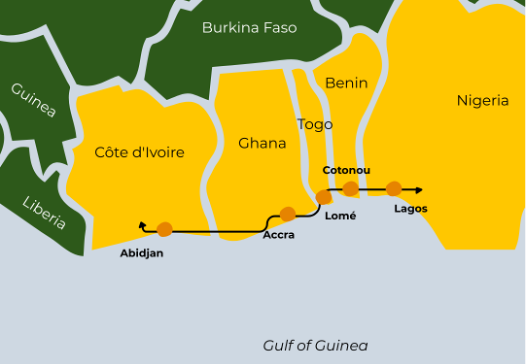
The coastal region between Lagos and Abidjan has been described as a megalopolis—a single mega-region historically centered on trade. Ports along the coast were established by colonial powers exporting natural resources and enslaved people. In the post-colonial period, many of these port cities become vibrant economic centers. West African countries have tried to harness these connections, through the regional block ECOWAS, which allows relatively free movement of people and goods, though with some restrictions, through several countries.
This fluid economic and cultural life often cuts against the bureaucracy of borders. People live in ways that belie these borders. Yet national policies still shape these connections. The vision of relatively unrestricted movement is often not the reality.
Import and export policies—often shaped by shifting political relations—create significant barriers to cross-border trade. Deteriorating ties between neighbouring countries like Togo and Benin, or Benin and Burkina Faso, have disrupted movement and economic activity along key corridors.
These challenges are compounded by worsening corruption and extortion at borders, disproportionally affecting small-scale traders. In Nigeria, for example, the border with Benin effectively extends inland through dozens of checkpoints, illustrating how informal practices can reshape how state authority is experienced in practice.
While cross-border movement is prevalent, these dynamics also influence perceptions of fairness, inclusion and state legitimacy—particularly where certain national or ethnic groups face hostility or unequal treatment.
Did you come across examples of how mobility—especially among regional migrants—is influencing how democratic life plays out in everyday settings?
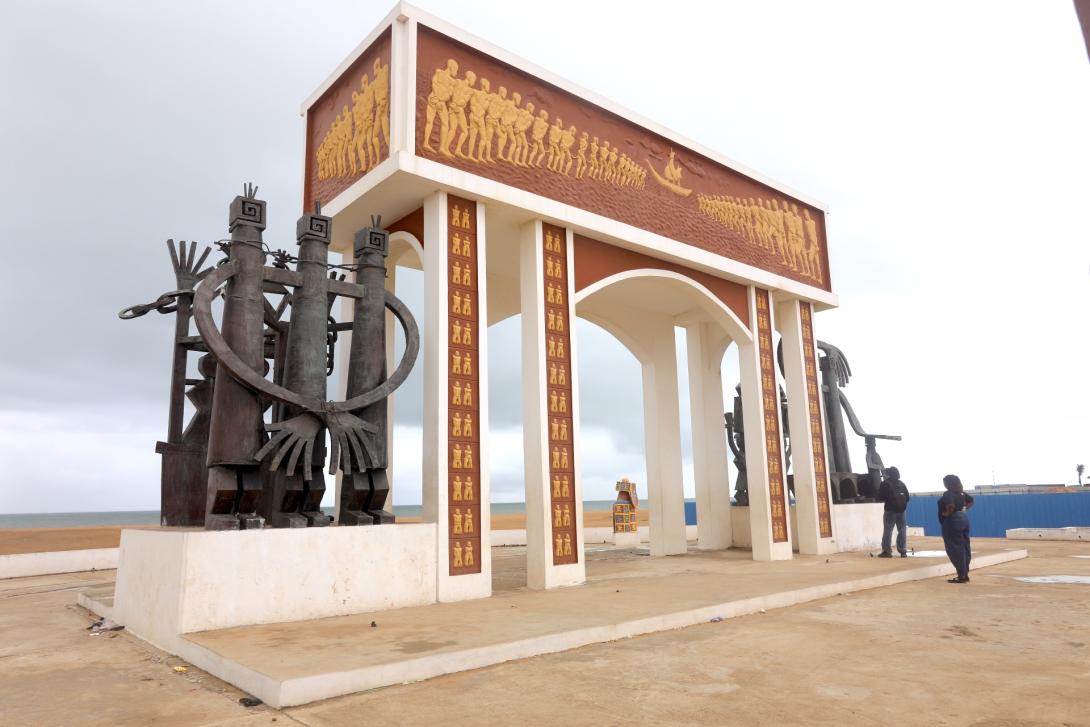
One striking example occurred at the Benin-Togo border, where we were caught in a 3-hour queue due to intensified checks by Togolese authorities. While crossings are typically straightforward, delays can intensify in response to political tensions between neighbouring states.
Togo has been ruled by a single family since 1957. Although elections are held, opposition figures are regularly targeted, criticism of government is constrained, and protests are often suppressed.
When we travelled, the delays coincided with a planned ‘silent protest’ calling on small businesses to shut down for a day. Border controls had tightened significantly, with heightened scrutiny of arrivals—reflecting concerns among authorities that cross-border movements from Benin could be linked to or amplify domestic political dissent.
In this context, mobility becomes entangled with governance. Border management is not only about regulating movement, but can also serve to monitor and contain dissent—illustrating how everyday mobility is shaped by the broader democratic environment.
How do patterns of mobility affect people’s relationship with formal democratic institutions?
Across several countries we observed a paradox. Migration—both legal and illegal—is a dominant feature of life, with economies, cities, ethnic groups and communities deeply interconnected across borders. Large migrant populations exist in virtually every country along the corridor, largely with a degree of freedom and harmony.
At the same time, many migrants live cautiously and with a degree of fear. Under ECOWAS rules, citizens can live and work freely for 90 days before requiring work permits. But because of restrictions and suspicions about what registration may lead to, many migrants do not register. At many borders we saw migrants crossing through illegal crossings to avoid extortion and charges, even though their documentation allows them access. Others crossed because they lacked documentation.
In interviews, many traders were reluctant to discuss their history in the country. Those who did said migrants often keep a low profile. While many described their host country as welcoming, periodic immigration enforcement—particularly in Côte D’Ivoire—has created an underclass with limited access to democratic institutions and public services. This weakens both participation and trust, particularly among populations that are economically integrated but politically marginalised.
We also observed how mobility shaped perceptions of democracy in migrants’ home countries, especially in border communities. In Sèmè-Krake, a town on the Nigeria-Benin border, opposite experiences of public services, governance and economic activity aggravate concerns on both sides of the border. On the Nigerian side, several communities have been completely cut off from state electricity for years—reflecting Nigeria’s chronic electricity and power crisis. Just across the border in Benin, however, power cuts are rare.
Conversely, in Benin, complaints focused on the lack of economic vibrancy and a growing number of taxes on the informal economy in recent years. These were compared to Nigeria’s relatively low taxation on informal labour. Political repression in Benin—including restrictions on protests—also made Nigeria’s democracy appear more liberal despite its many challenges. Migration within ECOWAS and along the coastal corridor therefore places neighbouring political systems in sharp contrast.
In your conversations along the Lagos–Abidjan corridor, how did people describe where they ‘belong’ — and to what extent do national borders shape, or fail to shape, that sense of identity?
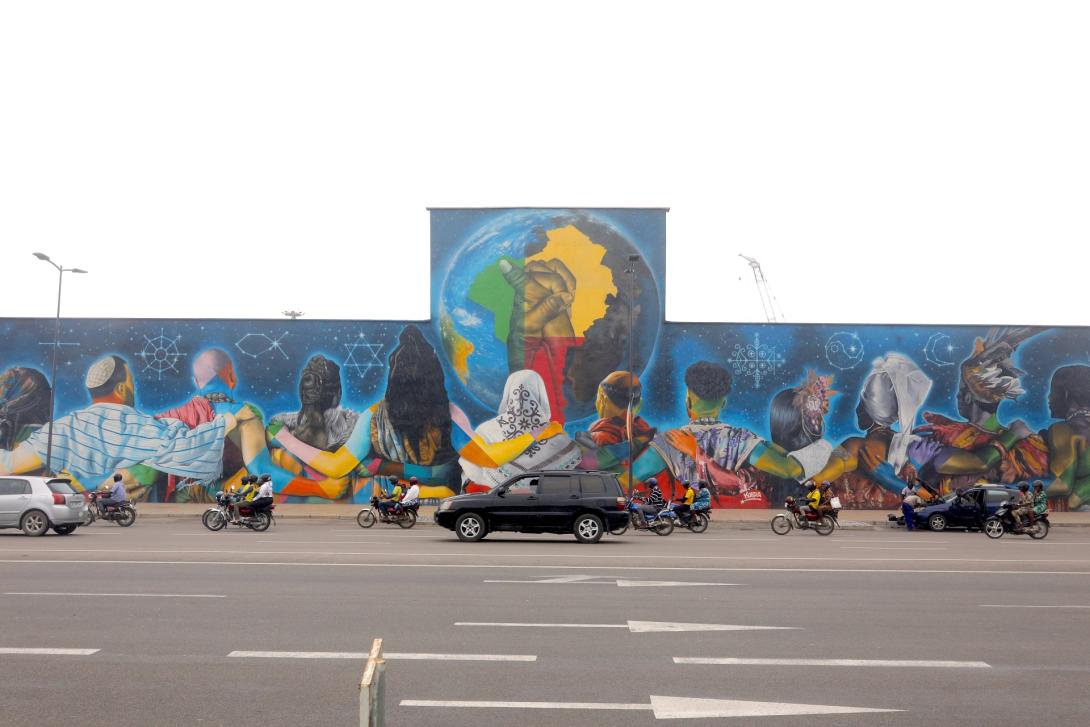
People expressed belonging along various lines; ethnic, national, and as Africans, depending on the context.
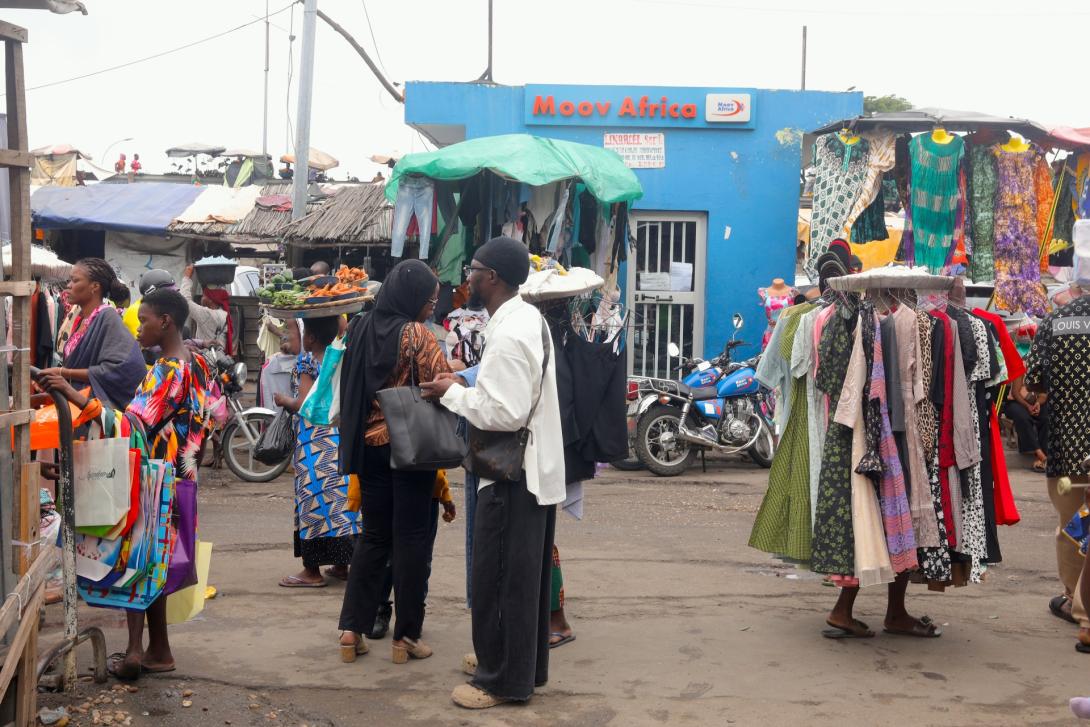
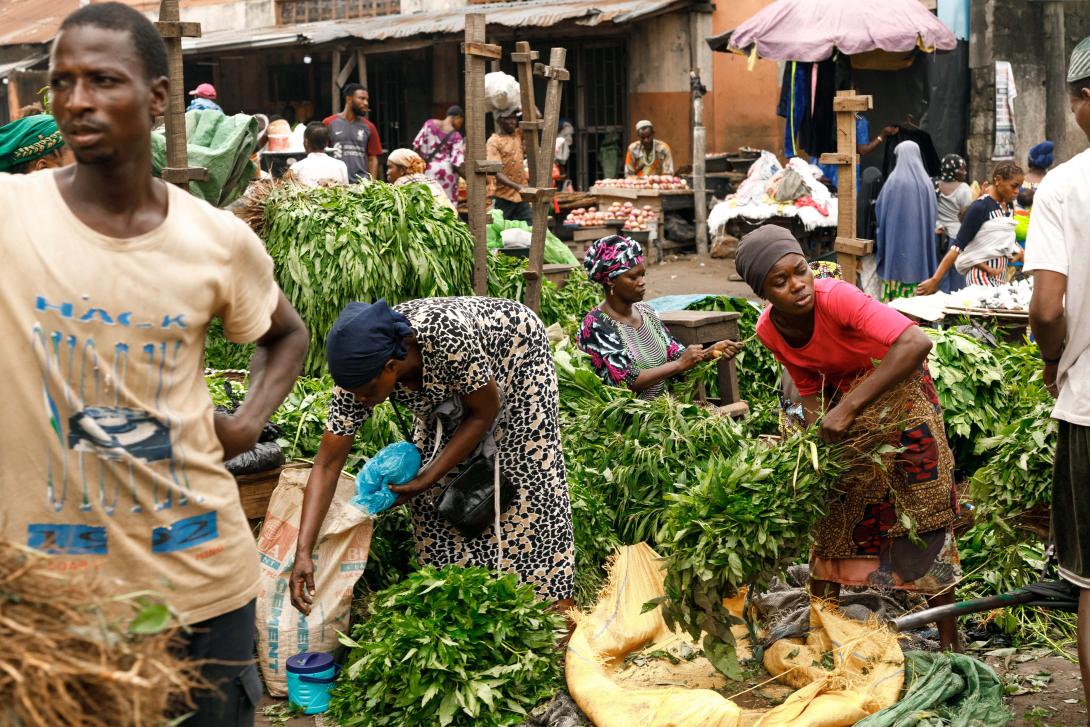
In markets across the region, migrant traders often clustered with their compatriots, with language and nationality shaping social and economic networks. At Treichville Market in Abidjan, we met a Nigerian businesswoman who had lived in Côte D’Ivoire for over 40 years, with children in Nigeria and Ghana. While conversations often began with shared ethnic identity, her experience reflected a more fluid sense of belonging—simultaneously Nigerian and Ivorian, Anglophone and Francophone, and a regional citizen, with a multipolar identity and experience.
Looking ahead, what questions do you think democracy actors should be asking about movement and belonging in West Africa?
Governments should assess whether ECOWAS is effectively supporting inclusive economic integration, or whether corruption and political barriers are undermining its role. Addressing extortion at borders and improving infrastructure are not only economic priorities, but also central to strengthen trust in governance and state accountability.
They must also consider whether democratic institutions are expanding or restricting rights and freedoms in practice. In one of the world’s youngest sub-regions, persistent gaps between representation, opportunity and participation raise fundamental questions about legitimacy—particularly for younger populations navigating limited economic prospects under entrenched political leadership.


About the author