How a democracy survives 1,561 days and counting of war
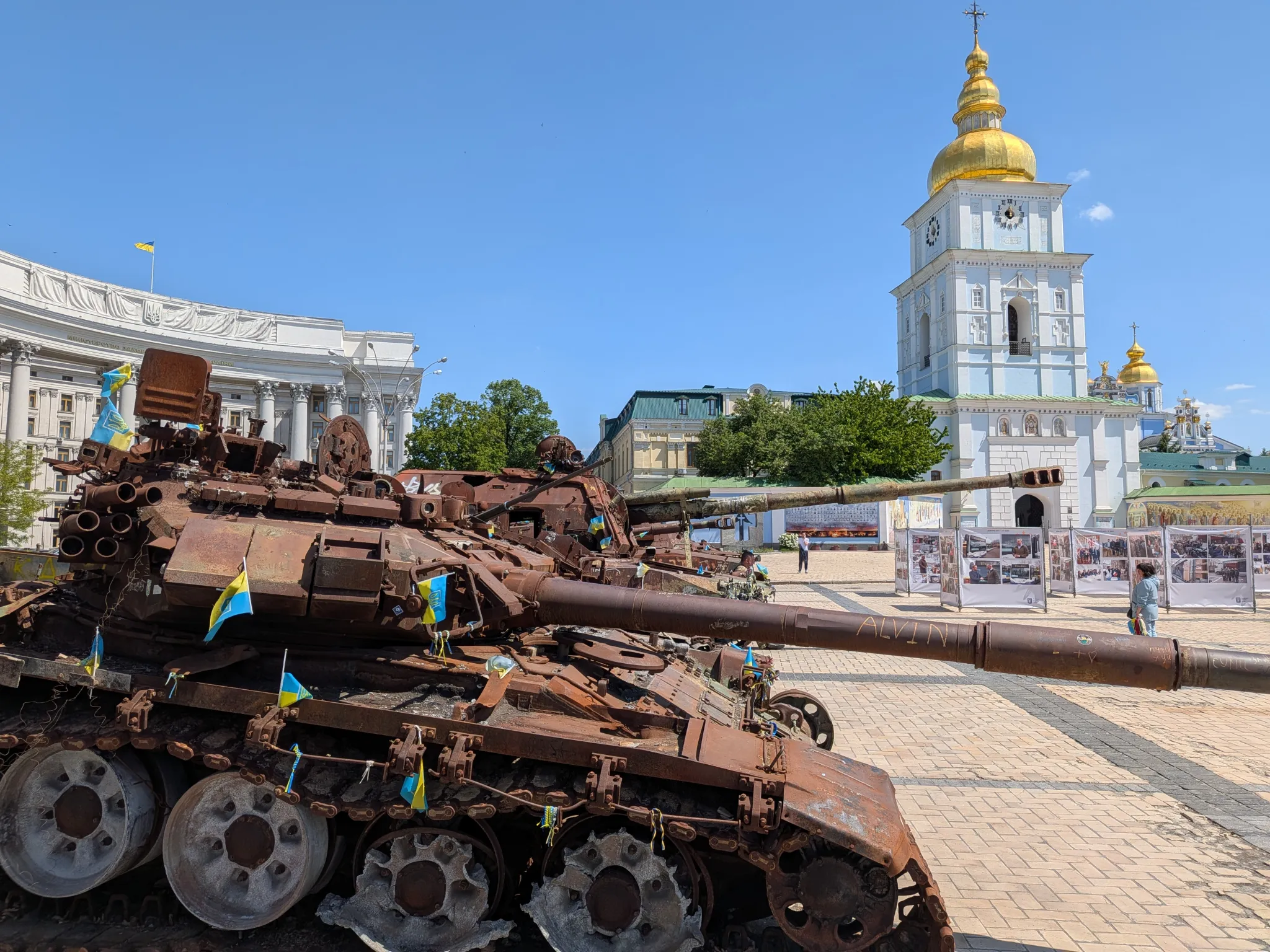
Most Ukrainians have Telegram channels that follow up on alerts to track drones, rockets and more detailed trajectories. It did not look good. Russia had targeted Western regions, normally safer. Some participants later said a drone buzzed over the hotel.
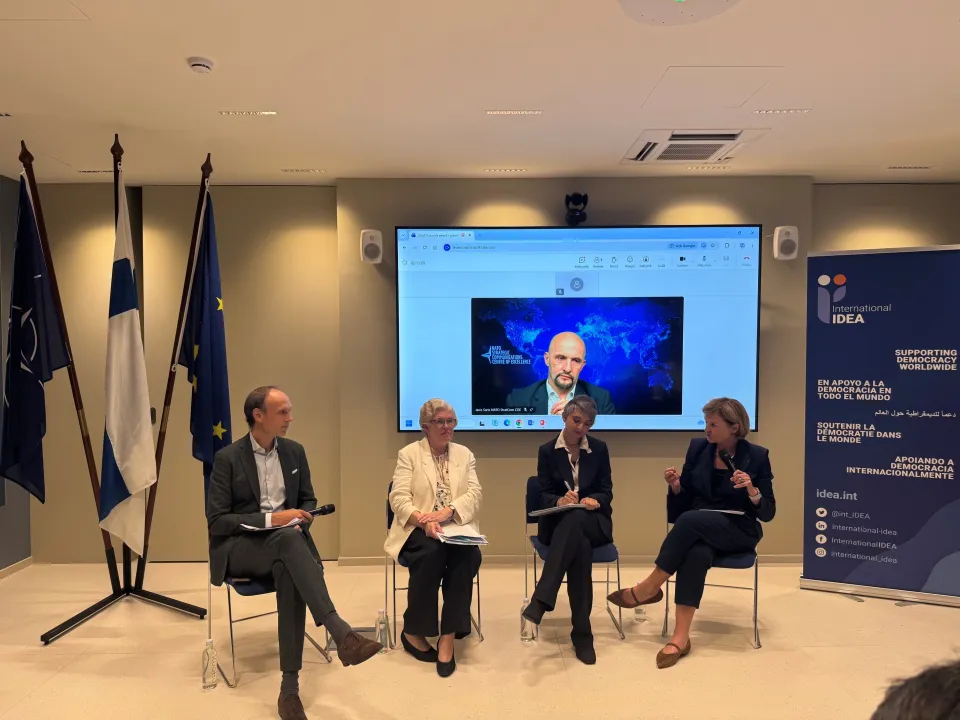
A few minutes later, the crisis communications session, supported by International IDEA, carried on calmly. It was one of several International IDEA-supported projects helping Ukrainians prepare for future elections, counter Russian disinformation and strengthen parliamentary and constitutional processes.
This was more than a moment of wartime disruption. It showed how even routine democratic preparation is shaped by war. Ukrainians are not just defending their sovereignty. They are also trying to ensure that war, with all the complications martial law brings, does not erode democracy in this country of 38 million people. The issue is increasingly significant as Russia stepped up airstrikes on Ukraine in recent weeks.
Central to this tension is Ukraine’s normalization of war. It may be a way of mentally coping, but it also carries risks—to both personal safety and democracy itself. This adaptation is visible in the rhythms of everyday life.
Sipping a traditional ‘Drunken Cherry’ liqueur in an outdoor café on one warm spring night in Kyiv, an air raid siren went off. It was a few days after the drone attacks that killed 24 people in the capital. But no one in the café budged. In 2025, there were around 800 air raid alerts. If each one had been obeyed, you would have spent a month of your year in some shelter, from an underground car park to a metro station.
Rather than obeying alarms immediately, locals mostly use official and unofficial Telegram channels to decide if the threat merits shelter. They warn if the alert is a ballistic missile travelling at up to 10 times the speed of sound in which case it is too late to do much) or a drone, which can take 30-40 minutes to reach Kyiv, meaning you can finish your beer, pay the bill and head for safety.
‘That is the problem here. People are exhausted. But you only need to be wrong about the risk once. It is normal, until it isn’t," a foreign security adviser sitting with me said. As if to prove the point, he had also forgotten to charge his phone—a cardinal sin in security, as it stops you being warned about imminent attacks.
Those same habits of exhaustion and adaptation can shape public life as well as personal safety. Letting your guard down on Russian disinformation is the institutional equivalent of forgetting to charge your phone.
That resilience is still alive and strong. People may criticize President Volodymyr Zelensky, and many are disappointed by news of corruption scandals. There are polarizing debates about how to deal with conscription. But for now, war appears to have deepened people’s belief in democracy.
‘People are very aware of what they are fighting for, and that is an open, democratic and inclusive country’, said Angelina Kariakina, co-founder of the Public Interest Journalism Lab.
That sense of what was at stake came through repeatedly in conversations. In a 10-day visit, I found Ukrainians exhausted and angry but determined. Anger comes as no surprise. One colleague said 17 people in her village of 4,000 had been killed on the front line. Do the maths on how that would translate into your hometown, and the impact becomes clear.
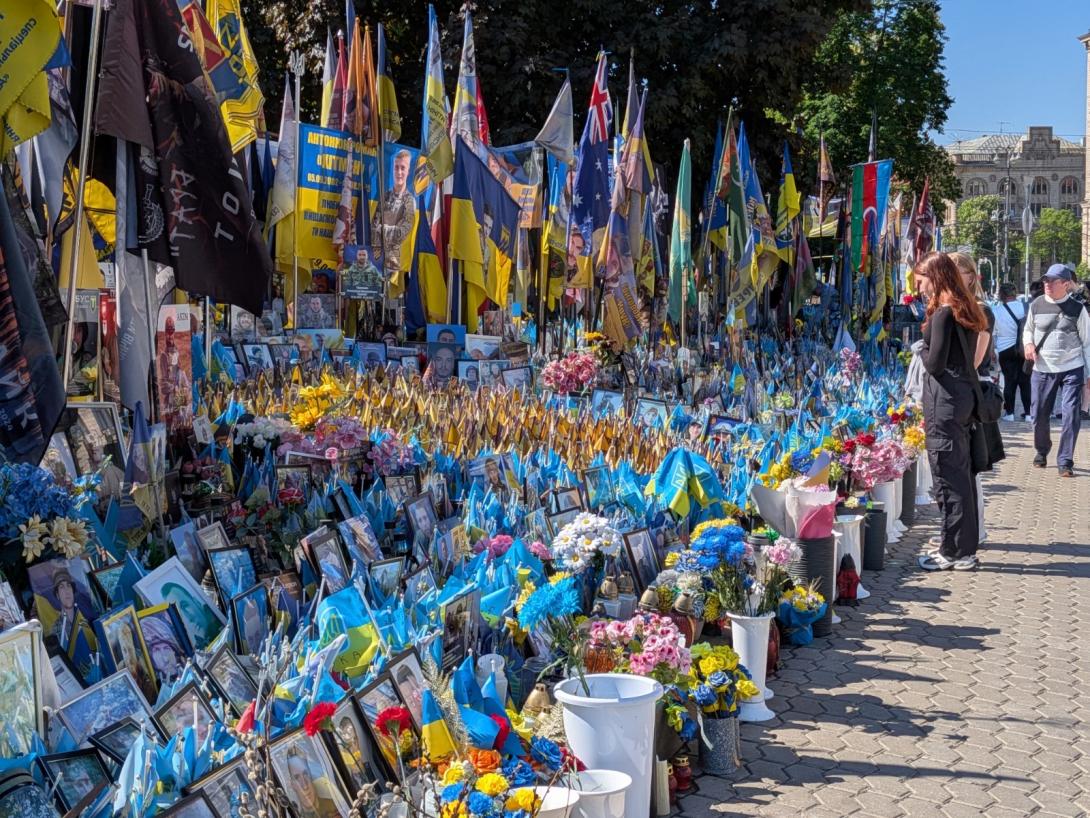
Everyone has a story of lost loved ones, of near misses, of friends returning from the front traumatized, or even more seemingly mundane but insidious losses—such as one colleague recounting how the attack destroyed a local café where her husband would breakfast each morning.
War permeates Kyiv, in what would otherwise be an unmistakably central European city of winding streets, cafés, bookshops and parks. A rap session at an outdoor restaurant created a semblance of European street life in spring, until you realize the singer has a prosthetic limb and is raising money. You see many men on crutches.
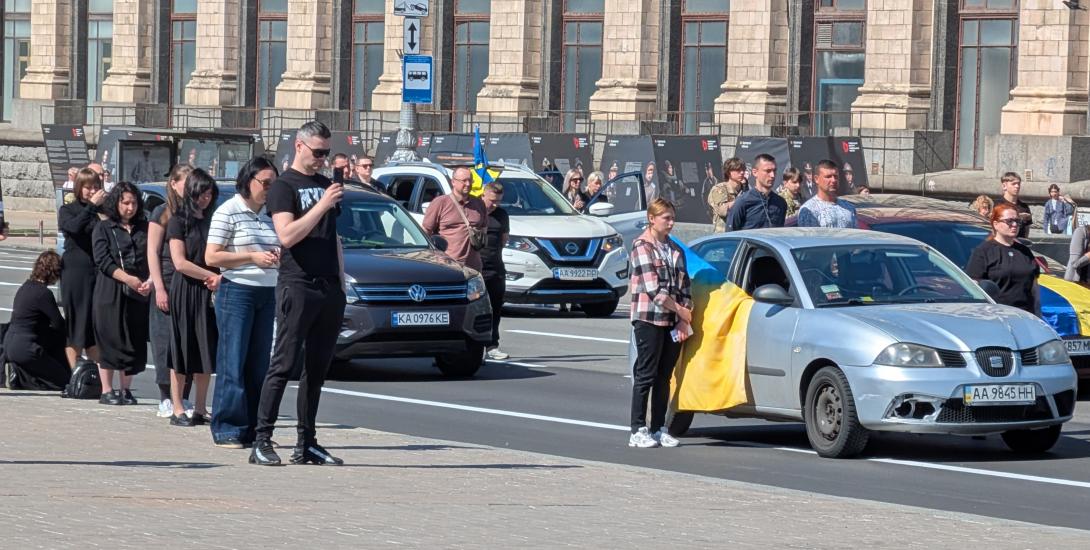
One morning, I headed out on what could have been an uneventful tourist circuit of the city. But each stage was punctuated by war. At nine o’clock every morning, I heard bells ring across a square and people stood still to commemorate the dead. An hour later, in Maidan Square, the emblematic heart of Kyiv, I saw women clad in black kneeling by the roadside, while a caravan of jeeps emblazoned with military flags drove slowly up the street. I then walked to visit one of the spiritual hearts of Ukraine—Sophia Cathedral—only to find its doors closed shut on me as yet another air raid siren blared.
I found the train stations most emblematic of war. Ukrainians are proud of their national train company, which is the country’s main way of getting around with airports shut. Men in military fatigues and backpacks are everywhere. One boarded a train for the front, saying goodbye to his tearful mother and father. Another man, with one leg, struggled to walk along the platform on crutches. Beside one platform, a safety video showed how to jump from a train during a drone attack. In Kyiv, a station board still shows a train timetable with destinations and platforms for cities under Russian occupation.
These daily scenes are not just the human backdrop to war. They also shape the conditions in which Ukrainian democracy has to survive, day after day.
Nearly every Ukrainian agrees it is impossible to hold elections during war, but that leaves the country more exposed to disinformation campaigns, given that the last vote was in 2019. When a Ukrainian singer held a huge concert in Kyiv in May, videos suspected of originating in Russia asked why Ukraine could not hold polls if it could hold concerts.
Russian disinformation is particularly worrying on the polarizing issue of conscription—one area in which Ukraine is vulnerable because of its struggle to recruit soldiers. Social media rumours, again from suspected Russian sources, allege mistreatment of conscripts.
Yet these pressures have not, so far, weakened democratic commitment. In some respects, they have sharpened it. Even after years of martial law, Ukraine has remained democratic. Yuliya Kyrychenko, who is studying how countries emerge from martial law as part of an International IDEA project, has had to go back to the United Kingdom in the World War II for a historical parallel.
‘One of Ukraine’s greatest achievements has been keeping to constitutional norms’, said Kyrychenko.
That commitment is visible not only in constitutional practice, but in public action. Thousands of young people took to the streets to stymie government efforts to weaken anti-corruption agencies, forcing the government to backtrack. The media is also broadly independent and critical.
‘Ukraine may not be able to hold elections, but we still have very complex counterbalances to protect our democracy, and civil society is a major part of this’, said Kariakina.
But even with those safeguards, Ukraine’s democratic survival still depends on endurance.
‘This is a war, a war of attrition’, said Oleksandr Burmahin, a member of Ukraine’s TV and Radio Council whose work on tracking disinformation is supported by International IDEA.
‘We are tired, but we must stand together. Who stands the longer, wins’.
Disclaimer: Opinions expressed in this commentary are those of the author and do not necessarily represent the institutional position of International IDEA, its Board of Advisers or its Council of Member States.


About the author