


Speech by Kevin Casas‑Zamora at the Congress of Local and Regional Authorities of the Council of Europe
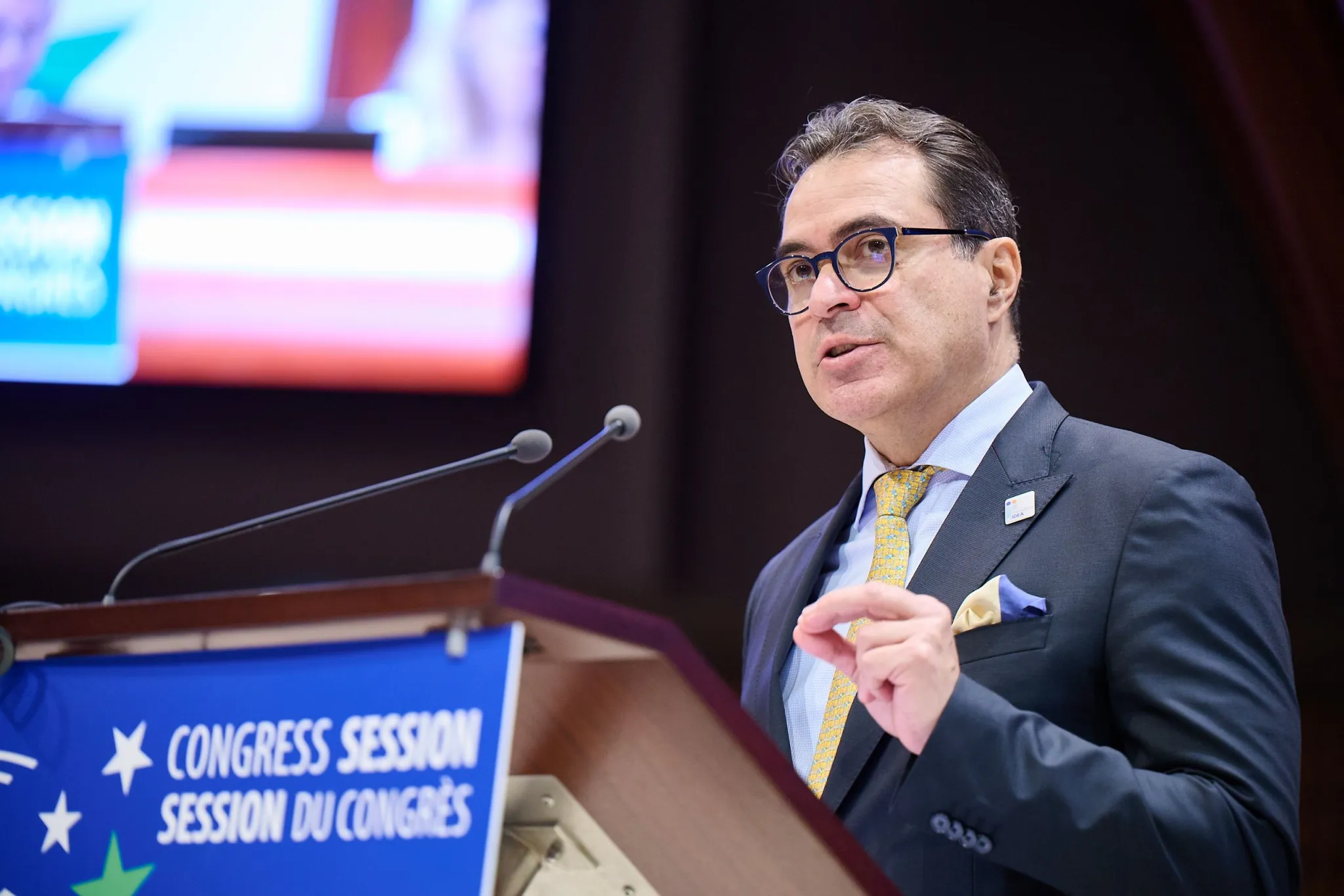
In this statement, I want to do two things. First, I will share some findings from International IDEA’s flagship report, the Global State of Democracy. I encourage you to read the full report, but today I’ll focus on what it reveals about elections. And second, I will say a bit about the vital role of subnational authorities in supporting democracy.
For any of you who are not familiar with International IDEA, it is an intergovernmental organization, with 35 Member States from all regions and a sole mandate to support democracy globally. Our membership includes 12 countries that are also Members of the Council of Europe.
Across 30 years and around the world, our work has combined research with capacity development projects, convening of dialogues, and policy advocacy. As one example, I am proud that we are currently partnering with the Council of Europe on designing a framework to implement the Reykjavik Principles for Democracy.
International IDEA’s annual Global State of Democracy Report places elections in the context of a broader struggle for democracy. Our latest report shows that the number of countries where the quality of democracy has declined over the last five years far exceeds those that have seen improvements. What’s more, this has now happened nine years in a row, the longest run in half a century. The trend is consistent in all parts of the world and at every level of democratic performance. Among regions, Europe does best overall—but it is not immune from the global trend.
Some of the most serious challenges our report identifies are in the category of Representation, where declines outnumber advances by a ratio of 7 to 1. This category includes the critical indicator of credible elections, which declined in one out of every five countries worldwide.
The causes of this deterioration are not mysterious. Democratic institutions, including elections, face an increasingly dangerous mix of threats. Digital disinformation and cybersecurity risks are coinciding with extreme climate events and deeply polarized electorates. While our report focuses on national and global democratic trends, this toxic cocktail endangers democracy at all levels.
In this context, I want to emphasize the particular importance of elections as a bulwark against democratic erosion. High-integrity elections offer the best opportunity to stem the tide of democratic decay—as has been demonstrated globally in recent years, from Zambia to Guatemala, as well as here in Europe. Credible elections are so important because they are very visible expressions of democracy and very powerful generators of public trust. Where citizens can exercise their franchise, freely and fairly, and where they can generate meaningful political change through the ballot box, people have reason to trust in the legitimacy and the vitality of their democracy. Indeed, there can be no democracy, real or perceived, without credible elections.
This brings me to the second part of my remarks, where I want to focus on the vital role of subnational governments. And here again, trust is central.
Local authorities generally enjoy more public trust than national administrations. The 2024 OECD Survey on Drivers of Trust in Public Institutions, which covered 30 countries on five continents, found that the proportion of respondents reporting a high or relatively high level of trust in their local authorities was some five percentage points higher than for national governments. This gap may be even starker in Europe. A few years ago, the Groupe d’études géopolitiques in France assessed the average difference in trust between local and national administrations in the EU at a full 15 percentage points.
This subnational trust advantage is a tremendous asset for all of you. It should give you confidence to innovate in ways that keep bringing people closer to their democracy, through more participatory and inclusive models of decision-making. As with all great assets, of course, trust is also a responsibility. Upholding and strengthening democracy in today’s extremely difficult context will be impossible without public trust in processes, like credible elections, as well as in outcomes, like equality and prosperity. That’s why it is so crucial to maintain and leverage this strength of subnational governments—not only to advance local objectives, but to rebuild and renew trust in democracy at all levels.
Let me illustrate this, and conclude, with a personal anecdote. While it comes from outside of Europe, I hope it will resonate with you. A couple years ago, I visited Nepal, where IDEA is working with local partners to enhance inclusive participation and representation in the rural councils. What impressed me most were the women who had bravely stood for election into these traditionally male spaces. I saw how their leadership was transforming their communities, by bringing to the fore issues, like domestic gender-based violence, which would never have been on agendas shaped only by men. That’s the power of local politics to lead the way to social change.
I tell you this story to reinforce that what you do to sustain and protect free elections at local and regional levels will have an important impact on the future of democracy at all levels. And as I look out at all of you here, a group as diverse as Europe itself, united in civic duty and empowered by public trust, I am confident that we can protect democracy’s future. Please know that International IDEA stands ready to support your efforts, in this forum and beyond.
Thank you.


