


Keynote Address: Standing Committee Session for the 59th Plenary Assembly of the SADC Parliamentary Forum
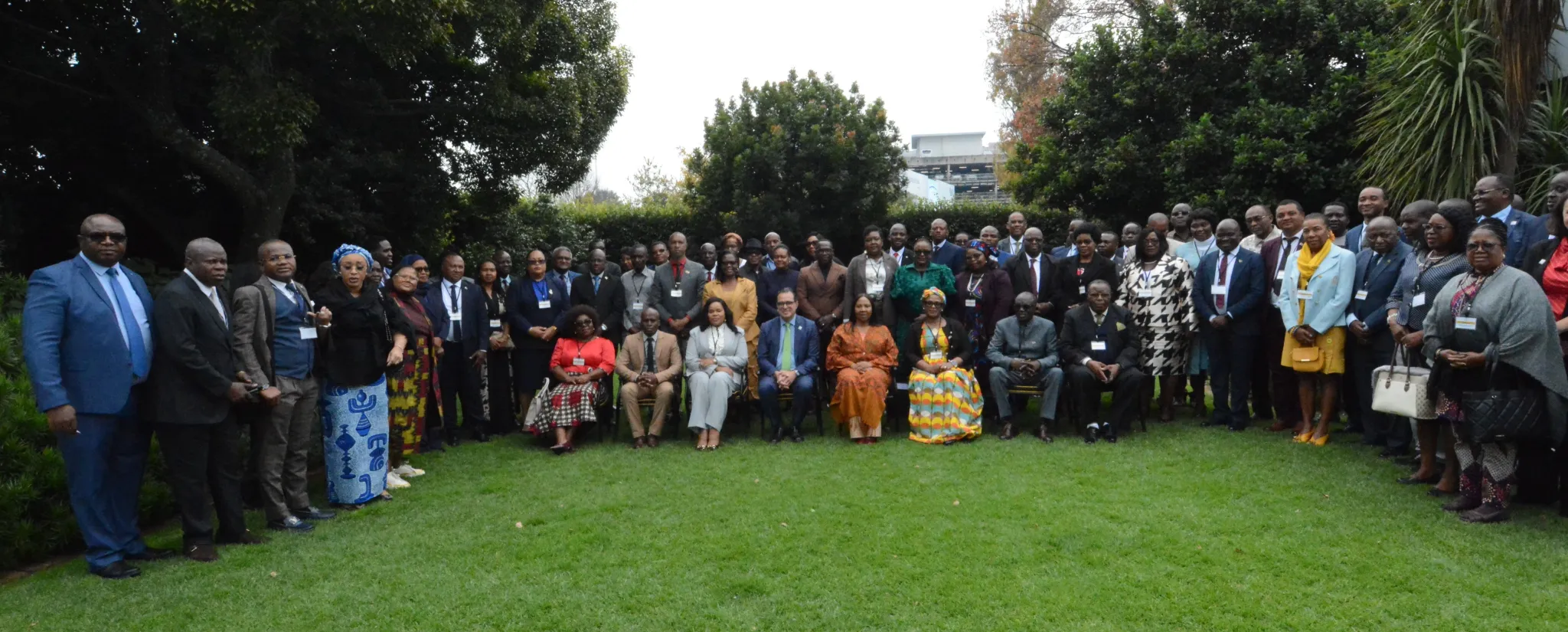
Your Excellency Madam Secretary-General of the SADC Parliamentary Forum, Honourable Members of the Standing Committee, distinguished SADC Parliamentary Forum staff, dear colleagues and friends:
On behalf of International IDEA, it is a great honour to join you at this Standing Committee Session for the 59th Plenary Assembly of the SADC Parliamentary Forum, convened under the theme of Enhancing Parliamentary Advocacy for the Effective Domestication and Implementation of SADC Protocols for Democratic and Inclusive Governance.
For those who may not be very familiar with International IDEA, our Institute is an intergovernmental organisation with 35 Member States, including eight African countries, and the sole mandate of advancing and supporting democracy worldwide. Within the Southern African region, we are proud to count Botswana, Mauritius, Namibia and South Africa among our Member States. All four of these countries have been Members of IDEA since the first years of our Institute, with South Africa being one of our Founding Member States in 1995. For many years now we also have had a significant country program and office in Mozambique.
Let me state from the outset that International IDEA is extremely proud of our partnership with the SADC Parliamentary Forum. We regard this partnership as strategic, rooted in our shared commitment to strengthening democratic governance, constitutionalism, inclusion and accountable institutions. Two years ago in Windhoek, it was my pleasure to formalize this cooperation in a MoU, which I signed with Secretary General Sekgoma.
Honourable Members,
In my remarks today, I want to do three things. First, I wish to share my perspective on the challenges facing democracy today, globally and in Africa. Second, I will speak about the pivotal role of parliaments in guiding democracies through these challenges, the coordination function this Forum offers, and the cooperation between our two organizations. And third, I’ll say a few words on what I think is required, not only to protect democracy, but to renew it—to enable democracy to keep meeting people’s needs in an increasingly uncertain world.
We live in a defining moment for democracy globally. The world today is marked by weakened multilateralism, democratic retrenchment, geopolitical fragmentation, violent conflicts, economic uncertainty, climate-related insecurity, rising inequality and declining public trust in institutions. This long list of challenges is felt viscerally in the public mood. The optimism accompanying earlier waves of democratisation has, in many places, been replaced by growing anxiety about the resilience of democratic systems and the capacity of institutions to respond effectively to citizens’ needs.
International IDEA’s Global State of Democracy indices, one of the world’s leading and most comprehensive data sources on democratic quality and performance, show that far more countries are experiencing democratic retrenchment than democratic advances. This worrying pattern has held for nine consecutive years now, and in all parts of the world. The erosion is especially visible in such critical areas as civic freedoms, judicial independence, media freedom, and effective oversight of the executive.
When it comes to Africa, this continent continues to demonstrate important democratic resilience. Across our data from last year, African countries accounted for almost a quarter of all nations registering improvements in democratic performance. Yet democratic consolidation remains uneven. Democratic institutions in Africa, as in other parts of the world, are being tested by social and economic pressures, contested elections, governance deficits, insecurity, exclusion, and the widening gap between citizen expectations and state performance. This too is reflected in our data: across continents, Africa showed the largest share of democratic declines. This is a dynamic continent—for better and for worse.
Honourable Members,
In this context, parliaments play an essential role as democratic guardrails. Parliaments are indispensable institutions for preserving constitutionalism and the rule of law, for checking executive power, for safeguarding inclusion, and for maintaining public trust in democratic governance. They are the channel by which the will of the people, in all its dynamism and diversity, is translated into law, policy, budgets and public accountability.
When parliaments are strong, inclusive, transparent and responsive, they are a vector for public engagement and trust in democracy, renewing the social contract between citizens and the state. When they are weak, marginalised or disconnected from citizens, a crucial opportunity for public trust-building and democratic innovation is lost, and the whole democratic system becomes vulnerable. The strength of any democracy is inseparable from the strength of its parliamentary institutions.
This is why International IDEA works with parliaments as a central dimension of our global efforts to support democracy. Through programs like Inter Pares, our EU-funded initiative that pairs European parliaments with peer legislatures across the Global South for mutual learning and support, we help parliaments to not only meet expectations but to continually improve, from keeping up with changing technologies to exploring new modes of participatory governance.
Supporting the vital importance of parliaments is also, of course, the raison d’être of the SADC Parliamentary Forum. This Forum has shown outstanding regional democratic leadership over the years since its founding. It has played an invaluable role in advancing democratic governance in Southern Africa, including by promoting parliamentary benchmarking, supporting legislative harmonisation, encouraging women’s and youth political participation, strengthening election observation, and developing regional model laws, guidelines and democratic standards.
Let me highlight two sets of achievements, beginning with the Forum’s contribution to developing key tools and instruments for regional democracy, including the SADC Model Law on Elections, the Benchmarks for Democratic Legislatures in Southern Africa, and the Principles and Guidelines for Parliaments in Promoting Human Rights.
These instruments are not merely technical outputs—they are regional public goods. They provide parliaments with practical guidance to strengthen legislative quality, promote democratic oversight, advance human rights, enhance electoral integrity and deepen constitutional governance. They demonstrate the value of regional cooperation, peer learning and shared standards in addressing common governance challenges.
The ongoing development of the SADC Model Law on Constitutionalism and the Rule of Law is another case in point. At a time when democratic norms and constitutional safeguards are under pressure regionally and globally, this initiative shows welcome regional commitment to reaffirm accountable governance, human rights, constitutionalism and respect for the rule of law.
Second, I want to take the opportunity to recognise the historic strides this Forum has made to transform itself into a SADC Parliament. This evolution represents one of the most important democratic institutional developments in regional governance in the SADC region and the entire African continent. The Agreement Amending the SADC Treaty at the SADC Summit in Kinshasa in 2023, and the entry into force of the Agreement in July 2024, represent the conclusive determination of the SADC Membership to strengthen regional parliamentarism as part of efforts to deepen democracy and integration in Southern Africa.
The progress towards a SADC Parliament affirms that regional integration must be anchored not just in economic cooperation and intergovernmental decision-making, but also in democratic legitimacy, accountability, representation and citizen engagement. This initiative has great potential to strengthen democratic norms, enhance parliamentary diplomacy, deepen citizen participation, and provide a platform for harmonising democratic standards across Member States across the region.
Honourable Members,
International IDEA deeply values its partnership with the SADC Parliamentary Forum, which has manifested in many ways over the years. Our relations reached new heights during the Covid-19 pandemic, when democratic institutions faced extraordinary pressure. Parliaments had to rapidly adapt to the new circumstances and find ways to protect public health while continuing to exercise their constitutional mandates of representation, legislation, oversight and budget scrutiny.
In partnership with the SADC Parliamentary Forum and others, International IDEA led global and regional efforts to strengthen parliamentary resilience during the pandemic. Our joint publication with SADC PF, Enhancing Parliamentary Effectiveness During Crises, remains an important source of knowledge on how parliaments can maintain continuity, safeguard oversight, protect transparency and sustain citizen representation during emergencies. The pandemic reminded us that strong parliaments are not a luxury for stable times; they are essential institutions for maintaining democratic governance during periods of crisis and uncertainty. Beyond Covid-19, our report has relevance to broader challenges and disruptions, including conflict, natural disasters, or other public health emergencies.
International IDEA is also proud and grateful to have been able to support SADC PF in developing many of the important normative instruments I mentioned earlier, including the Model Law on Elections and the forthcoming Model Law on Constitutionalism and the Rule of Law. We remain available to share and deploy our comparative knowledge, technical expertise and global experience across themes including constitution-building, electoral processes, political participation and representation, parliamentary strengthening, and democratic governance. We look forward to continuing our work with the Forum, the emerging SADC Parliament, SADC Member States, national parliaments and other partners in the eternal journey to sustain and improve democracy.
Honourable Members,
This spirit of cooperation will be essential to meeting this crucial moment for democracy, in the Southern African region and beyond. The world faces a democratic test, as institutions come under pressure and citizens demand more responsive governance. If we are to rebuild trust, democratic norms must become more than words—they must be demonstrated through institutional practice, and they must be part of people’s daily experience.
This is true globally and for everyone; but here in Africa, it is particularly true when it comes to the youth. The future resilience of democracy in Africa hinges on whether young people believe democratic institutions can respond to their aspirations and concerns. On the world’s youngest continent, demography is no mere statistic, but a democratic imperative. If young people feel excluded from decision-making, disconnected from political institutions, or disillusioned with democratic processes, the legitimacy and sustainability of democracy will be irredeemably weakened for generations to come.
Parliaments must thus become institutions where young people see representation, accountability, participation and hope. Youth inclusion cannot be limited to symbolic participation or occasional consultation. It must be a core component of legislating, budgeting, committee work, political party reforms, civic education, parliamentary outreach and leadership pathways. The same applies to women’s political participation and the inclusion of persons with disabilities and other marginalised groups. Inclusive governance must be embedded in the rules, the resources and the daily practice of parliamentary work.
Amid all democracy’s travails, against the woe that dominates the headlines, stands the fact that, according to Afrobarometer data, 2/3 of Africans still prefer to live in democracies. The people of this continent continue to support democracy, even if they do not always feel that democracy supports them. The fate of democracy in Africa rides on the ability of political systems, including parliaments, to include these voices. This is our collective challenge. This is our shared opportunity.
Honourable Members,
This Standing Committee can send a clear and powerful message to the SADC PF Plenary Assembly in Seychelles: that adoption and implementation of regional normative frameworks and protocols must be monitored; that constitutional and budgetary oversight must be ensured; that the integrity of elections must be protected; that inclusion must be institutionalised; and that commitment to democratic governance must be made real through laws, funding, accountability and citizen engagement.
If this message leaves Johannesburg with discipline, deadlines and shared accountability, then I am confident that the 59th Plenary Assembly will do more than debate democracy: it will strengthen democracy. And at a time when democracy is under unprecedented stress globally, the continued strengthening of parliamentary institutions in Southern Africa is an invaluable display of leadership. It affirms that democracy remains the most legitimate and universal pathway for inclusion, accountability, peace, development and human dignity. And it confirms that here, where democracy is as young and as vibrant as anywhere, there is great cause for hope.
Thank you again for the invitation to speak with you today. I wish you all the best in your deliberations.
Thank you.


