


Kevin Casas-Zamora shares welcome remarks during regional office opening in Pretoria, South Africa
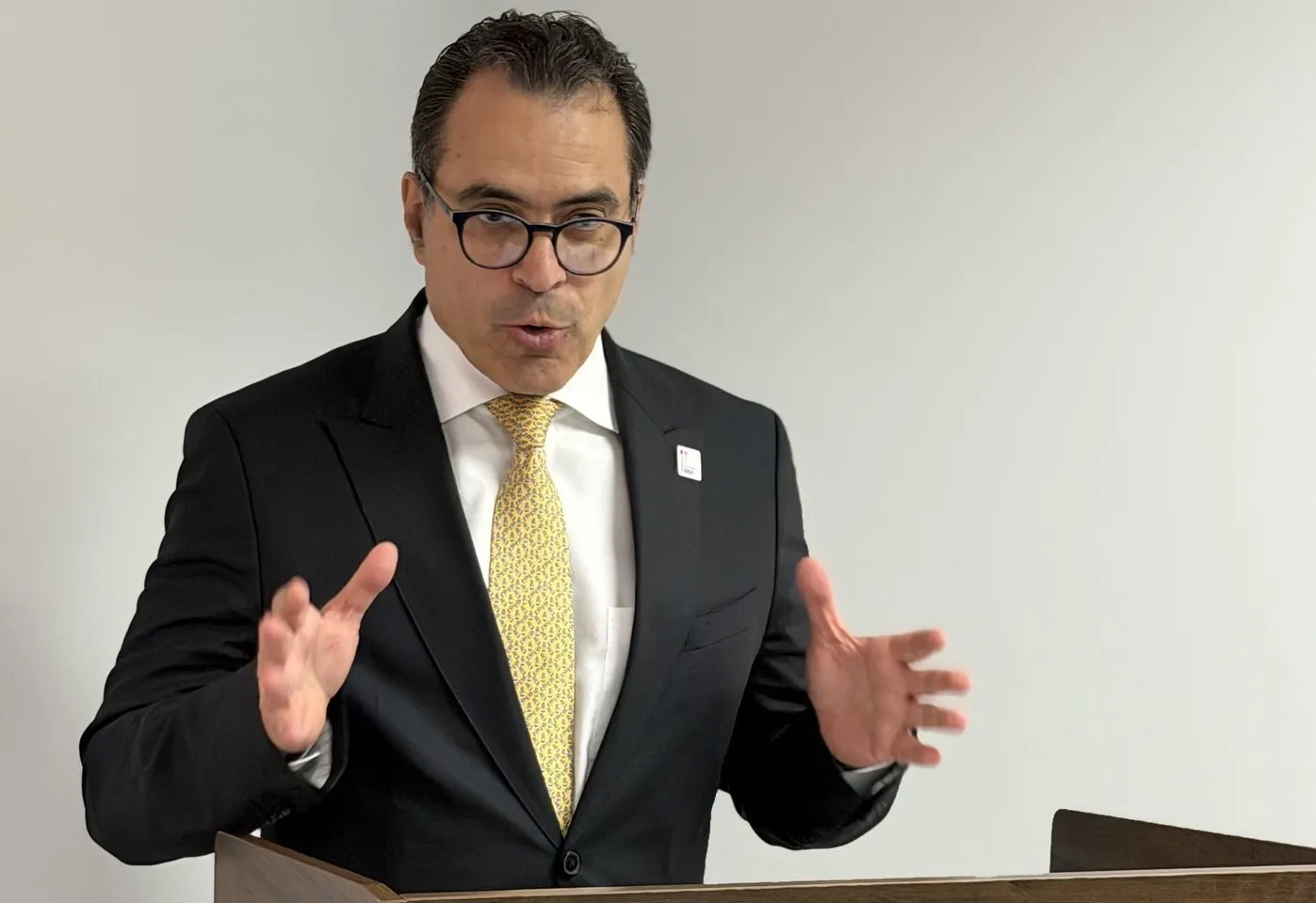
Your Excellencies, representatives of International IDEA’s Member States, distinguished guests, dear friends:
Good afternoon and welcome to this gathering, which is a celebration of the longstanding and recently renewed partnership between International IDEA and South Africa.
I’m Kevin Casas-Zamora, the Secretary-General of International IDEA. For those of you who are not so familiar with the work of our Institute, International IDEA is an intergovernmental organization with 35 Member States, including eight African countries, dedicated to supporting democracy globally. Among our membership, we are very proud to count South Africa. In these brief remarks, I want to tell you a bit about IDEA’s mission, our longstanding partnership with South Africa, and why this work is so important right now.
International IDEA is known for three core functions. First, we produce policy-friendly, comparative knowledge on issues related to elections, constitution building, political participation and representation, gender, and the assessment of democratic performance around the world. Second, we help implement those insights through capacity development and technical assistance programmes. And third, we play an important role as a convenor of political dialogues on key questions facing democracy, providing a platform for discussion and acting as a neutral broker. In these three intersecting capacities, we work in some 60 countries, partnering with electoral authorities, parliaments, constitutional courts, political parties, and other stakeholders.
Our membership base is very diverse. We have Member States from all continents, large and small countries, states that transitioned to democracy more recently as well as others with very long democratic traditions. This diversity is crucial when it comes to understanding democracy—how it is built, developed, and sustained, in ways unique to local circumstances of place and people. Yet, while each country’s trajectory is different, the premise of our Institute is that the democratic journey can be made easier by drawing on the lessons of others.
It was in this spirit of diversity and solidarity that South Africa joined with 13 other countries to found International IDEA in 1995. This was a bold move for a country just claiming its own democracy, one reflecting the pride and sincerity with which South Africa asserted that claim. And it was noticed, especially in this region. Within two years, Botswana and Namibia had joined the Institute, followed by Mauritius two years later. Then, as now, South Africa was a leader in democracy, and in International IDEA.
Since those early days, International IDEA’s relationship with South Africa has been sustained both at our Headquarters in Stockholm and through our activities in Africa. We work closely with South African institutions including DIRCO, the Independent Electoral Commission, and the National Assembly.
Last year, when we sought to host an event in Africa to mark International IDEA’s 30th anniversary, it was no coincidence that we came here. In partnership with DIRCO, we held a major conference that culminated in the Pretoria Consensus: a landmark statement of collective commitment to reimagine democracy across Africa and the Global South, grounded in collaborative innovation, participatory governance, inclusive multilateralism, and shared accountability.
Next year, South Africa will continue its tradition of leadership and association with IDEA by assuming the chairship of our Council of Member States. I appreciate the interest that DIRCO and the IEC are already expressing in this opportunity, and I look forward to working with them to make the South African chairship a great success.
This kind of democratic leadership is even more essential now than it was 30 years ago. International IDEA was founded at a time of optimism for democracy, marked by the fall of the Berlin Wall, the democratic transitions across my home region of Latin America, and the victory of freedom in South Africa. If history was not ending, it was at least trending in favour of democracy.
The world is very different today. Democracy is on the back foot globally. International IDEA’s data show that for nine straight years, more countries have experienced a deterioration in the quality of their democracy than saw advances. Meanwhile, the international order, which was created to prevent a return to the madness of the first half of the twentieth century, is collapsing before our eyes. That order was flawed, unequal and incomplete. Without question, the international system should be reformed and made more inclusive. But that system also made possible, in most places, levels of peace and prosperity unprecedented in human history. Trampling on the UN Charter, making a mockery of international humanitarian law, and committing war crimes day after day after day—as has been happening in Ukraine and Gaza—this is not creative destruction. It is destruction, pure and simple.
Faced with this trend of democratic decay and normative failure, what we need is more humanity, not less. More accountability, not less. More democracy, not less.
And this is precisely why International IDEA exists. This is why we are working with our Member States and partners to identify and monitor the threats to democracy, tease out the best examples from all over the world of how to counter them, and empower those who are on the frontlines of democracy, fighting for the norms we profess. On any given day, our colleagues are strengthening electoral preparedness in Ukraine and The Gambia; advancing political inclusion of women and marginalized groups in Nepal and Paraguay; and helping journalists and civil society groups in Central America and Sierra Leone to counter disinformation. Democracy has many dimensions, and so does our work to support it.
None of these contributions would be possible without our Member States, donors, and partners who work with us on the ground, who support and apply our world-class research on democracy, who use our platform to advance their foreign policy objectives, who lend their voices to collective advocacy, and who ensure that democracy does not disappear from the political agenda.
I direct this last point in particular to my friends from South Africa and other countries in the Global South. The future of democracy depends on it not being seen as a Western project. Democracy must instead be seen for what it is: a human project. We need Global South leadership to demonstrate and remind the world that democracy has helped countless developing countries to become free, sovereign, and better societies—and, hence, that it is worth not just defending, but strengthening. Together.
This is why I’m so proud to be opening International IDEA’s Regional Office in South Africa. This country is one of the triumphs of democracy: a society that overcame the dual adversities of colonialism and apartheid to achieve equal suffrage and peaceful reconciliation. Even more profoundly, South Africa’s continued commitment to consolidating democracy at home and supporting democracy abroad shows that the long walk to freedom is a never-ending journey; that democracy is not won all at once but earned day by day. South Africa is an ideal home for our Regional Office not only because of this country’s past, but because of what this Rainbow Nation represents for democracy’s future: a future of renewal, and of hope.
On the walls of this new office hangs an old photograph. In this photo, President Mandela sits between Thabo Mbeki and F.W. de Klerk. It was given to International IDEA by South Africa on the occasion of the Institute’s founding in 1995. To me, this image embodies the transformative promise of democracy: that what unites us is stronger than what divides us; that a better future can be forged if we work together; that, in the words of Madiba himself, “everything seems impossible until it’s done.”
My friends, there is nothing automatic about democracy. Our task at IDEA is to make the impossible, or at least the improbable, a little more likely. It’s a mission we accept with pride, but it is not one we can achieve alone. So, thank you again for being here, and for being part of this collective effort to support democracy. I look forward to continuing this essential work together.
Thank you.


