International Migration Review Forum, 3rd Plenary Meeting, General Debate
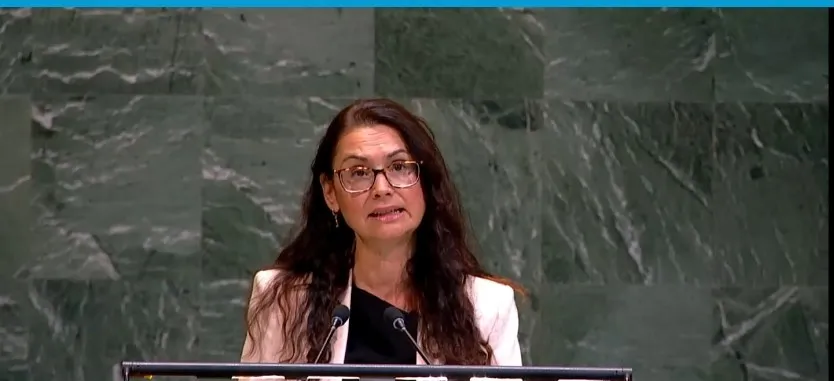
Statement by International Institute for Democracy and Electoral Assistance (IDEA)
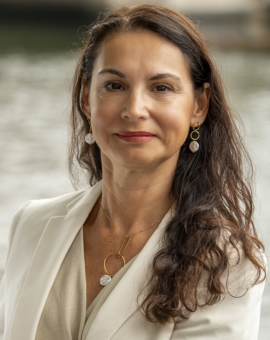
Delivered by Annika Silva-Leander, Permanent Observer of International IDEA to the United Nations
International Migration Review Forum, 3rd Plenary Meeting, General Debate,
UN Headquarters, New York, 8 May 2026.
Excellencies,
Today, more than 300 million people live outside their country of birth. The absolute number of migrants has tripled since 1970. Driven by conflict, climate change and economic necessity, migration is reshaping societies and political systems worldwide.
As International IDEA’s Global State of Democracy report shows, representation, rights, rule of law and participation—the four pillars of democracy—are weakening globally, including in established democracies. This decline is often accelerated by political actors and parties that exploit fear and division, including by demonizing migrants and refugees. Such narratives fuel polarization, erode social cohesion and weaken trust in institutions—corroding democracy from within. They also undermine progress toward the 2030 Agenda, which relies on inclusive and cohesive societies for its achievement.
The UN Charter affirms the equal rights and dignity of all, and Article 21 of the Universal Declaration of Human Rights guarantees the right of everyone to participate in the government of their country.
But our systems have not kept pace with reality. Our research shows that across the world migrants and refugees are routinely excluded from political participation—denied voting rights in host countries and often unable to exercise them in their countries of origin. As many as 53 countries do not allow their citizens to vote from abroad, and for those that do, legal barriers are often compounded by administrative obstacles that render participation inaccessible in practice. In Asia, for example, our research shows recent elections have included innovations such as postal and online voting for migrant workers, but millions of migrant workers still remain effectively disenfranchised, as electoral systems often exclude highly mobile populations from participating in the democratic process.
The case of Ukraine illustrates the stakes concretely. With more than 6 million people displaced by Russia’s aggression, ensuring that Ukrainians abroad can participate in future elections will be essential to democratic legitimacy, post-war recovery and long-term stability. International IDEA is proud to be working directly with Ukrainian authorities to prepare inclusive out-of-country voting arrangements for future Ukrainian post-war elections.
International IDEA calls on this Assembly to act on three priorities: 1) countries of origin should, where feasible, facilitate accessible out-of-country voting for their citizens; 2) host countries should consider broader measures to support the democratic participation of long-term residents, in line with national law and international good practice; and 3) political actors must end the demonization of migrants and refugees. The demonization of any group corrodes the foundations of democracy.
Safeguarding our common future requires an unwavering commitment to human dignity, respect and equal rights for all.
Watch the full speech here.


About the authors