11th Emergency Special Session of the United Nations General Assembly: Support for lasting peace in Ukraine
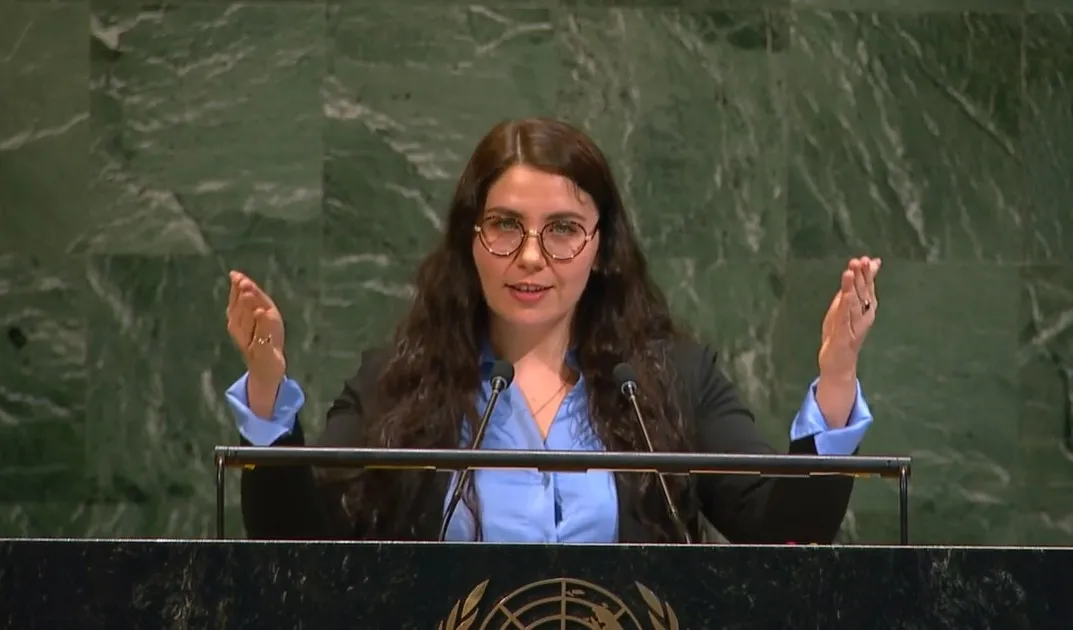
11th Emergency Special Session of the United Nations General Assembly: Support for lasting peace in Ukraine
New York, 24 February 2026
Statement by the International Institute for Democracy and Electoral Assistance
Excellencies, Distinguished delegates,
Four years after the full-scale invasion of Ukraine by the Russian Federation, the continued violation of Ukraine’s sovereignty and territorial integrity remains a grave assault on the principles that underpin both democracy and the international legal order. This war is not only an act of aggression against a sovereign Member State of these United Nations, but an attack on the fundamental right of a people to determine their future free from external coercion, occupation, and the use of force. Democracy, sovereignty, and the rule of law are inherently intertwined—and they are all being violated by the Russian Federation’s attacks on Ukraine.
The Charter of the United Nations provides the legal foundation for Ukraine’s right to resist aggression, including Article 2 on respect for sovereignty and territorial integrity and Article 51 on the inherent right of self-defence. Successive resolutions of the General Assembly have reasserted Ukraine’s sovereignty within its internationally recognized borders and the prohibition on the acquisition of territory by force. The defence of Ukraine is inseparable from the defence of self-government and the rules-based international system.
Excellencies,
Democratic resilience is demonstrated most vividly in moments of profound crisis. Despite immense destruction, displacement, loss, and human suffering, Ukraine’s constitutional order has continued to function. Institutions remain operational, civil society remains engaged, and public commitment to democratic values endures. This resilience underscores a central finding of International IDEA’s global analysis: that where democratic institutions are rooted in rights, constitutionalism and supported by citizens, they can withstand extraordinary external pressure. Ukraine’s perseverance demonstrates that democracy is not a luxury but a source of national strength and sovereignty in the face of aggression.
All this attests to the fact that sovereignty is not merely a territorial concept, but the expression of a people’s will through a constitutional order and accountable institutions. Yet no type of sovereignty can be fully exercised under conditions of coercion and occupation. That is why International IDEA has consistently underscored that elections are not isolated events, but processes requiring legal certainty, security, inclusiveness, and public trust. The timing and organization of elections in Ukraine is a sovereign prerogative of Ukraine, grounded in its Constitution and legal framework, which must remain free from external pressure or interference. To impose electoral timelines in conditions that do not allow for full, free, safe and meaningful participation would only undermine democratic legitimacy. Ultimately, elections must reflect the will of the people, not the constraints of war imposed by an aggressor. The right of the Ukrainian people to determine their political future belongs exclusively to them. All efforts towards peace in Ukraine must be anchored in these principles, as well as in accountability for the Russian Federation’s violations of international law.
International IDEA stands proudly in solidarity with Ukraine. We must never forget that the brave women and men fighting for democracy, sovereignty, and the rule of law in Ukraine are fighting for democracy, sovereignty, and the rule of law everywhere. The example and the result of their struggle will shape the future for all of us—and thus, their struggle is ours too.
Thank you.


About the authors