


Indigenous Peoples, Rights, and Access to Justice in the Philippines
Case Study, October 2026

Executive Summary
This case study examines how Philippine constitutional law and Supreme Court jurisprudence have shaped the rights of Indigenous peoples, particularly in relation to ancestral domains, natural resources, free, prior, and informed consent (FPIC), and access to justice. It traces a shift from colonial-era jurisprudence marked by paternalistic and discriminatory assumptions toward stronger recognition of native title, customary practices, and Indigenous rights under the Constitution of the Republic of the Philippines (1987) and the 1997 Indigenous Peoples’ Rights Act (IPRA).1
These developments are relevant to environmental and climate justice because many disputes involving Indigenous communities concern land, forests, mineral resources, and development projects within ancestral domains. The cases discussed are not, for the most part, climate litigation in a narrow sense, but they establish legal principles and institutional pathways that may shape future environmental and climate-related claims.
From a democracy perspective, the case study highlights both the potential and the limits of courts. Judicial recognition of Indigenous rights can strengthen rights protection, accountability, and participation, but access to justice remains constrained by jurisdictional complexity, limited legal representation, and implementation gaps.
Recent reforms concerning professional responsibility and legal aid may improve access, but their democratic significance will depend on whether Indigenous communities can participate effectively in decisions affecting their lands, resources, and futures.
Introduction
Indigenous peoples remain disadvantaged in Philippine society. Reports from the World Bank (Pérez-Brito and Belghith 2024) show that Indigenous peoples continue to face significant gaps in education, health, access to safe water, and social protection. Compared with the rest of the Philippine population, they have lower educational attainment and higher illiteracy rates. These conditions can limit access to stable, productive employment, reinforcing long-standing inequalities. Indigenous peoples have also been more likely to live in substandard housing compared with non-Indigenous populations. This situation increases their exposure to health, safety, and income-related risks. Significantly, as Indigenous peoples maintain their long-standing relationship with the land, their situation is worsened by the absence of secure land tenure and weak land governance.
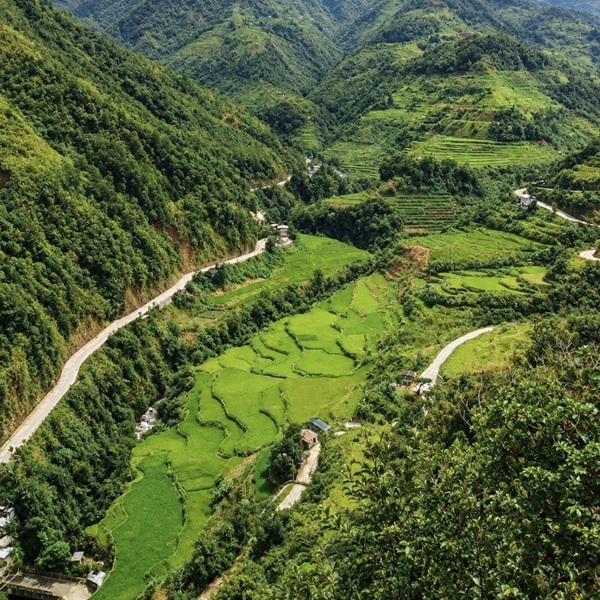
Development activity, extractive projects, and climate change can place additional pressure on Indigenous communities because of their close social, cultural, and economic relationships with ancestral lands and natural resources. Indigenous land and environmental defenders have also faced violence, criminalization, and other forms of intimidation in connection with disputes over land and natural resources (Global Witness 2019, 2025).

The conditions facing Indigenous peoples across the country run counter to the expectations set by the 1987 Constitution, which mandates that the state promote and protect their rights. There is good reason for this expectation: as Cats-Baril (2020: 9) explains, constitutional recognition can provide robust protection for Indigenous peoples’ rights and signals a strong commitment to defending those rights within a stable legal framework. Such recognition is particularly significant because constitutional provisions reflect the state’s fundamental values, as embraced by both the government and society (OHCHR 2018: 7).
The ultimate guardian of the Constitution is the Supreme Court, the head of the judiciary, which gives full effect to the constitutional mandate. It ensures that the rule of law applies to everyone, protects rights, and holds even the government accountable. Aside from defending the Constitution, the court also adds to the development of the legal system and ensures that human rights principles are respected (Barak 2002: 26).
In climate-related and other public interest litigation, courts can provide additional avenues for accountability and rights protection, although their democratic contribution depends on who can access the courts, whose interests are represented, the scope of judicial authority, and whether remedies are implemented (Doyle 2025: 10). Courts do not merely interpret the law but also resolve disputes concerning its application and enforcement (Cats-Baril 2020: 31). For marginalized communities, including Indigenous peoples, the practical value of judicial protection therefore depends not only on formal legal rights but also on access to representation and effective remedies.
Accordingly, this case study examines how the Supreme Court of the Philippines has interpreted and protected the rights of Indigenous peoples and the challenges that have emerged in their application, as reflected in its jurisprudence. Drawing on the International Institute for Democracy and Electoral Assistance (International IDEA) publication Let the Courts Decide? The Potential and Limitations of Climate Litigation from a Democracy Perspective (Poletto and Hickey 2025), this case study treats Indigenous rights jurisprudence as part of the institutional context within which environmental and climate-related claims may be brought. It focuses on three democracy-relevant dimensions: rights protection and access to justice; participation and consent in decisions affecting ancestral domains; and the capacity of courts and public institutions to hold decision-makers accountable. Most of the cases discussed are not climate cases in a narrow sense, but they shape legal pathways that may become relevant where climate change, environmental degradation, and development pressures intersect with Indigenous rights.
1. Indigenous Peoples and the Philippine Legal System
1.1. Who Are Indigenous Peoples?
According to the National Commission on Indigenous Peoples (NCIP), there are at least 222 different Indigenous peoples throughout the Philippines (NCIP 2019: 176). Legally, they are recognized under the Indigenous Peoples’ Rights Act,2 which defines Indigenous peoples, also known as Indigenous cultural communities, as groups of people who identify themselves as Indigenous and are recognized by others as such. They have traditionally lived in organized communities on shared territories that they have occupied, used, and cared for since time immemorial. They share common languages, customs, traditions, and other distinctive cultural traits. The classification also includes communities that have become distinct from the broader Philippine population by resisting colonization and the influence of non-Indigenous religions and cultures. It also encompasses communities that may have been displaced from or now live outside their ancestral lands.
The 2020 Philippine Census of Population and Housing reported that there were approximately 9.4 million members of these communities, accounting for 8.7 percent of the Philippine population (Pérez-Brito and Belghith 2024: 20).
1.2. The Legal Regime
The Constitution of the Republic of the Philippines (1987)3 recognizes and promotes the rights of Indigenous cultural communities within the framework of national unity and development. It mandates the state to protect Indigenous peoples’ rights to their ancestral lands to ensure their economic, social, and cultural well-being and requires Congress, in determining the ownership and extent of ancestral domains, to take customary laws into account. Consistent with this mandate, the Constitution places limits on the state’s authority to utilize and dispose of natural resources and agricultural lands.
The Constitution also recognizes the preservation and development of Indigenous cultures, traditions, and institutions and provides for sectoral representation and a consultative body on policies affecting Indigenous communities. Regarding sectoral representation, Indigenous peoples are expressly identified as one of the sectors that should be represented under the party-list system that Congress may create. Separate constitutional provisions provide for autonomous regions in Muslim Mindanao and the Cordilleras, subject to constitutional and statutory requirements.
The IPRA was enacted more than a decade after the Constitution’s ratification. As the principal implementing law for the Constitution’s mandates on Indigenous peoples, the IPRA reaffirmed Indigenous peoples’ rights over their ancestral domains and lands, established mechanisms for the delivery of basic services, and created a dedicated agency, the National Commission on Indigenous Peoples (NCIP). The NCIP is the principal government body tasked with formulating and implementing policies, plans, and programs to advance the rights and welfare of Indigenous peoples and to recognize and protect their ancestral domains.
The NCIP also exercises quasi-judicial functions over specified claims and disputes under the IPRA, including certain matters concerning ancestral domain delineation, boundary disputes, and Certificates of Ancestral Domain Title. Its jurisdiction is not exclusive across all disputes involving Indigenous rights; the relationship between NCIP and regular court jurisdiction is discussed further below.
2. The Philippine Judiciary and Indigenous Peoples Jurisprudence
2.1. The Judiciary and the Philippine Supreme Court
The modern Supreme Court was established under Act No. 136 of the Philippine Commission in 1901.4 The Constitutions of 1935, 1973, and 1987 subsequently vested judicial power in the Supreme Court and such lower courts as may be provided by law.
Judicial power under the 1987 Constitution is distinctive in that it adopts an expanded scope. Courts are empowered not only to settle actual controversies involving legally enforceable rights but also to review and invalidate acts of any branch or instrumentality of government on the grounds of grave abuse of discretion.5 Consequently, when government action is taken in a capricious, whimsical, or arbitrary manner that patently and grossly violates the Constitution, the law, or jurisprudence—or amounts to an evasion of a positive duty—the courts may strike it down. This expansion marked a significant departure from earlier constitutional arrangements, as it allows courts to resolve disputes even when the challenged acts fall within the political branches’ discretionary authority.
2.2. Indigenous Jurisprudence: From Benevolent Prejudice to Rights Recognition
Substantial Distinction and Native Title
Throughout the past century, relatively few Supreme Court cases have directly concerned Indigenous peoples. One contributing challenge lies in identifying who qualifies as such a community, as the terminology and conceptual framework became more clearly articulated only in the latter part of the 20th century. In the Philippine context, only Indigenous peoples were historically referred to as “non-Christians,” a classification that did not primarily denote religious affiliation. Instead, it reflected assumptions tied to geography, perceived lack of “civilization,” and alleged educational deficiency. This framing immediately raises concerns regarding the discriminatory nature of the “non-Christian” designation.
During US colonial rule, legislation classified certain Indigenous communities as “non-Christian” and subjected them to assimilationist policies. In Rubi v. Provincial Board of Mindoro (1919),6 Mangyan petitioners—referred to in the judgment as Manguianes—challenged the resolution of the Provincial Board ordering the compulsory relocation of the Mangyan to a reservation in Mindoro. The provincial authorities justified the measure in terms of public order, education, and assimilation.
The Supreme Court allowed the resettlement of the Manguianes. It explained that the policies caused no due-process or equal protection violations because these communities were indeed backward, adding that their assimilation would only further unite the Philippine people and promote a shared national identity. According to the court, because the Manguianes were considered “uncivilized” and intellectually unequal to their peers, assimilation was necessary to achieve the overarching goal of national unity. The court’s ruling reflected the policy of benevolent assimilation pursued by the American colonizers.
Curiously, the legal doctrine applied in Rubi, which sanctioned the removal of the Manguianes from their ancestral lands, did not cite an earlier, highly significant body of jurisprudence recognizing natives as the rightful owners of land claimed as private property. A decade before Rubi, the United States Supreme Court, then exercising appellate jurisdiction over decisions of the Philippine Supreme Court, reversed the latter court in Cariño v. Insular Government.7 The US Supreme Court held that native inhabitants of the Philippines did not lose ownership of their lands upon the transfer of sovereignty from Spain to the USA, nor did they lose ownership by the absence of a formal paper title. The determining factor was the existence of native title, under which Indigenous inhabitants are presumed to have retained continuous ownership of their lands if, as stated in Cariño, “as far back as testimony or memory goes, the land has been held by individuals under a claim of private ownership.”8
Despite the significance of Cariño and its recognition of native title, the decision has found limited application in subsequent Philippine jurisprudence.9 Later cases concerning Indigenous peoples focused less on land rights and more on criminal liability.
Benevolent Prejudice Against Indigenous Peoples
The limited Indigenous jurisprudence from the early to mid-20th century was also marked by criminal law cases that sanctioned differential treatment of Indigenous peoples based on their perceived lack of civilization and education. In several rulings, the Supreme Court mitigated penalties imposed on members of so-called non-Christian tribes because they were assumed to be ignorant. In U.S. v. Maqui,10 the court treated membership in an “uncivilized tribe” as an extenuating circumstance, explaining that such individuals were deemed to have lived “far away from the centers of civilization” and to be severely lacking in “instruction and education.” As a result, the court held that they “should not be held to so high a degree of responsibility as is demanded of those citizens who have had the advantage of living their lives in contact with the refining influences of civilization.”11 This echoes U.S. v. Palidat,12 where the court justified its ruling based on the portrayal of the non-Christian Igorots as having been raised in complete ignorance of law and social order, imbued with what were described as degrading superstitions that made it a perceived duty to take the life of another. The court further added that they were not only uncivilized, but they also had no “adequate conception of human life.”13
While the law recognized lack of education as a mitigating circumstance, its application to specific segments of Philippine society, particularly Indigenous peoples, who were presumed by the Supreme Court to be inherently uncivilized and unlettered, reflects discriminatory prejudice. These decisions exemplify benevolent prejudice (Werhun and Penner 2010: 900), in which negative stereotypes and beliefs are applied to a subordinate group in a subtle and ostensibly positive manner. Although framed as kindness or leniency, such beliefs ultimately reinforce the subjugation of minorities by portraying them as requiring the guidance and supervision of the majority.
This perception began to shift by the 1970s, although prejudicial overtones remained. Thus, in People v. Manla,14 the mitigating circumstance of lack of education was not applied to cultural minorities because it was ruled that, on matters involving grave offenses, the acts are “as wrong to the ignorant as they are to the enlightened.”15 This ruling was later echoed in 1992 in People v. De los Reyes.16
Growing Recognition of Indigenous Peoples’ Rights
A major turning point came with Cruz v. Secretary of Environment and Natural Resources (2000),17 which challenged the constitutionality of key provisions of the IPRA. The Supreme Court divided evenly: seven justices voted to dismiss the petition and seven voted to grant it. Since a majority is required to declare the statute unconstitutional, the petition was dismissed and the IPRA remained in force. Given the result, there was no majority opinion resolving the constitutional challenge on its merits. Nevertheless, the case was important not only because the IPRA remained in force, but also because the separate opinions contained influential discussions of the historical and constitutional context of Indigenous rights. These opinions provided important insights into the history and judicial understanding of Indigenous peoples. Justice Santiago M. Kapunan observed that Philippine legal history “has not been kind to the indigenous peoples,”18 while Justice Reynato S. Puno examined how earlier legal arrangements had contributed to their alienation.19
Another significant Supreme Court decision is Sama v. People of the Philippines,20 in which the court balanced the state’s police power to regulate the cutting of trees with the exercise of customary laws over resources found within ancestral domains. The court struck a balance: while maintaining that unauthorized tree cutting remained punishable, it found that the accused Iraya-Mangyan’s status as an Indigenous person and their exercise of customary practices within a recognized ancestral domain created reasonable doubt as to the act’s unlawfulness. Highlighting the IPRA’s recognition of Indigenous peoples’ right to manage natural resources within ancestral domains in accordance with their traditions, the court found that the prosecution failed to prove guilt beyond a reasonable doubt and accordingly acquitted the petitioners. The decision therefore provides an important example of how customary resource use within an ancestral domain can affect the criminal law assessment of alleged unlawful resource extraction.
The same issue arose in the intracommunity dispute in Daco v. Cabajar,21 involving the Tagbanua in Palawan, where one member asserted individual ownership of an island located within an ancestral domain that had not yet been issued a Certificate of Ancestral Domain Title. The Supreme Court resolved the case by reiterating that, for Indigenous peoples, ownership and title do not depend on a formal paper instrument. A paper title merely serves as formal recognition of native title. Consequently, ancestral domains and Indigenous ownership are legally recognized even in the absence of a documentary title. The land is presumed to be privately owned by the Indigenous community and should be demarcated from the public domain.
Another positive affirmation by the Supreme Court is the recognition of Indigenous peoples’ right to free, prior, and informed consent (FPIC). In Lone Congressional District of Benguet Province v. Lepanto Consolidated Mining Co.,22 the court reversed the decision of the Court of Appeals, which had affirmed an arbitral award holding that the FPIC requirement did not apply to mining companies renewing licenses granted before the enactment of the IPRA. The court clarified that the FPIC requirement under the IPRA embodies a state policy and must be observed. At the same time, in recognition of mining companies’ due process rights, the court held that the government must be afforded a full opportunity to comply with the FPIC requirement.
The Supreme Court has also laid down a clear rule on the proper use of financial assistance held in trust for Indigenous peoples. In Corvera-Cirunay v. Commission on Audit,23 it was held that when Indigenous peoples consent to the conduct of development projects in their ancestral domains, both royalties and financial assistance provided to them are reserved for the Indigenous communities under the memorandum of agreement covering those projects. The court held that financial assistance received for the benefit of the Mamanwa Indigenous community in connection with a nickel-processing project in Surigao del Norte could not be used by the NCIP to defray its own operating expenses. Government-held trust funds must be used solely for the specific purpose for which they were created or received and cannot be redirected to ordinary NCIP operating costs. The court further provided that, despite a subsequent addendum indicating that the community had permitted such use, allowing a later amendment to the original agreement would effectively circumvent the trust-fund principle under the Government Auditing Code. The court cautioned that such an approach could set a precedent whereby similar deviations might be justified through the mere execution of subsequent contracts. Finally, allowing the financial assistance to be used to defray the NCIP’s operating expenses was contrary to the Commission’s own FPIC guidelines, which require it to adopt and enforce mechanisms to protect, promote, and realize the rights of Indigenous peoples.
Access to Justice and Legal Representation
In Unduran v. Aberasturi,24 the Supreme Court clarified that the NCIP does not have general jurisdiction over every dispute involving Indigenous rights. Under section 66 of the IPRA, its jurisdiction over claims and disputes is generally limited to parties belonging to the same Indigenous cultural community or Indigenous peoples’ group, although the court identified specific ancestral domain matters over which the NCIP has primary jurisdiction regardless of the parties. Other disputes may therefore have to proceed before regular courts. For Indigenous claimants, this can increase the importance of access to legal representation and familiarity with ordinary court procedures.
The Supreme Court has also taken measures intended to enable lawyers to actively support the administration of justice, consistent with the new Code of Professional Responsibility and Accountability.25 This new code of ethics requires lawyers to advocate for causes of special concern, including environmental protection and the rights of Indigenous peoples. Accordingly, they should contribute to law reform, improve the administration of justice, and address identified social concerns. In support of the ethical duties under the Code of Professional Responsibility and Accountability, the Supreme Court issued the Rules on Unified Legal Aid Service, requiring Filipino lawyers to render pro bono legal services to marginalized sectors, including indigent Indigenous peoples.26
The Code of Professional Responsibility and the Rules on Unified Legal Aid Service are significant developments that enable Indigenous peoples to litigate and protect their rights, as they often lack access to adequate legal assistance. Crucially, this legal assistance extends beyond court representation to encompass pretrial proceedings such as mediation, voluntary or compulsory arbitration, and other forms of alternative dispute resolution. Furthermore, Indigenous peoples may solicit support for rights awareness initiatives, capacity-building activities, and basic human rights education, empowering Indigenous peoples to protect their ancestral domains and the environment. This mandate augments current litigation trends, in which legal assistance is largely limited to lawyers from nongovernmental organizations and legal academics.
Risks to land and environmental defenders remain an important part of the access-to-justice context. Global Witness documented 30 killings of land and environmental defenders in the Philippines in 2018, the highest number recorded in any country that year (Global Witness 2019). Its 2025 annual report recorded eight cases involving killings or disappearances in the Philippines in 2024, the highest country total recorded in Asia that year (Global Witness 2025).
3. Democratic Implications
The 4th Philippine Human Rights Plan 2024–2028 includes a thematic chapter on Indigenous peoples and identifies continuing challenges relating to cultural identity, FPIC, ancestral domains, land occupation, and the interaction of government agencies and other stakeholders with Indigenous communities (Republic of the Philippines 2024: 2). These concerns underscore the gap between formal legal protection and implementation.
The plan states that Indigenous peoples face persistent and interconnected challenges that underscore the state’s duty. Central to these challenges is the fact that structural weaknesses are exacerbated by a widespread lack of understanding of, and respect for, the FPIC process and the exercise of Indigenous peoples’ priority rights, particularly among national government agencies, private institutions, corporations, investors, and other stakeholders engaging with Indigenous peoples. At the same time, Indigenous peoples face rampant land grabbing, illegal occupation of ancestral territories, the unauthorized entry of migrants into ancestral domains, and the unlawful sale of ancestral domains, resulting in displacement and the violation of their collective rights to land and resources.
The issues mentioned in the human rights plan persist despite the IPRA’s strength as a statutory framework for the protection of Indigenous peoples’ rights. Despite the breadth of the constitutional and statutory framework, relatively few Supreme Court decisions directly address the rights of Indigenous peoples. This limited body of jurisprudence, alongside the implementation challenges identified in the human rights plan, illustrates the gap that can arise between formal legal protection and the extent to which Indigenous rights disputes reach the country’s highest court.
The Supreme Court, particularly in post-IPRA rulings, shifted from “benevolent yet prejudicial” views of Indigenous peoples to a focus on dismantling systemic bias and consciously cultivating equity. Following the adoption of the Constitution in 1987 and the IPRA in 1997, significant Indigenous rights jurisprudence confronted the legal history of Indigenous peoples and recognized their distinctive rights. Native title became prominent in discussions surrounding Indigenous land tenure. The right to self-determination, particularly the application of FPIC, was affirmed and elevated as a clear Philippine policy, balancing the rights of Indigenous peoples with those of other stakeholders.
Yet why do Indigenous peoples remain marginalized despite explicit constitutional protections and the enactment of the IPRA more than two decades ago? The Constitution was envisioned as a robust, rights-centered fundamental law that empowers the courts to act decisively against grave abuses of government discretion while setting clear standards to respect, protect, and promote Indigenous peoples’ rights. Similarly, the IPRA was groundbreaking, not only for extending basic social services but also for recognizing Indigenous peoples’ ownership and tenure over ancestral lands, including those long treated as part of the public domain.
This gap demonstrates that even the most progressive laws become hollow when implementation falters and underlying oppression is not addressed. Without empowerment, Indigenous peoples remain unable to effectively litigate and vindicate their rights. The gap underscores the continuing obligation of the NCIP, as emphasized by the Commission on Human Rights of the Philippines (2019: 35), to perform its mandate actively, consistently, and in good faith. The Commission also calls on legislators to ensure coherence in the legal framework and to provide sufficient, sustained funding for the delineation and titling of ancestral domains. These efforts must align with the Supreme Court of the Philippines’ recognition of Indigenous peoples’ rights and environmental protection as matters of vital legal concern.
4. Conclusion
Philippine law now provides substantially stronger recognition of Indigenous peoples’ rights than the colonial and early postcolonial jurisprudence reviewed in this case study. The 1987 Constitution and the IPRA recognize ancestral domain rights, cultural integrity, and participation, while subsequent Supreme Court decisions have developed principles concerning native title, customary resource use, and FPIC.
From a democracy perspective, however, legal recognition is only one part of the picture. Indigenous communities must also be able to participate meaningfully in decisions affecting their territories, obtain legal representation, navigate the respective jurisdictions of the NCIP and regular courts, and secure implementation of favorable legal outcomes. These conditions are particularly important where development projects, environmental degradation, and climate impacts place additional pressure on ancestral lands and resources.
The Philippine experience therefore illustrates both the potential and the limits of litigation. Courts can clarify rights, review public authority, and provide remedies, but they cannot by themselves overcome barriers in implementation, legal access, and institutional capacity. Strengthening access to justice, effective FPIC processes, and accountable implementation remain essential if constitutional and statutory protections are to translate into meaningful protection for Indigenous peoples.
Abbreviations
FPIC Free, prior, and informed consent IPRA Indigenous Peoples’ Rights Act NCIP National Commission on Indigenous Peoples
References
Barak, Aharon. 2002. “A Judge on Judging: The Role of a Supreme Court in a Democracy.” Harvard Law Review 116 (1): 16–162. https://doi.org/10.2307/1342624.
Cats-Baril, Amanda. 2020. Indigenous Peoples’ Rights in Constitutions Assessment Tool. International IDEA. https://doi.org/10.31752/idea.2020.37.
Commission on Human Rights of the Philippines. 2019. The Haran Report: On Human Rights Violations Against the Lumad of Mindanao. https://library.asiapacificforum.net/api/files/17228695968370lfkg9qd8o2.pdf.
Doyle, Alister. 2025. “Introduction.” In Let the Courts Decide? The Potential and Limitations of Climate Litigation from a Democracy Perspective, edited by Michele Poletto and Sharon Pia Hickey. International IDEA. https://doi.org/10.31752/idea.2025.70.
Global Witness. 2019. Defending the Philippines: How Broken Promises Are Leaving Land and Environmental Defenders at the Mercy of Business at All Costs. 24 September. https://globalwitness.org/en/campaigns/land-and-environmental-defenders/defending-the-philippines/.
Global Witness. 2025. Roots of Resistance: Documenting the Global Struggles of Defenders Protecting Land and Environmental Rights. 17 September 2025. https://globalwitness.org/en/campaigns/land-and-environmental-defenders/roots-of-resistance/.
NCIP (National Commission on Indigenous Peoples). 2019. Annual Report 2019. https://ncip.gov.ph/wp-content/uploads/2024/03/2019-AAR.pdf.
OHCHR (Office of the United Nations High Commissioner for Human Rights). 2018. Human Rights and Constitution Making. United Nations. HR/PUB/17/5. https://www.ohchr.org/en/publications/special-issue-publications/human-rights-and-constitution-making.
Pérez-Brito, Carlos, and Nadia Belhaj Hassine Belghith. 2024. No Data, No Story: Indigenous Peoples in the Philippines. World Bank Group. https://thedocs.worldbank.org/en/doc/baa43cc91ec55266a538e9023c528bd7-0070062024/no-data-no-story-indigenous-peoples-in-the-philippines.
Poletto, Michele, and Sharon Pia Hickey, eds. 2025. Let the Courts Decide? The Potential and Limitations of Climate Litigation from a Democracy Perspective. International IDEA. https://doi.org/10.31752/idea.2025.70.
Republic of the Philippines. 2024. 4th Philippine Human Rights Plan 2024–2028. Presidential Human Rights Committee Secretariat. https://phrcs.gov.ph/philippine-human-rights-plan/.
Werhun, Cherie D., and April J. Penner. 2010. “The Effects of Stereotyping and Implicit Theory on Benevolent Prejudice Toward Aboriginal Canadians.” Journal of Applied Social Psychology 40 (4): 899–916. https://doi.org/10.1111/j.1559-1816.2010.00603.x.
About the Author
Raymond Marvic (Ice) C. Baguilat is an Indigenous Tuwali human rights lawyer who serves as Head Legal Officer at the University of the Philippines Law Center’s Institute of Human Rights and leads its Indigenous Peoples Law and Policy Program. He is a faculty member of the University of the Philippines College of Law and earned his Juris Doctor from the University of the Philippines and Master of Laws from the University of Melbourne.
The author wishes to thank Biyaya Monique Reyes Macaraig for her assistance in preparing this case study. Bjoern Dressel is also thanked for his comments on its subject matter and preliminary direction.


© 2026 International Institute for Democracy and Electoral Assistance International IDEA publications are independent of specific national or political interests. Views expressed in this publication do not necessarily represent the views of International IDEA, its Board or its Council members.
With the exception of any third-party images and photos, the electronic version of this publication is available under a Creative Commons Attribution NonCommercial-ShareAlike 4.0 (CC BY-NC-SA 4.0) licence. You are free to copy, distribute and transmit the publication as well as to remix and adapt it, provided it is only for non-commercial purposes, that you appropriately attribute the publication, and that you distribute it under an identical licence. For more information visit the Creative Commons website: http://creativecommons.org/licenses/ by-nc-sa/4.0.
Design and layout: International IDEA
DOI: https://doi.org/10.31752/65183
ISBN: 978-91-8137-232-8 (PDF)
ISBN: 978-91-8137-233-5 (HTML)


