


Indigenous Land Rights and Democratic Inclusion in Bangladesh
Policy Brief, September 2026

Executive Summary
Indigenous peoples in Bangladesh experience persistent insecurity concerning land, political participation, and recognition of customary institutions. Official census data and estimates by Indigenous organizations differ substantially regarding the size of the population, reflecting differences in terminology, classification, and community coverage. These issues affect more than questions of identity: they influence whether customary tenure, collective rights, and Indigenous participation are recognized in decisions concerning land and development.
The institutional context differs between the Chittagong Hill Tracts and the plains. In the Chittagong Hill Tracts, the 1997 Chittagong Hill Tracts Accord1 created a framework for regional governance, land dispute resolution, and recognition of traditional institutions, but implementation remains incomplete and institutional responsibilities continue to overlap. In the plains, comparable mechanisms for customary tenure, land dispute resolution, and self-governance are largely absent. Across both contexts, Indigenous women and youth face additional barriers to participation, education, security, and access to justice.
This brief presents policy options concerning implementation of the Chittagong Hill Tracts Accord, recognition of customary tenure, land dispute resolution in the plains, political representation, participation in development decisions, Indigenous language services, and the inclusion of Indigenous women and youth. It also considers how Bangladesh’s domestic arrangements could be brought into closer dialogue with international standards concerning Indigenous peoples’ rights.
1. Background
The legal and political debate begins with terminology. Indigenous peoples and their representative organizations in Bangladesh commonly use the terms Indigenous peoples and Adivasi, whereas article 23A of the Constitution refers to “tribes, minor races, ethnic sects and communities.”2 This difference is not merely semantic: it shapes wider political and legal debates concerning identity, collective land rights, customary institutions, and the relevance of international Indigenous rights standards.
A second distinction runs through this brief: Indigenous communities in the Chittagong Hill Tracts and the plains operate with different legal and institutional frameworks. In the Chittagong Hill Tracts, the 1997 Accord established a framework for regional governance, land dispute resolution, and recognition of traditional institutions, although implementation remains incomplete. In the plains, comparable institutions and land protection mechanisms are largely absent. As a result, the pathways for land security, self-governance, and democratic participation differ significantly between the two contexts (Dhamai 2014)3.
The scale of the population is itself contested. The 2022 Population and Housing Census recorded 1,650,159 people under the country’s ethnic minority classifications, representing approximately 1 percent of Bangladesh’s population. Indigenous organizations estimate that the Indigenous population is closer to 4 million, across more than 54 communities. The gap reflects differences in terminology, classification, community coverage, and methods of self-identification used in official and non-governmental sources rather than statistical discrepancy (Bangladesh Bureau of Statistics 2023; Bangladesh Indigenous Peoples Forum 2023).
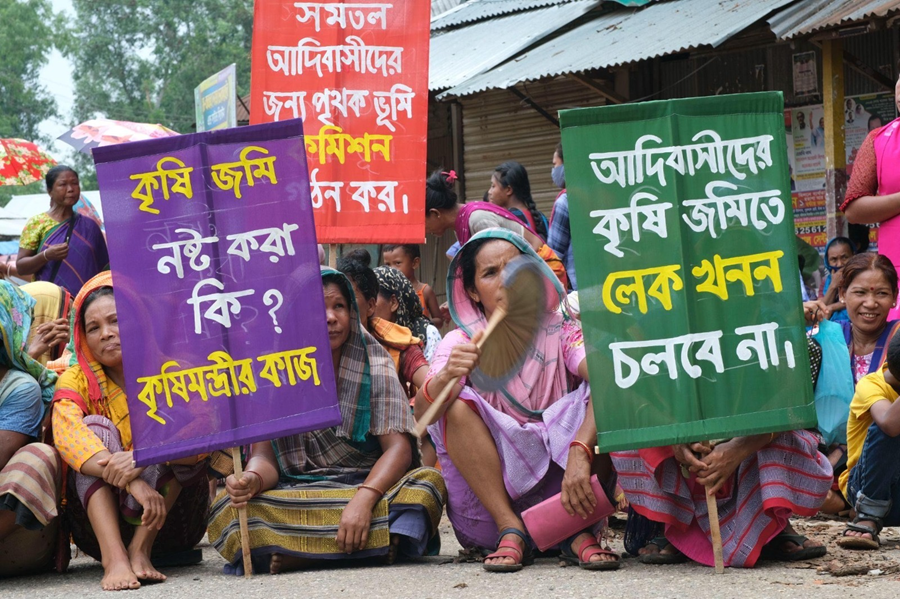

Indigenous communities live in the Chittagong Hill Tracts and in plains and coastal areas, including parts of Cumilla, Dinajpur, Greater Mymensingh, Greater Sylhet, Khulna, Rajshahi, and Rangpur. They maintain diverse languages, belief systems, livelihoods, and customary institutions. Their contributions include agriculture, forest and natural resource management, handicrafts, fisheries, livestock production, and community-based tourism. At the same time, many communities experience limited recognition within land administration, political institutions, and national policymaking (Dhamai 2014).
The Chittagong Hill Tracts have a distinct history of customary and territorial governance. Before colonial rule, Jumma communities exercised forms of local self-government through customary political and social institutions. Under British administration, the area was governed through special arrangements and was later classified as an excluded administrative area. The Chittagong Hill-tracts Regulation 1900 established a separate administrative framework and regulated settlement, land access, and governance in the region (Dhamai 2014).4
Some elements of this special status continued during the early Pakistan period, but later legal and administrative changes weakened some of the differentiated protections. Changes in settlement, land administration, and state control contributed to disputes over customary land and territorial governance that persisted after Bangladesh gained independence in 1971 (Chakma 2014). This history helps explain why present-day land disputes are inseparable from questions of regional authority and self-government.
Article 23A requires the state to protect and develop the cultures and traditions of the communities covered by the provision. Articles 27 and 28 provide general guarantees of equality and non-discrimination.55 The Small Ethnic Groups Cultural Institutions Act 2010 lists 50 ethnic groups for the purposes of that legislation, while Indigenous organizations identify more than 54 communities nationally (Bangladesh Indigenous Peoples Forum 2023).6
The plains followed a different trajectory. Some Indigenous-majority areas in Greater Mymensingh had differentiated administrative arrangements during the colonial period, but comparable protections were not retained after the Pakistan period (Dhamai 2014). Plains communities therefore entered the post-independence period without a regional framework equivalent to that of the Chittagong Hill Tracts.
Following more than two decades of armed conflict concerning autonomy, land rights, and political recognition, the Government of Bangladesh and the Parbatya Chattagram Jana Samhati Samiti (PCJSS) signed the Chittagong Hill Tracts Accord on 2 December 1997. The Accord established a framework for peace and regional governance, including the Chittagong Hill Tracts Regional Council, strengthened Hill District Councils, recognition of traditional institutions, a Land Commission, and commitments concerning displaced persons, land disputes, and temporary military camps.7
Implementation has remained partial and contested. Continuing concerns include the incomplete transfer of functions to Chittagong Hill Tracts institutions, limited fiscal and administrative authority, delays in resolving land disputes, and security-related and settlement provisions. Parbatya Chattagram Jana Samhati Samiti implementation reports attribute the delays to limited political commitment and administrative resistance (PCJSS 2024; Chakma 2014). The result is a regional framework whose formal promise exceeds its practical authority. The Chittagong Hill Tracts Land Commission was established pursuant to the 1997 Accord and subsequently given a statutory basis through the Chittagong Hill Tracts Land Dispute Settlement Commission Act 2001, as amended in 2016. Its mandate is to resolve land disputes in the Chittagong Hill Tracts and support the restoration of land rights. However, its effective operation has been limited by continuing disagreement over procedures, delays in adopting or applying operational rules, institutional capacity constraints, and incomplete implementation of the Accord (PCJSS 2024).89
Land disputes are not confined to historical claims. Indigenous organizations continue to report land disputes linked to settlement, tourism, commercial plantations, and development projects. A recurring concern is whether affected communities receive timely information, meaningful opportunities to participate, and adequate recognition of customary tenure before decisions are made (Kapaeeng Foundation 2025; PCJSS 2025a).
International standards on free, prior, and informed consent provide a relevant benchmark for assessing such participation, although their application must be considered within Bangladesh’s domestic legal framework (United Nations General Assembly 2007b, 19 and 32).
Indigenous communities in the plains also report land loss and displacement associated with infrastructure, commercial development, conservation measures, tourism, and state land-use projects. Although the legal and institutional settings differ from those in the Chittagong Hill Tracts, recurring concerns include weak recognition of customary occupation, dependence on formal title documents, limited consultation, and the absence of a dedicated mechanism for resolving Indigenous land disputes (Dhamai 2014; Kapaeeng Foundation 2025).
Section 97 of the State Acquisition and Tenancy Act 1950 restricts certain transfers of land belonging to members of designated “aboriginal castes or tribes” without official approval. This provides a limited safeguard against some transfers to non-Indigenous persons. It does not, however, establish comprehensive recognition of customary, communal, or overlapping tenure, nor does it create an institution comparable to the Chittagong Hill Tracts Land Commission.10
The practical consequence is that communities relying on customary possession, collective use, or oral evidence may be treated as having no enforceable interest when registration, acquisition, or compensation procedures prioritize a formally recorded individual title.
Land governance is closely connected to political representation. Indigenous peoples have historically had limited representation in parliament and central policymaking institutions, although a reliable current baseline cannot be established because official results from the 2026 election do not classify representatives by Indigenous identity (Bangladesh Election Commission 2026). In the Chittagong Hill Tracts, the Regional Council and Hill District Councils provide formal channels for participation in regional governance, but their influence is constrained by incomplete transfer of functions, limited fiscal authority, and overlapping mandates with central and district administrations (Government of Bangladesh and PCJSS 1997; Chakma 2014).
Customary institutions also continue to exercise important local functions. Circle chiefs, headmen, and karbaris customary village-level leaders have responsibilities concerning community administration, customary law, local dispute resolution, and aspects of land governance, including land associated with jhum, or rotational cultivation.
These functions are recognized to varying degrees in the Chittagong Hill Tracts’ legal and administrative arrangements, but final statutory authority remains with state institutions (Chakma 2014).11
Customary authorities operate alongside district administrations, deputy commissioners, police, land offices, and Union Parishads, or union councils, which derive their authority from national law and administrative rules. Where their mandates intersect with customary functions, the absence of clear procedures for coordination can create uncertainty over land administration, dispute resolution, and local decision-making (Chakma 2014).
Plains communities have fewer formally recognized channels through which to influence decisions about land, resources, and development. Although they participate in general local government and electoral structures, those structures do not provide dedicated recognition of customary institutions or collective land governance arrangements.
Language barriers, limited access to culturally appropriate education, weak availability of Indigenous language public services, and difficulties accessing justice further constrain meaningful participation (Dhamai 2014; Chakma 2014).
Land insecurity also affects communities’ ability to maintain livelihoods and respond to environmental change, particularly where access to forests, water, and agricultural land depends on customary tenure. These connections are examined later in the analysis.
Despite these institutional differences, the democratic outcome is similar: Indigenous communities have limited influence over decisions affecting their lands, institutions, and development priorities. The analysis that follows examines how insecure tenure, institutional ambiguity, underrepresentation, and unequal access to public institutions constrain self-governance and democratic inclusion.
2. Analysis
2.1. Indigenous Land Rights and Bangladesh’s Democratic Transition
Land rights are closely connected to democratic inclusion because access to land affects livelihoods, cultural continuity, community institutions, and the capacity to participate in public life. Although the governance challenges differ between the Chittagong Hill Tracts and the plains, both can prevent communities from acting as recognized rights holders in decisions about land, resources, and development. The constitutional and institutional reform process initiated after the 2024 political transition provides a potential entry point for considering whether constitutional, land administration, and participation arrangements adequately include Indigenous communities (Bangladesh Constitution Reform Commission 2025; United Nations Country Team in Bangladesh 2026).
In the Chittagong Hill Tracts, unresolved land claims continue to affect relations among Indigenous communities, Bengali residents, and public authorities. State-sponsored settlement, displacement associated with the armed conflict, and differences between customary and formally recorded claims have created overlapping and contested rights to land (Amnesty International 2013). The 1997 Chittagong Hill Tracts Accord sought to address these disputes through the Land Commission, which was subsequently given a statutory basis through the Chittagong Hill Tracts Land Dispute Settlement Commission Act 2001 and amended in 2016. However, procedural disagreements, institutional constraints, and delays in establishing effective operating arrangements have prevented the Commission from becoming a generally effective remedy (Government of Bangladesh and PCJSS 1997; Hossain 2016).1213
These unresolved disputes have consequences beyond tenure security. Where communities cannot obtain timely decisions, determine which institution has authority, or participate meaningfully in development decisions, confidence in regional and national institutions may be weakened. An effective land dispute resolution is therefore essential for implementing the Accord and for rebuilding confidence in governance in the Chittagong Hill Tracts (Hossain 2016).
In the plains, Indigenous communities face a different institutional gap. Section 97 of the State Acquisition and Tenancy Act 1950 restricts certain land transfers involving members of designated communities, yet national law does not comprehensively recognize communal or customary tenure. Communities that rely on long-standing occupation, collective use, or customary evidence may therefore be unable to establish their interests in registration, acquisition, and compensation procedures (Dhamai 2014).14
This gap leaves plains communities vulnerable to land loss through commercial agriculture, infrastructure, conservation, tourism, and other development measures. Recent Indigenous rights monitoring has documented land-related incidents in plains districts, including Naogaon, Rajshahi, and Sylhet, and involving alleged land grabbing by both state and non-state actors (Kapaeeng Foundation 2025; IWGIA 2024). It also affects democratic participation: communities that are not recognized as rights holders may receive information or opportunities to participate only after important decisions have already been made. Strengthening tenure recognition would therefore improve not only land security but also communities’ capacity to engage as rights holders in local and national decision-making. A long-running example is the establishment of an air force firing and bombing range in Madhupur, Tangail, which Indigenous sources associate with the displacement of Garo residents from Nayapara in the late 1970s (Partho 2012).
Comparative experience may offer institutional options rather than directly transferable models. India’s Constitution establishes autonomous district and regional councils in specified tribal areas through the Sixth Schedule, while Nepal’s Constitution combines federal, provincial, and local government with provisions on inclusion and representation of Indigenous nationalities and other marginalized groups.15 These arrangements illustrate possible approaches to territorially differentiated governance, recognition of local institutions, and political representation. Bangladesh should assess their relevance in light of its own constitutional system, the Chittagong Hill Tracts Accord, and the distinct circumstances of plains communities.
Bangladesh’s current institutional reform process provides an opportunity to assess how constitutional, electoral, land administration, and local governance systems affect Indigenous participation. If Indigenous land rights, representation, and customary institutions remain outside the broader reform agenda, existing patterns of centralized decision-making may be reproduced.
The relevant test of inclusion is not only whether Indigenous citizens can vote due to formal equality, but whether they can influence decisions concerning land, resources, public services, and regional governance.
These land and participation barriers also have particular implications for Indigenous youth. Land insecurity can reduce access to land-based livelihoods, cultural practices, and traditional ecological knowledge. Indigenous communities in Bangladesh remain highly dependent on land, agriculture, and natural resources, while land dispossession and declining livelihood opportunities have contributed to economic insecurity and migration into precarious employment (ILO 2018; Kapaeeng Foundation and IWGIA 2020). Youth-led research in the Chittagong Hill Tracts has also highlighted the effects of climate change, deforestation, monoculture plantations, and resource extraction on Indigenous livelihoods, cultural practices, and traditional knowledge systems (The Business Standard 2026).
The National Youth Policy 2017 recognizes ethnic minorities and other marginalized groups, but it does not establish clearly defined mechanisms for the representation and participation of Indigenous youth. Indigenous youth organizations have therefore called for stronger recognition in youth policy processes and decision-making institutions (Bangladesh, Ministry of Youth and Sports 2017; Ahsan 2022; The Daily Star 2025).
Indigenous women may experience land insecurity differently because household livelihoods and community responsibilities are often closely connected to land and natural resources. In communities practicing jhum cultivation and other land-based livelihoods, reduced access to agricultural land, forests, and common resources can increase women’s economic insecurity and affect their ability to sustain household and community responsibilities (Dhamai 2014; Nath et al. 2005; Kapaeeng Foundation 2016).
These disadvantages may be compounded by gender-based violence, language barriers, limited access to legal and public services, and insufficient representation in formal and customary institutions. Indigenous women experience intersecting forms of exclusion associated with gender, Indigenous identity, socioeconomic position, and geographic location, although the nature and extent of these barriers differ among communities and between the Chittagong Hill Tracts and plains (Kapaeeng Foundation, BIWN and IWGIA 2016; Chakma and Chakma 2023).
2.2. Legal Ambiguities and Institutional Weaknesses
The constitutional terminology matters because article 23A recognizes culture without establishing corresponding collective rights. Indigenous organizations argue that the terms “tribes, minor races, ethnic sects and communities” fail to recognize their preferred identity and leave questions of customary tenure and self-governance unresolved. Although terminology alone does not determine every entitlement, it frames how collective claims and international Indigenous rights standards are understood in domestic law (Montaz 2015).1616
This disagreement became explicit during consideration of the Fifteenth Amendment in 2011. The Parbatya Chattagram Jana Samhati Samiti and other representatives sought recognition as Indigenous or Adivasi peoples, but the amendment adopted the terminology now used in article 23A (bdnews24.com 2011).1717 The unresolved disagreement continues to shape official classification, legislation, policy, and relations between Indigenous organizations and the state (Montaz 2015).
Institutional ambiguity compounds this legal uncertainty. The Chittagong Hill Tracts’ institutional framework includes the Regional Council, Hill District Councils, traditional authorities, district administrations, the Ministry of Chittagong Hill Tracts Affairs, and other central institutions. Their responsibilities intersect in areas such as land administration, development planning, policing, public services, and natural resource management. Since functions have not been fully transferred, and coordination procedures remain unclear, responsibility for both decisions and implementation is often uncertain (Chakma 2014; Chakma and Chakma 2026).18
Limited fiscal and administrative authority further constrains the ability of regional institutions to carry out their mandates. Where institutions cannot control budgets, staffing, or implementation, formal participation may not translate into substantive influence. Clarifying mandates, transferring the resources associated with assigned functions, and strengthening accountability relationships are therefore essential to making the Accord’s self-governance arrangements operational (Chakma and Chakma 2026).
Plains Indigenous communities face a different institutional gap because their customary bodies generally lack comparable recognition in national or local governance arrangements. Replicating the Chittagong Hill Tracts model would not necessarily be appropriate. Instead, options could include formal consultation roles, recognition of customary evidence in land procedures, community representation in local planning, and regular channels through which customary institutions engage with Union Parishads and district administrations. Any model should be developed with the communities concerned and reflect differences among plains Indigenous peoples.
2.3. Human Security and Social Exclusion
The effects of exclusion are not confined to institutions. Land disputes, displacement, and contested development projects can expose communities to intimidation, violence, and social exclusion, while Indigenous women and girls face additional risks linked to gender, ethnicity, remoteness, insecure tenure, and limited access to state protection. Organizational monitoring documents continuing gender-based violence, although the reported cases do not provide comprehensive prevalence data (Kapaeeng Foundation 2025; PCJSS 2025a).
The Kapaeeng Foundation documented 17 reported cases affecting Indigenous women and girls in 2024, including rape, attempted rape, physical assault, abduction, killing, and sexual harassment. The organization attributed alleged responsibility in several cases to Bengali settlers, other non-Indigenous individuals, and members of state institutions. Although the figures are not nationally representative, they indicate continuing protection and accountability concerns (Chakma and Chakma 2026).
A Parbatya Chattagram Jana Samhati Samiti report documented a further 15 incidents affecting 16 Jumma women and girls in the Chittagong Hill Tracts during the first half of 2025. The reported incidents included rape, attempted rape, killing, sexual harassment, and physical assault, with alleged perpetrators including Bengali settlers, laborers, other non-Indigenous individuals, and members of the security forces. These figures again document protection concerns rather than national prevalence (PCJSS 2025b).
Indigenous women and girls may face substantial barriers when seeking protection and justice. Documented barriers in the Chittagong Hill Tracts include fear of stigma and retaliation, lengthy and expensive proceedings, administrative delays, complex court procedures, inadequate legal aid support, and pressure on survivors and their families to abandon or settle cases outside the formal justice system (Amnesty International 2016). Recent monitoring reports also indicate continuing concerns regarding delayed or inadequate institutional responses to reported violence against Indigenous women and girls (Kapaeeng Foundation 2025; PCJSS 2025a, 2025b). These barriers may reduce reporting and make it more difficult for survivors to participate throughout investigations and judicial proceedings. Policy responses should focus on accessible and confidential reporting mechanisms, legal aid, survivor support, protection from intimidation, appropriate investigation standards, and public monitoring of case outcomes.
Access to culturally and linguistically appropriate education affects longer-term participation in public life. The National Education Policy 2010 provides for primary education in the mother tongues of children belonging to small ethnic groups. Implementation has included the development and distribution of pre-primary and primary-level materials in five Indigenous languages, but coverage remains limited and shortages of trained teachers continue to constrain their regular use in classrooms (Bangladesh, Ministry of Education 2010; Pangkhua 2024). Limited access to Indigenous language education can affect learning, cultural transmission, and later engagement with public institutions.
2.4. Political Representation and Participation
Bangladesh’s parliamentary framework does not provide a dedicated representation mechanism for Indigenous peoples. The 300 general seats are filled through direct elections in single-member constituencies, while the Constitution provides reserved parliamentary seats only for women. Indigenous participation in parliament therefore depends largely on constituency boundaries, party nominations, and electoral competition (Bangladesh Parliament 2026; IPU 2026).
Comparative experience offers several alternatives: reserved seats, candidate or nomination requirements, adjusted electoral arrangements, consultative bodies, and representative institutions outside parliament. These approaches have different implications for electoral legitimacy, accountability to Indigenous constituencies, and the ability of representatives to exercise substantive influence rather than merely increase their numerical presence (Protsyk 2010).
Bangladesh should therefore assess these alternatives in consultation with Indigenous communities from both the Chittagong Hill Tracts and the plains before selecting a particular model; the mechanism must respond to their different institutional circumstances while creating meaningful influence at the national level.
The existence of Indigenous representatives and regional institutions does not by itself ensure influence over policy. In the Chittagong Hill Tracts, important decisions concerning budgets, land administration, development, and security continue to involve central ministries, district administrations, and security institutions. Although the 1997 Accord envisaged the transfer of substantial functions to the Chittagong Hill Tracts Regional Council and the Hill District Councils, key aspects of this devolution remain incomplete. In 2025, the Accord Implementation and Monitoring Committee decided to establish a further committee to address the transfer of functions to the three Hill District Councils (Chakma 2014; Chakma and Chakma 2026).19
Where regional bodies lack control over assigned functions, budgets, and implementation, their participation may remain formal rather than substantive. Strengthening the transfer of authority and resources and clarifying accountability between Chittagong Hill Tracts and central institutions is therefore necessary to make the Accord’s self-governance arrangements operational (Chakma and Chakma 2026).
Indigenous participation in the plains is especially constrained by the absence of dedicated institutions through which communities can influence land, resource, and development decisions. Participation should not be understood only as voting. Meaningful participation requires communities to receive information early, become involved before decisions are taken, propose alternatives, and obtain a reasoned response–in particular when development measures may affect customary occupation or collective resource use.
Indigenous youth also have limited access to visible and influential roles in public decision-making. The National Youth Policy 2017 recognizes ethnic minorities among marginalized youth groups and promotes education, employment, leadership, and civic engagement. It does not, however, establish clearly defined mechanisms for Indigenous youth representation, consultation, or monitoring. Indigenous youth organizations have called for stronger recognition in policy processes and governance structures (Bangladesh, Ministry of Youth and Sports 2017; Ahsan 2022; The Daily Star 2025).
Any youth mechanisms should distinguish between the circumstances of the Chittagong Hill Tracts and the plains and should include young women, persons with disabilities, and smaller or less-represented communities. Youth involvement should also move beyond consultation by giving young people defined roles in land documentation, local planning, climate action, and monitoring public commitments.
2.5. Development, Climate Change, and Extractive Industries
Tourism, infrastructure, economic zones, conservation measures, and other resource development projects may affect Indigenous land and livelihoods in both the Chittagong Hill Tracts and the plains. Indigenous rights monitoring has documented land acquisition associated with special economic zones, tourism complexes, commercial establishments, and the creation of reserve forests (Kapaeeng Foundation 2018). In the Chittagong Hill Tracts, the proposed tourism resort at Chimbuk Hill raised concerns about displacement of Mro communities, impacts on farmland, forests, water sources, and cultural sites, and the absence of prior information and free, prior, and informed consent (AIPP and IWGIA 2023).
Such disputes are especially likely where customary rights are not identified before project approval, information is inaccessible, participation begins only after key decisions have been made, and compensation recognizes only formal titles.
Free, prior, and informed consent is recognized in the United Nations Declaration on the Rights of Indigenous Peoples as an important standard for decisions affecting Indigenous peoples. Bangladesh has not incorporated a comprehensive free, prior, and informed consent framework into domestic law. Nevertheless, free, prior, and informed consent principles offer a useful governance benchmark: participation should begin before authorization, communities should receive relevant information, and their views should be capable of influencing whether and how a project proceeds (United Nations General Assembly 2007b, 10, 19, 28, and 32).
Climate change and environmental degradation interact with land insecurity because many Indigenous livelihoods depend directly on forests, water, agricultural land, and other natural resources. Research among Indigenous communities links natural resource access, forest management, livelihoods, and locally developed responses to climate-related pressures (Ahmed and Haq 2019; Garai et al. 2022). Where tenure and access rights are insecure, communities may lose not only resources but also the authority to sustain long-term resource management practices and influence the adaptation and development decisions that affect them.
Indigenous ecological knowledge can contribute to forest and agricultural management, climate adaptation, and disaster risk reduction. Studies in Bangladesh document community knowledge and practices related to environmental observation, disaster preparedness, and adaptation to climate-related pressures (Irfanullah and Motaleb 2011; Ahmed and Haq 2019; Garai et al. 2022). Its inclusion in policy should be based on community participation and respect for communities’ control over how their knowledge is documented, shared, and used. Incorporating Indigenous knowledge without recognizing related land rights or decision-making authority would not by itself constitute meaningful inclusion (United Nations General Assembly 2007b, 31–32).
2.6. International Standards and Bangladesh’s Commitments
In December 2025, Bangladesh voted in favor of United Nations General Assembly Resolution A/RES/80/191 on the rights of Indigenous peoples. The resolution addresses international cooperation and participation concerning the rights and development of Indigenous peoples. Bangladesh’s vote does not alter its domestic legal framework, but it provides a relevant point of reference for dialogue on how these principles could be reflected more consistently in national policy (United Nations General Assembly 2025).
International standards do not automatically determine Bangladesh’s constitutional or statutory arrangements, but they help define the outcomes that domestic reform should achieve: recognition of customary tenure, early and influential participation, respect for Indigenous institutions, cultural and language rights, and access to remedy. The central policy question is therefore how these principles can be translated into workable institutions, procedures, and accountability mechanisms—not simply whether Bangladesh formally endorses them.
Bangladesh ratified the International Labour Organization (ILO) Convention No. 107 on Indigenous and Tribal Populations on 22 June 1972, and the Convention remains in force for the country (ILO n.d.-a). Convention No. 107 contains protections concerning land, employment and recruitment, working conditions, social security, health, and education, but it reflects an earlier integration-oriented approach.20 Bangladesh has not ratified ILO Convention No. 169, which revised Convention No. 107 and places greater emphasis on self-identification, participation, Indigenous institutions, and peoples’ control over their development priorities (ILO n.d.-b).21
Bangladesh abstained when the United Nations General Assembly adopted the United Nations Declaration on the Rights of Indigenous Peoples in 2007 (United Nations General Assembly 2007a). The United Nations Declaration on the Rights of Indigenous Peoples is a declaration rather than a treaty and does not require ratification. It provides an international benchmark concerning land, culture, participation, self-government, and free, prior, and informed consent (United Nations General Assembly 2007b).
The analysis identifies different but connected governance gaps. In the Chittagong Hill Tracts, the central challenges concern incomplete implementation of the Accord, unresolved land disputes, and overlapping authority. In the plains, the principal gaps are weak recognition of customary tenure and the absence of dedicated institutions for land protection and participation.
Across both contexts, Indigenous women and youth face additional barriers, while development and climate decisions often lack sufficiently early and influential community participation. The policy options below follow this two-track approach rather than proposing a single model for all Indigenous communities.
3. Policy Options
The following policy options are directed to the Government and Parliament of Bangladesh, Chittagong Hill Tracts institutions, local government bodies, Indigenous customary authorities and organizations, and development partners. Because the institutional circumstances of the Chittagong Hill Tracts and the plains differ substantially, the options should be developed through context-specific consultation rather than applied as a single national model. All options should ensure the meaningful participation of Indigenous women and youth, including young women, persons with disabilities, and members of smaller or less-represented communities.
3.1. Clarify Responsibilities and Strengthen Implementation in the Chittagong Hill Tracts
The government, the Ministry of Chittagong Hill Tracts Affairs, the Chittagong Hill Tracts Regional Council, the Hill District Councils, and customary institutions should agree and publish a time-bound framework for implementing the outstanding provisions of the 1997 Chittagong Hill Tracts Accord. The framework should clarify responsibilities for land administration, development planning, public services, budgets, and dispute resolution. It should also identify implementation milestones and establish regular public reporting and procedures for addressing institutional disagreements.22
3.2. Strengthen Recognition of Land Rights and Access to Remedy
Parliament, land authorities, Chittagong Hill Tracts institutions, and Indigenous communities should review how customary, communal, and overlapping land rights are recognized in land registration, allocation, acquisition, compensation, and dispute resolution procedures. In the Chittagong Hill Tracts, this should include strengthening the Land Commission’s mandate, procedures, staffing, resources, and accessibility. In the plains, the government should assess institutional options such as a dedicated land mechanism, specialized procedures within existing institutions, or independent regional review bodies. These mechanisms should recognize customary evidence, provide accessible remedies, and avoid automatically converting collective rights into individual titles.
3.3. Improve Participation in Land, Development, and Environmental Decisions
Authorities and project proponents should identify customary and collective rights before approving infrastructure, tourism, conservation, commercial, or resource development measures. Participation should begin while alternatives remain open and should provide information in accessible languages and formats. Procedures should include transparent assessment of environmental and social impacts, recognition of collective interests, fair compensation where applicable, and accessible mechanisms for review and remedy. The principles of free, prior, and informed consent in the United Nations Declaration on the Rights of Indigenous Peoples should inform the design of these procedures within Bangladesh’s domestic legal framework (United Nations General Assembly 2007b, 19 and 32).
3.4. Strengthen Representation and Meaningful Political Participation
Parliament, electoral institutions, local government bodies, and Chittagong Hill Tracts institutions should assess structured mechanisms for strengthening Indigenous representation at national, regional, and local levels. Options should include reserved or designated representation, transparent nomination procedures, consultative bodies, and regular community participation mechanisms. The design should represent Indigenous communities from both the Chittagong Hill Tracts and the plains and ensure the participation of Indigenous women, youth, persons with disabilities, and smaller communities. Participation should involve timely access to information, opportunities to propose alternatives, and an institutional response to community input rather than consultation alone.
3.5. Expand Indigenous Language, Leadership, and Justice Pathways
Education, youth, justice, and local government authorities should expand Indigenous language education and public information, recruit and train Indigenous teachers and interpreters, and improve access to legal aid and survivor support services. They should also establish leadership, civic education, and mentoring opportunities for Indigenous women and youth and connect these opportunities to community institutions, local planning, and public decision-making. Youth policy mechanisms should provide defined channels for Indigenous youth representation, consultation, and monitoring rather than relying only on general references to marginalized groups (Bangladesh, Ministry of Education 2010; Bangladesh, Ministry of Youth and Sports 2017).
3.6. Support Community-Led Knowledge, Monitoring and Accountability
Indigenous communities and organizations, including Asia Indigenous Peoples Pact member organizations and youth networks, should lead the documentation of customary land, oral histories, environmental knowledge, and community priorities. Communities should retain ownership and control of the resulting information and determine who may access and use it. Government institutions and Indigenous representatives should also establish joint monitoring arrangements covering Chittagong Hill Tracts Accord implementation, land dispute resolution, participation in development decisions, representation, violence against Indigenous women and girls, and access to Indigenous language services. Monitoring results and agreed follow-up actions should be made publicly available in accessible formats.
References
Ahmed, Mufti Nadimul Quamar, and Shah Md. Atiqul Haq. 2019. “Indigenous People’s Perceptions About Climate Change, Forest Resource Management, and Coping Strategies: A Comparative Study in Bangladesh.” Environment, Development and Sustainability 21: 679–708. https://doi.org/10.1007/s10668-017-0055-1.
Ahsan, Nazmul. 2022. “Putting National Youth Policy in Force.” New Age, 27 October. https://www.newagebd.net/article/184733/putting-national-youth-policy-in-force.
AIPP (Asia Indigenous Peoples Pact) and IWGIA (International Work Group for Indigenous Affairs). 2023. Input for the Thematic Report of the UN Special Rapporteur on the Rights of Indigenous Peoples: Tourism and the Rights of Indigenous Peoples. 9 March. https://aippnet.org/2023/03/09/input-thematic-report-un-special-rapporteur-rights-indigenous-peoples/.
Amnesty International. 2013. Pushed to the Edge: Indigenous Rights Denied in Bangladesh’s Chittagong Hill Tracts. https://www.amnesty.org/en/documents/asa13/005/2013/en/.
Amnesty International. 2016. Bangladesh: Submission to the United Nations Committee on the Elimination of Discrimination Against Women, 65th Session, 24 October–18 November 2016. Index No. ASA 13/4863/2016. https://www.amnesty.org/en/documents/asa13/4863/2016/en/.
Bangladesh Bureau of Statistics. 2023. Population and Housing Census 2022: National Report, Volume 1. https://bbs.gov.bd/pages/static-pages/6922e0ff933eb65569e297dc.
Bangladesh Constitution Reform Commission. 2025. Summary of the Recommendations of the Constitution Reform Commission. Legislative and Parliamentary Affairs Division. 22 February. https://crc.legislativediv.gov.bd/pages/notices/695e3a4ca31054345f1057be.
Bangladesh Election Commission. 2026. “13th Parliament Election Result.” https://ecs.gov.bd/en/page/election-result.
Bangladesh Indigenous Peoples Forum. 2023. "Message from President." In Solidarity, edited by Sanjeeb Drong.
Bangladesh Parliament. 2026. “Introduction: Parliament Composition.” https://www.parliament.gov.bd/about/introduction.
Bangladesh, Ministry of Education. 2010. National Education Policy 2010. https://www.unesco.org/creativity/en/policy-monitoring-platform/national-education-policy-2010.
Bangladesh, Ministry of Youth and Sports. 2017. National Youth Policy 2017. Dhaka: Ministry of Youth and Sports. https://moysports.gov.bd/pages/static-pages/6940329d35ce18e1c055f6c1.
bdnews24.com. 2011. “Santu Larma Rejects Charter Review Proposals.” 23 June. https://bdnews24.com/bangladesh/santu-larma-rejects-charter-review-proposals.
Chakma, Mangal Kumar. 2014. “Situation of Civil and Political Rights of Indigenous Peoples.” In Survival Under Threat: Human Rights Situation of Indigenous Peoples in Bangladesh, edited by Mong Shanoo Chowdhury. Asia Indigenous Peoples Pact and Kapaeeng Foundation. https://aippnet.org/2014/02/14/survival-under-threat-human-rights-situation-of-indigenous-peoples-in-bangladesh.
Chakma, Trimita. 2020. A Rapid Assessment Report: The Impact of COVID-19 on Indigenous and Tribal Peoples in Bangladesh. June 2020. Kapaeeng Foundation. https://kapaeengnet.org/wp-content/uploads/2020/07/A-Rapid-Assesment-Report-of-The-impact-of-COVID-19-on-Indigenous-and-Tribal-Peoples-in-Bangladesh.pdf.
Chakma, Pallab, and Bablu Chakma. 2023. “Bangladesh.” In The Indigenous World 2023. International Work Group for Indigenous Affairs. https://www.iwgia.org/en/publications/iw-2023-bangladesh?lang=en.
Chakma, Pallab, and Bablu Chakma. 2024. “Bangladesh.” In The Indigenous World 2024. International Work Group for Indigenous Affairs. https://www.iwgia.org/en/publications/iw-2024-bangladesh.
Chakma, Pallab, and Bablu Chakma. 2026. “Bangladesh.” In The Indigenous World 2026. International Work Group for Indigenous Affairs. https://www.iwgia.org/en/articles/iw-2026-bangladesh?lang=en.
Dhamai, Binota Moy. 2014. “An Overview of Indigenous Peoples in Bangladesh.” In Survival under Threat: Human Rights Situation of Indigenous Peoples in Bangladesh, edited by Mong Shanoo Chowdhury. Asia Indigenous Peoples Pact and Kapaeeng Foundation. https://aippnet.org/2014/02/14/survival-under-threat-human-rights-situation-of-indigenous-peoples-in-bangladesh.
Garai, Joydeb, Hok Bun Ku, and Yang Zhan. 2022. “Climate Change and Cultural Responses of Indigenous People: A Case from Bangladesh.” Current Research in Environmental Sustainability 4: 100130. https://doi.org/10.1016/j.crsust.2022.100130.
Government of Bangladesh and Parbatya Chattagram Jana Samhati Samiti. 1997. Chittagong Hill Tracts Accord. Signed 2 December.
Hossain, Md Shazzad. 2016. “Settlement of Land Dispute—The Prerequisite for Enduring Peace in the Chittagong Hill Tracts.” NDC Journal 15 (2): 179–201. https://ndcjournal.ndc.gov.bd/ndcj/index.php/ndcj/article/view/187.
ILO (International Labour Organization). n.d.-a. “Ratifications for Bangladesh.” Accessed 31 August 2026. https://normlex.ilo.org/dyn/nrmlx_en/f?p=1000:11200:0::NO:11200:P11200_COUNTRY_ID:103500.
ILO (International Labour Organization). n.d.-b. “Ratifications of the Indigenous and Tribal Peoples Convention, 1989 (No. 169).” Accessed 31 August 2026. https://normlex.ilo.org/dyn/nrmlx_en/f?p=NORMLEXPUB:11300:0::NO::P11300_INSTRUMENT_ID:312314.
Irfanullah, Haseeb Md., and Mohammad Abdul Motaleb. 2011. “Reading Nature’s Mind: Disaster Management by Indigenous Peoples of Bangladesh.” Indian Journal of Traditional Knowledge 10 (1): 80–90.
IPU (Inter-Parliamentary Union). 2026. “Bangladesh: Reserved Seats and Quotas.” IPU Parline. https://data.ipu.org/parliament/BD/BD-LC01/.
Kapaeeng Foundation. 2016. State of Indigenous Women and Girls in Bangladesh: Issues and Concerns at a Glance. https://www.iwgia.org/en/publications/state-of-indigenous-women-and-girls-in-bangladesh-issues-at-a-glance.
Kapaeeng Foundation. 2018. Executive Summary of the Human Rights Report on Indigenous Peoples in Bangladesh 2017. 3 April https://kapaeengnet.org/executive-summary-of-the-human-rights-report-on-indigenous-peoples-in-bangladesh-2017/.
Kapaeeng Foundation. 2025. “Indigenous Peoples’ Human Rights Report: 1 January–31 July 2025.” 8 August. https://kapaeengnet.org/indigenous-peoples-human-rights-report-1-january-31-july-2025/.
Montaz, Shahed. 2015. “Indigenous Peoples of Bangladesh and Their Constitutional Rights.” International Journal of Sociology, Social Anthropology and Social Policy 1 (1): 119–35. https://indianjournals.com/article/ijssasp-1-1-011.
Nath, Tapan Kumar, Makoto Inoue, and Sohel Chakma. 2005. “Shifting Cultivation (Jhum) in the Chittagong Hill Tracts, Bangladesh: Examining Its Sustainability, Rural Livelihood and Policy Implications.” International Journal of Agricultural Sustainability 3 (2): 130–42. https://doi.org/10.1080/14735903.2005.9684751.
Pangkhua, Laltanlian. 2024. “An Empty Promise; of Books Without Teachers.” The Daily Star, 19 March. https://www.thedailystar.net/chattogram/news/empty-promise-books-without-teachers-3570706.
Partho, Pavel. 2012. Aranyer. Institute of Environment & Development.
PCJSS (Parbatya Chattagram Jana Samhati Samiti). 2024. A Brief Report on Implementation of the CHT Accord. Information and Publicity Department of PCJSS. https://www.pcjss.org/wp-content/uploads/sites/16/2024/12/A-Brief-Report-on-Implementation-of-the-CHT-Accord-English-2-December-2024.pdf.
PCJSS (Parbatya Chattagram Jana Samhati Samiti). 2025a. Annual Report of 2024 on Human Rights Situation in CHT. Annual Report, January–December 2024. Information and Publicity Department of PCJSS. https://www.pcjss.org/publications/annual-report-2024-on-human-rights-situation-in-cht/.
PCJSS (Parbatya Chattagram Jana Samhati Samiti). 2025b. Half-Yearly Report, January–June 2025. Information and Publicity Department of PCJSS. https://www.pcjss.org/pcjss-half-yearly-report-january-june-2025-on-human-rights-situation-of-cht/.
Protsyk, Oleh. 2010. The Representation of Minorities and Indigenous Peoples in Parliament: A Global Overview. Inter-Parliamentary Union.
The Business Standard. 2026. “UNESCO-Backed Youth Research Highlights Growing Climate Risks for Indigenous Communities in CHT.” 25 May. https://www.tbsnews.net/bangladesh/unesco-backed-youth-research-highlights-growing-climate-risks-indigenous-communities-cht.
The Daily Star. 2025. “Add Indigenous Voices to Nat’l Youth Policy.” 19 October, updated 20 October. https://www.thedailystar.net/news/bangladesh/news/add-indigenous-voices-natl-youth-policy-4014391.
Toufique, Kazi Ali, Abdul Hye Mondal, Mohammad Yunus, Sinora Chakma, and Sami Farook. 2018. Baseline Assessment of Skills and Employment of Indigenous and Tribal Peoples in Bangladesh. International Labour Organization and Bangladesh Institute of Development Studies. https://www.ilo.org/publications/baseline-assessment-skills-and-employment-indigenous-and-tribal-peoples.
United Nations Country Team in Bangladesh. 2026. United Nations Country Results Report Bangladesh 2025. https://bangladesh.un.org/en/316495-united-nations-country-results-report-bangladesh-2025.
United Nations General Assembly. 2007a. “Vote on the United Nations Declaration on the Rights of Indigenous Peoples.” 61st Session, 107th Plenary Meeting, 13 September.
United Nations General Assembly. 2007b. United Nations Declaration on the Rights of Indigenous Peoples. General Assembly Resolution A/RES/61/295, 13 September. https://docs.un.org/A/RES/61/295.
United Nations General Assembly. 2025. Rights of Indigenous Peoples. Resolution A/RES/80/191, 15 December. https://digitallibrary.un.org/record/4098152?ln=en&v=pdf-.
About the Author
Toni Chiran is President of the Bangladesh Indigenous Youth Forum (BIYF) and Deputy Chairperson of the Asia Indigenous Youth Platform (AIYP). He has more than a decade of experience in Indigenous rights advocacy and is currently pursuing an LLB at the University of London.
About the AIPP
The Asia Indigenous Peoples Pact (AIPP) is a regional membership-based organization founded in 1992 by Indigenous peoples’ movements across Asia. Serving as a platform for 46 member organizations and movements across 14 countries, AIPP brings together Indigenous peoples to discuss shared challenges, develop common positions, and advance programs that promote and protect their rights and interests. Over three decades, AIPP has become a trusted and influential vehicle for solidarity, cooperation, and collective action among Indigenous peoples in Asia, implementing initiatives developed and approved in partnership with its members and coordinating five regional networks focused on Indigenous media, women, defenders, knowledge, and youth.


© 2026 International Institute for Democracy and Electoral Assistance
International IDEA publications are independent of specific national or political interests. Views expressed in this publication do not necessarily represent the views of International IDEA, its Board or its Council members.
With the exception of any third-party images and photos, the electronic version of this publication is available under a Creative Commons Attribution NonCommercial-ShareAlike 4.0 (CC BY-NC-SA 4.0) licence. You are free to copy, distribute and transmit the publication as well as to remix and adapt it, provided it is only for non-commercial purposes, that you appropriately attribute the publication, and that you distribute it under an identical licence. For more information visit the Creative Commons website: http://creativecommons.org/licenses/ by-nc-sa/4.0.
Design and layout: International IDEA
DOI: https://doi.org/10.31752/47258
ISBN: 978-91-8137-221-2 (PDF)
ISBN: 978-91-8137-222-9 (HTML)


