


Climate Litigation and Democratic Governance in India
Case Study, October 2026

Executive Summary
India’s climate litigation docket remains relatively small, but climate arguments are increasingly appearing in environmental and regulatory disputes before the Supreme Court, high courts, and the National Green Tribunal. Recent cases illustrate a range of judicial approaches, from the Supreme Court’s recognition in M.K. Ranjitsinh v. Union of India1 of a constitutional right to be free from the adverse effects of climate change to youth-led litigation, court-initiated proceedings on heat waves, and judicial scrutiny of climate-relevant regulatory decisions.
Viewed from a democracy perspective, this emerging jurisprudence has the potential to broaden access to justice, strengthen government accountability and coordination, promote transparency and public participation, and institutionalize evidence-based, expert-led decision-making. At the same time, these developments raise important questions about the appropriate role of courts in climate governance, the extent to which liberal standing translates into inclusive adjudicatory processes, the reliance on expert-led processes, and the implementation and longer-term impact of judicial decisions.
The Indian experience therefore illustrates both the potential and the limitations of climate litigation as a component of democratic climate governance. Its significance lies not only in the outcomes of individual cases, but also in how litigation influences regulatory processes, governance mechanisms, institutional accountability, and public participation, while respecting constitutionally recognized roles of judicial, executive, and legislative institutions.
Introduction
As countries across the globe experience climate change impacts, India is particularly vulnerable, because of its varied topography, demography, and uneven levels of economic development across its population. Parts of the country are already experiencing the impacts, including more frequent extreme weather events, altered weather and precipitation patterns, changes in crop yields, and greater energy demand for cooling. India is now one of the world’s largest annual emitters of greenhouse gases (GHGs), while its per capita emissions remain well below the global average. Its historical contribution to global emissions is also substantially lower than that of many early-industrialized economies: India’s 2026 Nationally Determined Contribution (NDC) states that the country accounts for less than 4 percent of cumulative global carbon dioxide emissions since 1850 and that its per capita emissions remain significantly below the global average (Government of India 2026). Given the country’s growing emissions and the urgent need to adopt adaptation measures and build a resilient economy, climate change presents a complex challenge for India as a developing nation.

India has been an active and vocal participant in international climate change negotiations since they began (Sengupta 2019: 114). Most recently, India has submitted its NDC under the 2015 Paris Agreement for 2031–2035 (Government of India 2026). At the national level, the National Action Plan on Climate Change (NAPCC), described as India’s first climate policy instrument, was released in 2008. It espoused a “co-benefits” approach that promotes India’s development objectives while also addressing climate change effectively (Government of India 2008). The NAPCC led to the emergence of several national and subnational policy measures and institution-building initiatives in the climate sphere (Dubash and Ghosh 2019; Dubash et al. 2024). India has yet to enact comprehensive legislation on climate change.2 However, numerous laws, regulatory instruments, and policy measures relating to the environment, energy, electricity, agriculture, transport, construction, and other sectors support climate action by both the government and the private sector (Ghosh 2021; Varottil 2025). While some seek to mitigate emissions or facilitate adaptation, others seek to build resilience in a highly climate-vulnerable country.
Current measures have had mixed outcomes. Climate Action Tracker rates India’s overall climate targets and action as “Highly insufficient,” while rating its current policies and action against a fair-share benchmark as “Insufficient” (Climate Action Tracker n.d.). One key factor has been the countervailing effect of policy choices that increase GHG emissions, reduce the country’s carbon sink, and lock in carbon-intensive infrastructure for the foreseeable future. For example, India continues to expand renewable energy capacity while also adding coal-fired power capacity, creating a tension between decarbonization objectives and continued fossil fuel dependence (Climate Action Tracker n.d.). It is also permitting the clearing of vast tracts of forest land for non-forestry activities, thus losing its natural carbon sink (Rajya Sabha 2026).
As climate considerations become more prominent in regulation and policymaking, and parts of India increasingly experience natural disasters and environmental degradation—exacerbated by the changing climate—questions of accountability for loss, regulatory failures, and future climate-related preparedness are becoming more salient.
Over the past four decades, the Indian judiciary has significantly influenced environmental regulation in the country and developed a rich environmental jurisprudence through its judgments and directions. While liberally interpreting constitutional and statutory provisions and referring to international and foreign legal instruments, it has recognized a large number of environmental rights—both substantive and procedural—and adopted key environmental legal principles (Bhullar 2019; Ghosh 2019; Rajamani 2007b). It has frequently intervened where executive or regulatory action has been challenged as inadequate—or even complicit—and has developed flexible remedies in response to environmental harm. One of the key aspects of the Indian judiciary’s response to environmental cases has been the relaxation of onerous procedural requirements, chief among which is the conventional rule of locus standi that allows only people who are directly affected to bring a case to the court.3
Against this backdrop, the willingness of the Indian judiciary to engage with climate concerns, and the nature of this engagement, becomes an important point of inquiry. Climate litigation in India is at a nascent stage. In fact, if one were to apply the more conventional definition of climate litigation, where climate change is the material issue (Sabin Center for Climate Change Law n.d.), only a small number of cases in India would qualify. However, adopting the broader definition of climate litigation, which encompasses cases in which climate concerns have arisen only peripherally (Peel and Lin 2019), helps identify a growing docket of Indian climate cases.
The first section of this case study maps the emerging climate litigation docket in India. The second examines how this jurisprudence may affect access to justice, existing governance mechanisms, accountability, public participation, and evidence-based decision-making. The final section considers both the potential and the limitations of climate litigation as a component of democratic climate governance.
1. Climate Litigation in India: The Docket So Far
The literature on climate litigation in India has identified several cases in which reference has been made to terms such as climate change, GHGs, and global warming, or to climate-relevant international legal instruments and negotiations (Ghosh 2020; Chaturvedi 2021; Ram Mohan et al. 2023). These cases have been adjudicated in a variety of forums, including the Supreme Court of India, high courts across the country, and the National Green Tribunal (NGT), a specialized statutory tribunal that adjudicates environmental issues.
In an earlier analysis (Ghosh 2020), 19 climate cases in India were classified into four categories based on how climate change was framed in documents before the court or in the final order, or on the nature of the forum’s engagement: (a) cases in which the litigant or the court referred to the climate change impacts of a particular government decision or the government’s inability to regulate certain activities; (b) cases in which litigants approached the court seeking proper implementation of a law or government policy; (c) cases in which litigants raised climate concerns while seeking the formulation of a new law or realigning existing processes or policies to accommodate climate concerns; and (d) cases in which the government defended its actions while referring to climate change.
Since that analysis, Indian courts have delivered a significant number of rulings that are likely to influence the future development of climate litigation and climate governance in the country. Some of these recent climate-relevant rulings are discussed below.
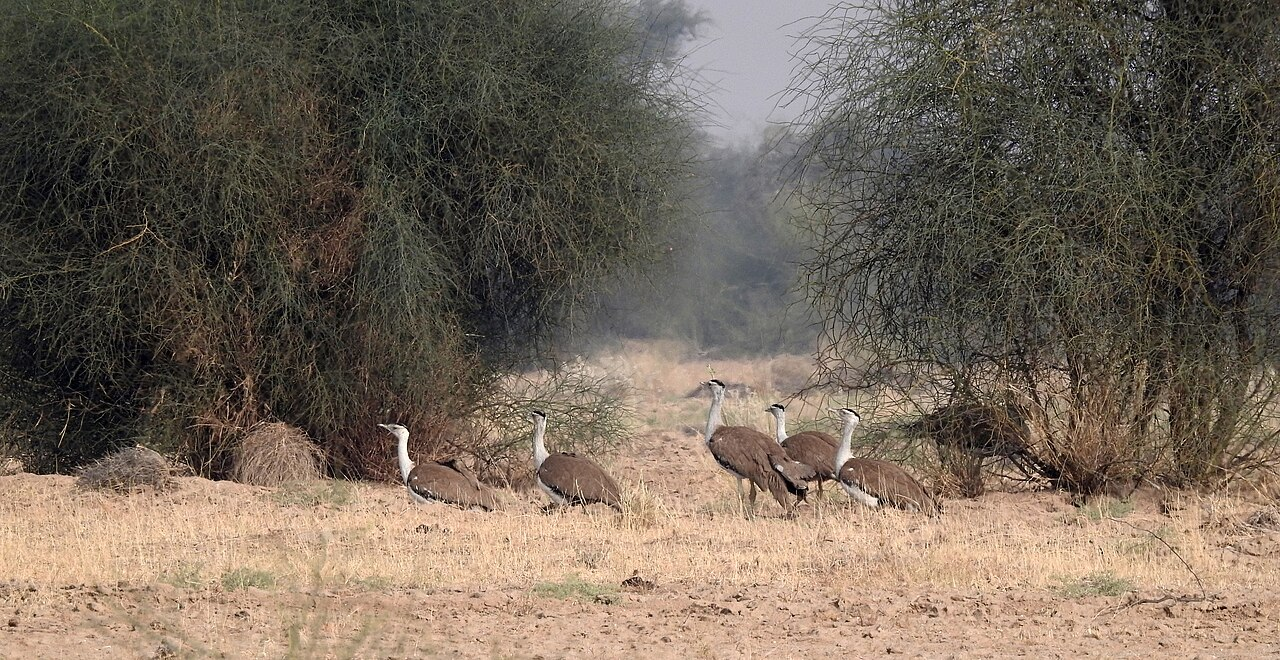
In a 2024 judgment, in a case seeking the protection of two critically endangered bird species—the great Indian bustard and the lesser florican—and their habitat, the Supreme Court of India articulated a climate right for the first time.4 The case raised serious concerns about power transmission lines crisscrossing the great Indian bustard’s habitat. The government and power companies claimed that restrictions on the transmission infrastructure affected India’s renewable energy potential because the region hosted several solar and wind energy projects.
In its judgment, the court removed some of the previously ordered restrictions and directed the establishment of an expert committee to recommend the way forward. The court characterized the main issue as “a dynamic interplay between protecting a critically endangered species and addressing the pressing global challenge of climate change.”5 It recognized a new and distinct right held by the people of India—“a right to be free from the adverse effects of climate change” —and identified two fundamental rights protected by the Constitution of India (1950) as its source—the right to life (article 21) and the right to equality (article 14).6
The judgment has been celebrated for its explicit articulation of a climate right, its acknowledgment that vulnerable communities will be unable to adapt to climate change and cope with its impacts, and the framing of climate change impacts as a violation of the right to equality as well as the right to life (Dutta 2024; Kumar and Naik 2024). At the same time, critical commentary has identified the judgment’s blind spots, the arguably uncritical support for the expansion of renewable energy infrastructure in the country despite adverse impacts on local ecology and livelihoods, and the tenuous link between the factual matrix before the court and extensive use of climate change language (Dubash and Ghosh 2024; Naik and Kumar 2025; Patel 2025).
The proceedings in the case continued after the 2024 ruling. In its final judgment delivered in December 2025, the Supreme Court considered the reports of the expert committee established by its 2024 ruling and adopted a revised framework of conservation and mitigation measures for the protection of the great Indian bustard, the lesser florican, and their habitat.7 The judgment continued to frame the dispute as requiring reconciliation between biodiversity conservation and renewable energy development, but it did not further elaborate the constitutional “right to be free from the adverse effects of climate change” articulated in the 2024 judgment. The court’s extensive reliance on the expert committee’s recommendations is also relevant to the democratic implications of expert-led decision-making discussed later in this case study.
The second case of significance is the Ridhima Pandey case.8 In 2019, the NGT had rejected a claim by the applicant, who was a minor at the time and is now a youth environmental activist, that existing environmental regulatory mechanisms needed to be adapted to accommodate climate concerns. The NGT ruled that there was no reason to presume that the Paris Agreement and other international instruments were not reflected in the Indian Government’s policies and regulatory processes.
At the time of writing, an appeal filed against the NGT’s order is pending before the Supreme Court. Through interim orders issued in February and July 2025, however, the court broadened its consideration of the case to questions of institutional coordination, power-generation emissions, and the regulatory framework for climate action.9 This is significant because the specific climate-related claims in the petition are now being viewed in the wider context of governance challenges, institutional reforms, and sectoral contributions.
In another case, the Supreme Court referred to India’s NAPCC, its 2015 NDC then in effect, and its commitment to create an additional carbon sink by increasing forest and tree cover by 2030.10 The case was filed against the felling of trees in the state of West Bengal for the construction of railway overpasses. Significantly, the Supreme Court, through an interim order, set up an expert committee to look into the broader issues concerning the felling of trees for development projects, compensation, and compensatory afforestation. The court eventually permitted the tree felling for reasons of public safety but directed the union government to meet with all the stakeholders and present a unified proposal on the expert committee’s report.11 At the time of writing, the case remains pending, and a final judgment has not yet been delivered.
In a 2023 judgment, the High Court of Bombay at Goa upheld the constitutionality of the Goa Cess on Products and Substances Causing Pollution (Green Cess) Act, 2013, a state law that imposed a so-called “green cess”12 on the handling, consumption, and utilization of products and substances that cause pollution.13 One of the main grounds justifying the legislation was that the cess would cover the expenditure incurred in taking measures to reduce the carbon footprint of the companies subject to the cess. The central question was whether the state of Goa could legislate on this issue. The court’s acceptance of the state’s competence to charge parties responsible for carbon emissions (and pollution more generally) a fee to cover the costs of necessary measures is significant for climate governance.
In a petition filed before the High Court of Delhi, the petitioner sought the formation of a committee that would recommend a roadmap for “all measures including any legislative amendments” necessary to implement India’s commitments under the 1992 United Nations Framework Convention on Climate Change.14 The court accepted the union government’s report filed in response and observed in its order that the government was moving on a “war footing” and taking a leading role on the issue.15 Notably, the court’s appreciation of the government’s “sincere efforts” was based on the government’s own report. The order records that the petitioner withdrew the petition after considering the government’s response.
The final set of noteworthy cases consists of those in which the courts took cognizance of a climate change–related issue on their own (i.e., suo motu). The Rajasthan High Court, in 2024 and again in 2025, initiated suo motu proceedings concerning heat waves in the state and the development of a heat action plan as part of the state’s Rajasthan Climate Change Project.16 The court issued directions to state government departments and ultimately closed the matter.17
The NGT also took suo motu cognizance of a newspaper article that described the adverse impacts that the expansion of wind energy projects in the Thar Desert had on people’s livelihoods, including the disruption of traditional agriculture and grazing practices (AFP 2024).18 The NGT eventually closed the matter upon being informed by the government that a similar issue was pending before the Supreme Court in the M.K. Ranjitsinh case (AFP 2024).19
2. Climate Litigation and Democratic Governance in India
A report by the International Institute for Democracy and Electoral Assistance (International IDEA) provides a comprehensive account of current trends in climate litigation globally (Poletto and Hickey 2025). The report applies a democracy lens to identify dimensions of democratic governance that climate litigation engages. This engagement could take the form of providing a voice to sections of society that are underrepresented in electoral politics, making governments more accountable for their actions and transparent in their functioning, and integrating scientific expertise and long-term considerations into decision-making (Tigre 2025: 108).
The Indian cases reviewed suggest at least five ways in which climate litigation—read in light of other significant rulings by Indian courts—could affect democratic governance. These pathways could mainstream climate considerations and strengthen access to justice, accountability, public participation, and evidence-based decision-making, but they also raise questions about judicial authority, representation, expert-led decision-making, and implementation.
First, climate considerations can be mainstreamed within regulatory processes, particularly those relating to environmental impacts. India does not have a comprehensive climate law at either the national or subnational level. However, certain recent legislative measures have been justified on the basis of climate benefits, such as the 2023 Carbon Credit Trading Scheme and the 2023 Green Credit Rules. The Van [Sanrakshan evam Samvardhan] Adhiniyam, 1980—the primary forest conservation legislation—has been amended to include India’s target of net-zero emissions by 2070. This target was included in India’s 2015 NDC, and India’s 2026 NDC places its 2031–2035 mitigation targets within this longer-term net-zero pathway (Government of India 2026). Climate litigation could contribute to the incorporation of climate considerations into existing regulatory and institutional frameworks, including environmental approval processes. Doing so would help India both curtail its emissions and make its economy and population more resilient. The Supreme Court’s orders in the Ridhima Pandey case are likely to provide important guidance in this regard.
Judicial directions on deforestation and protection of ecosystems are also crucial for protecting India’s carbon sinks. For instance, in a recent judgment on the illegal felling of trees in the state of Madhya Pradesh, the NGT referred to climate change and its impacts extensively.20 At the time of writing, the Supreme Court’s final directions are awaited in two matters: one concerning tree felling for development projects and compensatory afforestation,21 and another challenging the amendment to the forest conservation law (the Van (Sanrakshan evam Samvardhan) Adhiniyam) that narrows the definition of statutorily protected forest land in the country.22 These directions could potentially frame regulatory processes in a way that significantly limits the loss of forest cover (i.e., carbon sinks).
Second, Indian climate litigation illustrates several procedural routes through which climate issues can reach judicial forums. Liberal public interest standing, youth-led litigation, and suo motu proceedings can broaden opportunities for judicial review. However, procedural openness does not necessarily ensure direct participation by affected communities or overcome the practical barriers to litigation.
The judicial articulation of a climate right in M.K. Ranjitsinh could pave the way for underrepresented and vulnerable communities to seek judicial recourse for loss and damage suffered (or likely to be suffered) even if there is no clear statutory violation. Cases such as Ridhima Pandey and the suo motu cases initiated by the Rajasthan High Court and the NGT illustrate the diverse procedural routes through which climate issues in India can reach the courts.
While recognizing the power of the NGT to initiate suo motu cases (for example, by taking cognizance of media reports), the Supreme Court has discussed the impacts of climate change and the need for a flexible mechanism to address such issues. The court has specifically highlighted the disproportionate harm that will be suffered by certain sections of society due to climate change, thus justifying the need for the NGT to be more than a spectator in serving the ends of justice by going beyond cases filed before it.23
In public interest cases, Indian courts have been inclined to relax the traditional standing requirements. This means even people or organizations that are not directly affected themselves can bring a climate claim to court, as long as they have approached the court in good faith. While this makes Indian courts more accessible to those seeking to raise climate claims, it does not necessarily translate into a more inclusive adjudicatory process. Affected communities and marginalized voices may remain unrepresented. This has, in fact, been one of the critiques of the public interest litigation (PIL) jurisdiction exercised by Indian courts (Rajamani 2007a).
Third, climate cases could facilitate collaborative and coordinated executive action and promote responsive, transparent, and accountable governance. For instance, through its interim orders, the Supreme Court in Ridhima Pandey has used the proceedings not only to consider climate-related legal claims but also to require greater coordination among ministries, regulators, and other public institutions responsible for climate-relevant sectors. Directions from the Supreme Court in Association for Protection of Democratic Rights and from the Rajasthan High Court in the suo motu cases on heat waves further illustrate how Indian courts are requiring various government departments and agencies to collaborate and coordinate while dealing with issues of climate relevance. The NGT’s judgment concerning emissions of hydrofluorocarbon-23 (HFC-23), a potent GHG generated during the manufacture of hydrochlorofluorocarbon-22 (HCFC-22), directed the Ministry of Environment, Forest and Climate Change and the Central Pollution Control Board to examine the regulatory regime and take appropriate measures. Subsequently, in October 2016, the government directed HCFC-22 manufacturers not to emit or vent HFC-23 into the atmosphere.24
The Indian judiciary has emphasized the need for transparency, accountability, and public consultation in governance in several cases. Through a series of recent judgments, the Supreme Court has identified the features of environmental rule of law (EROL) in India (Ahlawat and Koonan 2022; Ghosh and Rajamani 2025) and has held that it fosters open, accountable, and transparent decision-making and participatory governance.25 The court also perceives its role as a constitutional court in undertaking judicial review to ensure that institutions and regulatory bodies comply with EROL principles.26 Climate cases provide an opportunity for litigants—and the courts—to push for compliance with the features of environmental rule of law.
In its 2025 order on heat waves, the Rajasthan High Court observed that transparency and public participation are essential for ensuring that public resources are used effectively and in the public interest.27 In an important ruling on the powers of state-level environmental regulatory agencies, the Supreme Court specifically linked public participation and climate change, observing that “public participation in environmental protection has assumed great importance with climate change threatening to drastically disrupt our way of living.”28 The court held that environmental regulatory agencies must be easily accessible and encourage public participation in their decision-making processes.
Court-facilitated coordination can therefore strengthen accountability where responsibilities are fragmented across institutions. Court directions can also improve procedural safeguards such as transparent and participatory decision-making. But sustained climate governance ultimately depends on executive and legislative institutions developing and implementing coherent policy frameworks.
Fourth, climate litigation can expand the role of scientific and technical expertise in environmental decision-making. This can strengthen the evidentiary basis of judicial and regulatory decisions, but it also raises questions about whose expertise is recognized and how affected communities participate in expert-led processes.
As part of the emerging jurisprudence on environmental rule of law, the Supreme Court has held that EROL seeks to “facilitate a multidisciplinary analysis of the nature and consequences of carbon footprints”29 and “to draw within the fold all stakeholders in formulating strategies to deal with current challenges posed by environmental degradation, climate change, and the destruction of habitats.”30 The court has called for an integrated approach that involves all stakeholders, including the scientific and legal communities.
In environmental cases, the Indian courts have often sought expert reports and been guided by their recommendations. Apart from the appointment of experts, the Supreme Court has, on various occasions, as in the Ridhima Pandey case, appointed an amicus curiae to assist it in navigating the issues before it. This assistance from experts and court-appointed lawyers can be useful in climate cases because the issues involved are complex and constantly evolving, and the parties are often unable to provide the court with appropriate assistance. The Supreme Court’s December 2025 judgment in the M.K. Ranjitsinh case illustrates the court’s extensive reliance on the expert committee’s technical assistance in developing a framework for reconciling species conservation with renewable energy infrastructure. Expert-led processes also provide an opportunity for deeper engagement with affected communities and other forms of local knowledge, which a courtroom-centric decision-making process is not designed for. For instance, the expert committee formed in the M.K. Ranjitsinh case reportedly undertook field visits and consultations with relevant stakeholders, including local communities, before submitting its recommendations to the Supreme Court.31
While judicial decision-making can benefit from the appointment of expert committees, the selection of experts, the definition of the committees’ terms of reference, and the methodology followed by the experts can become contested issues (Choubey 2026; The Hindu Bureau 2026).
Fifth, judicial decisions can expose regulatory gaps and stimulate legislative action. India has yet to pass a climate law, although there are several provisions in existing laws that can support climate action. Climate rulings could prompt the government to expressly acknowledge and confront climate change and its risks, facilitate climate action, and establish legislative mechanisms for grievance redress. For instance, the Rajasthan High Court observed that “it is high time for the Governments to bring appropriate legislation” and enact a law arising out of the 2015 Prevention of Deaths Due to Heat and Cold Waves Bill that had been presented in parliament.32 However, judicial calls for legislation raise separation-of-powers questions: the democratic contribution of litigation lies less in courts determining climate policy themselves than in prompting elected and publicly accountable institutions to address identified legal and regulatory gaps.
3. Concluding Observations
India is highly vulnerable to the impacts of climate change and, at the same time, is a significant contributor to GHG emissions. Climate change is an ongoing, pressing, and complex governance challenge for the country, a present challenge, not merely a future one. The Indian judiciary, which has long played a pivotal role in environmental governance in the country, has increasingly used climate change language (Ghosh 2020). Although climate litigation in India remains at a relatively nascent stage, the growing number of cases in which climate change concerns are raised suggests that the climate docket is likely to continue expanding (Ghosh 2020). As climate impacts become more apparent, attribution studies become more robust, and climate literacy increases, climate concerns may become more central to such cases in the near future.
India’s multiple development priorities can create pressure for short-term policymaking at the expense of long-term, deliberative, evidence-based, and inclusive planning. In this context, judicial scrutiny of climate claims may facilitate the mainstreaming of climate considerations, strengthen procedural safeguards, and create pathways for marginalized voices to be heard, although the extent to which judicial rulings can democratize climate governance will depend significantly on their effective implementation—in letter and spirit.
At the same time, the significance of climate cases in India must not be overstated. There are several systemic issues affecting the Indian legal system, and these, quite naturally, will impact climate cases as well (Ghosh 2020, 2021). Overflowing dockets lead to enormous delays in the hearing and disposal of cases, and there is a fair degree of inconsistency in judicial outcomes despite the theoretical importance attached to precedent (India being a common law jurisdiction). Furthermore, Indian courts have often adopted a hands-off approach while reviewing the government’s economic policies, and challenges to infrastructure projects have frequently failed (Parikh and Sahu 2023).
The outcome and impact of climate cases are often not easy to identify and assess. A court may reject a petitioner’s claim while executive measures are nevertheless introduced (the ICELA case), guidance is provided for future policies (Association for Protection of Democratic Rights), and awareness is generated around the issue—inside the legal community and beyond. Although the Supreme Court’s articulation of a constitutionally grounded climate right in the 2024 M.K. Ranjitsinh ruling is noteworthy, the absence of clear guidance raises the question of how such a right can be operationalized when constitutionally protected rights conflict. Significantly, the Supreme Court’s final judgment of December 2025 in M.K. Ranjitsinh identifies the need for companies to discharge their constitutional obligation to protect the environment but does not further develop the constitutional “right to be free from the adverse effects of climate change.”33
While the climate docket is expanding, a large number of recent environmental judgments that could have engaged with climate issues have not referred to them. This is, of course, an outcome of both the cause of action, which may be a direct statutory violation unrelated to climate change, and the arguments before the courts in what is essentially an adversarial system. It is also an indication that although climate change is a very real issue and policymakers in India and around the world are grappling with its various facets, decisions are being made in India—both inside and outside courtrooms—that may compromise its future in a warming world.
The effectiveness of climate litigation in India will be defined not only by successful claims but also by the ability of judicial discourse to trigger more systemic reforms in governance, strengthen mechanisms for public participation, transparency, and accountability, and institutionalize evidence-based, expert-led decision-making while respecting the foundational principles of a constitutional democracy.
Abbreviations
EROL Environmental rule of law GHG Greenhouse gas HCFC Hydrochlorofluorocarbon HFC Hydrofluorocarbon ICELA Indian Council for Enviro-Legal Action NAPCC National Action Plan on Climate Change NDC Nationally determined contribution NGT National Green Tribunal PIL Public interest litigation
References
AFP. 2024. “India’s Green Energy Wind Drive Hits Desert Herders Hard.” The New Indian Express, 26 August. https://www.newindianexpress.com/india/2024/Aug/26/indias-green-energy-wind-drive-hits-desert-herders-hard.
Ahlawat, Himanshu, and Sujith Koonan. 2022. “Environmental Rule of Law in India: A Transformative Principle or Old Wine in a New Bottle.” Journal of Indian Law and Society 13 (1): 133–45.
Bhullar, Lovleen. 2019. “The Judiciary and the Right to Environment in India: Past, Present and Future.” In Indian Environmental Law: Key Concepts and Principles, edited by Shibani Ghosh. Orient BlackSwan. https://www.orientblackswan.com/pdfs/opaccess/9789352875795.pdf.
Chaturvedi, Eeshan. 2021. “Climate Change Litigation: Indian Perspective.” German Law Journal 22 (8): 1459–70. https://doi.org/10.1017/glj.2021.85.
Choubey, Jitendra. 2026. “Experts Write to CJI Seeking Overhaul of SC-Appointed Panel Reviewing Aravalli Protection Judgment.” The New Indian Express, 19 June. https://www.newindianexpress.com/india/2026/Jun/19/experts-write-to-cji-seeking-overhaul-of-sc-appointed-panel-reviewing-aravalli-protection-judgment.
Climate Action Tracker. n.d. “India.” Accessed 22 September 2026. https://climateactiontracker.org/countries/india/.
Dubash, Navroz K., and Shibani Ghosh. 2019. “National Climate Policies and Institutions.” In India in a Warming World: Integrating Climate Change and Development, edited by Navroz K. Dubash. Oxford University Press. https://doi.org/10.1093/oso/9780199498734.003.0019.
Dubash, Navroz K., and Shibani Ghosh. 2024. “Towards Operationalising a New Climate Right for India: Unpacking the Ranjitsinh Judgment.” The India Forum, 20 September. https://www.theindiaforum.in/climate-change/toward-operationalising-new-climate-right-india.
Dubash, Navroz Kersi, Aditya Valiathan Pillai, and Anirudh Sridhar. 2024. “Climate Change: Policy, Institutional, and Legal Framework.” In The Oxford Handbook of Environmental and Natural Resources Law in India, edited by Philippe Cullet, Lovleen Bhullar, and Sujith Koonan. Oxford University Press. https://doi.org/10.1093/oxfordhb/9780198884682.013.31.
Dutta, Ritwick. 2024. “How a Critically Endangered Bird Helped Further the Cause of Climate Justice in India.” The Wire, 12 April. https://thewire.in/environment/how-a-critically-endangered-bird-helped-further-the-cause-of-climate-justice-in-india.
Ghosh, Shibani. 2019. “Procedural Environmental Rights in Indian Law.” In Indian Environmental Law: Key Concepts and Principles, edited by Shibani Ghosh. Orient BlackSwan. https://www.orientblackswan.com/pdfs/opaccess/9789352875795.pdf.
Ghosh, Shibani. 2020. “Litigating Climate Claims in India.” AJIL Unbound 114: 45–50. https://doi.org/10.1017/aju.2020.5.
Ghosh, Shibani. 2021. “Climate Litigation in India.” In Comparative Climate Change Litigation: Beyond the Usual Suspects, edited by Francesco Sindico and Makane Moise Mbengue. Springer Nature. https://doi.org/10.1007/978-3-030-46882-8_18.
Ghosh, Shibani, and Lavanya Rajamani. 2025. “Environmental Rule of Law.” In Justice for the Nation: Reflections of the 75 Years of the Supreme Court of India, edited by Anurag Bhaskar and Vasudev Devadasan. Thomson Reuters.
Government of India. 2008. National Action Plan on Climate Change. Prime Minister’s Council on Climate Change. https://moef.gov.in/uploads/2018/04/NAP_E.pdf.
Government of India. 2026. India’s Nationally Determined Contribution (2031–2035). https://unfccc.int/sites/default/files/2026-04/INDIA%20NDC%202031-35.pdf.
Kumar, Parul, and Abhayraj Naik. 2024. “India’s New Constitutional Climate Right: Examining the Significance of M.K. Ranjitsinh and Others v. Union of India and Others for Climate Litigation in India.” Verfassungsblog, 25 April. https://verfassungsblog.de/indias-new-constitutional-climate-right/.
Naik, Abhayraj, and Parul Kumar. 2025. “Endangered Birds, Renewable Energy, and India’s New Constitutional Climate Right.” Journal of Environmental Law 37 (1): 159–67. https://doi.org/10.1093/jel/eqaf003.
Parikh, Sanjay, and Geetanjoy Sahu. 2023. “Has the Judiciary Abandoned Environment for Neoliberalism?” EPW Engage, 1 April. https://www.epw.in/engage/article/has-judiciary-abandoned-environment-neoliberalism.
Patel, Gautam. 2025. “Consistently Inconsistent: Environmental Law and the Supreme Court.” In [In]complete Justice? The Supreme Court at 75, edited by S. Muralidhar. Juggernaut Books.
Peel, Jacqueline, and Jolene Lin. 2019. “Transnational Climate Litigation: The Contribution of the Global South.” American Journal of International Law 113 (4): 679–726. https://doi.org/10.1017/ajil.2019.48.
Poletto, Michele, and Sharon Pia Hickey, eds. 2025. Let the Courts Decide? The Potential and Limitations of Climate Litigation from a Democracy Perspective. International IDEA. https://doi.org/10.31752/idea.2025.70.
Rajamani, Lavanya. 2007a. “Public Interest Environmental Litigation in India: Exploring Issues of Access, Participation, Equity, Effectiveness and Sustainability.” Journal of Environmental Law 19 (3): 293–321. https://doi.org/10.1093/jel/eqm020.
Rajamani, Lavanya. 2007b. “The Right to Environmental Protection in India: Many a Slip Between the Cup and the Lip?” Review of European Community & International Law 16 (3): 274–86. https://doi.org/10.1111/j.1467-9388.2007.00573.x.
Rajya Sabha. 2026. “Unstarred Question No. 697: Permissions for Tree Felling and Forest Diversion.” 5 February. https://sansad.in/getFile/annex/270/AU697_IbWLQI.pdf?source=pqars.
Ram Mohan, M. P., Els Reynaers Kini, and Sriram Prasad. 2023. “India’s Progressive Environmental Case Law: A Worthy Roadmap for Global Climate Change Litigation.” Georgetown Journal of International Law 54 (4): 489–562. https://dx.doi.org/10.2139/ssrn.4224616.
Sabin Center for Climate Change Law. n.d. “Methodology.” Accessed 22 September 2026. https://www.climatecasechart.com/methodology.
Sengupta, Sandeep. 2019. “India’s Engagement in Global Climate Negotiations from Rio to Paris.” In India in a Warming World: Integrating Climate Change and Development, edited by Navroz K. Dubash. Oxford University Press. https://doi.org/10.1093/oso/9780199498734.003.0007.
The Hindu Bureau. 2026. “Environmentalists Write to Supreme Court Committee About ‘Inadequate’ Public Consultation on Aravallis.” The Hindu, 25 August. https://www.thehindu.com/sci-tech/energy-and-environment/environmentalists-write-to-supreme-court-committee-about-inadequate-public-consultation-on-aravallis/article71388966.ece.
Tigre, Maria Antonia. 2025. “Climate Litigation and Democracy in the Global South.” In Let the Courts Decide? The Potential and Limitations of Climate Litigation from a Democracy Perspective, edited by Michele Poletto and Sharon Pia Hickey. International IDEA. https://doi.org/10.31752/idea.2025.70.
Varottil, Umakanth. 2025. “Corporate Climate Litigation in India: Traversing the Private–Public Law Divide.” National University of Singapore, NUS Law Working Paper 2025/009. https://doi.org/10.2139/ssrn.5282805.
About the Author
Shibani Ghosh is a Visiting Fellow at the Sustainable Futures Collaborative in New Delhi and an Advocate-on-Record at the Supreme Court of India. She researches and writes on issues relating to environmental law, regulation, and governance and has authored several articles, book chapters, and opinion pieces on these issues. She has edited the volume Indian Environmental Law: Key Concepts and Principles (Orient BlackSwan, 2019). As a practicing lawyer, Shibani appears in environmental cases before the Supreme Court of India, Delhi High Court, and the National Green Tribunal.
The author wishes to thank Garima Thakur for her valuable assistance in the preparation of the case study, and Nathalie Ebead for her insightful review comments.


© 2026 International Institute for Democracy and Electoral Assistance International IDEA publications are independent of specific national or political interests. Views expressed in this publication do not necessarily represent the views of International IDEA, its Board or its Council members.
With the exception of any third-party images and photos, the electronic version of this publication is available under a Creative Commons Attribution NonCommercial-ShareAlike 4.0 (CC BY-NC-SA 4.0) licence. You are free to copy, distribute and transmit the publication as well as to remix and adapt it, provided it is only for non-commercial purposes, that you appropriately attribute the publication, and that you distribute it under an identical licence. For more information visit the Creative Commons website: http://creativecommons.org/licenses/ by-nc-sa/4.0.
Design and layout: International IDEA
DOI: https://doi.org/10.31752/52041
ISBN: 978-91-8137-229-8 (PDF)
ISBN: 978-91-8137-230-4 (HTML)


