While the Standing Committee on Climate Change was established by the Court in 2018, there is limited publicly available evidence of its subsequent activity or impact.
Leghari v Federation of Pakistan (Lahore High Court, 2015)
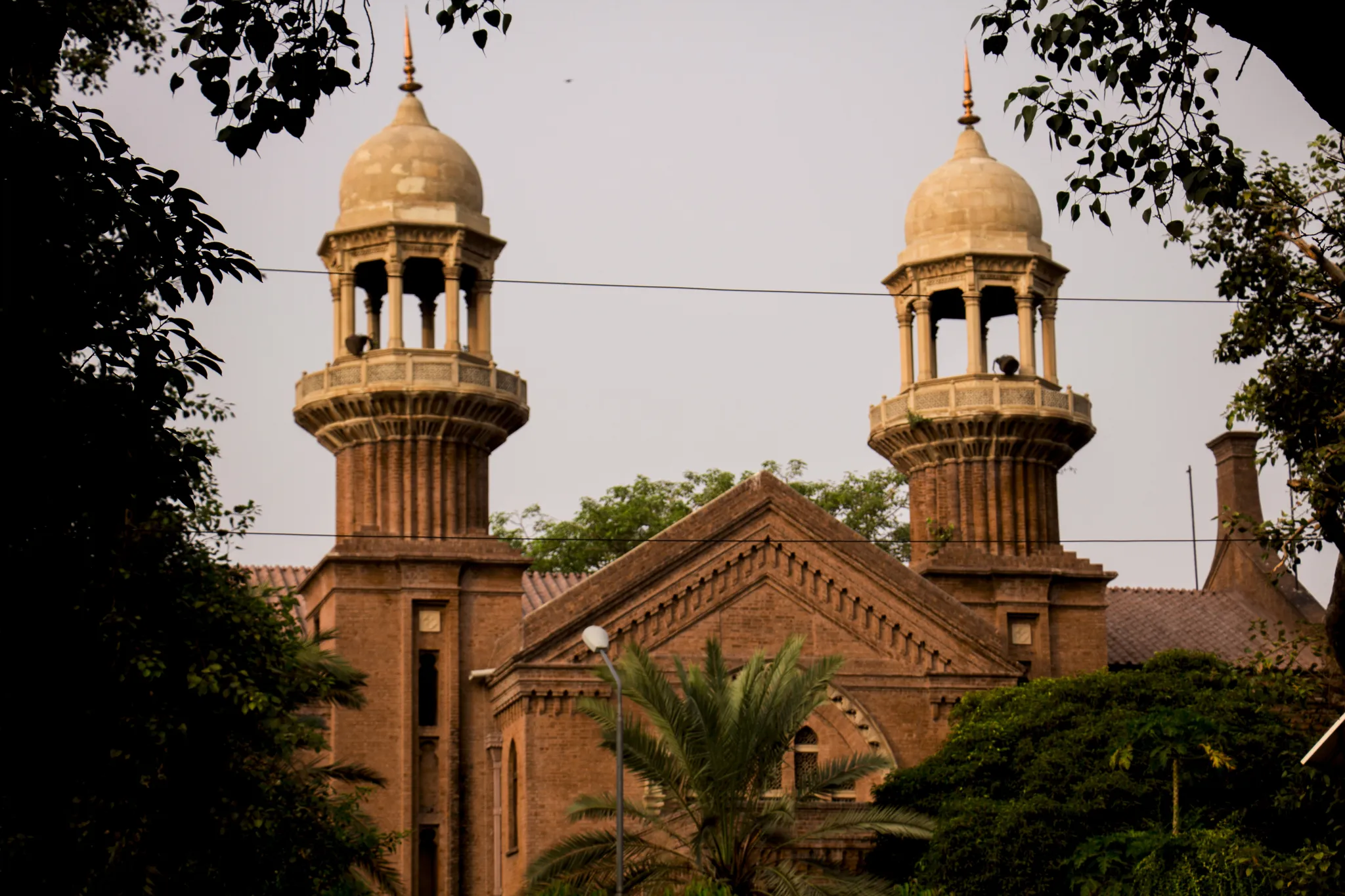
Photo credit MariyamAftab via Wikimedia Commons
Summary
- In Asghar Leghari v Federation of Pakistan, the Lahore High Court found on 4 September 2015 that Government of Pakistan violated the constitutional rights to life and human dignity due by failing to implement the national Framework for Implementation of Climate Change Policy. With this significant ruling, the Lahore High Court framed “climate justice” as an evolution in environmental jurisprudence, linking environmental protection with fundamental rights and sustainable development.1 The High Court took the unusual and innovative step of retaining supervisory jurisdiction of the case. It established two oversight bodies (a Climate Change Commission, and later a Standing Committee) to continuously monitor the implementation of Pakistan’s climate change frameworks, with the Court remaining available as needed to ensure ongoing implementation.2
Case Essentials
Current status
Implemented
Judgment Date:
September 04, 2015
Appeal or follow-up:
Yes
Last Verified:
25 Nov 2025
Full Case Summary and Files
View
Ruling
Remedy ordered
- Institutional mechanism: The Court directed each relevant ministry, department, and public authority to nominate a Climate Change Focal Point to coordinate implementation with the federal Ministry of Climate Change.3
- Institutional mechanism: The Court required government departments to identify and submit priority Adaptation Action Points from the Framework for Implementation of Climate Change Policy.4
Compliance mechanism
- Hard deadline: 31 December 2015 for the implementation of the identified Adaptation Action Points.5
- Oversight body: Creation of a Climate Change Commission to monitor implementation progress of the National Climate Change Policy (2012) and its Framework.6 As ordered by the Court , an eminent environmental lawyer was appointed as chair (Dr. Parvez Hassan), and members included government officials (e.g. from Water, Agriculture, and Finance ministries), civil society representatives, and Leghari’s own legal counsel. After the Commission’s final progress report, in 2018, the Court replaced the Climate Change Commission with a Standing Committee on Climate Change to ensure continued implementation.7
Legal Basis
- Constitution: Violations of the right to life (Art. 9) and right to human dignity (Art. 14) due to government inaction on climate change, particularly the non-implementation of the National Climate Change Policy (2012) and Framework for Implementation of Climate Change Policy (2014-2030).8
- International law: The Court relied on international environmental law principles, including sustainable development, the precautionary principle, environmental impact assessment, intragenerational equity, and the public trust doctrine as fundamental to understanding constitutional rights, principles, and state duties.9
Implementation
Government response
- Compliant: The federal and provincial governments engaged with the Court and implemented several measures through the court-mandated Climate Change Commission,10 thus fulfilling the legal requirements of the ruling.
Legislation
- Punjab Water Act, Act 21 of 2019 (13 December 2019): the Act determines the regulation and management of water in the Punjab province with the aims of sustainability and conservation11 (initially drafted by the court-installed Climate Change Commission).12
Policy
- National Water Policy (24 April 2018): first comprehensive policy for sustainable water resource management in Pakistan, approved unanimously by the Council of Common Interests (federal-provincial body)13 (initially drafted by court-installed Climate Change Commission).14
Institutional
- By 2018, the court-installed Climate Change Commission reported around 66 per cent implementation of the priority items of the Framework for Implementation of Climate Change Policy, including:15
- Appointment of climate change focal points in all provincial departments
- Implementing a Framework for Design and Evaluation of Climate Smart Projects
- Developing background studies to inform future climate change policies
Climate Judgment Implementation Tracker: Interview with Asghar Leghari, plaintiff in Leghari v Pakistan
Climate Judgment Implementation Tracker: Interview with Dr Hassan, Chair of the Pakistani Climate Change Commission
Sources
1 Asghar Leghari v Federation of Pakistan (W.P. No. 25501/2015, Lahore High Court, 25 January 2018) [12].[20]–[21]
2 Asghar Leghari v Federation of Pakistan (W.P. No. 25501/2015, Lahore High Court, 25 January 2018) [25]–[27]
3 Asghar Leghari v Federation of Pakistan (W.P. No. 25501/2015, Lahore High Court, 4 September 2015) [8]
4 Asghar Leghari v Federation of Pakistan (W.P. No. 25501/2015, Lahore High Court, 4 September 2015) [8]
5 Asghar Leghari v Federation of Pakistan (W.P. No. 25501/2015, Lahore High Court, 4 September 2015) [8]
6 Asghar Leghari v Federation of Pakistan (W.P. No. 25501/2015, Lahore High Court, 4 September 2015) [8], [11]
7 Asghar Leghari v Federation of Pakistan (W.P. No. 25501/2015, Lahore High Court, 25 January 2018) [25]–[27]
8 Asghar Leghari v Federation of Pakistan (W.P. No. 25501/2015, Lahore High Court, 4 September 2015) [7]
9 Asghar Leghari v Federation of Pakistan (W.P. No. 25501/2015, Lahore High Court, 4 September 2015) [7]
10 Asghar Leghari v Federation of Pakistan (W.P. No. 25501/2015, Lahore High Court, 25 January 2018) [18]–[19]
11 Punjab Assembly, Punjab Water Act, 2019 (Act XXI of 2019), 13 December 2019, <https://faolex.fao.org/docs/pdf/pak195674.pdf>, accessed 17 December 2025
12 Asghar Leghari v Federation of Pakistan (W.P. No. 25501/2015, Lahore High Court, 25 January 2018) [4]–[5]
13 Ministry of Water Resources, Government of Pakistan, National Water Policy of Pakistan, April 2018, <https://www.mowr.gov.pk/SiteImage/Misc/files/National%20Water%20Policy.pdf>, accessed 17 December 2025
14 Asghar Leghari v Federation of Pakistan (W.P. No. 25501/2015, Lahore High Court, 25 January 2018) [14], [17]
15 Asghar Leghari v Federation of Pakistan (W.P. No. 25501/2015, Lahore High Court, 25 January 2018) [18]–[19]
Share
Share


Case Essentials
Current status
Implemented
Judgment Date:
04 Sep 2015
Appeal or follow-up:
Yes
Last Verified:
25 Nov 2025
Full Case Summary and Files
View
Share
Share
Related content