Cracks in the bedrock: Lessons from the 2026 Global State of Democracy
Disclaimer: Opinions expressed in this commentary are those of the author and do not necessarily represent the institutional position of International IDEA, its Board of Advisers or its Council of Member States.
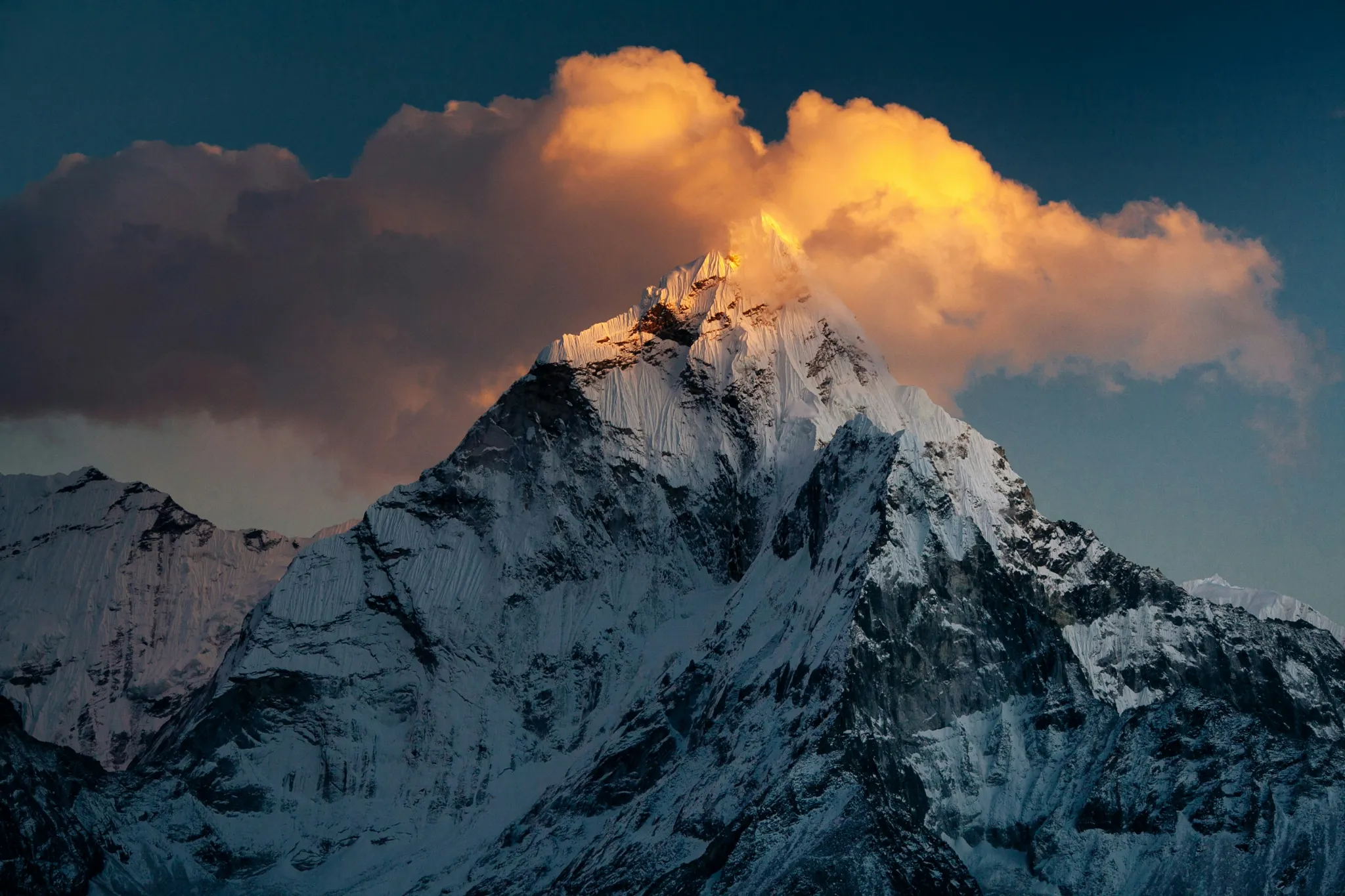
Three weeks ago, in the wake of the devastating flood that ravaged a part of northern Nepal, scientists made a startling discovery. Contrary to many initial assumptions, the flood was not triggered by a simple glacier collapse. It was instead the breakdown of a portion of the mountain’s bedrock that prompted the ensuing disaster.
It turns out that democracy is not so different from a mountain. Just as bedrock in the physical world is mostly hidden, acting mostly as the foundational support for structures that are built upon it, the bedrock of democratic systems is not always visible in our everyday lives. Yet when that bedrock erodes or collapses, the impact on the freedom we have to live our daily lives, to exercise our rights and find the information we need to make decisions is immediately perceptible.
This year’s Global State of Democracy report highlights the importance of bedrock, urging stakeholders to devote greater attention and resources to the foundational stones of democratic governance.
Between 2020 and 2025, the bedrock institutions of representative government, including Credible Elections, Effective Parliament, Freedom of Expression and Freedom of the Press, have suffered the most widespread declines. Almost one quarter of countries experienced declines in Freedom of Expression or Freedom of the Press, and about one in five countries saw deterioration in the credibility of their electoral processes and the extent to which their legislatures checked executive power. These declines can be traced to a number of issues. Elections are marred by problems such as harassment of opposition candidates, interference with the work and mandate of election authorities and fraud at the polling stations. Pursuing accountability for these violations is increasingly challenging, as the freedom to speak out is restricted by phenomena such as threats and violence against journalists, the proliferation of “foreign agents’ laws,” censorship, and internet shutdowns.
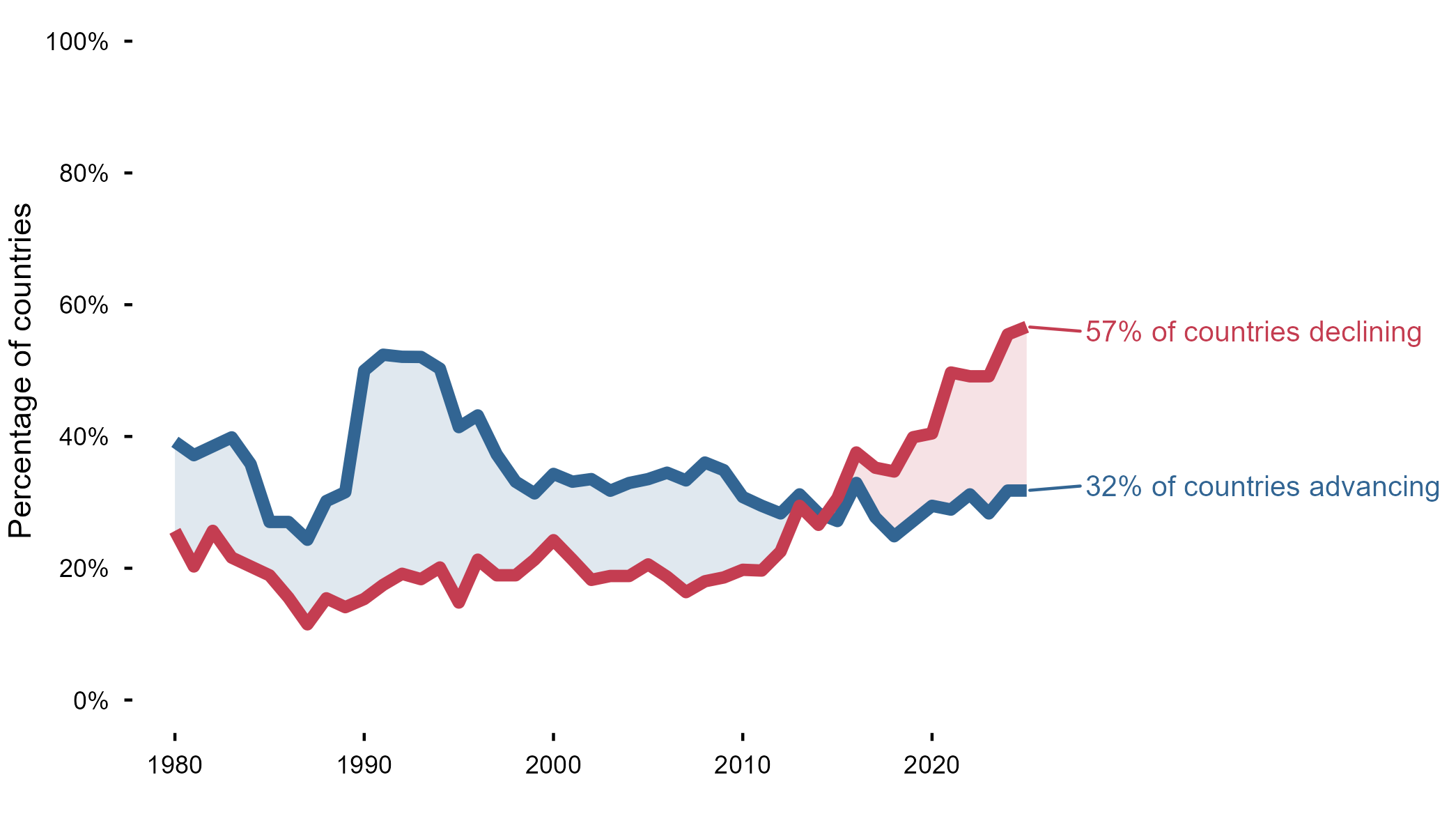
While some of the worst examples of these challenges are found in countries that struggle with broader instability and violence, including Afghanistan, Myanmar, El Salvador and Burkina Faso, higher performing countries such as Germany, Portugal, and the United Kingdom have also been impacted by many of these problems. Overall, 2025 was the 11th consecutive year in which net declines outnumbered net advances.
Figure 1: Percentage of countries with significant advances and declines at the factor level (excluding Basic Welfare)
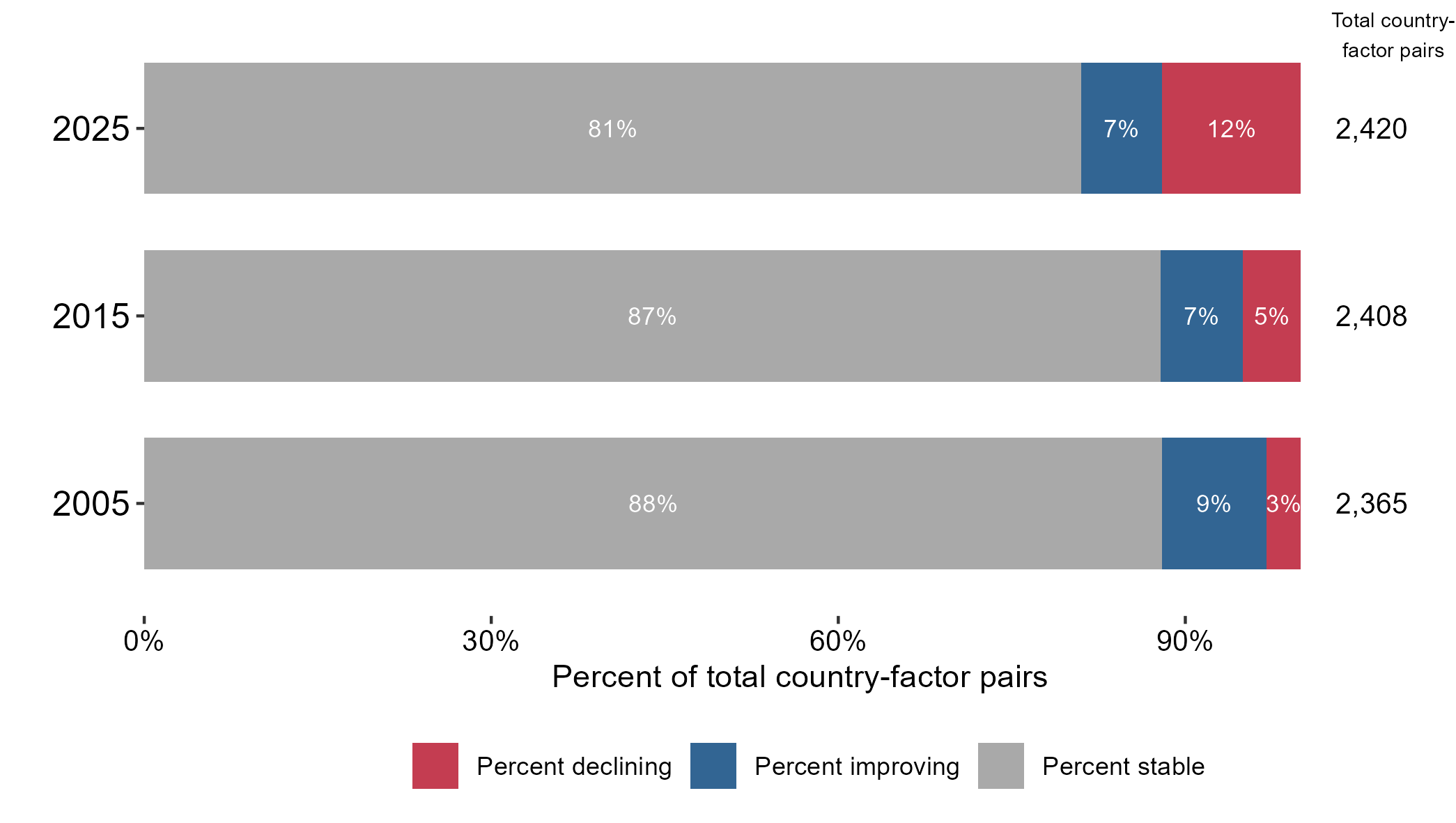
At the same time, it is notable that change in the quality of democracy is relatively rare. Between 2020 and 2025, the more dominant trend was one of stagnation. In more than 80 percent of cases, there was no change at all.
Figure 2: Percentage of total country-factor pairs stable, declining, and improving
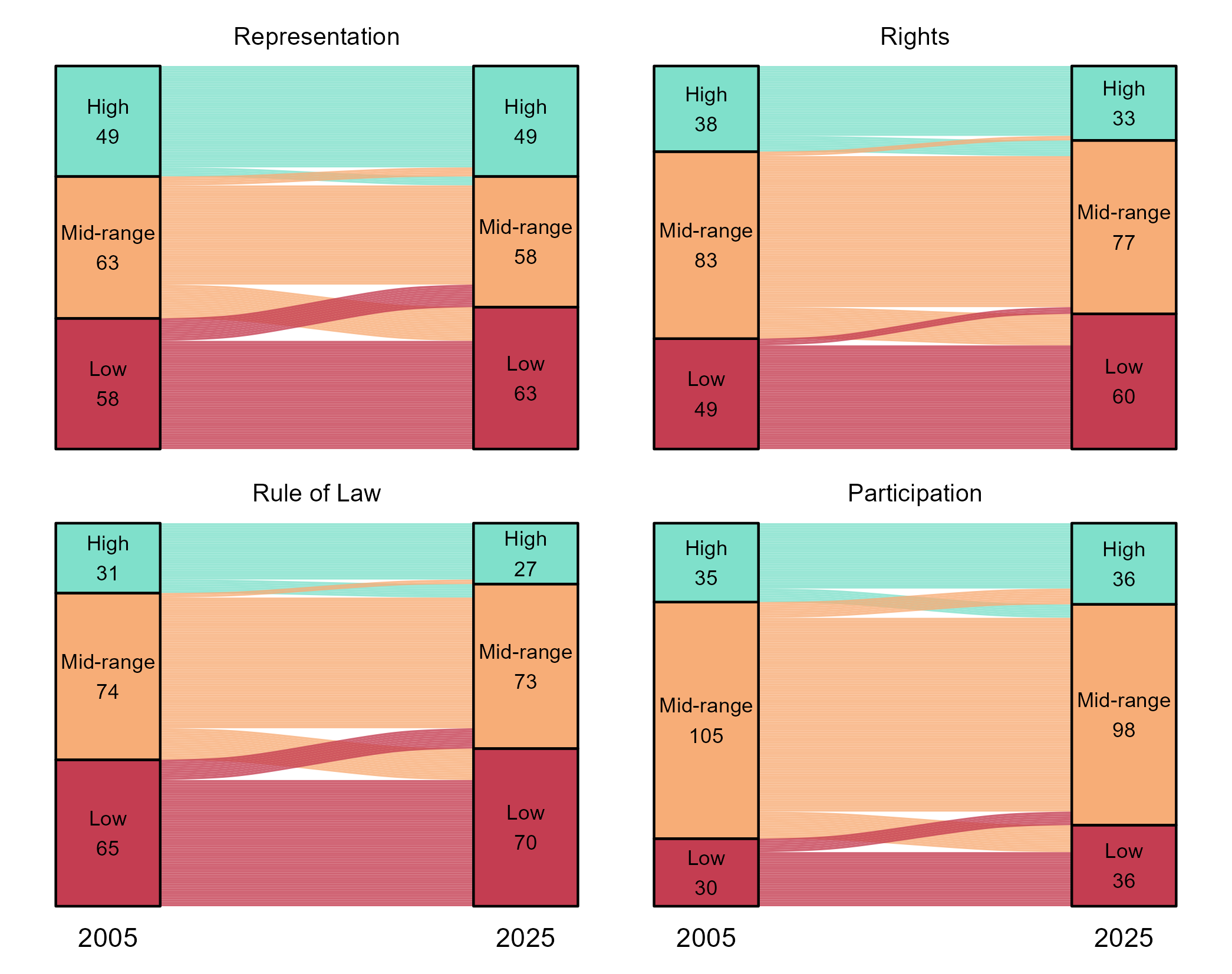
And while that pattern may appear reassuringly stable, it is a low bar. Across all categories, most countries’ levels of democracy can be considered average, falling in what is considered the mid-range band of performance (See Figure 2). Moreover, almost half of the time (46 percent of cases), countries fall in the lower half of this range.
Figure 3: Number of countries in each performance band by category
Those hybrid contexts, which have erected a minimal level of democratic infrastructure without the solid bedrock to support it, are worthy of special attention, because they are most at risk of violent conflict. Part 2 of the report explains these risks in detail.
Democratic declines in the United States
But violence is not unique to countries “in the middle.” It also impacts countries that have historically been less prone to instability. The United States is a clear example, especially for the ways in which it has been involved in violent conflict around the world. On the international stage, the US has recently used an “America First” policy to justify dismantling international aid programs, attempting to influence the outcomes of elections in other countries, removing foreign leaders from power as well as threatening and perpetrating unprovoked violence against other states.
It has also undermined the principle of peaceful settlement of disputes and the multilateral institutions that uphold the international rule of law, withdrawing its membership and support from dozens of organizations that work to address the climate emergency, human rights, security and development. This weakens democratic governance globally by diminishing people’s ability to exercise meaningful control over their political futures: national outcomes risk being shaped less by popular will than by external coercive pressures.
But democracy inside the United States has also suffered in recent years, especially with regard to the independence of the courts and in structures and norms that ensure that the law is equally and fairly enforced. This breakdown can be largely traced to the administration’s embrace of the ‘unitary executive theory,’ which holds that the president has sole and final authority over the entire executive branch. This approach has been reinforced by the Supreme Court, which has gone as far as to intervene in lower court processes to halt the implementation of orders that are unfavorable to the government.
At the level of the citizenry, people in the US are increasingly constrained in their ability to push back. Indicators that track Access to Justice, Freedom of Expression and Freedom of the Press are at their lowest-ever levels, reflecting an environment that is marked by the criminalization of critical speech and threats against media outlets that voice opposition to the administration’s policies. Performance in the indicators that measure the effectiveness of Congress and the freedom for political parties to operate has declined, mirroring a landscape in which countervailing institutions are reticent to use their authority out of fear of legal or violent retribution from the administration and its supporters.
Looking ahead
Yet there are some burgeoning signs of renewal, even in the midst of crisis. Many advances have been seen in contexts that are at important junctures in their democratic journeys – including Bangladesh, Brazil, Poland, Sri Lanka, and Syria. Syria, devastated by 14 years of civil war, has experienced four of the five largest improvements, including in measures of safety, respect for rights, space for civil society and access to justice. Even in Australia, where levels of democratic participation have historically been high, improvements have continued.
It remains to be seen whether these cases will yield lessons that help counterbalance negative forces in other places. What is clear is that democratic declines in one country have far-reaching effects, inside and outside that state’s borders. These impacts are perhaps most stark with regard to violence, but they can also be seen in the ways in which other countries change their approaches to domestic policymaking and international cooperation.
We know what works, and now is the time to redouble efforts to bolster what remain of bedrock democratic institutions and renew the norms that give shape to people’s everyday lives: we must support and promote civil society participation, an open civic space, commitment to alternation of parties in power, accountability for the misuse of power and resources, and genuine delivery for citizens. The flood risks are too great to do anything else.


About the author