
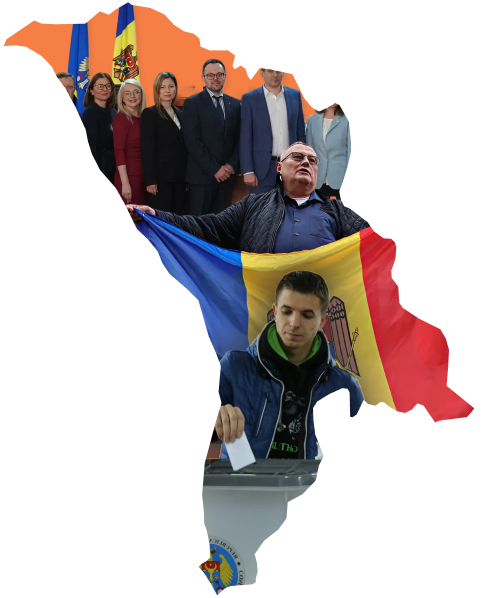
Moldova is currently at the centre of intense foreign interference, with external actors using information manipulation to influence public opinion, polarize voters, and challenge the legitimacy of electoral outcomes.
Coordinated campaigns leverage social media, fake outlets, AI‑generated content, and diaspora channels to steer narratives — especially during election periods and critical referenda. Civil society, media, and policymakers must act together to safeguard democratic integrity
Foreign narratives amplified online can quickly escalate tensions during Moldovan elections.
Geopolitical fault lines — over EU accession, the Moldovan–Romanian language debate, and the war in Ukraine — give foreign-aligned narratives their strongest traction. Fear of war among Moldovans rose roughly tenfold after Russia's 2022 invasion, a shift actively fed by Russian officials and state media framing Moldova as the next "second Ukraine." Much of this manipulation now flows through domestic proxies — politicians, journalists, influencers, and clergy — and increasingly through Telegram, which combines private messaging and public channels with almost no content moderation. Strengthening institutional coordination, platform accountability, and citizens' media literacy are essential steps to closing these gaps.
Electoral FIMI in Moldova
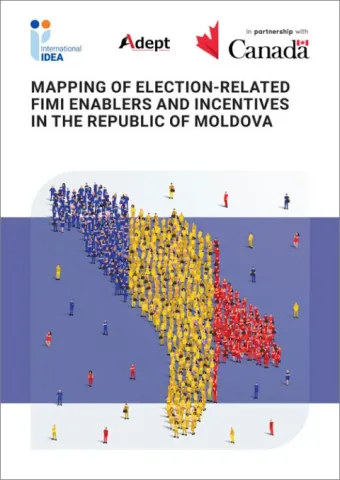
Moldova's East–West divide — over EU accession, language identity, and historical memory — is the central fault line foreign actors exploit. Fear of war rose roughly tenfold (3% → 36%) after Russia's invasion of Ukraine, fed by narratives framing Moldova as the next "second Ukraine."
Interference runs largely through domestic intermediaries — pro-Russian politicians, local media, journalists, influencers, and clergy. Fugitive oligarch Ilan Shor's vote-buying scheme recruited citizens via Telegram groups and chatbots, resurfacing in 2025 under the banned "Victoria" bloc
Moldova's media landscape includes 41 active TV stations, 61 radio stations, over 400 rebroadcast foreign channels, and numerous online outlets. Yet this pluralism is undermined by weak financial sustainability, high ownership concentration, and heavy dependence on foreign donor funding — leaving the sector structurally fragile and exposed to influence.
While media is pluralistic on paper, it splits along linguistic and geopolitical lines. Russian-speaking audiences are underserved by balanced domestic outlets — a gap Russian state media and local amplifiers continue to fill.
National Agencies
No Results Found
Sorry, seems like there is no data available at the moment.
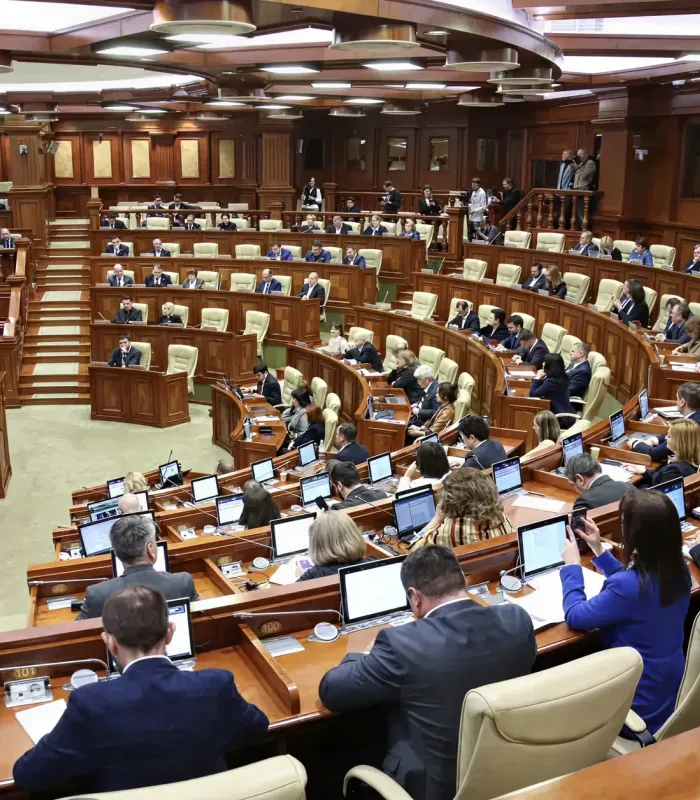
Moldova Electoral Legal Framework
Moldova's legal foundation for elections rests on a new Electoral Code (2022), which strengthened the Central Electoral Commission's oversight of political finance. But the law hasn't kept pace with where campaigning happens: it covers online activity in principle, yet sets no specific rules for digital advertising or third-party spending — a gap wide enough that the CEC estimates real online costs may run three times higher than what's officially reported.
The 2024 presidential election and EU referendum exposed the consequences, with authorities documenting cash smuggling, crypto transfers, and roughly 150,000 bank accounts opened via a Russian-linked bank. Parliament responded with Law No. 100 (2025) targeting illegal foreign financing, while draft laws sent to the Venice Commission propose folding online-platform rules into existing media legislation rather than writing a new one — favoring transparency over sanctions.
Structural gaps persist: Gagauzia's electoral law still isn't aligned with national standards, and informal cooperation with Meta, Google, and TikTok since 2024 remains voluntary. Outside EU jurisdiction, Moldova has no binding mechanism like the Digital Services Act to fall back on.