

Russian Federation
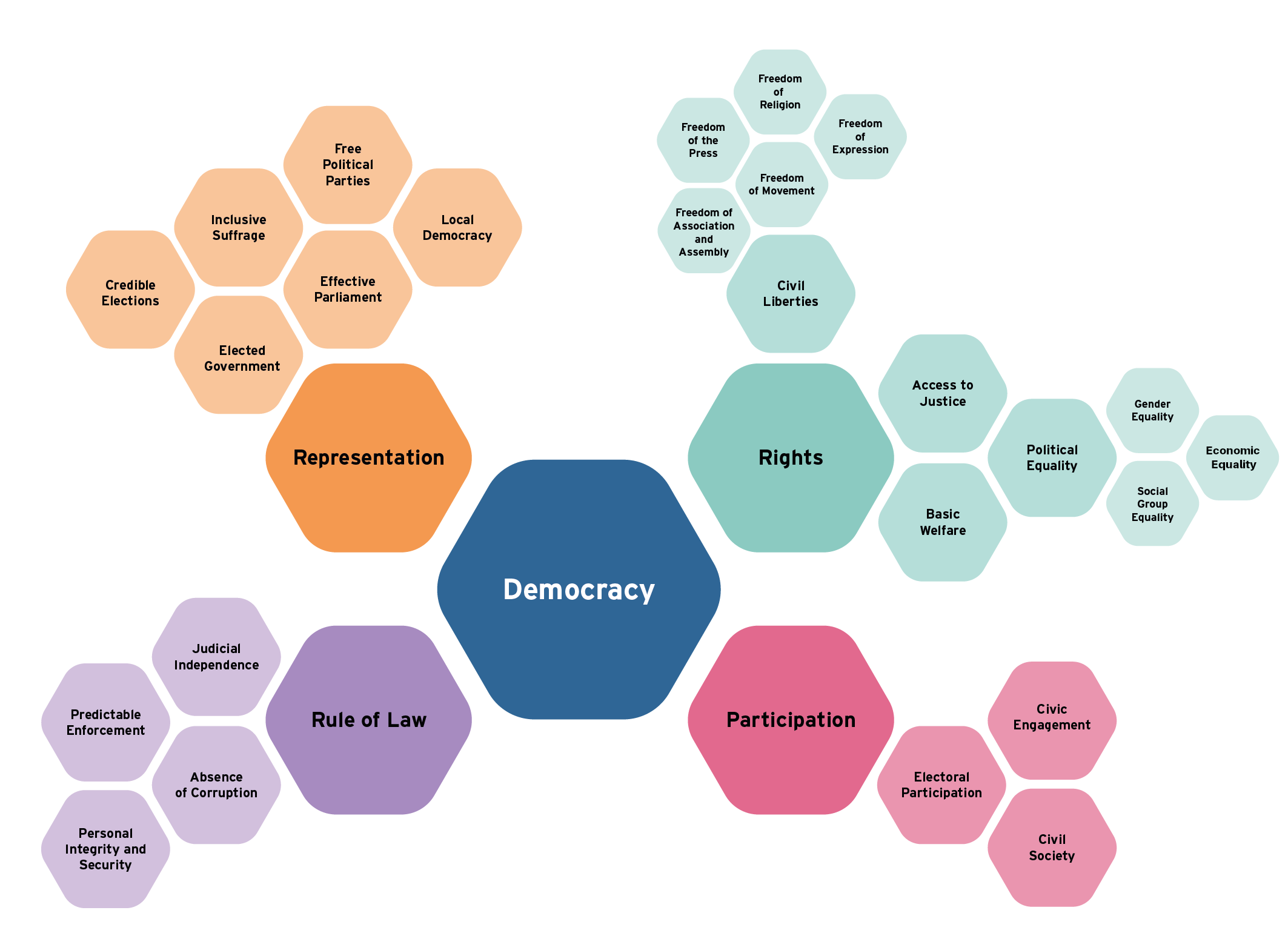
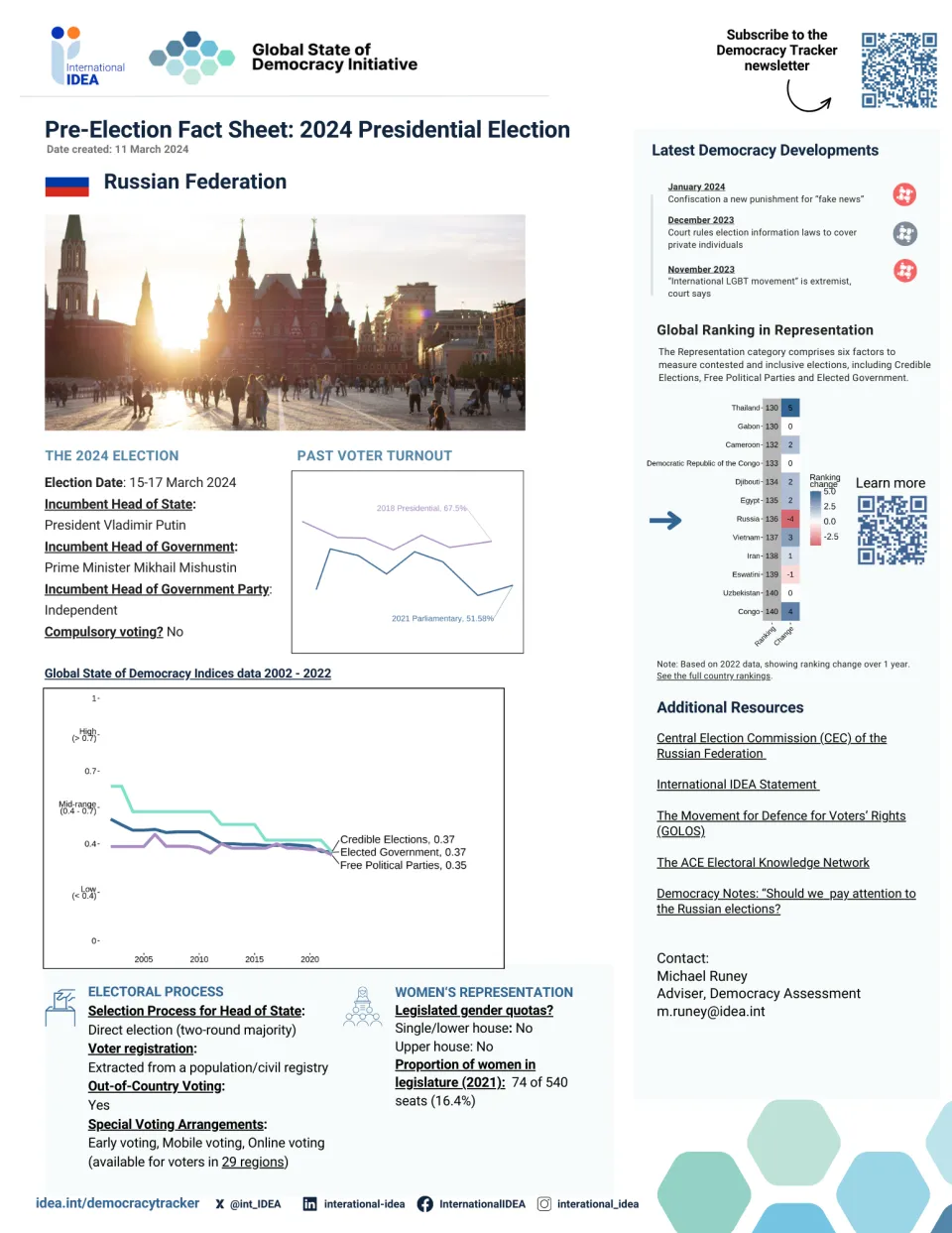
Russia performs in the low range across all Global State of Democracy (GSoD) categories of democracy. It falls in the bottom 25 per cent of the world with regard to several factors of Representation, Rights, Rule of Law and Participation. In the last five years, it has experienced significant declines in seven factors of democratic performance, including Civil Liberties, Credible Elections, Political Equality and Civil Society. Russia is an upper middle income country, heavily dependent on hydrocarbon and mineral exports. In more than two decades under President Vladimir Putin, the country has deteriorated from a heavily flawed democracy to an authoritarian police state.
In 2014, Russia responded to the Ukrainian Revolution of Dignity by launching a proxy war in the country’s east and illegally annexing the Crimean peninsula. In February 2022, Russia launched a full-scale invasion of Ukraine. Western nations responded with wide-ranging sanctions that have seriously damaged, but not crippled, the Russian economy, and the Russian state responded by cracking down on any and all independent civil society activity, antiwar protest, and remaining media freedom.
Russia is the largest country on earth by land area and a complex multi-confessional and multi-ethnic society, composing roughly four broad socioeconomic groups: Westernized and wealthy urban centers, mid-sized towns and cities dependent on state or major industrial employment, isolated and economically precarious villages, and “ethnic republics” that are a mix of the previous two groupings. In President Putin’s two decades in power, these “four Russias” were controlled through what the Kremlin euphemistically referred to as “managed democracy,” which in turn produced an increasingly personalized leadership system and the progressive depoliticization of various parts of Russian society. The persistence of the current political system lies in its ability to reward and discipline various parts of Russian society through the depoliticization of most spheres of life, the stoking of nationalist-conservative sentiment, the maintenance of an encompassing propaganda apparatus, and repressive and deadly violence. In recent years, the sticks of repression and more overt control and censorship of the media and internet become core tools of governance, culminating in the wide-ranging crackdown on even mild dissent and the suspicious death of opposition leader Alexei Navalny in a prison camp in February 2024
While the GSoD Indices data show that Russia’s performance on gender equality has been static (at mid-range) for the past several decades, the increasing repression has likely impacted the state of equality. Despite equality guaranteed by law, studies indicate an increase in gender inequality in recent years due to lack of a clear state policy and propaganda that reinforces patriarchal attitudes, making women more vulnerable to violence, discrimination, and lack of political opportunities.
Russia’s political trajectory in the years to come will be determined by the fate of its war on Ukraine, as victory of some sort has become a question not of national, but of regime security.
Barring a clear end to the war, potential elite fractures and the slowly increasing cost of international sanctions may lead to a chaotic breakdown of the current government system. However, the closing-off of public information spaces makes ascertaining the course of public opinion nearly impossible . All feasible outcomes point towards significant declines across measures of democracy as the country continues to depart further from the rule of law in order to maintain its war effort.
Updated: May 2025
https://www.idea.int/democracytracker/
August 2026
Yabloko banned from Duma elections
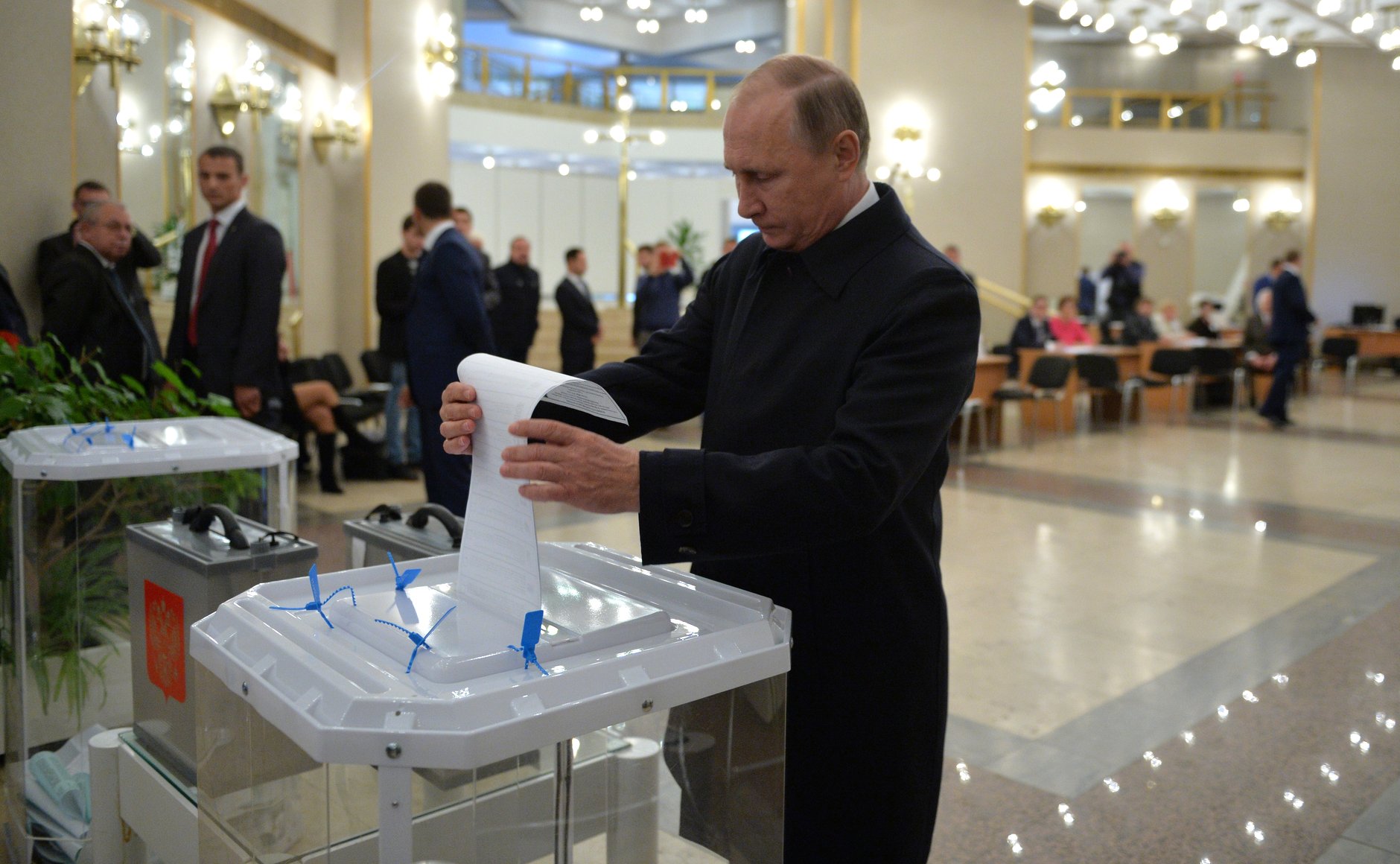
Russia's Supreme Court barred the liberal Yabloko party from participating in the September 2026 State Duma elections, overturning the party's registration days after it had been approved by the Central Election Commission. The court accepted a lawsuit filed by the pro-government Rodina party alleging campaign-related legal violations, including foreign funding and copyright infringements. Yabloko was the only officially registered party campaigning against Russia's war in Ukraine and advocating for a ceasefire. The decision thus removed the sole anti-war option from the national ballot and further narrowed political competition ahead of parliamentary elections. Human Rights Watch and opposition groups criticized the ruling as a violation of political participation and freedom of expression




June 2026
Russia expands punitive actions against exiled government critics
On 10 June 2026, President Vladimir Putin signed legislation allowing the government to confiscate property, seize bank funds, and take a range of other punitive measures against Russians abroad for a range of offenses. Effective 1 September, courts may freeze Russian bank accounts and other domestic assets before deciding the underlying case, including for alleged military ‘discrediting’, sanctions advocacy, ‘foreign agent’ violations and involvement with ‘undesirable’ organizations. On 22 July, the State Duma adopted a further package targeting people abroad who were convicted in absentia. It provides for a public register and restrictions on banking, property transactions, electronic state services and consular assistance. Rights advocates described the measures as ‘civic death’. Together, the laws expand Russia’s capacity to penalize anti-war activists, journalists and other critics beyond its borders, and their vague criteria allow for even broader application in the future.
Sources: ICNL, The Moscow Times (1), The Moscow Times (2)

April 2026
Russia removes public access to judicial statistics
Independent Russian media discovered in April 2026 that Russia’s Judicial Department, which operates under the Supreme Court, had removed public access to judicial statistics and failed to publish data for 2025 by its own reporting deadline. The withdrawn database had provided biannual information on convictions, sentencing patterns, defendants’ demographic characteristics, and prosecutions under specific articles of the criminal code. Officials stated that access was suspended because regulations governing publication were being revised, but provided no details regarding the scope of the changes or whether the data would be restored. Journalists, researchers, and human rights organizations had relied on the statistics to monitor judicial practices and track politically sensitive prosecutions, including cases involving extremism, treason, and anti-war activity. The removal of the database further reduces transparency and public oversight of the judiciary, part of a broader policy of restricting access to official data since Russia’s full-scale invasion of Ukraine.
Sources: Meduza, The Moscow Times, Vyorstka
November 2025
Persecuted rock band flees to Armenia
All members of a St. Petersburg rock band, Stoptime, were sentenced to repeated periods of administrative detention in October and November for performing songs by artists the state considers ‘foreign agents’. The band had performed street concerts for years without permits but had not been threatened with arrest until videos of their performances began to be shared widely on Russian social media. The case marks a new level of restrictions on speech in modern Russia, as the street musicians have neither taken any political stances nor played political songs. It remains unclear what specific actions the state considers sufficient to have warranted this action, and the lack of clarity marks a deepening of an already restricted space for free speech. Diana Loginova, Alexander Orlov and Vladislav Leontiev were first sentenced to 12- or 13-days imprisonment for ‘organizing a rally that causes public disorder,’ and then re-arrested and sentenced on different administrative charges twice more immediately upon exiting the city jail. Criminal charges of ‘discrediting the military’ were filed against all three in November, but on 23 November all three were not subjected to rearrest and successfully traveled to Armenia.
Sources: Meduza, Mezha, Amnesty International
See all event reports for this country
Global ranking per category of democratic performance in 2025

Basic Information

Human Rights Treaties
 State party
 Signatory
 No action
Performance by category over the last 6 months


Global State of Democracy Indices
Hover over the trend lines to see the exact data points across the years


Factors of Democratic Performance Over Time
Use the slider below to see how democratic performance has changed over time