

Mozambique
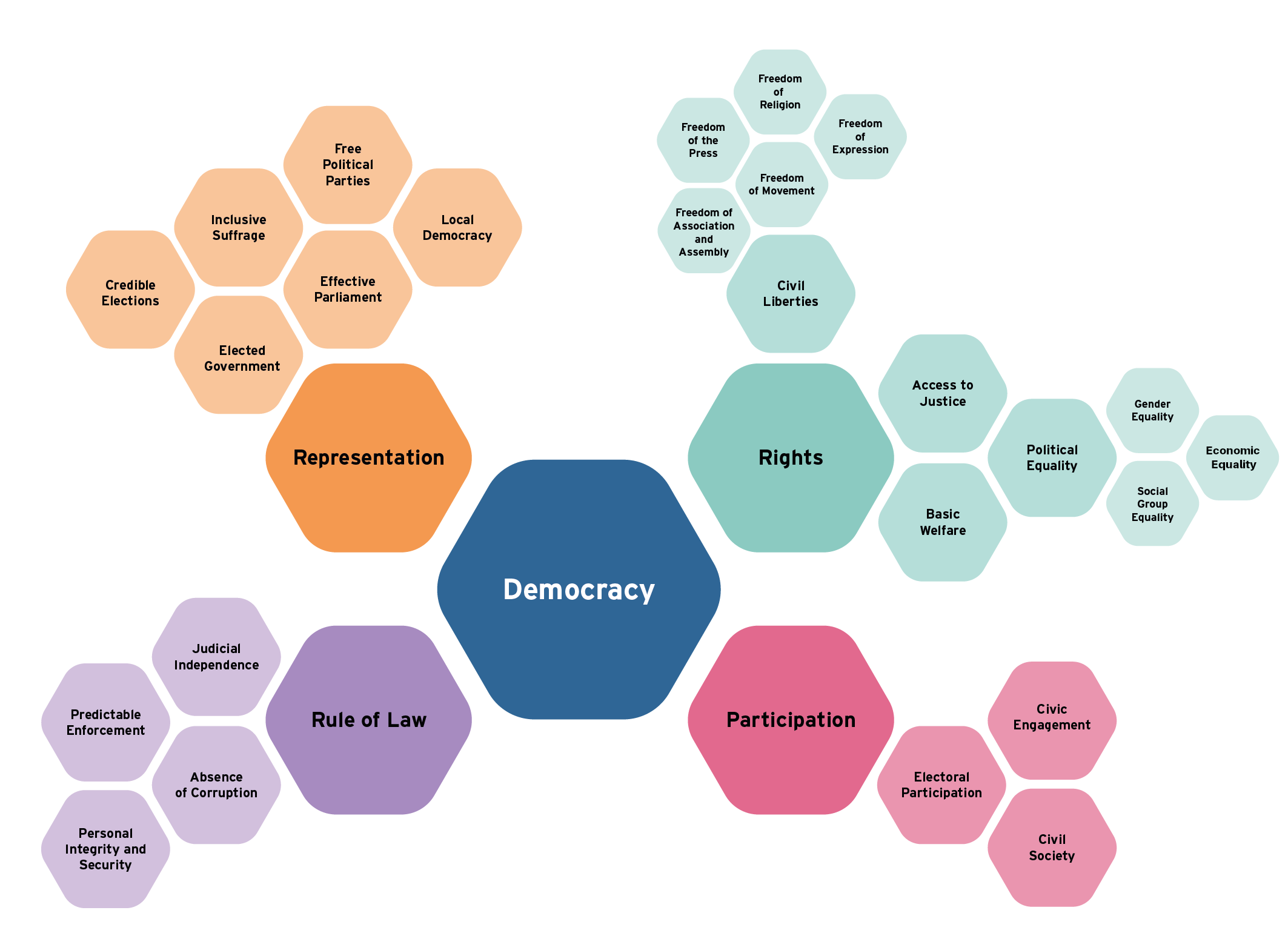
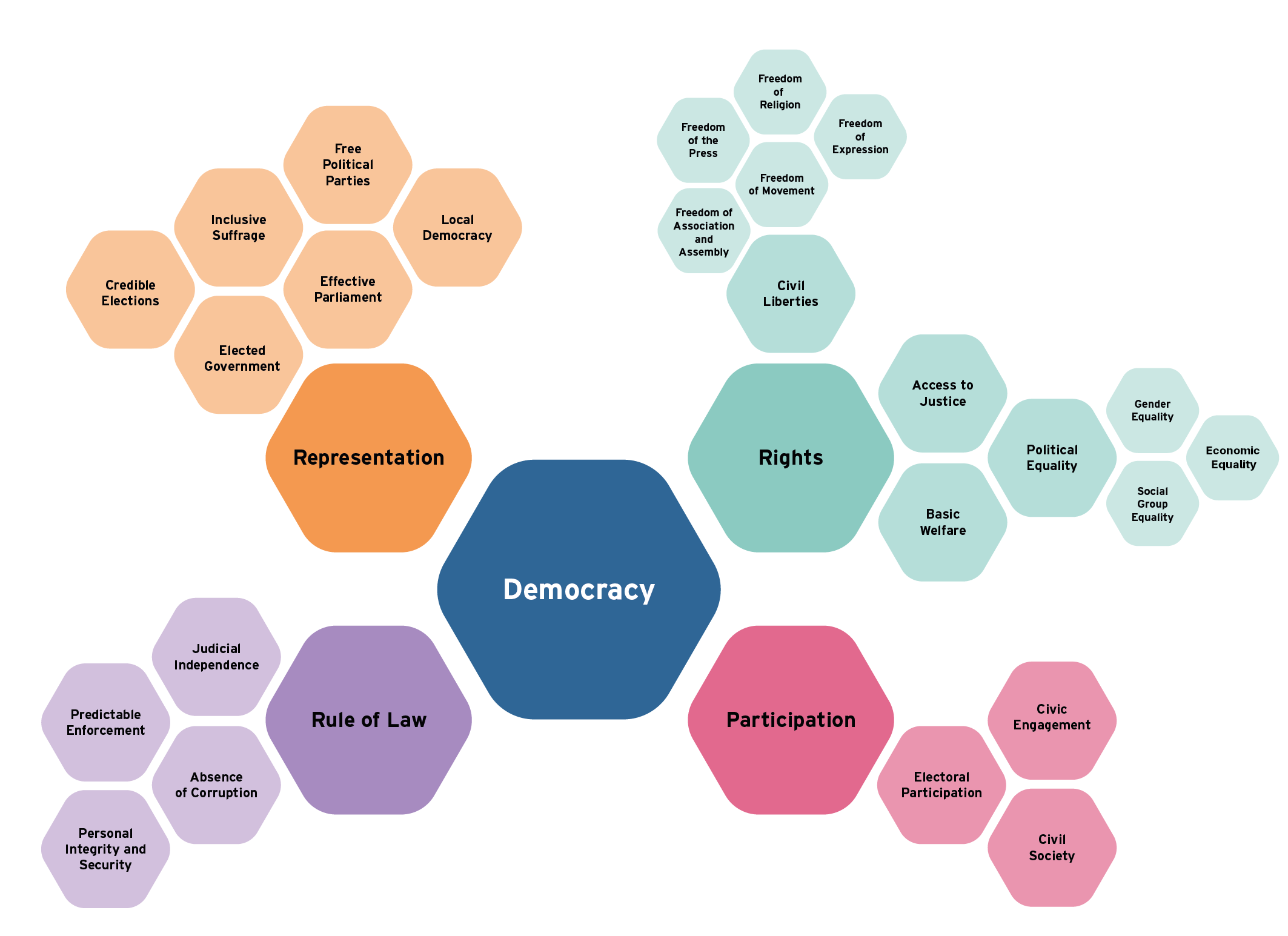
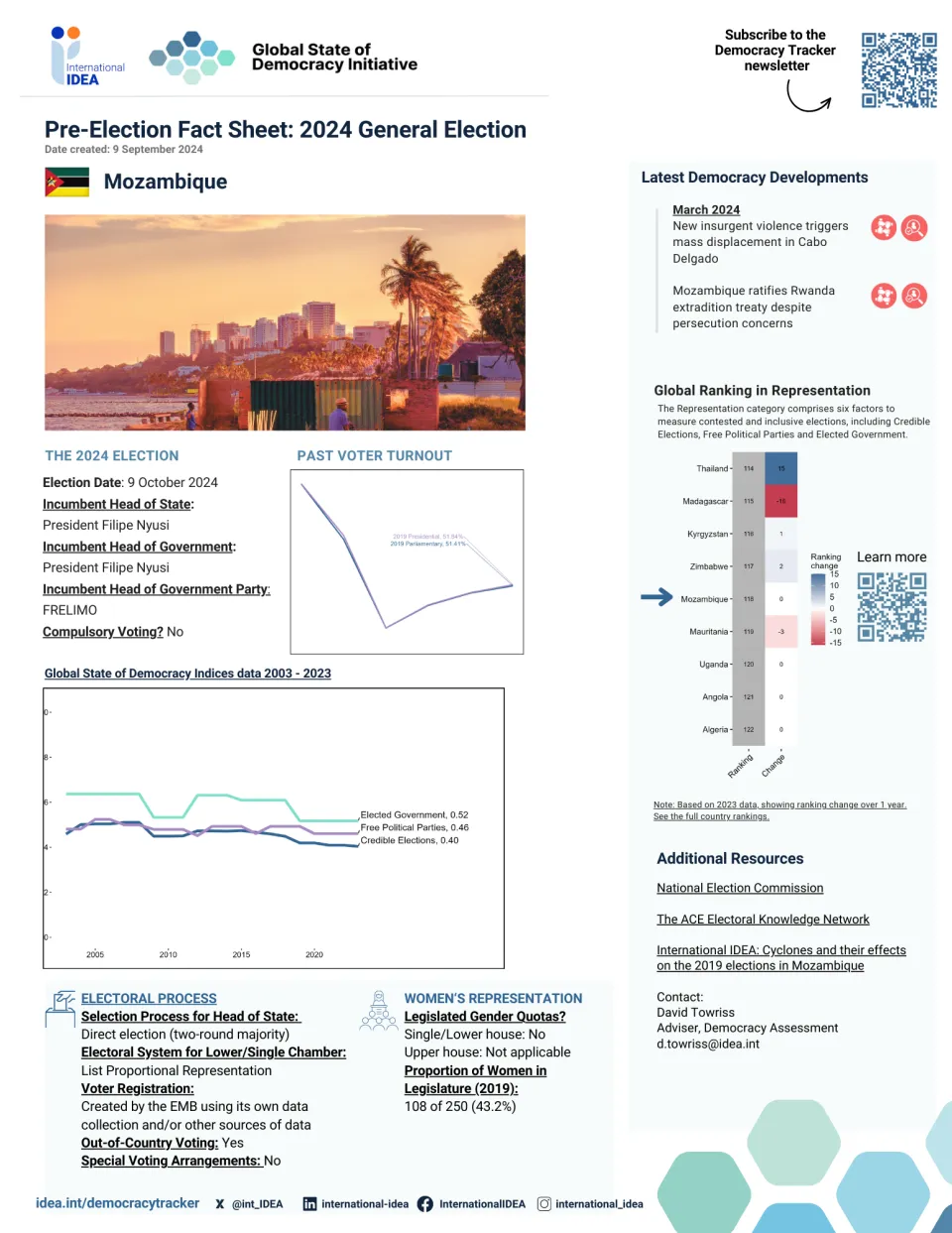
Mozambique performs at the low-range in three categories of the Global State of Democracy (GSoD) framework (Representation, Rights and the Rule of Law) and at the mid-range in Participation. Compared to 2019, it has suffered declines in Credible Elections, Free Political Parties, Civil Liberties and Absence of Corruption. Mozambique has a diverse economy, with key sectors including agriculture, mining, and energy. However, its economic development has been hindered by conflict, natural disasters and corruption and it remains one of the poorest countries in the world.
Once part of a trade network spanning the African continent and Indian ocean, present-day Mozambique was colonized by the Portuguese, who sought to control the trade. Colonization began in the sixteenth century and culminated in the establishment of a settler administration, whose exploitative rule left Mozambique with a distorted economy, weak administrative capacity and arbitrary borders. After a 16-year-long armed struggle led by the Marxist Mozambique Liberation Front (FRELIMO), the country gained its independence in 1975, with power handed to FRELIMO as the ruling party. Since then, it has governed Mozambique continuously; initially as a one-party state, before introducing a formally multi-party system and holding Mozambique’s first elections in 1994. However, politics and the economy have continued to be controlled by the ruling party and allied elites.
Although Mozambique’s constitutional arrangements provide for a formal separation of powers between the three branches of government, neither the judiciary nor legislature effectively check the powerful presidency, primarily because of the blurred lines between the ruling party and the state. Consequently, democratic space has become increasingly restricted as FRELIMO has responded to popular discontent by repressing critical voices in civil society, opposition parties and the press, and controlling democratic processes, most notably elections. The contested 2024 general election triggered widespread, deadly violence between protesters and the security agencies. The protests reflected a broad set of governance concerns, including police brutality, poverty, youth unemployment and corruption, which is a major problem, exemplified by the Hidden Debt scandal.
Mozambique’s socio-political landscape has also been profoundly impacted by the civil war, fought by FRELIMO and the anti-communist Mozambican National Resistance (RENAMO), now an opposition party. FRELIMO-RENAMO tensions were later reignited by a six-year low-intensity guerrilla campaign waged by RENAMO militants between 2013 and 2018. In recent years, an Islamic insurgency has grown in the northern province of Cabo Delgado. These conflicts have been fuelled by resentments over long-standing regional socio-economic inequalities, which divide the relatively prosperous south from the more populous north.
Mozambique is a mid-performer on the GSoD’s Gender Equality measure. Despite legal protections, the marginalization of women continues, with gender-based violence widespread and persistent gaps in representation in leadership in both the public and private sectors, access to education and employment. Same-sex relations are legal, but LGBTQIA+ persons generally lack legal protections and face stigma.
Looking ahead, it will be important to monitor the government’s approach to the post-election instability and popular demands for governance reform. Relevant in this regard are the discussions between President Daniel Chapo and former presidential candidate Venâncio Mondlane, the national dialogue between the government, political parties and civil society, as well as the prosecution of protesters and the policing of future protests. The impact of these developments may be felt across the GSoD framework, but in the short-term Personal Integrity and Security, Civil Liberties and Civil Society are areas to watch.
Last updated: July 2025
https://www.idea.int/democracytracker/
June 2026
Inclusive National Dialogue launches public debate on competing state-reform proposals
In the month of June, the Technical Commission for the Implementation of the Political Commitment for an Inclusive National Dialogue (COTE) launched public hearings across the country to debate proposals for political and institutional reform. The transition from consultations to debate on specific governance and constitutional proposals marks an important stage in Mozambique's post-election dialogue process. COTE presented three alternative scenarios for Mozambique's future political organization, ranging from limited adjustments to the current system to more far-reaching constitutional and state reforms, including changes to electoral arrangements and institutional structures. Public hearings were scheduled for July and August to gather citizen input before identifying a preferred reform pathway. However, civil-society groups have warned that public trust in the process remains fragile and that the credibility of future reforms will depend on inclusive participation and effective implementation.
Sources: Africa News Hut; 360 Mozambique (1); 360 Mozambique (2); DW


April 2026
Parliament Approves Decentralization Amendment, Abolishing Provincial State Representation Services
On 24 April, Parliament unanimously approved amendments to the country's provincial governance framework, abolishing the provincial State Representation Services and transferring their functions to the Provincial Executives, headed by the elected Provincial Governors. The reform traces to a functional-effectiveness review launched by former President Filipe Nyusi in 2023 through the Commission for Reflection on the Decentralized Governance Model (CREMOD), which found persistent overlap and friction between governors and provincial secretaries of state. The unanimous approval by all four parliamentary parties — Frelimo, Podemos, Renamo and MDM — signals rare cross-party consensus in a political system often marked by tension between Frelimo and the opposition.
Sources: Press Reader; Plataforma; Club of Mozambique

August 2025
Insurgent attacks cause mass displacement in northern Mozambique
The UN’s International Organisation for Migration reported on 5 August that in the preceding two weeks nearly 60,000 people had been displaced from Mozambique's northern Cabo Delgado province, as a result of escalating attacks from insurgents operating in the area. Since January 2025, more than 95,000 people are estimated to have fled the ongoing insurgency in Cabo Delgado, and access to food, shelter, medical care and other basic necessities has become increasingly fragile for displaced persons and host communities. This has been exacerbated by the scaling back of humanitarian assistance in response to international aid cuts.
Update: Approximately 100,000 people were displaced from northern Mozambique in the second half of November, as attacks by insurgents intensified and spread beyond Cabo Delgado Province, where the insurgency has been concentrated. According to the IOM, it is the fourth major influx of internally displaced people Northern Mozambique has faced in recent months.
Sources: Al Jazeera, Club of Mozambique, United Nations (1), Médecins Sans Frontières, United Nations (2), Africa News


June 2025
Child abductions surge in Cabo Delgado province
In June, the United Nations and Human Rights Watch (HRW) reported a significant rise in the number of children abducted by insurgents in Mozambique’s conflict-affected Cabo Delgado province. A local monitor told HRW that ‘in recent days, 120 or more children have been abducted’. In 2024, the UN recorded a total of 468 child abductions in Cabo Delgado. Most abductees are forced into labour, marriages and combat by the militants, who have been fighting an insurgency in the province since 2017.
Sources: United Nations (1), Human Rights Watch, United Nations (2)

See all event reports for this country
Global ranking per category of democratic performance in 2025

Basic Information

Human Rights Treaties
 State party
 Signatory
 No action
Performance by category over the last 6 months


Election factsheets
Global State of Democracy Indices
Hover over the trend lines to see the exact data points across the years


Factors of Democratic Performance Over Time
Use the slider below to see how democratic performance has changed over time